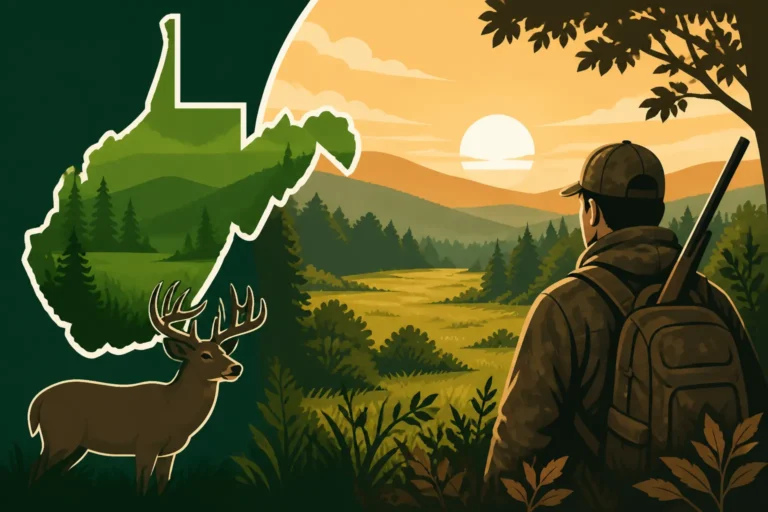
Hunting Otter Creek Wilderness Fringe
Many hunters dream of the deep woods, the kind of untouched wilderness where game lives largely undisturbed by human presence. But the reality of truly penetrating deep into a designated wilderness area like Otter Creek in West Virginia can be incredibly daunting, not to mention physically exhausting, and sometimes, the best opportunities are actually found right on the edges. This guide aims to help you navigate and unlock the potential of hunting the Otter Creek Wilderness fringe, providing practical strategies to find success in these often overlooked yet incredibly productive transition zones.
Understanding the Otter Creek Wilderness Fringe
The Otter Creek Wilderness, nestled within the sprawling Monongahela National Forest in Randolph and Tucker counties, is a gem for those seeking solitude and a truly wild hunting experience. However, the term "wilderness fringe" is crucial here. We're not talking about deep within its 20,000+ acres where regulations are strictest and access is foot-traffic-only. Instead, we're focusing on the areas immediately bordering this designated wilderness – the rugged, often steep, and heavily timbered public lands of the Monongahela that act as a buffer. These are the zones where the characteristics of deep wilderness meet the slightly more accessible, but still wild, national forest.
Think of it like this: the wilderness itself is a core sanctuary, but animals don't recognize imaginary lines on a map. They move freely, and often, the most consistent movement patterns for deer, bear, and turkey will be found where they can utilize the security cover of the wilderness while also accessing diverse food sources and escape routes available just outside its most restricted core. This fringe zone typically includes steep hollows, dense rhododendron thickets, high ridges, and mature hardwoods that characterize much of the Monongahela National Forest Hunting. It's still incredibly challenging terrain, but usually offers slightly more navigable entry points and a bit less restriction than the absolute interior.
The topography of the Otter Creek fringe is quintessential Allegheny Mountain country: expect dramatic elevation changes, rocky outcrops, and dense undergrowth in the valleys. Water is abundant, with numerous small streams and the namesake Otter Creek itself carving through the landscape. This creates a mosaic of habitats, from high-elevation spruce-fir stands to oak-hickory forests on the mid-slopes and various riparian zones. Understanding this transition from deep wilderness to adjacent national forest is your first step in successful fringe hunting.
Targeting Game Species on the Fringe
The wilderness fringe acts as a natural magnet for various game species due to its blend of security cover, diverse food sources, and reduced human disturbance compared to more accessible public lands. Deer, bear, and turkey are the primary draws, each utilizing the fringe in slightly different ways.
Whitetail Deer in Rugged Terrain
Deer, especially mature bucks, often seek out these less-pressured fringe areas. They'll bed deep within the thick laurel and rhododendron found in the steeper hollows or on benches just below ridge tops, feeling safe from intrusion. During feeding times, they'll venture out to browse on succulent vegetation in younger clearings, or more commonly, forage for acorns and other mast crops found in the mature hardwood stands that often line the wilderness boundary. The key to hunting these fringe deer is understanding their movement between security and food, and how topography dictates their travel. Look for benches, saddles, and subtle terrain features that act as natural funnels. While the deer density might not be as high as in farmland counties, the bucks here often live longer and grow larger simply because they are harder to find and hunt. You might find fewer deer, but the ones you do find are often quality animals that know how to survive in tough country. Hunting West Virginia's Long Archery Season can be particularly effective in these fringe areas, as the minimal disturbance aligns well with deer behavior.
West Virginia Black Bears
West Virginia's black bear population thrives in areas like the Monongahela National Forest, and the Otter Creek Wilderness fringe is no exception. These large omnivores benefit immensely from the expansive, undisturbed habitat. Bears will frequent the fringe areas for various reasons throughout the season. In spring and early summer, they might be drawn to emerging green growth in creek bottoms or clearings. As fall approaches, their focus shifts heavily to mast crops, particularly acorns and beechnuts. The diverse forest composition of the fringe, with its mix of oak, beech, and cherry, provides ample food sources. Bears use the dense cover of the wilderness for bedding and escape, often moving out into the surrounding national forest to feed. Learning to identify bear sign – scat, claw marks on trees, overturned rocks, and matted-down feeding areas – is critical. A good strategy might be to scout areas with heavy mast production just outside the wilderness boundary, understanding that bears will travel from the deeper cover to exploit these food sources. Hunting Bears Over Natural Mast in the Mountains is an essential read for anyone considering bear hunting here.
Wild Turkeys and Small Game
Wild turkeys, too, are frequent residents and travelers of the fringe. During the spring gobbler season, they'll use the mature timber for roosting and the more open woods and clearings on the edges for strutting and feeding. Locator calls can be very effective here, as the terrain often carries sound well, and turkeys are generally less pressured than in more accessible spots. Spring Turkey Hunting in West Virginia offers great insights into tactics. In the fall, turkey flocks will move through the fringe, again heavily utilizing mast crops. Squirrels are abundant, especially during good mast years, and grouse can be found in regenerating clear-cuts or dense rhododendron thickets on the fringe. For small game hunters, the fringe offers a challenge but also rewards with genuine wilderness experiences. Squirrel hunting in particular, where you can still-hunt or sit quietly and pick off bushy-tails, can be a fantastic way to experience the fringe. For more on this, check out Squirrel and Small Game Hunting in West Virginia.
Accessing and Navigating the Wilderness Edge
Successfully hunting the Otter Creek Wilderness fringe demands careful planning, robust navigation skills, and a realistic understanding of the terrain. This isn't flat ground, and a day hunt can quickly turn into an overnight adventure if you're not prepared.
Planning Your Entry and Exit
Access points around the Otter Creek Wilderness are primarily forest roads that often dead-end or become unsuitable for conventional vehicles. Identifying these roads, and then pinpointing areas where you can comfortably park and begin your hike, is paramount. Satellite imagery and topographic maps are your best friends here. A reliable GPS unit or a mapping app like onX Hunt is absolutely essential. Don't rely solely on cell service, as it's often nonexistent in these rugged mountains. Download your maps for offline use before you leave home. When planning your route, always consider the terrain. What looks like a short walk on a flat map can be a grueling climb up a near-vertical slope. Plan your entry and exit points with the knowledge that you'll be tired, potentially carrying game, and possibly navigating in low light. Scouting West Virginia Public Land Before Season cannot be stressed enough; walking these areas before the season begins will give you an invaluable advantage.
Essential Navigation Tools and Techniques
Beyond your primary GPS device or mapping app, always carry a physical map and compass, and know how to use them. Batteries die, and electronics fail. The dense canopy and steep hollows can make satellite acquisition tricky, so having analog backups is critical. Learning to read the terrain features on a topo map – identifying ridges, saddles, hollows, and benches – will help you orient yourself even without a signal. Look for natural landmarks like unique rock formations or large trees to help confirm your position. When deep in the woods, even subtle changes in direction can lead you astray quickly. Tools like those offered by GoHunt can help you overlay different map layers, from topo lines to property boundaries (ensuring you stay on public land), making your pre-hunt planning much more effective. Mark your vehicle's location and key waypoints as you go.
| Feature Type | Deep Wilderness Interior | Wilderness Fringe | Accessible Public Land |
|---|---|---|---|
| Hunting Pressure | Very Low | Low to Moderate | High |
| Terrain | Extremely Rugged, Remote | Rugged, Steep, Remote | Varied, often gentler |
| Access | Foot Travel Only, No Trails | Rough Trails, Forest Roads | Maintained Roads, Parking Lots |
| Game Security | Highest | High | Moderate |
| Species Diversity | High (Deer, Bear, Turkey) | High (Deer, Bear, Turkey, Small Game) | Moderate (Deer, Turkey) |
| Required Fitness | Expert, Multi-day Backpacking | Advanced, All-day Hikes | Moderate, Day Hikes |
| Navigation | Advanced GPS/Map/Compass | Advanced GPS/Map/Compass | Basic GPS/Map |
| Tree Stand/Blind | Generally Prohibited/Discouraged | Temporary Stands/Blinds Allowed | Stands/Blinds Allowed |
Strategic Hunting Tactics for Otter Creek's Perimeter
Hunting the fringe requires specific tactics that account for the terrain, the behavior of wilderness-savvy game, and the unique challenges of the environment. This isn't a place for casual hunting; it demands patience, physical endurance, and a keen eye for subtle signs.
Still-Hunting and Scouting Subtle Features
Still-hunting is perhaps the most effective method in these fringe areas. Moving slowly, stopping frequently, and using your binoculars to pick apart the dense cover will give you an advantage. The steep terrain often creates natural funnels where game will travel, such as benches that contour around hillsides, saddles between peaks, or the heads of hollows. Focus your attention on these subtle terrain features. Look for fresh tracks, droppings, rubs, and scrapes, especially along logging roads or old skid trails that traverse the perimeter. These game trails often serve as highways for animals moving between the wilderness core and surrounding feeding areas. Pay particular attention to the wind and thermals, which can be unpredictable in steep country. Always try to approach from downwind, remembering that thermals typically rise in the morning and fall in the evening. For more detailed insights into navigating this type of landscape, consider Hunting Steep Allegheny Ridges.
Treestand and Ground Blind Considerations
While permanent structures are typically prohibited within the Otter Creek Wilderness itself, the adjacent national forest land allows for temporary treestands and ground blinds. If you plan to use one, mobility is key. Lightweight climbing sticks and portable stands are your best bet. Setting up on a bench overlooking a promising travel corridor, or a saddle that connects two ridge systems, can be highly effective. Remember, a good treestand setup should not only offer a clear shot but also provide a quiet, concealed entry and exit. On these rugged fringes, finding the perfect tree can be challenging, so be prepared to adapt. Alternatively, natural ground blinds brushed in with local vegetation can be very effective in dense rhododendron thickets or at the edge of a small clearing. Whether using a stand or blind, always prioritize safety, especially on steep ground. Treestand Setups in Monongahela National Forest provides excellent guidance.
Gear Up for the Long Haul
Hunting the Otter Creek Wilderness fringe is physically demanding. Your gear needs to be up to the task. Durable, waterproof boots with excellent ankle support are non-negotiable for navigating steep, uneven, and often wet terrain. Consider a good quality backpack that can comfortably carry your essentials – water, food, first-aid, emergency shelter, and game bags – as well as your weapon. If you plan on harvesting a deer or bear, think about how you'll get it out of the woods. A game cart might be useful on old logging roads, but in many areas, you'll be quartering the animal and packing it out on your back. Warm, moisture-wicking layers are essential, as weather conditions can change rapidly in the mountains. Don't forget a bright headlamp for hiking out after dark and a small saw or field dressing knife. Investing in reliable gear, like those sturdy Boots for West Virginia Hollows and Ridges and a well-fitting Packs for a Monongahela Forest Day Hunt, will make your experience safer and more enjoyable.
Disclaimer
This article is for general informational purposes only and does not constitute professional advice. Laws, prices and regulations vary by location and change over time. Consult a qualified professional for guidance on your specific situation.