Wyoming County Archery-Only Public Ground
Hunting archery-only public ground in a county like Wyoming County, West Virginia, can feel like navigating a maze blindfolded. You've got the passion for bowhunting, but figuring out where you can actually legally draw a string on public land, and how to effectively hunt those areas, brings a whole new layer of frustration. This guide is here to untangle that complexity, offering clear insights into the regulations, how to pinpoint those prime public hunting spots, and the best tactics to make your archery season in Wyoming County a success.
Understanding Wyoming County's Archery-Only Deer Regulations
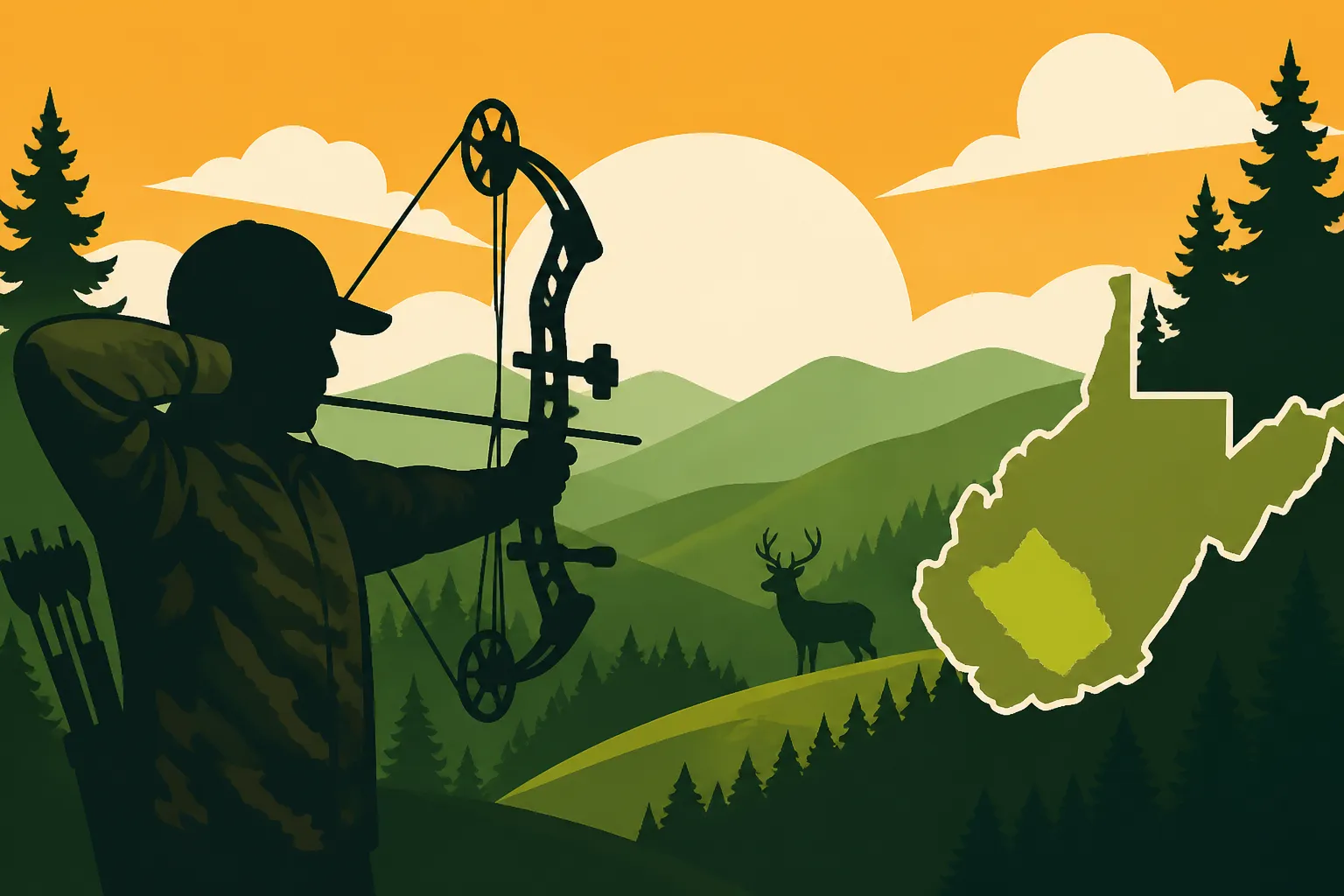
When you hear "archery-only," it instantly signals a different kind of deer season, and Wyoming County is one of those unique places in West Virginia where the gun season for deer is entirely skipped. This isn't just a minor tweak; it fundamentally changes the hunting pressure, deer behavior, and the strategies you'll need to employ. It's a bowhunter's paradise in some ways, but it also comes with its own set of challenges.
The Rationale Behind Archery-Only Zones
Why would a county opt for archery-only? Often, these designations are a blend of historical context, localized deer management goals, and community preference. In areas like Wyoming County, the landscape can be steep, rugged, and densely forested, making traditional rifle hunting less safe or efficient in certain populated corridors or near smaller private holdings. By restricting hunting to archery equipment, it generally means less long-range pressure on the deer herd and often translates to a more intimate, quiet hunting experience. It also typically provides a longer, continuous season without the disruptive mid-season gun openers that can scatter deer and alter their patterns significantly. For many, the idea of hunting a deer herd that isn't running from gun blasts for weeks on end is a huge draw, allowing for more consistent patterning and less skittish animals, at least until they feel bowhunting pressure.
Key Season Dates and Bag Limits for Bowhunters
West Virginia's archery season is famously generous, often running from late September well into December, overlapping with the peak rut and then trailing off into the late season. For counties like Wyoming, which are strictly archery-only for deer, this extended period is the only opportunity to harvest a whitetail. It’s crucial to remember that while the general statewide archery dates apply, the specific nuances of bag limits and reporting requirements are equally important. For instance, the general statewide bag limit might be a buck and two antlerless deer, but these can vary slightly by county or specific WMA. Always double-check the current West Virginia hunting regulations for Wyoming County before you head out. These dates and limits dictate your entire season, from early fall patterns to the colder, post-rut December hunts. Understanding these frameworks is your first step to a legal and successful hunt, especially when planning multi-day trips or hunting across different phases of the season. West Virginia Archery Season Opening Day is a date you'll have circled, as it kicks off these unique opportunities.
Permitted Archery Equipment and Crossbow Rules
When hunting in an archery-only county, "archery" means just that: traditional bows, compound bows, and crossbows. However, even within those categories, there are specific regulations you need to be aware of. For instance, there are minimum draw weight requirements for traditional and compound bows, ensuring ethical harvesting. Crossbows, while perfectly legal for the entire archery season in West Virginia, also have their own set of rules, often pertaining to minimum draw weight or maximum bolt length. It’s important to know that these aren't just suggestions; they are legal requirements. Using a non-compliant bow or crossbow can lead to significant penalties. Beyond the legalities, consider the practical side: what kind of broadheads are you using? Mechanical or fixed? What's your arrow/bolt weight? In rugged, dense West Virginia terrain, you'll likely be taking shots at closer ranges, often through small shooting lanes, so equipment tuned for penetration and accuracy at those distances is paramount. Crossbow Rules During West Virginia Archery Season provides more detailed information if you're planning to use one.
Identifying and Accessing Public Hunting Ground in Wyoming County
Wyoming County, like much of West Virginia, has a mix of private and public lands. The key to successful public land hunting, especially in an archery-only zone, is knowing where those public lands are and, crucially, how to get to them without trespassing. This takes a bit of homework, but the reward is access to some fantastic, less-pressured hunting opportunities.
Navigating the Specific WMAs and National Forest Areas
While Wyoming County doesn't host a giant swath of a single national forest unit like some other parts of the state, it does feature various public hunting opportunities, including portions of Wildlife Management Areas (WMAs) and sometimes smaller, isolated state forests or public hunting access points managed by the West Virginia Division of Natural Resources (WVDNR). These WMAs are your primary target. They are managed specifically for wildlife habitat and public recreation, including hunting. Each WMA might have slightly different regulations or areas of particular interest. For example, some might have old clear-cuts offering thick bedding areas, while others might feature more mature timber with reliable mast crops. Identifying these specific WMAs within Wyoming County, understanding their boundaries, and knowing any unique rules they might have is critical. The WVDNR website is an excellent starting point, often providing maps and basic information for each WMA. Don't be afraid to delve into the details; a small, overlooked public tract might hold the buck of a lifetime because other hunters assume there's "no public land" in the area.
Utilizing Mapping Tools for Public Land Boundaries
Gone are the days of relying solely on paper maps, though a good paper map is still a fantastic backup. Today, digital mapping applications are absolutely indispensable for public land hunting, especially in a county with mixed ownership like Wyoming. Services like onX Hunt and GoHunt are game-changers. With onX Hunt, for example, you can see clear property lines, distinguishing public land from private land, right on your phone or GPS device. This is invaluable for avoiding accidental trespass, which is a major concern when hunting property you're not intimately familiar with. These apps also provide topographic maps, aerial imagery, and often information on land features, roads, and trails. You can mark waypoints for potential stand locations, bedding areas, water sources, and travel corridors. Before you even set foot in the woods, you can scout from your couch, identifying potential access points, likely deer habitat, and areas that might hold less pressure simply because they are harder to reach. This kind of detailed information allows you to plan your approach and exit strategies meticulously, which is paramount for bowhunting success on public ground. Using Go Wild West Virginia Without Cell Service discusses how crucial it is to download your maps for offline use, something these apps allow you to do.
Strategies for Low-Pressure Access Points
Public land, by its very definition, is open to everyone, and that means competition. However, in an archery-only county, the overall pressure might be lower than in gun counties, but good spots still get hit. Your goal is to find "low-pressure" access points. This doesn't necessarily mean finding secret spots that no one knows about – those are rare. Instead, it means thinking differently. Most hunters will take the easiest route in: the main parking lot, the obvious trail, the well-worn logging road. If you're willing to walk a little further, climb a little steeper, or navigate through some thicker brush, you can often leave 90% of the hunting pressure behind.
Look for less obvious pull-offs, old logging spurs that are overgrown, or even points where a creek crossing makes access slightly more challenging. These "tougher" access points often lead to areas where deer are less disturbed and more likely to stick to their natural patterns. Also, consider mid-week hunts versus weekends, if your schedule allows, to reduce encountering other hunters. Using your mapping app, you can identify these less-traveled routes and plan your ingress and egress quietly and efficiently. Remember, in an archery-only zone, a deer that hasn't seen a human in weeks is far more likely to present a shot opportunity than one that's been bumped daily.
Effective Bowhunting Tactics for Archery-Only Public Land
Hunting public land with a bow, especially in an archery-only area, demands a specific skillset. It's about blending into the environment, understanding deer movement under different pressure levels, and being incredibly patient. The longer season gives you more opportunities, but it also means adapting your tactics as the deer's behavior changes throughout the fall and early winter.
Adapting Scouting and Stand Placement for Bowhunting Pressure
Scouting is the bedrock of successful bowhunting. In an archery-only public land scenario, your scouting needs to be even more precise. You're not just looking for deer sign; you're looking for archery-shot opportunities. This means identifying heavy trails, pinch points, funnels, and feeding areas where a deer might present a 20-30 yard shot. Early season scouting, before the leaves fall, is invaluable for identifying these natural choke points and understanding the canopy, which dictates your visibility from a stand. As the season progresses and leaves drop, revisit these spots to see how visibility changes and if new deer patterns emerge.
Stand placement is critical. On public land, you'll often face competition, so being able to quickly and quietly hang a mobile treestand or set up a ground blind is an advantage. Consider using a system like a climbing treestand or a saddle hunting setup, which allows for maximum flexibility. When hanging your stand, don't just look for a tree with good cover; consider your entry and exit routes, prevailing wind, and where you expect the deer to be coming from and going to. A stand with a perfect view is useless if your scent blows right into the deer's travel path every morning. Remember that deer on public land are often accustomed to human presence, but they are still wary. Set up where you intercept them in their natural movement, not where you force them to alter their route. For steep terrain, knowing Hanging a Stand on a Steep Allegheny Ridge can be a game-changer.
Leveraging Topography and Natural Funnels for Success
West Virginia's mountainous terrain is a bowhunter's best friend. Ridges, hollows, saddles, and creek bottoms all create natural funnels that deer love to use. These topographical features are amplified in their importance in an archery-only zone because deer are less likely to be pushed off their natural travel paths by gun hunters. Deer will often travel along benches on hillsides, just below the ridge lines, where they can move efficiently while staying out of sight. Saddles – dips in a ridge – act as highways between drainages. Creek bottoms, especially those with thick cover, are excellent midday bedding and travel routes.
Study your topo maps on onX Hunt or GoHunt. Look for where a steep hollow narrows into a subtle pinch point, or where two fingers of a ridge come together. These are ideal ambush spots for a bowhunter. Also, pay attention to subtle changes in vegetation. A transition from mature oaks to thick laurel or a clear-cut edge can create a natural funnel. Deer will use the path of least resistance, but they'll also seek cover and security. Your job is to find where those two needs intersect, creating a predictable travel route. Understanding Wind and Thermals on a Steep Ridge is absolutely crucial here, as thermals dictate scent movement in these elevation changes, especially in the mornings and evenings.
Mastering Quiet Movement and Scent Control in Thick Cover
Bowhunting, by its nature, demands stealth. On public land in an archery-only county, where deer might be slightly less wary than in heavily gun-hunted areas but are still very much wild, quiet movement and meticulous scent control are non-negotiable. Every snap of a twig, every rustle of leaves, can blow your hunt. Practice walking silently, picking up your feet, and placing them gently. Wear quiet clothing – wool or fleece are excellent choices for reducing noise.
Scent control is equally paramount. Deer have an incredible sense of smell, and a single whiff of human odor can send them bounding away. This means washing your hunting clothes in scent-free detergent, storing them in airtight containers, showering with scent-free soap, and using scent-eliminating sprays. Pay attention to the wind, always. It's the most critical factor in bowhunting. If the wind isn't right for your chosen stand, don't hunt it. Have alternative spots for different wind directions. Even with the best scent control, if a deer gets directly downwind, it's often game over. Learn to play the wind, understand thermals, and minimize your scent footprint. This combination of stealth and scent management will give you the best chance at success in the dense cover often found in Wyoming County.
Essential Gear and Preparation for Wyoming County Archery Hunters
Having the right gear and being properly prepared can make all the difference between a frustrating hunt and a rewarding one. This is especially true when you’re venturing onto public lands, where amenities are nonexistent and you need to be self-sufficient.
Choosing the Right Apparel and Boots for Mountain Terrain
West Virginia's mountain terrain can be demanding. You'll be walking up and down steep grades, crossing wet bottoms, and navigating through dense brush. Your clothing and footwear need to be up to the task. Layering is key, as temperatures can fluctuate wildly, especially during the long archery season. Start with a good moisture-wicking base layer, add an insulating mid-layer (fleece or wool are excellent), and top it with a quiet, waterproof/windproof outer shell. Wool is a fantastic choice for insulation, even when wet, and it's naturally quiet.
For boots, focus on comfort, support, and waterproofing. You'll be covering miles, sometimes off-trail, so ankle support is crucial to prevent twists and turns on uneven ground. A good pair of waterproof boots with aggressive traction will keep your feet dry and give you confidence on slippery slopes and creek crossings. Consider a boot with insulation suitable for the cooler months of the archery season, but don't overdo it for early season hunts, where breathability is more important. Remember, your feet are your primary mode of transportation, so investing in quality footwear is a non-negotiable. Boots for West Virginia Hollows and Ridges delves deeper into this essential gear.
Optimizing Your Pack for Day-Long Public Land Hunts
When you're hiking into public land, often miles from your vehicle, every ounce in your pack counts. However, you can't afford to leave essential items behind. Your daypack needs to be thoughtfully packed for the unexpected. Beyond your bow and arrows, consider these essentials:
| Category | Essential Items | Why It's Needed |
|---|---|---|
| Navigation | GPS device (with offline maps), phone with mapping app (onX Hunt), compass | Crucial for staying found, especially in thick woods with no cell service. |
| Safety & First Aid | Small first-aid kit, whistle, headlamp (with extra batteries) | For emergencies, signaling, and navigating in the dark after a successful hunt. |
| Hydration | Water bottle or hydration bladder, water filter/purifier | Staying hydrated is essential, especially on strenuous hunts. Water filter for emergencies. |
| Food | High-energy snacks (nuts, jerky, protein bars) | Sustain energy throughout the day, especially if the hunt runs long. |
| Game Care | Field dressing knife, game bags, small roll of flagging tape, heavy-duty rope | For processing your harvest, marking trails, and potential dragging. |
| Miscellaneous | Wind checker, calls (grunt tube, doe bleat), license/tags, small binoculars | For situational awareness, attracting deer, and legal compliance. |
This is a minimalist list, but it covers the core needs. Packs for a Monongahela Forest Day Hunt offers more advice on packing light and smart for extended public land trips. Your pack should be comfortable, quiet, and allow easy access to frequently used items.
Post-Harvest Considerations: Field Dressing and Extraction
Successfully harvesting a deer with a bow on public land in Wyoming County is a fantastic achievement, but the work isn't over. In fact, it's just beginning. You need a solid plan for field dressing and extracting your animal, especially if you're deep in the woods or on steep terrain.
First, perform a thorough field dress. This means removing the entrails to allow the carcass to cool down as quickly as possible, preventing spoilage, particularly during the warmer parts of the early archery season. Carry sharp, reliable knives and disposable gloves for hygiene. Once field dressed, you'll need to decide on your extraction method. If you're close to a road or a flat trail, a deer cart can be a lifesaver. However, in much of Wyoming County's steep, rugged terrain, a cart might be impractical. In such cases, a quality deer sled or simply dragging the deer by hand might be your only options. If the terrain is exceptionally steep or the distance too great, you might need to consider quartering the deer and packing it out in pieces using a frame pack. This is often the most efficient, albeit labor-intensive, method for remote kills. Plan this out beforehand, considering the worst-case scenario. Always have a clear route marked (mentally or with your GPS) for the extraction. And don't forget to report your harvest as required by West Virginia law. Dragging a Deer Off a Steep Ridge can give you some practical tips for that challenging task.
Disclaimer
This article is for general informational purposes only and does not constitute professional advice. Laws, prices and regulations vary by location and change over time. Consult a qualified professional for guidance on your specific situation.