Shotguns for West Virginia Grouse and Woodcock
There’s nothing quite like the heart-stopping flush of a ruffed grouse exploding from thick laurel, or the erratic, aerial dance of a woodcock twisting through an alder run. But in West Virginia’s rugged mountains and dense cover, these thrilling moments often last mere seconds, leaving many hunters frustrated with missed shots and an empty game vest. This guide is all about helping you understand the specialized tools – namely, the shotguns – that will put the odds a little more in your favor when pursuing these elusive upland birds.
The Unique Challenges of West Virginia Upland Hunting
Hunting ruffed grouse and American woodcock in West Virginia isn't like walking open fields for pheasants or sitting in a blind for ducks. This is a game of quick reflexes, instinct, and a whole lot of walking through some truly wild country. Our mountains present a specific set of challenges that demand careful consideration of your gear, especially your shotgun.
Thick Cover and Quick Shots
Imagine yourself winding through a dense rhododendron thicket, your eyes scanning the shadowy undergrowth. Suddenly, a grouse bursts out, a blur of brown and grey, heading straight for the nearest stand of evergreens. You have perhaps a second, maybe two, to shoulder your shotgun, find the bird, swing, and fire. This isn't a long-range proposition; most shots at grouse and woodcock in West Virginia are taken at incredibly close quarters, often within 15 to 25 yards, sometimes even closer. The birds appear and vanish with astonishing speed. This means your shotgun needs to be quick to point, easy to swing, and capable of putting a dense pattern of shot on a fast-moving target in a blink. You'll spend more time walking and less time shooting, but when the shot presents itself, you need to be ready immediately.
Terrain and Movement Demands
Beyond the immediate challenge of the birds themselves, there's the terrain. West Virginia's grouse and woodcock habitat often means steep hillsides, rocky streambeds, dense clear-cuts, and tangled creek bottoms. You're not just carrying a shotgun; you're often climbing, scrambling, pushing through brush, and navigating uneven ground for miles. A heavy, cumbersome shotgun becomes a significant burden after a few hours of this. This is why weight, balance, and maneuverability are paramount. You need a gun that feels like an extension of your arm, not a dead weight you're dragging through the woods. We're talking about covering serious ground, often in challenging conditions, to find birds in places like the Monongahela National Forest or specific Grouse Hunting Allegheny Highlands Cover. A shotgun that's a joy to carry is one you'll want to take out more often, and that's half the battle.
Understanding Shotgun Gauges for Upland Birds
Choosing the right gauge is one of the most fundamental decisions an upland hunter faces. Each has its devotees and its drawbacks, especially when considering the particular demands of West Virginia's grouse and woodcock. The goal is to find a balance between adequate stopping power, sufficient shot payload, and manageable recoil, all while being quick to handle in dense cover.
The Venerable 12 Gauge: Power and Versatility
The 12 gauge is, without a doubt, the most popular shotgun gauge in America, and for good reason. It offers the widest array of ammunition choices, from light target loads to heavy magnum waterfowl loads. For upland birds, a 12 gauge loaded with appropriate shot sizes can certainly do the job. Its primary advantage is its ability to deliver a substantial payload of shot, creating a very dense pattern that increases the margin for error on those fleeting flushes. If you already own a 12 gauge for other hunting or sporting purposes, it can absolutely be pressed into service for grouse and woodcock.
However, the versatility of the 12 gauge can also be its biggest drawback for upland hunters. The guns tend to be heavier, especially those designed for waterfowl or trap shooting, which can be a real drag when you're hiking Steep Allegheny Ridges. Recoil can also be more pronounced, though lighter loads can mitigate this. For a dedicated upland gun, you'd want a lighter-framed 12 gauge, perhaps one designed for sporting clays or field use, but even then, it might feel a bit unwieldy compared to its smaller counterparts in tight cover. It’s certainly a viable option, but sometimes it’s more gun than you truly need for these smaller birds.
The Nimble 20 Gauge: The Upland Hunter's Sweet Spot
Many seasoned upland hunters, especially those pursuing grouse and woodcock in challenging terrain, consider the 20 gauge to be the ideal choice. It strikes an almost perfect balance between sufficient stopping power and a lighter, more maneuverable firearm. A modern 20 gauge, especially a break-action or a well-balanced semi-automatic, can be significantly lighter and handier than most 12 gauges. This reduction in weight makes a monumental difference when you're covering miles of West Virginia's rugged landscape.
The 20 gauge still throws a respectable payload of shot, enough to effectively bring down grouse and woodcock at typical engagement ranges. Recoil is noticeably softer than a 12 gauge, which can lead to faster follow-up shots if needed and less fatigue over a long day of hunting. Ammunition is widely available, and gun manufacturers offer a fantastic selection of light and well-balanced 20 gauge firearms specifically designed for upland pursuits. For many, a 20 gauge is the quintessential "upland gun," perfectly suited for the quick-handling demands of Grouse and Woodcock Hunting in West Virginia. If you're looking for a dedicated gun, this is often where the recommendation starts.
The Classic 16 Gauge: A Niche but Noble Choice
The 16 gauge holds a special, almost revered place among a subset of upland hunters. Often referred to as "the sweet sixteen," it aims to offer the shot payload closer to a 12 gauge but in a lighter, 20-gauge-like frame. In theory, it's the best of both worlds. In practice, while it’s a wonderful gauge, its primary challenge today is ammunition availability. While not impossible to find, 16 gauge shells are far less common and generally more expensive than 12 or 20 gauge options.
If you happen to inherit a classic 16 gauge shotgun, or you simply appreciate its historical charm and unique balance, it can be an absolutely fantastic gun for grouse and woodcock. Many older models, particularly side-by-sides, are beautifully balanced and a joy to carry. However, for someone buying a new shotgun today, the limited ammunition choices often make it a less practical option compared to the more ubiquitous 12 or 20 gauge. It's a choice for the connoisseur, not necessarily the most pragmatic option for a new upland hunter.
The Sporting .410 Bore: For the Expert or Specialty Hunter
The .410 bore is the smallest commonly available shotgun gauge, and it’s a bit of a controversial choice for upland hunting. While incredibly light and maneuverable, its very small shot payload and extremely tight pattern require a high degree of shooting precision. For a flying grouse or woodcock, hitting the bird consistently with a .410 demands exceptional skill. The margin for error is razor-thin.
For an experienced hunter looking for an extra challenge, or for a very young or small hunter who simply cannot handle the recoil or weight of a larger gauge, the .410 can be considered. However, for most hunters, especially those new to upland hunting or navigating West Virginia's dense cover where shots are fast and fleeting, the .410 will likely lead to frustration and missed opportunities. It's a specialist's tool, not a general recommendation for these fast-flushing birds.
| Gauge | Pros for Upland | Cons for Upland | Typical Weight Range (empty) | Recoil Level (relative) | Ammo Availability |
|---|---|---|---|---|---|
| 12 Gauge | Versatile, large shot payload, dense patterns | Can be heavy, more recoil, less maneuverable in thick cover | 6.5 – 9 lbs | Moderate to Heavy | Excellent |
| 20 Gauge | Great balance of power/weight, nimble, good patterns | Slightly smaller shot payload than 12ga | 5.5 – 7 lbs | Light to Moderate | Excellent |
| 16 Gauge | Good payload in a lighter package, classic feel | Limited ammo availability, harder to find new guns | 6 – 7.5 lbs | Moderate | Fair |
| .410 Bore | Very light, almost no recoil, very fast handling | Tiny shot payload, very tight pattern, requires high skill | 4.5 – 6 lbs | Very Light | Good |
Shotgun Actions: Finding Your Rhythm in the Cover
The action of your shotgun refers to how it loads, fires, and ejects shells. Each type has distinct characteristics that affect weight, balance, reliability, and speed of follow-up shots. For upland hunting in West Virginia, where you might only get one or two chances at a bird, the action choice impacts your ability to make that critical shot.
Break Actions: Over/Under and Side-by-Side
Break actions, encompassing both over/under (O/U) and side-by-side (SxS) shotguns, are often considered the quintessential upland guns. Their primary advantage is their inherent simplicity, reliability, and excellent balance. They are typically lighter than other actions because they don't have complex moving parts like pump or semi-automatic mechanisms.
- Over/Under (O/U): An O/U has two barrels stacked vertically. This design provides a single sighting plane, which many shooters find intuitive. They are often very well-balanced and point naturally. Most O/Us allow for interchangeable choke tubes in each barrel, giving you flexibility to set up a wider pattern for the first shot and a tighter one for a follow-up, which is incredibly useful for varying flush distances. They are durable, easy to clean, and offer two quick shots. A quality O/U is a true workhorse in the upland woods.
- Side-by-Side (SxS): A SxS has two barrels mounted horizontally. These guns often have a classic aesthetic and are generally very fast to shoulder and swing due to their wider forearm and low profile. Some hunters find the double sighting plane takes a bit more getting used to, but others swear by their instinctive pointing ability. Like O/Us, they offer two quick shots and often have excellent balance. Many older, cherished upland guns are SxSs, and they remain popular for those who appreciate tradition and nimble handling. Both O/U and SxS are typically very reliable because of their minimal moving parts, making them great choices for navigating dense cover where dirt and debris can be an issue.
Pump Actions: Reliable and Rugged
The pump-action shotgun is a beloved workhorse, known for its rugged reliability and affordability. Guns like the venerable Remington 870 or Mossberg 500 have been putting meat in the freezer for decades. Their main advantage is their absolute dependability; they cycle a wide variety of ammunition with very few issues, even when dirty or wet. This is a huge plus when you're out in the unpredictable West Virginia weather, especially considering the mud and moisture you'll encounter in Finding Woodcock in Alder Runs.
However, for fast-flushing upland birds, the manual cycling of a pump action can be a disadvantage. After the first shot, you have to pump the forearm to eject the spent shell and load a new one. While experienced shooters can do this quickly, it's still slower than a semi-automatic or a second barrel on a break action. The slight pause can mean the difference between getting a second shot or watching the bird disappear. They also tend to be a bit heavier than break actions due to their moving parts and solid construction. But if you value ultimate reliability and don't mind the manual operation, a pump gun can certainly get the job done, and it’s often a very economical option to get into upland hunting.
Semi-Automatics: Speed and Recoil Mitigation
Semi-automatic shotguns offer the fastest possible follow-up shots and often have the softest felt recoil, making them an attractive option for upland hunting. They use the energy from the fired shell to automatically cycle the action, eject the spent casing, and load a fresh round from the magazine. This means you can get multiple shots off very quickly without breaking your cheek weld or swing. This speed can be a real asset when a flock of woodcock flushes or you miss the first shot on a grouse.
Modern semi-autos from brands like Beretta, Benelli, or Browning are incredibly reliable and generally lighter than older models. The gas-operated designs, in particular, do an excellent job of absorbing recoil, which is great for long days afield or for hunters sensitive to kick. The main drawbacks can be their price, which is often higher than pumps or even some break actions, and they can sometimes be a bit more finicky with ammunition. Some semi-autos prefer specific shell loads to cycle reliably, though many modern designs are quite versatile. They also have more intricate mechanisms, which require a bit more attention to cleaning to maintain peak performance, especially in the grit and grime of a West Virginia hunt. Despite these minor considerations, a well-chosen semi-automatic can be an incredibly effective and comfortable upland gun.
Barrel Length and Choke Selection for Grouse and Woodcock
Once you've settled on a gauge and action, the next critical decisions involve barrel length and choke. These factors directly influence how your shotgun patterns shot and how it handles in the dense cover specific to Ruffed Grouse in the West Virginia Highlands.
Optimizing Barrel Length for Maneuverability
For grouse and woodcock hunting, shorter barrels are almost always preferred. Why? Maneuverability. As we discussed, you're often pushing through thick brush, low-hanging branches, and tangled vines. A long barrel will constantly snag on everything, making it difficult to shoulder quickly when a bird flushes. It also slows down your swing, which is detrimental when shooting at fast, erratic targets at close range.
Most dedicated upland shotguns feature barrels in the 24 to 26-inch range. Some hunters even go as short as 22 inches, especially for side-by-sides. This shorter length reduces overall gun weight, brings the center of balance closer to the shooter, and allows for a lightning-fast swing in tight quarters. You'll hear many a tale of hunters using longer barrels for waterfowl or turkey that feel utterly cumbersome when trying to navigate a dense West Virginia laurel hell. When considering Barrel Length for Walking Thick Cover, remember that every inch matters for quick pointing and avoiding snags.
Choke Tubes: Spreading the Shot Just Right
Choke is essentially a constriction at the end of your shotgun barrel that controls the spread of the shot pattern. For grouse and woodcock, given the close ranges, you want a relatively open choke. The goal isn't to create a tight, long-range pattern, but rather a wide, forgiving pattern that increases your chances of hitting a fast-moving, close-range bird.
- Cylinder (CYL) / Skeet (SKT): These are the most open chokes, providing the widest pattern at close range. They are excellent for woodcock, which often flush just a few yards away, and for the first shot at a grouse that bursts out right under your nose.
- Improved Cylinder (IC): Slightly tighter than Cylinder/Skeet, Improved Cylinder is often considered the most versatile choke for general upland hunting. It offers a good balance of spread and density for shots out to about 25-30 yards, covering most grouse and woodcock scenarios.
- Modified (MOD): A Modified choke is tighter still and might be useful as a second barrel on an O/U or SxS if you anticipate slightly longer shots or hunt in more open cover. However, for most primary grouse and woodcock hunting in thick West Virginia woods, it's often too tight for the first shot.
Many modern shotguns come with interchangeable choke tubes, allowing you to adapt your setup. For a single barrel gun (pump or semi-auto), starting with an Improved Cylinder is a solid choice. For a double barrel, a common setup is Cylinder/Skeet in the first barrel and Improved Cylinder in the second. This combination allows for a wide pattern on the closest birds and a slightly tighter pattern for those that get out a bit further before you get a second shot. Don't underestimate the impact of Choke Choice for Fast Flushes – it's crucial for consistent success.
Ammunition Selection: Matching Loads to Birds and Habitat
Choosing the right ammunition is just as important as selecting the right shotgun. The goal is to maximize your chances of a clean kill without over-damaging the delicious meat of these birds. For grouse and woodcock, this usually means smaller shot sizes and specific materials, depending on local regulations.
Shot Size for Grouse and Woodcock
Given the relatively small size of grouse and woodcock, and the close range at which they are typically shot, smaller shot sizes are generally preferred. The smaller the shot size number, the larger the individual pellets; conversely, larger numbers (like 7.5, 8, 9) mean smaller pellets, but more of them in a given payload.
- #7.5 Shot: This is a fantastic all-around choice for grouse. The pellets are large enough to carry sufficient energy for a clean kill, yet small enough that you get a good number of pellets in your pattern. It's a versatile size that works well in most cover.
- #8 Shot: Often considered the standard for woodcock and ideal for grouse in truly dense cover. The smaller pellets create a very dense pattern, increasing the likelihood of hitting these erratic, twisting birds. Many hunters consider #8 shot in an Improved Cylinder choke to be the perfect combination for West Virginia woodcock.
- #9 Shot: This is the smallest commonly used shot size and is almost exclusively for woodcock or very close-flushing grouse. While it delivers an incredibly dense pattern, the individual pellets don't carry much energy, limiting its effective range to very close encounters. It's excellent for woodcock in alder runs but might be a bit light for grouse that get out to 25-30 yards.
For Shot Size for Grouse and Woodcock, most hunters will carry a mix of #7.5 and #8 shot, or stick primarily with #8. The key is to deliver enough pellets to create a lethal pattern without shredding the bird.
Lead vs. Non-Toxic Shot Requirements
This is a critical consideration in West Virginia, as it is across the country. Traditionally, lead shot has been the go-to for upland birds due to its density and affordability. However, environmental concerns, particularly regarding waterfowl and wetlands, have led to regulations requiring non-toxic shot in certain areas.
While lead shot is generally legal for upland birds on most private and public lands in West Virginia, you must be aware of specific regulations. If you hunt in any area that requires non-toxic shot – typically federal refuges, some specific wildlife management areas (WMAs), or any area designated as a wetland – you must use steel, bismuth, or other approved non-toxic alternatives. It's always best practice to check the specific regulations for the area you plan to hunt through official resources or platforms like GoHunt, which can often provide updated information on WMA rules.
Even if not legally required, some hunters choose to use non-toxic shot exclusively for ethical and environmental reasons. Steel shot is less dense than lead, so you often need to go up one or two shot sizes (e.g., #6 steel instead of #7.5 lead) to get comparable performance. Bismuth is a closer match to lead in density and performance but is significantly more expensive. Always verify the rules for your specific hunting location before heading afield.
Essential Features Beyond the Core Firearm
Beyond the fundamental choices of gauge, action, barrel length, and choke, a few other features on a shotgun can significantly enhance your experience and success when hunting grouse and woodcock in West Virginia. These are often subtle details that make a big difference over a long day.
Stock Fit and Feel for Fast Swinging
A shotgun that fits you well is perhaps the most underrated aspect of good shooting, especially for quick-flushing birds. When a grouse explodes, you don't have time to adjust your head or shoulder your gun awkwardly. It needs to come up naturally, with your eye looking right down the barrel at the target.
The length of pull (LOP), comb height (where your cheek rests), and pitch (the angle of the buttstock) all contribute to proper gun fit. While custom fitting can be expensive, many modern shotguns offer adjustable shims or come in various stock configurations to better suit different body types. When you shoulder the gun with your eyes closed, then open them, your dominant eye should be looking straight down the rib without straining. If you consistently have to move your head or feel like you're searching for the target, the gun doesn't fit you, and you'll struggle with fast shots. Spending time with a knowledgeable gun dealer or a shooting instructor can help you determine what fits you best. Remember, a shotgun that fits you well is one that points naturally, like an extension of your body, which is crucial for those split-second opportunities.
Sling Attachments and Carrying Comfort
When you're traversing miles of rugged West Virginia terrain, especially up and down steep hollows and over blowdowns, you'll inevitably need to use both hands to navigate or stabilize yourself. That's where a good sling comes in. While you want your shotgun readily available for a flush, having the option to sling it across your back or shoulder can be a lifesaver, both for comfort and safety.
Look for shotguns that either come with sling swivel studs or can easily have them installed. A comfortable, wide sling will prevent digging into your shoulder and distribute the weight better. Some hunters prefer a two-point sling, while others like a single-point for quicker transitions. The key is to find a system that allows you to carry your gun hands-free when needed, but also quickly transition to a shooting position when a bird flushes. After all, carrying a gun that is heavy or cumbersome for hours on end can quickly lead to fatigue, impacting your ability to shoot effectively. Many hunters appreciate having a sling when they're making their way through thick cover or over fallen timber.
Maintenance in West Virginia's Wet Woods
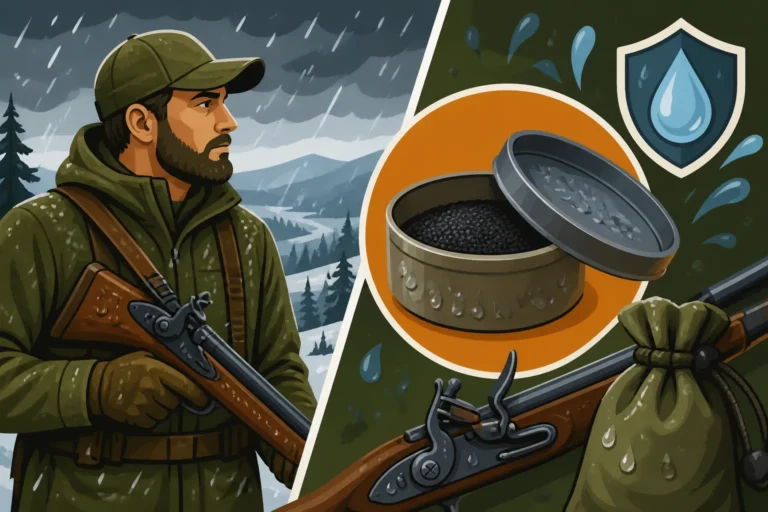
West Virginia weather can be unpredictable. You might start your hunt under sunny skies and end it in a drizzling rain or even a wet snow. Hunting in these conditions means your shotgun is going to get wet, muddy, and potentially covered in debris from brush. Proper maintenance isn't just about preserving your firearm; it's about ensuring its reliable operation when that critical moment arrives.
Choose a shotgun that is relatively easy to field strip and clean. Guns with synthetic stocks and blued or treated metal finishes tend to stand up better to moisture and rough handling than fine walnut and highly polished steel. After every hunt, especially in wet conditions, wipe down your gun, clean the bore, and ensure all moving parts are lubricated. Pay special attention to the action and choke tubes, as these areas can collect grime and moisture. A reliable gun is a well-maintained gun, and that reliability is priceless when you're deep in the woods, far from your truck, and a covey of grouse erupts. Consider a quality gun oil and a cleaning kit a non-negotiable part of your upland gear.
Choosing the Right Shotgun for Your West Virginia Hunt
Bringing all these considerations together, selecting the "right" shotgun for West Virginia grouse and woodcock hunting is a personal decision, but there are some guiding principles that can help you make an informed choice. It’s about finding a balance that suits your style, budget, and the specific conditions you’ll face.
Considering Public Land Hunting Pressure
West Virginia boasts an impressive amount of public hunting land, including national forests and numerous Wildlife Management Areas. These areas, while providing incredible access, can also experience hunting pressure, especially on popular weekends. This pressure can make birds even more wary and quick to flush, often at the first hint of an approaching hunter or dog.
When hunting pressured public land, quiet and quick handling become even more important. A pump action, while reliable, can sometimes be noisy to cycle, potentially alerting nearby birds. Semi-automatics or break actions tend to be quieter in operation. The ability to stop, listen, and then quickly shoulder your gun without making undue noise can be a real advantage. Furthermore, on public land, you're more likely to encounter other hunters. Having a lightweight, nimble shotgun for those long walks, perhaps with a helpful navigation app like those found on GoHunt, helps you access less-pressured areas where birds might hold tighter. If you're hunting Opening Weekend Crowds on West Virginia Public Land, being able to move quietly and quickly can make a real difference.
Balancing Cost and Performance
Shotguns range dramatically in price, from a few hundred dollars for a basic pump to several thousand for a high-end break action. It's easy to get caught up in wanting the "best," but remember that the most expensive gun isn't always the "best" for you or for West Virginia grouse and woodcock.
- Entry-Level (Under $700): You can find excellent, reliable pump actions and even some decent semi-automatics in this range. These are workhorse guns that will perform admirably. Brands like Mossberg, Remington (used), Stevens, and some Winchester models offer great value.
- Mid-Range ($700 – $1,500): This is where you start to see more refined semi-automatics (Beretta A300, Franchi Affinity, Browning Maxus) and solid entry-level to mid-tier over/unders (CZ, Stevens, some older Browning or Beretta models). You get better fit and finish, often better balance, and more advanced recoil systems.
- High-End ($1,500+): Here you find premium O/Us (Browning Citori, Beretta 686, Caesar Guerini) and bespoke side-by-sides. These guns often feature exquisite craftsmanship, superior materials, and exceptional balance, but the performance advantage for hitting a grouse at 20 yards is often marginal compared to a well-fitting mid-range gun.
Your personal budget will dictate your options, but prioritize reliability, good fit, and maneuverability over flashy aesthetics. A well-maintained, mid-range 20-gauge semi-auto or over/under that fits you well will serve you wonderfully in West Virginia's grouse woods, often outperforming a much more expensive gun that doesn't feel right in your hands. Investing in a good pair of Boots for Walking West Virginia Ridges might be a better use of funds than the most expensive shotgun on the rack!
Training and Practice for Upland Success
Even the finest shotgun in the world is only as good as the shooter behind it. For the fast, instinctive shooting required for West Virginia grouse and woodcock, consistent practice is not just recommended, it's essential. You need to develop muscle memory and a feel for your gun that allows you to react instantly when a bird flushes.
Clay Shooting for Upland Skills
Clay target shooting, particularly skeet or sporting clays, is invaluable for developing upland hunting skills. These disciplines are designed to simulate the unpredictable flight paths of game birds.
- Skeet: Skeet shooting involves targets crossing in front of you at various angles and distances, mimicking flushing birds. It's excellent for practicing your swing, lead, and quick target acquisition, especially at closer ranges. The "low house" and "high house" throws simulate birds flushing from your left or right, a common scenario when Flushing Grouse Without a Dog.
- Sporting Clays: Often called "golf with a shotgun," sporting clays courses are designed to mimic real-life hunting scenarios, with targets that simulate flushing pheasants, springing teal, or even rabbits bouncing across the ground. This provides a more diverse set of challenges than skeet and is fantastic for developing the judgment and adaptability needed in the field.
The key with clay shooting is not just to hit the targets, but to focus on your form: how you mount the gun, your swing, and your follow-through. Consistent practice will build the confidence and muscle memory needed to react instinctively when a wild bird explodes from cover. Don't just blast away; focus on the fundamentals and visualize the real-world scenario.
Field Practice and Dog Work
Beyond the formal setting of a shooting range, nothing quite prepares you for real upland hunting like time in the actual field. This could involve walking unshot cover, practicing gun mounts, or ideally, working with a trained bird dog.
- Simulated Flushes: Even without a dog or live birds, you can walk through typical grouse and woodcock cover (like that found in Woodcock Hunting West Virginia Alder Runs) with an unloaded gun. Practice shouldering your shotgun quickly at imaginary flushes. Pay attention to how the gun handles, whether it snags on branches, and how quickly you can get your eye to the rib.
- Working with a Dog: If you hunt with a bird dog, field practice is crucial for both you and your canine companion. The dog learns how to work cover, find birds, and hold points, while you learn to anticipate flushes, react to the dog's behavior, and prepare for the shot. Even if the bird gets up and you don't shoot, the act of mounting the gun and following the bird is valuable practice. This synergy between hunter and dog is a beautiful part of upland hunting and hones your instincts in a way that no clay range can fully replicate. Remember, the goal isn't just to hit the bird, but to make a quick, clean, and ethical kill, and that comes from confident, practiced shooting.
Disclaimer
This article is for general informational purposes only and does not constitute professional advice. Laws, prices and regulations vary by location and change over time. Consult a qualified professional for guidance on your specific situation.