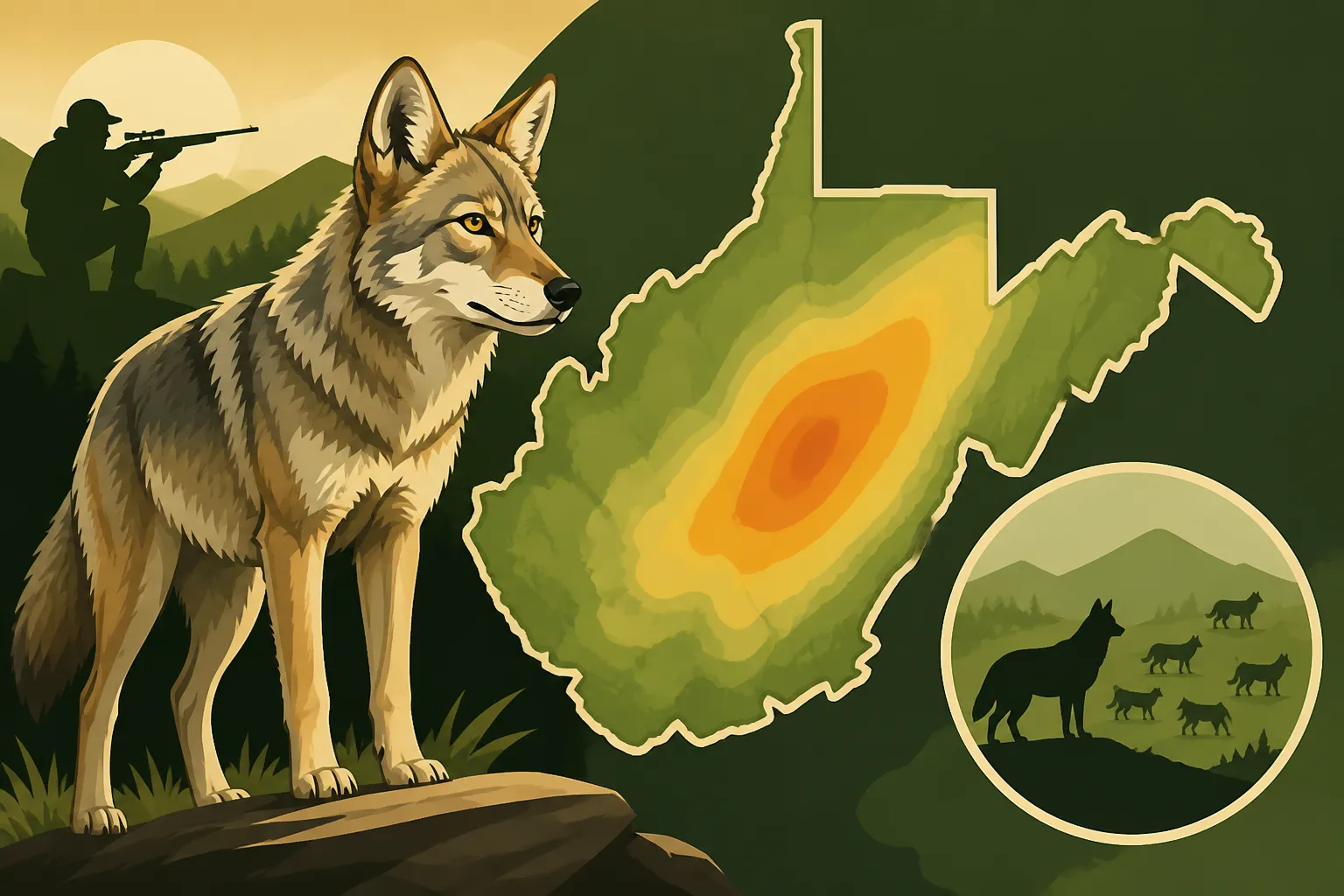
West Virginia Coyote Range and Density
If you've spent any time hunting or even just enjoying the outdoors in West Virginia over the last few decades, you've likely noticed a significant increase in coyote activity. These wily canids have firmly established themselves across our beautiful state, leading to a lot of questions and sometimes frustration for landowners and hunters alike. This guide is here to shed some light on the fascinating, and sometimes challenging, story of the coyote's presence in West Virginia, exploring their journey, where they thrive, and what their robust populations mean for our local ecosystems and hunting pursuits.
The Rise of the Coyote in West Virginia
It’s hard to imagine the West Virginia mountains without coyotes now, but they aren't actually native to our state. Their arrival and subsequent proliferation across the landscape is a relatively recent phenomenon, one that speaks volumes about their adaptability and resilience. For many generations, the mountain state was a place where other large predators roamed, but as those populations dwindled, an ecological void was created, just waiting to be filled.
Historical Expansion Across the State
Coyotes, originally inhabitants of the western plains, began their eastward expansion in the late 19th and early 20th centuries. This wasn't a rapid invasion, but a gradual, persistent push driven by habitat changes, human activity, and the disappearance of their natural competitors. As forests were cleared for agriculture in the Midwest and deer populations rebounded across the East, coyotes found a welcoming new frontier. They truly started making their presence known in West Virginia during the 1970s and 80s, steadily establishing breeding populations in county after county.
Initially, they appeared in the western and northern parts of the state, likely migrating from Ohio and Pennsylvania. From there, they dispersed, adapted to our mountainous terrain, and began to fill almost every available niche. It’s remarkable how quickly they made themselves at home, moving into areas that historically saw nothing but red and gray foxes as top canid predators. Their ability to survive and thrive in such diverse environments, from dense timber to agricultural fields, is a testament to their incredible versatility.
Filling the Niche of Extirpated Predators
Before European settlement, West Virginia's ecosystem had a very different lineup of apex predators. Mountain lions and wolves, creatures that played a crucial role in regulating deer and other large prey populations, once roamed these hills. However, intense hunting pressure and habitat loss led to their extirpation from the state by the early 20th century. This left a significant gap at the top of the food chain, especially concerning large ungulates and smaller game.
The arrival of the coyote perfectly coincided with this ecological vacancy. While not as large or as powerful as a wolf or mountain lion, coyotes are incredibly effective opportunistic predators. They filled this vacant niche, exerting a new level of predation pressure on deer, particularly fawns, and other wildlife. This shift has had ripple effects throughout the ecosystem, altering prey behavior and even impacting populations of smaller predators like foxes. Their success highlights the dynamic nature of our wild places, always adapting and evolving even in the face of human influence.
Current Range and Distribution in West Virginia
Walk into almost any corner of West Virginia today, from the Eastern Panhandle to the Ohio River Valley, and you're likely to encounter a coyote or at least their sign. They are truly ubiquitous now, a common thread woven into the fabric of our diverse landscapes. However, their numbers and the types of environments they inhabit can vary quite a bit depending on where you are in the state.
From Farmlands to Forested Mountains
Coyotes are incredibly adaptable, a trait that has allowed them to colonize a vast array of habitats across West Virginia. In the more agricultural regions, like the rolling hills of the Ohio River Valley or the farmlands of the Eastern Panhandle, coyotes thrive in areas with a mix of open fields for hunting and dense woodlots or brushy fencerows for cover. Here, they'll target rodents, rabbits, and even livestock, which unfortunately can lead to West Virginia Coyote Attacks on Livestock. These open areas provide excellent hunting grounds, and the proximity to human settlements often means abundant food sources, whether from garbage or easy prey.
Move into the rugged, heavily forested mountains of the Monongahela National Forest or the deeper Allegheny Highlands, and you'll still find them, though perhaps in slightly different densities. Here, they adapt to hunting in dense timber, often utilizing old logging roads and creek bottoms. Their diet shifts more towards deer fawns, wild turkeys, and forest rodents. The steep terrain and thick cover can make them harder to spot, but their howls echoing through the hollows are a tell-tale sign of their presence. I’ve seen coyote tracks on some of the highest, most remote ridges, proving there's almost nowhere they won't go in search of a meal.
Regional Hotbeds and Sparse Areas
While coyotes are found statewide, certain regions tend to have higher densities than others. The central and western portions of West Virginia, particularly areas with a good mix of forest and agricultural land, often report significant coyote activity. Counties with a healthy balance of deer, turkey, and small game populations, alongside plenty of cover, seem to be hotbeds. Farmers in these areas are often acutely aware of their presence due to livestock concerns.
On the other hand, extremely high-elevation, dense wilderness areas, while not devoid of coyotes, might have slightly lower densities compared to the mixed-use landscapes. Similarly, some of the most heavily fragmented suburban areas, while offering food, might not provide enough undisturbed cover for them to truly flourish in the same numbers. However, they are still present, often moving through green spaces and drainage ditches, demonstrating their capacity to adapt even to urban fringes. Using tools like GoHunt can help you visualize habitat types and identify potential coyote strongholds by examining aerial maps before you ever set foot in the woods. This kind of detailed scouting, even for something like understanding West Virginia Coyote Range and Density can be incredibly insightful.
Understanding Coyote Density: What Influences Their Numbers
Understanding where coyotes are is one thing, but knowing why their numbers are high or low in certain spots requires a deeper dive. Coyote populations are incredibly responsive to their environment, and a few key factors play a huge role in determining how many of these adaptable predators can thrive in a given area. It’s a complex dance between food, habitat, and human interaction.
Food Availability and Prey Abundance
The most significant factor influencing coyote density is undoubtedly food. Coyotes are opportunistic feeders, meaning they will eat almost anything readily available. In West Virginia, this primarily translates to a diet rich in small mammals like mice, voles, rabbits, and squirrels. When these populations are booming, coyote numbers tend to follow suit. But their diet also includes significant amounts of deer, particularly fawns, making them a natural predator that can impact West Virginia Fawn Survival Rates. An area with a robust West Virginia Deer Population Estimate often means a steady supply of fawns during the spring, which is a critical food source for breeding coyotes and their pups.
Beyond wild game, coyotes are not above scavenging or preying on domestic animals if the opportunity arises. Areas near farms with poultry, sheep, or even unprotected house pets can support higher coyote densities due to the ease of access to food. Unfortunately, this can lead to conflicts, highlighting the need for vigilance from landowners. When resources are plentiful, coyotes can reproduce more successfully, and their pups have a higher survival rate, leading to a bump in the local population. Conversely, a poor prey base due to harsh winters or disease can lead to a dip in coyote numbers.
Habitat Diversity and Cover
Just as important as food is the availability of suitable habitat and cover. Coyotes need places to den, raise their young, and escape from human detection or severe weather. This is why mixed landscapes often support higher densities. Areas with a mosaic of open fields, brushy edges, and dense timber provide the best of both worlds: open ground for efficient hunting and thickets for bedding and security. Fencerows, abandoned farmsteads, large drainage ditches, and thick laurel or rhododendron patches in the mountains are all prime coyote real estate.
In contrast, extremely large, unbroken tracts of mature forest, while home to some coyotes, might not support the same densities as areas with more edge habitat. Similarly, heavily urbanized areas lack the extensive cover coyotes prefer, though they can certainly survive in smaller, fragmented green spaces. The ideal habitat provides a buffet of food sources combined with ample places to hide, raise a family, and travel undetected. Knowing how to read the landscape for these features, perhaps while Scouting West Virginia Public Land Before Season, can give you a real edge in predicting where these animals might be.
Impact of Human Activity and Hunting Pressure
Humans have a complex relationship with coyotes, and our activities directly influence their populations. Hunting and trapping, while not typically a means to eradicate coyotes due to their incredible reproductive capacity, can certainly influence local densities and behavior. In areas with consistent Predator Hunting in West Virginia, coyotes might become more nocturnal or wary, making them harder to find. However, coyotes have an amazing compensatory reproduction strategy; when their numbers are reduced, they often respond by having larger litters and higher pup survival rates, making it difficult to significantly depress a statewide population.
Changes in land use also play a role. Residential development can push coyotes out of some areas, but fragmented suburban environments with plenty of brush and easy food can also attract them. Farmers’ efforts to protect livestock can also impact local coyote movements. On the flip side, less fragmented habitat and an abundance of prey due to conservation efforts (like healthy deer herds) can lead to an increase in coyote numbers. Understanding this intricate balance is key to appreciating their tenacious presence in West Virginia.
Identifying Coyote Sign and Activity
Knowing that coyotes are widespread is one thing, but being able to detect their presence in your specific hunting area or property is crucial for hunters and landowners alike. Coyotes leave behind plenty of clues, if you know what to look for. Being able to read these signs can tell you not only that they're around, but also roughly how many, what they're eating, and even their travel patterns.
Tracks, Scat, and Other Physical Evidence
The most common physical evidence of coyotes is their tracks and scat. Coyote tracks are typically oval-shaped, with four pads visible and distinct claw marks, usually narrower and more elongated than a domestic dog's track of similar size. Their stride is usually straight and purposeful, often appearing like a dog that is trotting. Look for these tracks along old logging roads, creek bottoms, power lines, and even muddy trails in agricultural fields. If you’re utilizing a mapping tool like GoHunt, you can identify these linear features and focus your scouting efforts there.
Scat, or droppings, is another clear indicator. Coyote scat often contains hair, bone fragments, and sometimes even berry seeds, reflecting their varied diet. It's usually rope-like, tapered at the ends, and can range in size depending on the animal's age and diet. You'll often find scat on prominent locations like rocks, logs, or trail intersections, as coyotes use it for territorial marking. Other signs include den sites, which are often inconspicuous burrows in dense cover, or "kills," where you might find the remains of a deer fawn or turkey. Keep an eye out for these subtle hints; they tell a story of the landscape.
Vocalizations and Behavioral Patterns
Beyond physical signs, coyotes are incredibly vocal animals, and their calls are often the first way many people realize they are present. Their calls are a distinctive mix of yips, howls, and barks, often starting with a solitary howl that quickly turns into a chorus of multiple animals. These vocalizations serve various purposes, including territorial defense, locating pack members, and celebrating a kill. If you hear a distant chorus at dusk or dawn, you can be pretty sure there's a coyote presence nearby. In fact, learning to mimic these calls can be an effective strategy for Coyote Calling in West Virginia Farm Country or even Predator Calling West Virginia Ridgelines.
Observing their behavioral patterns, though more challenging, can also provide insight. Coyotes are often crepuscular or nocturnal, meaning they are most active during dawn, dusk, and nighttime. This is especially true in areas with higher human activity or hunting pressure. Using trail cameras can be an excellent way to capture their movements without disturbing them, revealing their preferred travel corridors, hunting grounds, and even pack dynamics. Understanding their patterns is key, especially if you're interested in strategies like Night Hunting Rules for West Virginia Coyotes.
Implications for West Virginia Wildlife and Hunters
The widespread presence and robust populations of coyotes in West Virginia have had, and continue to have, significant implications for both our native wildlife and the hunting community. It’s a dynamic situation that requires ongoing observation and management considerations, impacting everything from deer herds to other furbearers.
Predation on Deer and Turkey Populations
One of the most talked-about impacts of coyotes is their role as a predator of white-tailed deer. While adult, healthy deer are generally too large and agile for a single coyote to take down, fawns are incredibly vulnerable. Coyotes are significant contributors to West Virginia Predator Impact on Fawn Recruitment, especially in the spring and early summer when fawns are born. Studies have shown that fawn mortality can be substantial due to coyote predation, which can influence local deer densities, especially in areas with lower overall deer populations or less robust habitats.
Similarly, wild turkeys, particularly nesting hens and poults, are also susceptible to coyote predation. Coyotes are opportunistic and will readily raid turkey nests or snatch young poults. While turkeys have evolved defenses against predators, a high coyote population can add significant pressure. This is a concern for turkey hunters and wildlife managers who are always monitoring West Virginia Turkey Population Trends. It’s not necessarily a catastrophic issue, as deer and turkey populations are managed to account for predation, but it's certainly a factor in population dynamics that wasn't as prevalent before coyotes became established.
Competition with Other Predators
Coyotes haven't just added a new layer of predation; they've also introduced a new competitor into the state's existing predator guild. They compete directly with other mesopredators like bobcats and foxes for food resources, particularly small game like rabbits and rodents. In some areas, the arrival of coyotes has been linked to declines in red and gray fox populations, as coyotes are larger and more dominant, sometimes even preying on foxes.
While West Virginia's bobcat population has been generally rebounding, the dynamic between them and coyotes is still an area of interest. Bobcats are primarily solitary and often more secretive, potentially allowing them to coexist by utilizing different habitat niches or hunting at different times. However, the presence of coyotes means increased pressure on shared prey bases, forcing all predators to adapt to a more crowded field. This kind of inter-species competition is a natural part of a healthy ecosystem, but it is a relatively new force in West Virginia's predator landscape.
Hunting Opportunities and Management Challenges
For hunters, the widespread presence of coyotes offers unique challenges and opportunities. On one hand, some view coyotes as competition for deer and turkey, leading to a desire to reduce their numbers. On the other hand, coyotes provide a challenging and often exhilarating hunting experience. There is no closed season for coyote hunting in West Virginia, and combined with liberal bag limits, it means year-round hunting for those who wish to pursue them. This makes Predator Hunting in West Virginia a popular pursuit, especially during deer and turkey off-seasons.
From a management perspective, coyotes present a fascinating dilemma. Their adaptability and prolificacy make significant statewide population reduction incredibly difficult, if not impossible, without extreme and often impractical measures. Instead, management often focuses on mitigating conflicts (like livestock depredation) and understanding their impact on game species. Researchers continue to monitor coyote populations and their interactions with other wildlife through methods like West Virginia Wildlife Disease Monitoring to maintain ecological balance. For hunters, it means integrating coyote knowledge into their overall strategy, whether it's managing deer populations or simply enjoying the challenge of hunting one of West Virginia’s most intelligent and resilient animals.
| Coyote Sign Type | Appearance/Description | Common Locations | Notes for Identification |
|---|---|---|---|
| Tracks | Oval-shaped, four pads visible, distinct claw marks; narrower than domestic dog. | Muddy trails, snow, creek banks, logging roads, field edges. | Often a straight, purposeful line of travel. |
| Scat (Droppings) | Rope-like, tapered ends, often containing hair, bone fragments, berries. | Prominent rocks, logs, trail intersections. | Used for territorial marking; size varies. |
| Vocalizations | Mix of yips, barks, and howls; often a solitary howl escalating to a chorus. | Dawn, dusk, night; echoing through hollows and valleys. | Can indicate multiple animals, territorial claims, or a kill. |
| Dens | Inconspicuous burrows, often under brush piles, rocky outcrops, or dense thickets. | Secluded areas with good cover, near food sources. | Most active during pup-rearing season (spring/early summer). |
| Kills/Carries | Remains of prey (deer fawns, rabbits, turkey poults); often partially consumed. | Hunting areas, near den sites, along travel routes. | Look for signs of struggle, drag marks, or scattered fur/feathers. |
Disclaimer
This article is for general informational purposes only and does not constitute professional advice. Laws, prices and regulations vary by location and change over time. Consult a qualified professional for guidance on your specific situation.