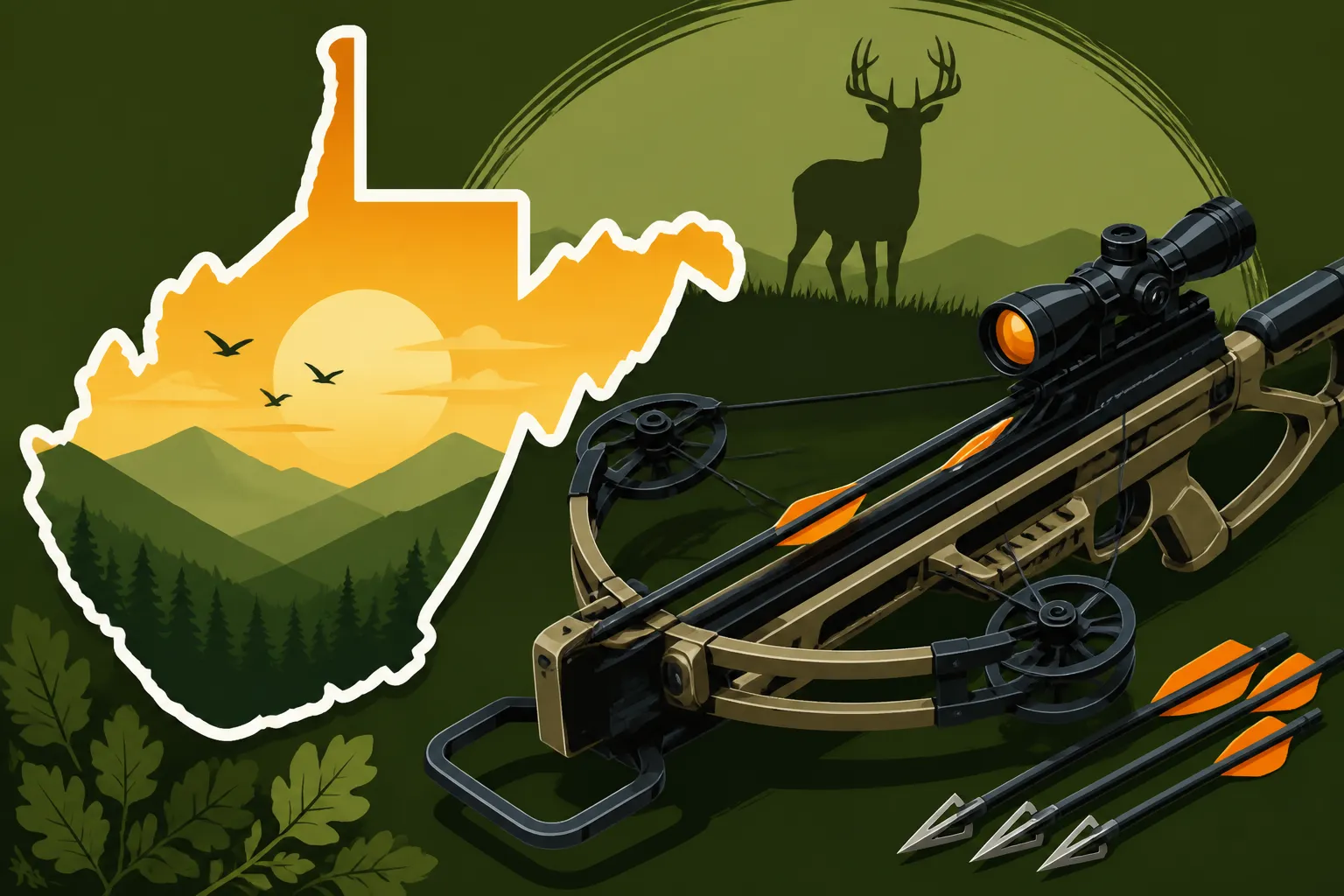
West Virginia Crossbow Equipment Requirements
The world of hunting regulations can feel like navigating a dense thicket, especially when it comes to specific equipment like crossbows. Many hunters, whether seasoned veterans or newcomers, find themselves scratching their heads, wondering if their setup is truly compliant with West Virginia's unique rules. It’s frustrating to invest time and money into gear only to find out you’re on the wrong side of the law. This guide aims to clear up all the confusion around West Virginia’s crossbow equipment requirements, ensuring you hit the woods prepared and legal.
Understanding West Virginia's Crossbow Regulations
Crossbows have become an increasingly popular choice for hunters in West Virginia, offering a unique blend of archery challenge and firearm-like precision. However, their integration into hunting seasons, particularly the traditional archery season, has come with its own set of rules and clarifications over the years. It's not as simple as just grabbing any crossbow and heading out; there are specific parameters you need to be aware of.
Historical Context of Crossbow Legality
For a long time, crossbows were viewed differently than traditional compound or recurve bows. There was a period where their use was restricted to hunters with specific disabilities or during particular seasons. This created a lot of debate among the hunting community, with some advocating for their wider acceptance due to their accessibility and effectiveness, and others concerned about their impact on fair chase and the challenge of archery hunting. Over time, the West Virginia Division of Natural Resources (WVDNR) carefully considered these viewpoints, along with biological data, and gradually expanded crossbow legality. This evolution means that today, crossbows are a fully integrated part of the general archery season, but with distinct regulations that reflect their unique characteristics. Understanding this history helps contextualize why certain rules exist, rather than just knowing what they are. It was a journey from special permit status to general use, reflecting changing attitudes and technology within the hunting world.
General Rules for Crossbow Use During Archery Season
When the leaves start to turn and the chill of autumn settles into the West Virginia hills, bowhunters eagerly await the opening of the long archery season. This season, which typically runs from late September well into December, is also when crossbows can be legally used by all licensed hunters. It's crucial to remember that crossbow use falls under the general archery season framework, which means you're largely bound by the same season dates, bag limits, and general rules as vertical bow hunters. This includes things like the West Virginia Archery and Crossbow Season Dates, and understanding the specific requirements for deer, bear, and turkey. However, specific equipment requirements for crossbows differ slightly from traditional bows. For instance, while you can typically use a crossbow in most counties during the archery season, it's always wise to double-check any county-specific regulations, especially if you're hunting in areas with unique antler restrictions or management zones. For detailed season dates and county breakdowns, resources like the WVDNR hunting guide or the GoHunt app are invaluable for staying current. It's also worth noting that while crossbows are permitted statewide during the general archery season, the West Virginia's Archery-Only Southern Counties maintain special rules that still apply to crossbow hunters, meaning no firearms are allowed at all during deer season in those specific areas.
Specific Equipment Requirements for Crossbows
When you're outfitting yourself with a crossbow for hunting in West Virginia, you can't just pick any model off the shelf and assume it's good to go. The WVDNR has specific requirements to ensure humane kills and maintain ethical hunting standards. These aren't arbitrary rules; they're in place to protect the animals and ensure a responsible hunting experience.
Draw Weight and Minimum Power Requirements
One of the most common questions about crossbows revolves around their power. While there isn't an explicit "draw weight" minimum listed in the regulations in the same way there might be for a compound bow, the emphasis for crossbows is on kinetic energy and penetration. West Virginia regulations stipulate that crossbows used for hunting deer, bear, or turkey must be capable of propelling a bolt with a minimum kinetic energy that ensures a clean, ethical kill. Practically speaking, this means a modern hunting crossbow designed for deer-sized game or larger will almost certainly meet the kinetic energy requirements. Most reputable crossbow manufacturers produce bows that easily exceed these minimums. However, it's your responsibility to ensure your specific crossbow, when paired with the correct bolt and broadhead, delivers sufficient power. Generally, crossbows with a draw weight of 150 lbs or more, launching bolts at 300+ feet per second, are considered adequate for West Virginia whitetails and even black bears. Trying to use an underpowered crossbow, perhaps one designed for target practice or small game, would be both illegal and highly unethical.
Broadhead and Arrow Specifications
The business end of your crossbow setup, the broadhead and arrow (or bolt), is arguably the most critical component for an ethical kill. West Virginia rules are quite clear here. For hunting deer, bear, or turkey, your crossbow bolt must be fitted with a broadhead that has at least two cutting edges and a minimum cutting diameter of 3/4 inch. This rule is designed to ensure maximum tissue damage and hemorrhage, leading to a quick and humane harvest.
When it comes to broadhead types, both fixed-blade and mechanical (expandable) broadheads are legal, provided they meet the minimum cutting diameter and cutting edge requirements.
- Fixed-blade broadheads are known for their robust construction and consistent performance, often preferred in situations where bone might be encountered or for larger, tougher game. They fly with excellent stability and their cutting diameter is present from the moment of impact.
- Mechanical broadheads, on the other hand, are designed to fly with greater aerodynamic efficiency, often mimicking the flight of a field point. Upon impact, their blades deploy, creating a larger cutting diameter. When choosing between these, consider factors like your crossbow's speed, arrow weight, and the type of game you're pursuing. For more in-depth comparisons, you might find valuable information in our guide on Fixed Versus Mechanical Broadheads.
Regardless of the type, ensure your broadheads are razor-sharp. A dull broadhead, no matter how large, will not perform as intended. Your bolts themselves must be specifically designed for crossbow use. While there aren't strict length requirements beyond what functions safely with your crossbow, ensure they are straight, consistently weighted, and fletched properly for stable flight. Integrating a high-quality broadhead is just as important as the crossbow itself for Broadheads for Timber Shots in dense West Virginia woods.
Scopes, Sights, and Accessories
One of the significant advantages of crossbows is the ability to use magnified optics, which can greatly aid in precision shot placement, especially at longer distances or in low light conditions often encountered in the deep hollows of West Virginia. The good news is that pretty much any scope designed for a crossbow is legal in West Virginia. This includes standard fixed or variable power crossbow scopes, red dot sights, and even illuminated reticle scopes.
However, there are still some important caveats:
- Electronic Sights: While illuminated reticles are fine, any sight that projects a beam of light, like a laser, onto the animal is generally prohibited for hunting purposes in West Virginia. The intent is to maintain fair chase and prevent undue advantage.
- Night Vision and Thermal Optics: These are strictly forbidden for hunting deer, bear, or turkey in West Virginia during daylight hunting hours. While night hunting is permitted for certain species like coyotes with special regulations, for major game, your optics must be traditional.
- Rangefinding Capabilities: Integrated rangefinding scopes are becoming more common, and these are typically legal as long as they don't project a laser onto the animal. The ability to quickly range your target is a massive advantage, especially when hunting the varied terrain of the Mountain State. Our resource on Crossbow Scopes for West Virginia Timber Ranges delves deeper into choosing the right optic for challenging environments.
When setting up your scope, ensure it's properly zeroed for your preferred hunting distances. Many crossbow scopes come with multiple aiming points to account for arrow drop at different ranges, which can be incredibly useful. Always practice with your actual hunting broadheads, as they can sometimes fly differently than field points.
Important Considerations for Crossbow Hunters
Beyond the specific equipment requirements, there are broader aspects to consider when hunting with a crossbow in West Virginia. These points touch on ethics, safety, and logistical preparation, all of which contribute to a successful and responsible hunting season.
Safety and Ethical Hunting Practices
Safety should always be your number one priority, whether you’re hunting with a crossbow, a vertical bow, or a firearm. Crossbows, due to their stored energy and mechanical trigger, demand respect. Always treat a crossbow as if it's loaded, keep the safety on until you're ready to shoot, and never point it at anything you don't intend to shoot. When climbing into a tree stand, always use a haul rope to pull up your crossbow after you are safely secured. This is a critical safety measure, just as important as wearing a harness, which is always recommended when using Treestands and Saddles on Public Land.
Ethical hunting practices are equally vital. Crossbows are incredibly accurate, but only at distances you've practiced extensively. Don't push your ethical range. Understand your crossbow's capabilities and, more importantly, your capabilities. Practice shooting from various positions—standing, kneeling, and from your treestand or ground blind—to build muscle memory and confidence. Shot placement is paramount for an ethical kill. Aim for the vital organs (heart/lungs) to ensure a quick and humane harvest. A good resource for understanding anatomy and shot placement for deer can be found through tools like GoHunt, which often includes detailed diagrams and tips. Remember, the goal is always a clean, swift kill that minimizes animal suffering.
Carrying Your Crossbow Afield
Transporting your crossbow safely and legally in West Virginia is another consideration. While unloaded firearms must be openly displayed in vehicles (or cased and not immediately accessible), crossbows fall under archery equipment. This means they should be uncocked when transported in a vehicle, or at least have the safety engaged and a bolt not nocked. Never transport a crossbow with a broadhead-tipped bolt nocked and ready to fire, especially on public roads.
When walking through the woods to your stand or still-hunting, keep the safety engaged until you are in a stationary position and ready for a shot opportunity. It’s a good practice to carry your crossbow so that the broadhead is pointed in a safe direction, away from yourself and others. Many hunters use a sling for easier carrying, especially on long treks across the rugged West Virginia terrain. If you're hunting in a group, communicate your movements and always be aware of where other hunters are. These practices are not just good manners; they're essential for preventing accidents in the field.
Staying Informed and Legal
The hunting landscape can change, with regulations sometimes being updated or clarified between seasons. Staying on top of these changes is a crucial part of being a responsible hunter in West Virginia.
Checking Your County-Specific Rules
While many regulations are statewide, West Virginia does implement county-specific rules for various reasons, including wildlife management goals, population densities, and public safety. For instance, some counties might have specific antler point restrictions, or unique early antlerless seasons. Although these generally apply more to deer management than crossbow equipment directly, it’s always prudent to check the current WVDNR hunting regulations pamphlet or their website before each season. Tools like the GoHunt app are also excellent for cross-referencing these details against your planned hunting area.
Additionally, certain areas within counties, like specific Wildlife Management Areas (WMAs) or federal lands such as the Monongahela National Forest, might have supplementary rules regarding access, camping, or even specific hunting methods. Always check the individual WMA regulations before you head out. These localized rules are usually in place to enhance management or ensure harmonious use of the land, so it’s always worth the extra effort to verify you're in compliance.
License and Stamp Requirements
To legally hunt with a crossbow in West Virginia, you need the appropriate hunting licenses and stamps, just like any other hunter. For residents, this typically involves a Class A hunting license and a West Virginia Deer/Bear/Turkey Stamp. Non-residents have similar requirements, often requiring a more comprehensive non-resident hunting license and applicable stamps.
A common question that arises is: Do You Need a Separate Crossbow Stamp? The answer in West Virginia is generally no. If you possess a valid hunting license and the necessary Deer/Bear/Turkey stamp, you are authorized to use a crossbow during the regular archery season. There isn't a specific "crossbow stamp" required beyond the standard archery/firearm tags. However, it is always a good idea to confirm all current license and stamp requirements through the WVDNR's official channels or by checking the West Virginia Hunting Licenses and What They Cost and West Virginia Deer Season Structure Explained guides, which provide detailed information on what you need to legally participate in the hunt. Always carry proof of your licenses and stamps with you while hunting, whether that's a physical copy or via the official Go Wild West Virginia app on your phone.
Table: West Virginia Crossbow Hunting Quick Reference
Feature/Requirement Description Mesa and the surrounding communities, the Mesa Water Conservation Program offers incentives to save water. We strive to provide opportunities for all residents to conserve water indoors and outdoors, whether you're a homeowner or business owner. Visit our Water Conservation website to learn more about current incentives, upcoming workshops and events, and additional conservation tips. For questions, call 480-644-3067 or email water.conservation@mesaaz.gov.
Please note: This article is intended for informational purposes only and does not constitute legal advice. Always consult the official West Virginia Hunting and Trapping Regulations or contact the WVDNR directly for the most current and accurate information. Laws and regulations can change, and it is the hunter's responsibility to stay informed and compliant.