West Virginia Minimum Rifle Caliber Rules
It can be incredibly frustrating trying to make sense of all the different hunting regulations, especially when it comes to specific equipment like rifle calibers. You want to be ethical, effective, and most importantly, legal, but the jargon can be a real headache. This guide is here to untangle West Virginia's minimum rifle caliber rules, ensuring you step into the woods with confidence and compliance.
Why Caliber Rules Matter So Much for West Virginia Hunters
When you’re out in the beautiful, rugged mountains of West Virginia, every decision you make in the field counts. The rifle caliber you choose isn't just a preference; it's a critical component of responsible hunting. These regulations aren't arbitrary; they’re designed with specific goals in mind.
Ethical Harvesting and Animal Welfare
No hunter wants to cause undue suffering. The primary reason for minimum caliber requirements is to ensure a humane and effective harvest. A bullet that is too small or lacks sufficient energy might wound an animal without delivering a quick, clean kill. This leads to tracking difficulties, potential loss of game, and unnecessary pain for the animal. In West Virginia, where deer can be robust and cover can be incredibly thick, having enough bullet energy to penetrate and dispatch an animal efficiently is paramount. It’s about respecting the animal and making sure that if you pull the trigger, you've given yourself the best chance for a swift outcome.
Safety and Legal Compliance
Beyond ethics, adhering to caliber rules is a matter of safety and legality. The West Virginia Division of Natural Resources (WVDNR) sets these standards to maintain order and public safety within hunting seasons. Using an illegal caliber, even unknowingly, can lead to fines, confiscation of equipment, and loss of hunting privileges. This is why understanding the specific requirements is so important. You can find detailed information on what constitutes a legal firearm for deer hunting, and that includes rifle caliber. It's not just about what you can use, but what you must use to stay on the right side of the law. Nobody wants their hard-earned hunting trip ruined by a preventable legal issue.
Decoding West Virginia's Rifle Caliber Regulations
Alright, let's get down to the nitty-gritty. West Virginia has specific rules for centerfire rifles used to hunt big game, primarily deer and bear. These rules are in place to ensure that hunters are using appropriate firearms for the species and conditions found across the state.
General Deer Hunting Caliber Requirements
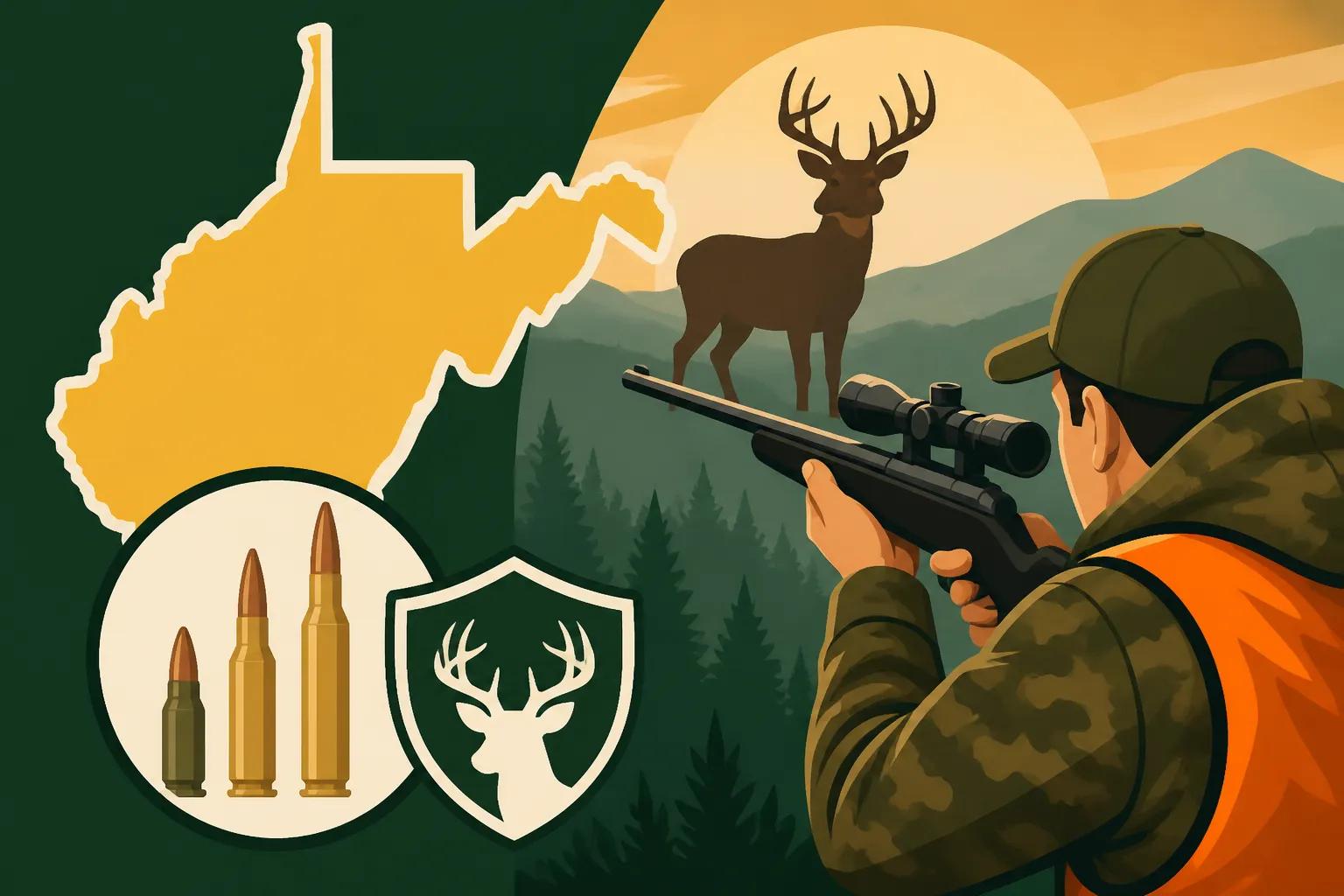
For hunting deer with a centerfire rifle in West Virginia, the regulations are fairly straightforward, but they do have minimums you need to be aware of. Essentially, your rifle must be chambered for a cartridge that fires a bullet with a minimum diameter of .22 caliber. However, it's not just about the bullet diameter; the cartridge itself must meet certain energy requirements, which typically means ruling out most rimfire .22s and some smaller centerfire cartridges that might technically be .22 caliber.
The most common interpretation and practical application of the rule states that any centerfire rifle firing a bullet .22 caliber or larger, with a case length of at least 1.285 inches, is generally acceptable for deer. This means cartridges like the .223 Remington or 5.56 NATO, which technically fit the .22 caliber diameter, are legal as long as they meet the case length requirement. Many hunters opt for larger calibers, but it's good to know where the line is drawn. Always refer to the latest WVDNR regulations directly, as they can sometimes be updated. It's a key part of understanding the state's deer season structure explained, which covers all the dos and don'ts for pursuing whitetails.
Here's a quick reference for general rifle caliber requirements:
| Requirement | Detail |
|---|---|
| Minimum Caliber | .22 caliber (0.224 inches) |
| Cartridge Type | Centerfire |
| Minimum Case Length | 1.285 inches (e.g., .223 Rem, .243 Win, .270 Win, .30-06 Sprg are all legal) |
| Game Species | Deer, Bear |
| Prohibited | Full metal jacket (FMJ) bullets, rimfire cartridges (e.g., .22LR, .17 HMR) |
Special Considerations: Straight-Wall Cartridges and Archery-Only Counties
West Virginia also makes provisions for what are known as "straight-wall cartridges." These are often used in areas where traditional bottlenecked rifle cartridges might be restricted, or for hunters who prefer them. A straight-wall cartridge is one where the cartridge case does not significantly taper from the base to the mouth. For deer hunting, straight-wall rifle cartridges must be at least .35 caliber and no longer than 1.80 inches in case length. Common examples include the .350 Legend, .45-70 Government, .444 Marlin, and even pistol cartridges like the .44 Magnum or .45 Colt when fired from a rifle. These offer plenty of stopping power for deer.
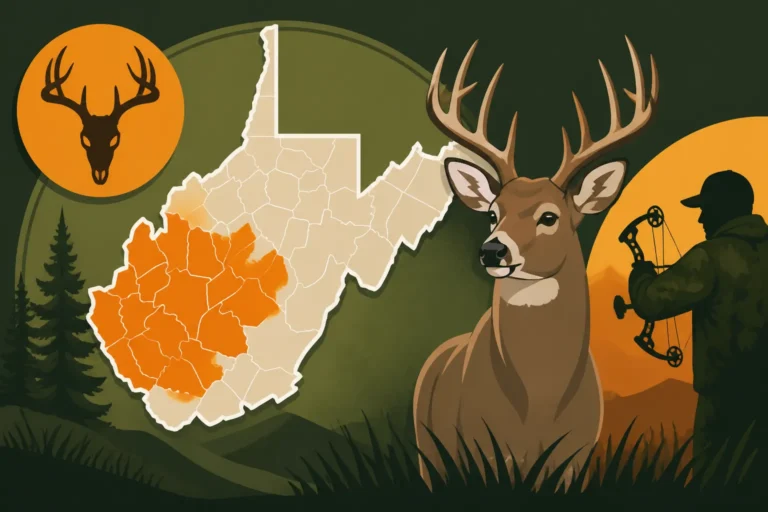
It's crucial to remember that certain counties in West Virginia are designated as archery-only for deer hunting. These include Logan, McDowell, Mingo, and Wyoming counties. In these specific areas, no firearms, including rifles of any caliber (straight-wall or bottleneck), are permitted for deer hunting. If you plan on hunting in these regions, you'll need to leave the rifle at home and grab your bow or crossbow instead. This is a very specific rule that often catches hunters unaware, so always double-check the regulations for the county you intend to hunt. Understanding Why Four Southern Counties Skip Gun Season is vital if you frequent these areas.
Caliber for Other Big Game
While this guide focuses heavily on deer, it's worth noting that the same minimum rifle caliber rules generally apply to black bears in West Virginia. Given the robust nature and impressive size that some West Virginia black bears can reach, using an adequately powered rifle is even more critical for a clean harvest. The calibers that are legal and effective for deer – such as the .270, .30-06, .308, and similar – are also perfectly suitable for bear hunting. Many hunters choose a slightly heavier bullet weight or a larger caliber like a .300 Winchester Magnum when specifically targeting bears, especially if hunting bears over natural mast in the mountains where longer shots might present themselves. For more on this, check out the comprehensive guide on Hunting West Virginia's Liberal Bear Season.
Navigating Exceptions and Specific Scenarios
The general rules cover most situations, but real-world hunting often presents nuances. It's helpful to consider how these regulations might interact with different hunter demographics or land types, and even how bullet choice can influence effectiveness.
Youth Hunting and Apprentice Hunters
West Virginia is very supportive of introducing new hunters to the tradition, and they have provisions for youth and apprentice hunters. However, when it comes to minimum rifle caliber rules, there isn't typically a different set of standards for younger hunters. They must still adhere to the same .22 caliber minimum and case length requirements as adult hunters.
That said, many experienced mentors will advise new or younger hunters to start with calibers that have manageable recoil. A hunter who flinches due to excessive recoil is less likely to make an accurate shot, regardless of the caliber's power. Calibers like the .243 Winchester, 6.5 Creedmoor, or even a .30-30 Winchester are excellent choices that meet the minimum requirements and offer significantly less recoil than, say, a .300 Win Mag. The focus should always be on accuracy and ethical shot placement, which is best achieved when the hunter is comfortable with their firearm. If you're considering a new setup, exploring Rifle Setups for West Virginia Deer Hunting offers excellent starting points.
Private Land vs. Public Land
One common question is whether the minimum rifle caliber rules change depending on if you're hunting on private land or public land in West Virginia. The answer is generally no. The statewide regulations regarding legal firearms and minimum calibers apply uniformly across all lands where hunting is permitted, whether it's your back forty, a friend's farm, or a vast tract of the Monongahela National Forest.
However, local ordinances or specific Wildlife Management Area (WMA) rules might have additional restrictions, so it's always wise to check the particular regulations for your hunting location, especially if you're on a WMA. While the statewide caliber minimums remain, some public lands might have specific rules regarding shot placement setbacks or other safety considerations. Utilizing resources like the GoHunt app can be incredibly helpful for identifying public land boundaries and specific WMA regulations before you head out, helping you stay compliant regardless of where you decide to pursue deer. Always carry proof of your license and be aware of your surroundings, especially when Opening Weekend Crowds on West Virginia Public Land can be heavy.
Understanding Bullet Construction
While caliber is the focus, it’s equally important to consider the type of bullet you're using within that caliber. West Virginia regulations prohibit the use of full metal jacket (FMJ) or military-type ammunition for hunting big game. This is because FMJ bullets are designed for penetration with minimal expansion, which often leads to poor energy transfer and a less humane kill.
For ethical hunting, you should always use expanding bullets, such as soft points (SP), hollow points (HP), or various bonded and partitioned bullets. These are designed to mushroom upon impact, creating a larger wound channel and transferring more energy to the animal, resulting in a quicker, more humane dispatch. So, even if you’re using a perfectly legal .30-06, if you load it with FMJ rounds, you’d be violating hunting regulations and, more importantly, compromising the ethics of your hunt. A good bullet choice, coupled with proper Rifle Ranges Realistic in Steep Terrain, makes all the difference.
Practical Advice for Choosing Your West Virginia Rifle Caliber
Beyond just meeting the minimum legal requirements, choosing the right rifle caliber for West Virginia hunting involves considering the diverse terrain, typical shot distances, and the species you're pursuing. It’s about finding the balance between power, accuracy, and shooter comfort.
Matching Caliber to Terrain and Shot Distance
West Virginia's hunting landscape is incredibly varied, from steep Allegheny ridges and dense laurel thickets to more open Eastern Panhandle farmlands. This terrain directly influences the shots you're likely to encounter. In much of the state's mountainous public land, shots are often relatively close, under 150 yards, due to heavy timber and undulating topography. For these conditions, a .30-30 Winchester, .35 Remington, or any of the straight-wall options like the .350 Legend or .45-70 are perfectly capable and quite popular. They deliver significant knockdown power at these ranges.
However, if you're hunting clear-cuts, gas well pads, or some of the more open agricultural areas in the Eastern Panhandle, you might encounter opportunities for longer shots, perhaps out to 250 or 300 yards. For these scenarios, calibers known for flatter trajectories and better ballistic performance at range, such as the .270 Winchester, .308 Winchester, 6.5 Creedmoor, or .30-06 Springfield, become excellent choices. The key is to match your caliber to the expected shot distances and your comfort level with that range. Remember that Hunting Steep Allegheny Ridges can make long shots difficult to line up safely, while hunting the Eastern Panhandle Farmland Deer might offer more open opportunities.
Popular and Recommended Calibers
Given West Virginia's terrain and deer size, several calibers consistently prove effective and popular among hunters:
-
For Shorter to Medium Ranges (under 200 yards):
- .30-30 Winchester: A classic brush gun, potent within its effective range.
- .350 Legend: A modern straight-wall option, excellent for close to medium range, with light recoil.
- .45-70 Government: A heavy hitter, especially effective at closer ranges, perfect for thick cover.
- .243 Winchester: A lighter recoiling option, great for new hunters or those sensitive to recoil, and still plenty effective for deer.
-
For Medium to Longer Ranges (up to 300+ yards):
- .308 Winchester: Extremely popular, accurate, and versatile, with moderate recoil.
- .270 Winchester: Known for its flat trajectory and effectiveness on deer, a great all-around choice.
- 6.5 Creedmoor: Gained immense popularity for its accuracy, mild recoil, and effectiveness at extended ranges.
- .30-06 Springfield: A time-tested classic, powerful and versatile, capable of taking any big game in North America.
When selecting your rifle, remember that Choosing a Rifle Caliber for West Virginia Deer isn't a one-size-fits-all decision; it depends on your specific hunting style and local conditions. Consider factors like bullet weight, bullet construction, and your ability to accurately place shots with that particular cartridge.
Practice, Practice, Practice
Ultimately, the most powerful caliber in the world is useless if you can't shoot it accurately. Regardless of which legal caliber you choose for your West Virginia hunt, consistent practice is absolutely vital. You should be proficient with your rifle at the typical distances you expect to shoot in the field. This means not just hitting the target, but consistently hitting the vital zone of a deer or bear.
Spend time at the range zeroing a rifle for mixed distances, particularly if you hunt varied terrain. Practice shooting from different positions—offhand, kneeling, using a rest—to simulate real-world hunting scenarios. Understanding how wind and thermals on a steep ridge can affect your shot is also critical. Even dragging a deer off a steep ridge after a successful hunt relies on effective shot placement to make recovery easier. A well-placed shot from a .243 is far more effective and ethical than a poorly placed shot from a .300 Win Mag. Your confidence and proficiency with your chosen rifle will contribute far more to your success and ethical hunting practice than simply chasing the biggest caliber.
Disclaimer
The information provided in this guide is for general informational purposes only and does not constitute legal advice. Hunting regulations can change frequently, and it is the hunter's responsibility to consult the most current West Virginia Division of Natural Resources (WVDNR) hunting regulations prior to any hunting activity. Always confirm specific rules, dates, and requirements directly from the official WVDNR sources.