West Virginia Youth Spring Turkey Weekend
It’s tough to instill a love for the outdoors in our young hunters when the regular season brings so much pressure, competition, and often, long stretches of silence. The West Virginia Youth Spring Turkey Weekend offers a unique, low-pressure opportunity for kids to experience the thrill of turkey hunting, focusing on learning and making memories. This comprehensive guide will walk you through everything you need to know to make your child's first foray into the spring woods a safe, successful, and unforgettable adventure.
Understanding the Youth Spring Turkey Weekend in West Virginia
The Mountain State understands that creating future conservationists starts with getting kids excited about hunting. That’s precisely why the West Virginia Youth Spring Turkey Weekend exists – to give young hunters an exclusive head start before the general season opens to everyone. It's a special time designed purely for the next generation of hunters to enjoy the woods with a dedicated mentor, free from the bustling crowds of opening day. This dedicated weekend provides a calmer, more focused environment where the primary goal isn't just harvesting a bird, but fostering a deep appreciation for wildlife, fair chase, and the traditions we hold dear.
What It Is and Why It Exists
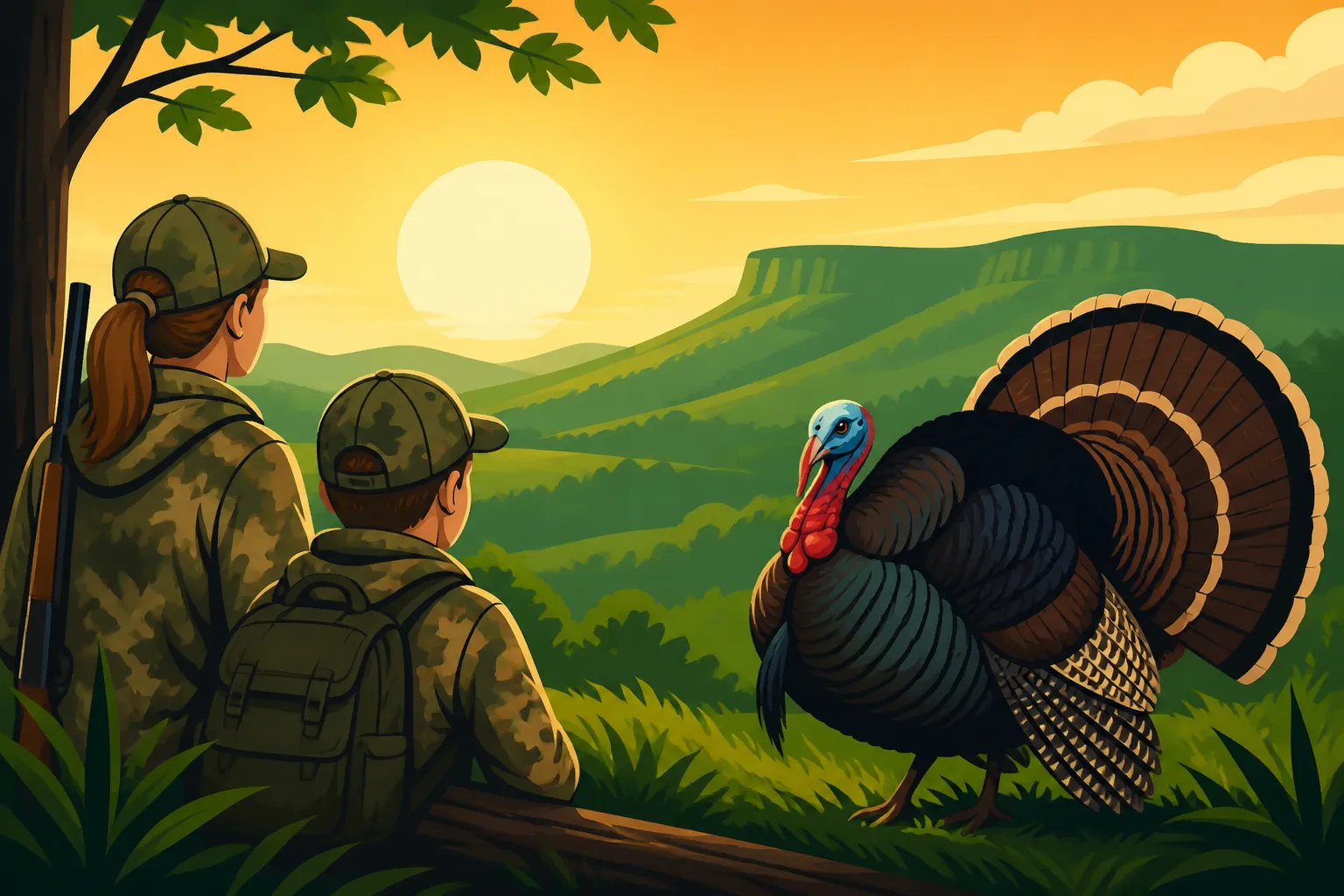
Imagine the spring woods: gobblers sounding off, the trees just starting to bud, and the air crisp with anticipation. Now imagine experiencing that with your child, without the added pressure of dozens of other hunters moving in on every gobble. That's the core idea behind the youth weekend. It's a chance to build skills, teach ethics, and create those priceless memories that last a lifetime, all while the birds are still relatively unpressured. The West Virginia Division of Natural Resources (WVDNR) established this special season to prioritize youth participation and ensure that hunting remains a vital part of our state's heritage. For many families, this early start is crucial, as school schedules, sports, and other commitments can often make it difficult to get into the woods during the general season. It removes some of those barriers, giving kids a prime opportunity.
Specific Dates and Eligibility
The West Virginia Youth Spring Turkey Weekend typically takes place the weekend immediately preceding the statewide general spring turkey season opener. While specific dates can shift slightly year-to-year, it generally falls in mid-April. This gives youth hunters a solid two days to try their luck. Eligibility is straightforward: hunters must be under 18 years of age. They must also possess a valid West Virginia hunting license and a West Virginia turkey stamp. If your young hunter is 15 years old or older, they'll need to have completed their hunter education course. However, for those younger or without certification, the state's generous provisions for West Virginia Mentored Youth Hunting Rules allow them to participate under the direct supervision of a licensed, experienced mentor. It's critical to double-check the current year's exact dates and regulations with the WVDNR before heading afield.
Special Rules and Regulations for Youth Hunters
The rules for the youth weekend mirror the general spring turkey season in many ways, but with specific safeguards for young hunters. For instance, the bag limit is usually one gobbler for the youth weekend, which counts towards the statewide two-gobbler limit for the entire spring season. This means if your child harvests a bird during the youth weekend, they have one more tag left for the general season. Hunting hours are typically from one-half hour before sunrise until 1:00 PM, which is standard for West Virginia spring turkey. Mentors must be at least 18 years old, possess a valid hunting license (but not necessarily a turkey stamp if they are not actively hunting), and remain in direct contact and immediate control of the youth hunter at all times. This "direct control" typically means being close enough to give instructions, ensure safety, and intervene if necessary. Mentors are also prohibited from carrying a firearm during the youth hunt, unless they are also licensed to hunt and are complying with bag limits, or if they possess a valid concealed carry permit. This rule ensures the focus remains squarely on the youth hunter's experience. It’s always a good idea to refresh your memory on the full West Virginia Spring Turkey Season Rules before you step into the woods.
Preparing for Your Youth Hunter's Success
Success during the West Virginia Youth Spring Turkey Weekend isn't solely about bagging a bird; it's about fostering a passion, building confidence, and enjoying the entire experience. Careful preparation is key to achieving this, from understanding where turkeys are likely to be to ensuring your young hunter has the right equipment and knowledge to feel empowered in the field. This isn't just about showing up; it's about setting the stage for a memorable outdoor adventure.
Scouting Before the Season
The most effective way to boost a young hunter's chances and maintain their interest is to put them in a good spot. This means doing your homework before the season arrives. A few weeks out, start hitting the woods. Listen for gobblers on the roost at dawn and dusk. Drive backroads near known turkey habitat, stopping to listen for distant calls. Look for fresh turkey sign: tracks in mud, droppings, and scratch marks where birds have been feeding on the forest floor. Pay attention to areas with good roost trees (often large hardwoods like oaks or sycamores) and open areas nearby where birds might pitch down. Public land areas like the Monongahela National Forest or various Wildlife Management Areas (WMAs) often have good populations. Identifying where turkeys are active can be a game-changer. For public land hunts, consider exploring areas with diverse habitat, such as the edge of clear-cuts or along creek bottoms, which often draw birds. Using mapping tools like GoHunt can help you identify potential roosting areas and travel corridors even before you step foot in the woods, making your scouting trips more efficient.
Gear Essentials for Young Hunters
Having the right gear makes a huge difference in comfort, safety, and ultimately, enjoyment. For a young turkey hunter, a lightweight 20-gauge shotgun is often ideal. It's easier to handle and has less recoil than a 12-gauge, making the shooting experience more pleasant. Ensure the shotgun is properly fitted, perhaps with a youth stock, so they can shoulder it comfortably. Paired with appropriate turkey loads, like modern tungsten-based shotshells, a 20-gauge can be surprisingly effective. Don't forget an ethical choke designed for turkey hunting to ensure a tight pattern. Beyond the shotgun, focus on comfortable, quiet clothing that blends into the spring woods. A good turkey vest with plenty of pockets for calls, shells, and snacks is invaluable. Head-to-toe camouflage is important, but a blaze orange hat or vest (worn by the mentor, or by both during transit to/from the stand, and removed once set up) is crucial for safety, especially if other hunters are around. A comfortable seat cushion or small folding chair can also make those long waits much more bearable for a fidgety youngster. For guidance on specific equipment, our article on Turkey Shotguns and Chokes offers valuable insights.
Calling Strategies for Kids
One of the most exciting parts of turkey hunting is the calling, and it's something kids can absolutely get involved with. Start them with simple calls. A push-button call or a slate call is often easier for small hands and provides immediate gratification with consistent sounds. Mouth calls are excellent once mastered, but can be frustrating for beginners. Teach them basic yelps, clucks, and purrs. The key isn't to be an expert caller, but to make realistic turkey sounds. During the actual hunt, it's usually best for the mentor to do the primary calling, but letting the youth hunter make a few clucks or yelps, especially when birds are distant, can be incredibly engaging. Explain why you're making certain calls and when to be quiet. Sometimes, silence is the most effective call of all, especially when a gobbler is committed and closing the distance. Remember, less is often more with calling, particularly on pressured birds. Learning how to properly Rattling and Grunting in West Virginia can be applied to calling other game too, reinforcing the broader skill of animal communication.
Mentoring Your Young Hunter in the Field
The role of a mentor during the West Virginia Youth Spring Turkey Weekend is paramount. You're not just a guide; you're a teacher, a role model, and a companion. Your focus should be on creating a positive, educational, and safe experience that sparks a lifelong love for hunting and the outdoors, far beyond the outcome of whether a turkey is harvested.
Prioritizing Safety and Enjoyment
Safety must always be the top priority. Before you even step foot in the woods, review gun safety rules rigorously. Teach them the four fundamental rules: treat every gun as if it’s loaded; always point the muzzle in a safe direction; be sure of your target and what’s beyond it; and keep your finger off the trigger until you are ready to shoot. Reinforce this constantly. Ensure your youth hunter understands how their shotgun operates, how to load and unload it safely, and how to carry it securely. During the hunt, emphasize muzzle control and the safe zone of fire.
Beyond safety, focus relentlessly on enjoyment. Hunting with a child is different from hunting solo. Be prepared for shorter attention spans, more questions, and the need for frequent breaks. Bring snacks, drinks, and maybe even a small book or game for quiet moments. Talk about the woods, identify trees and birds, discuss tracks and sign. Celebrate small victories – a gobble heard, a track found, a successful call. It’s about the journey, not just the destination. A good mentor knows when to push, and more importantly, when to simply soak in the moment. The West Virginia Hunter Education Requirements exist for a reason, reinforcing these crucial lessons.
Setting Up for Success
When you hear that gobble or locate birds through scouting, a smart setup is critical. With a young hunter, comfort and concealment are key. If possible, consider using a pop-up ground blind. It provides excellent concealment, allows for some movement without spooking birds, and offers protection from the elements. This is especially helpful for younger kids who might find sitting perfectly still for extended periods challenging. Make sure the blind is brushed in naturally to break up its outline.
If a blind isn't an option, find a large, wide tree that you can both sit against, providing a solid backrest and breaking up your silhouettes. Position yourselves so the youth hunter has a clear, safe shooting lane in the direction you expect the turkey to approach. Decoy placement is another crucial element. Position your decoys (a hen and jake combo is often effective) in an open area about 15-20 yards from your setup, slightly off to the side, so the approaching gobbler focuses on the decoys and not your position. This also ensures a broadside or slightly quartering-away shot for the hunter. Our guide on Decoy Placement for Pressured West Virginia Birds offers more advanced tips that can be adapted for youth hunts.
Handling the Shot and Beyond
The moment of truth can be exhilarating and intense. Prepare your young hunter for it. Talk them through what to expect when a gobbler comes into range. Emphasize patience and waiting for a clean, ethical shot. When the bird is close and the shot is clear, instruct them to take a deep breath, aim for the base of the neck/head, and squeeze the trigger smoothly.
If a shot is taken, immediately confirm if the bird is down. If it runs or flies off, mark the spot where it was last seen and stay put for a few minutes. Turkeys can sometimes flop around a bit before expiring, and rushing in too quickly can push a wounded bird further away. Teach your child how to blood trail effectively, looking for feathers, drops of blood, and disturbed leaves. This is a valuable lesson in responsibility and respect for the game. Once the bird is recovered, guide them through the checking process, which is mandatory in West Virginia. This can often be done easily through the GoHunt app or the WVDNR's online checking system. Celebrate their achievement, take photos, and talk about the experience. Even if no bird is harvested, emphasize the lessons learned and the joy of being in nature.
Navigating Public and Private Land Access
Finding a suitable place to hunt during the West Virginia Youth Spring Turkey Weekend can sometimes feel like a puzzle, but with a bit of planning and understanding of the rules, opportunities abound. Whether you're eyeing expansive public lands or hoping to gain access to a farmer's field, knowing how to approach these situations is key to a successful outing.
Finding Kid-Friendly Hunting Spots on Public Land
West Virginia boasts an incredible amount of public hunting land, offering diverse habitats for spring gobblers. Wildlife Management Areas (WMAs) are often excellent choices. Many WMAs are actively managed for wildlife, including turkeys, and some even have designated parking areas or trails that can make access easier for youth hunters. Examples include McClintic WMA in Mason County, which offers a mix of fields and timber, or Coopers Rock State Forest near Morgantown, with its vast wooded tracts. National Forests, like the Monongahela National Forest, provide even more expansive, albeit sometimes more rugged, opportunities.
When scouting public land, look for areas with less steep terrain, as hauling a young hunter (and potentially a turkey) up and down steep ridges can quickly become exhausting. Focus on areas with a mix of mature timber for roosting and open clearings or logging roads where birds might strut. Remember, public land can see pressure, but during the youth weekend, it’s significantly less crowded than opening day of the general season. Using mapping tools to identify terrain features, water sources, and potential access points is invaluable. For more detailed information on specific locations, checking out Finding a West Virginia WMA Near You can provide excellent starting points.
Gaining Private Land Permission
Hunting private land can offer a more controlled environment and potentially less pressure, which is often ideal for a youth hunter. However, gaining permission requires respect, good manners, and clear communication. Start by identifying potential landowners in areas known for turkey populations. Farmers or those with larger wooded tracts are good candidates. When you approach a landowner, do so in person, well in advance of the season, and be polite and well-groomed.
Clearly explain that you're hoping to take a young hunter out for the youth weekend. Emphasize that you will be respectful of their property, close all gates, pack out all trash, and notify them when you arrive and leave. Offer to help with chores if they're agreeable. Some landowners are more inclined to grant permission for youth hunts, seeing it as an opportunity to mentor the next generation. If they say no, thank them for their time and move on gracefully. A positive first impression can open doors for future seasons, or at least leave a good reputation. Remember, Asking a West Virginia Farmer for Permission can be intimidating, but a respectful approach goes a long way. Services like GoHunt also sometimes offer mapping overlays that can help you identify land ownership, though direct contact is always the best approach for securing permission.
Understanding West Virginia Sunday Hunting Rules
This is a crucial point for any hunter in West Virginia, especially when planning a weekend outing. Historically, Sunday hunting for certain game, like deer, bear, and turkey, was prohibited on public lands and often on private land in many counties. However, West Virginia has gradually expanded Sunday hunting opportunities through county-level decisions.
Currently, Sunday hunting for deer, bear, and turkey is permitted on private lands in all 55 counties. On public lands, Sunday hunting for these species is allowed within those counties that have opted in. This means that while Saturday of the Youth Spring Turkey Weekend will always be an option, whether you can hunt on Sunday depends on the specific county and whether you are on public or private land. It is imperative to verify the Sunday hunting regulations for the specific county you plan to hunt in, especially if you intend to hunt public land. These rules can change, so always consult the current WVDNR regulations summary before assuming anything. This flexibility allows for a more comprehensive weekend experience for youth hunters in many areas.
Common Challenges and Solutions
Hunting with a youth can present a unique set of challenges that seasoned solo hunters might not anticipate. From short attention spans to unpredictable weather, these hurdles can test patience and even sour the experience if not handled properly. However, with a bit of foresight and flexibility, these challenges can be transformed into teaching moments and opportunities to bond.
Dealing with Impatient or Fidgety Young Hunters
Let's be real: sitting perfectly still and silent for hours is tough for most adults, let alone a kid buzzing with energy. Impatience and fidgeting are almost guaranteed. The best solution is prevention and proactive engagement. Firstly, set realistic expectations. Explain that waiting is a huge part of hunting. Secondly, bring distractions for quiet moments. A small, silent toy, a book, or even a pair of compact binoculars for observing squirrels and birds can help. GoHunt often has educational content or articles that can be a great way to talk about other animals or hunting ethics during quiet times.
Breaks are essential. If you haven't heard a gobble in a while or your young hunter is clearly losing steam, suggest a short walk. Stretch legs, grab a snack, or just listen to the sounds of the forest. Sometimes, moving to a new spot, even just a few hundred yards, can reinvigorate their interest. Remember, the goal is to make it fun. If they're uncomfortable or bored, they won't want to come back. Consider hunting shorter periods, perhaps just early morning, rather than trying to sit all day.
Adverse Weather Conditions
West Virginia spring weather is famously unpredictable. You might start the morning with crisp, clear skies, only for it to turn into a cold, driving rain by noon. Adverse weather can quickly sap a young hunter's morale and even pose a safety risk.
Preparation is key here. Always pack layers of clothing, including waterproof outer shells for both you and your youth hunter. Wool or synthetic base layers are far better than cotton for staying warm when wet. A good pair of waterproof boots is non-negotiable. Bring extra gloves, hats, and even a small towel. If the weather turns genuinely nasty – heavy rain, high winds, or a sudden drop in temperature – sometimes the best decision is to call it a day. Explain to your child that safety comes first, and there will always be another hunt. Pushing them through miserable conditions can create negative associations with hunting. Instead, pivot to something warm and fun, like reviewing gear or making hot chocolate. Our article on Cold-Weather Sitting Strategy in the Mountains offers great insights that can be adapted for spring conditions.
Managing Expectations
Perhaps the most important challenge to address is managing expectations, for both the young hunter and the mentor. It's easy to get caught up in the idea of harvesting a big gobbler, but the reality is, many hunts don't end with a bird. Emphasize from the outset that the hunt is about the experience: being in nature, learning about wildlife, and spending time together.
Celebrate every success, no matter how small. Hearing a distant gobble, spotting a deer, finding a cool shed antler (check out Shed Hunting on West Virginia Public Land for tips!), or even just successfully making a turkey call can be a huge win for a young hunter. If the hunt doesn't result in a turkey, talk about what you observed, what you learned, and what you might do differently next time. Reinforce that hunting is a continuous learning process. The "success" of the West Virginia Youth Spring Turkey Weekend isn't measured by the weight of a turkey, but by the weight of the memories and the foundation of a lifelong passion for the outdoors.
| Aspect | West Virginia Youth Spring Turkey Weekend | West Virginia General Spring Turkey Season |
|---|---|---|
| Eligibility (Age) | Under 18 years old | 18 years old and up (or mentored youth) |
| Dates | Weekend preceding general season opener | Mid-April through mid-May (approx. 4 weeks) |
| Bag Limit (Weekend) | 1 gobbler | N/A (Part of overall season limit) |
| Overall Season Limit | 2 gobblers (includes youth weekend bird) | 2 gobblers |
| Mentor Requirements | Required for youth hunters | Optional (for mentored youth only) |
| Mentor Firearm Carry | Limited (often prohibited if not hunting) | Permitted (if licensed hunter) |
| Hunting Pressure | Generally lower | Higher, especially opening week |
| Focus | Youth experience, learning, safety | Harvest, personal hunting |
Disclaimer
Please remember that hunting regulations can change. Always consult the most current West Virginia Division of Natural Resources (WVDNR) hunting regulations guide before planning any hunting trip to ensure you are fully compliant with all state laws and seasons. This guide is for informational purposes only and does not supersede official WVDNR regulations.