Hunting a Steep Hollow Head at First Light
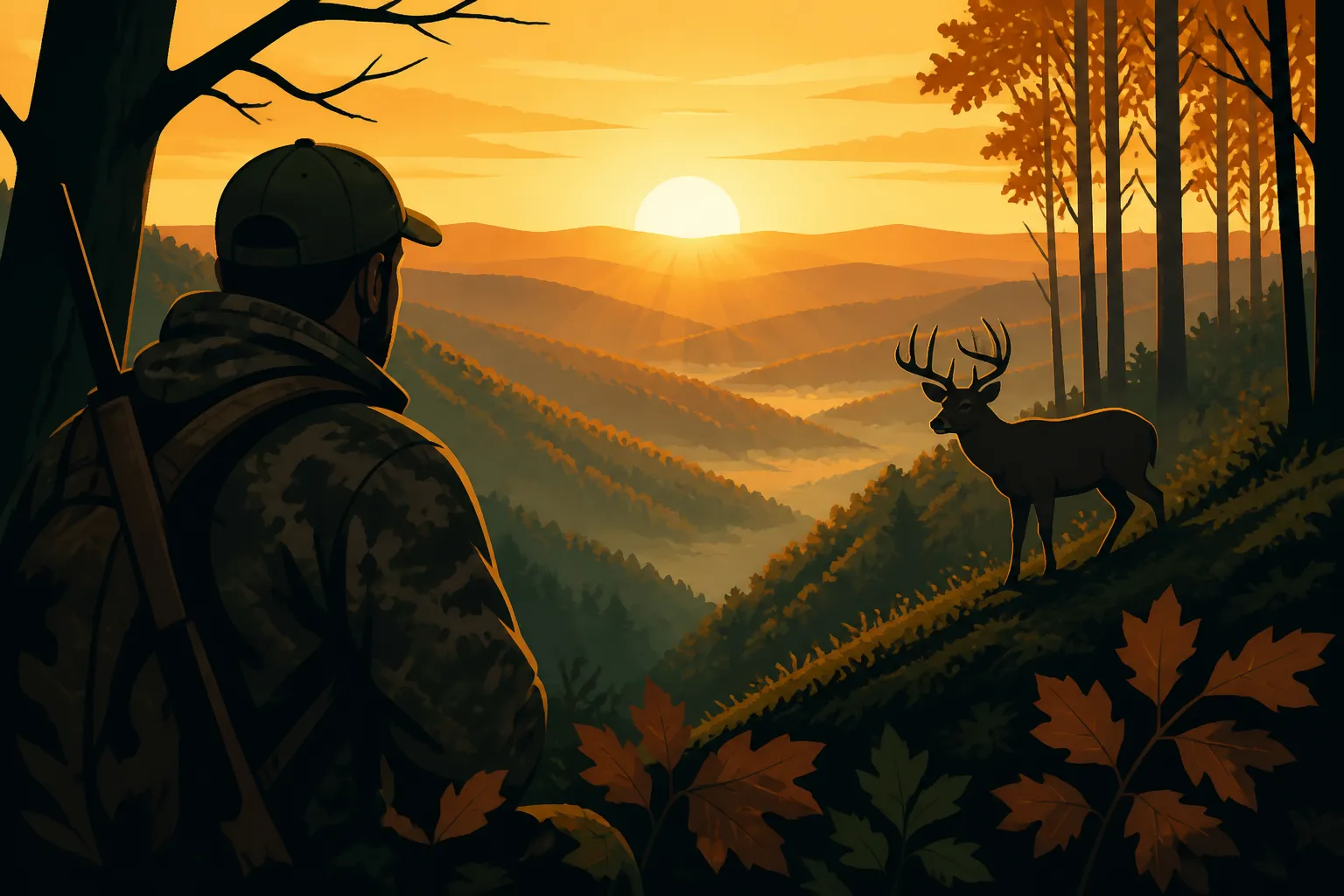
That feeling when you climb a steep West Virginia ridge in the predawn dark, heart thumping, hoping to intercept a deer moving in the faint light of morning – it’s exhilarating, but also incredibly challenging. The steep hollow heads, with their swirling winds and thick cover, can feel like a puzzle only the deer understand. This guide will dive deep into unraveling that puzzle, giving you the practical strategies and detailed insights you need to successfully hunt these challenging areas at first light, turning frustration into a filled tag.
Understanding the Dynamics of a Steep Hollow Head
Hunting the head of a steep hollow at first light is a tactic many overlook, often due to the sheer difficulty of the terrain and the seemingly unpredictable nature of deer movement in such places. However, these specific locations can be absolute goldmines if you understand the natural forces at play and how deer exploit them. It's not just about finding deer; it's about understanding why they are there and how they use the landscape.
Why Deer Use Hollow Heads at First Light
Deer, especially mature bucks, are masters of efficiency and security. A steep hollow head offers both in spades. As night gives way to dawn, several factors converge to make these spots prime deer habitat and travel corridors.
First and foremost are the thermals. In the mountains, as the air cools overnight, heavy cold air sinks down into the hollows. This creates a predictable downward draft, meaning your scent will be carried away from the ridgetops and down into the lowest parts of the hollow. Deer often take advantage of this by bedding just below the ridgetops or on benches within the hollow, relying on the rising morning thermals to carry their scent upward later in the day, but using the dropping thermals of late night and early morning to keep them hidden from anything approaching from above. At first light, as the sun begins to touch the highest points, these thermals will slowly begin to reverse, carrying scent up out of the hollow. This transition period, where the thermals are at their most stable or just beginning to shift, is critical for deer moving out of bedding areas or making their final nocturnal movements before settling in.
Beyond thermals, these hollow heads provide incredible security. The steep topography offers natural barriers, making it harder for predators (including human hunters) to approach undetected. Deer can navigate these steep slopes with surprising ease, using subtle benches, old logging roads, or barely visible trails to move between bedding areas on the slopes and feeding areas lower down or on adjacent ridges. They often stage in these pockets of thick cover, grabbing a last bite before bedding or waiting for full daylight before moving into more open areas. Think of it as a natural funnel that provides both cover and efficiency in their travel.
Finally, hollow heads often contain diverse food sources. From various mast trees – oaks, beeches, hickories – to browse plants that thrive in the varied sun exposure and moisture levels, deer can find a smorgasbord without venturing too far. A north-facing slope might hold moisture longer, fostering different vegetation than a south-facing slope. This localized buffet, combined with the security and thermal advantages, makes these hollow heads invaluable to deer looking to feed, bed, and travel efficiently without exposing themselves. They are often the last places deer feel comfortable exiting their nocturnal movements as light breaks.
The Challenges of Hunting Steep Terrain
Let's be honest: hunting steep West Virginia terrain is not for the faint of heart, and hollow heads amplify these difficulties. The physical exertion alone can be a major hurdle. You'll be climbing, sometimes crawling, up and down incredibly steep slopes, often carrying a stand, pack, and weapon. This isn't a casual stroll to a flat field edge; it's a genuine backcountry hike, and you need to be physically prepared for it. The extra effort often means more sweat, which means more scent – a hunter's worst enemy.
Noise is another huge challenge. Every step you take on dry leaves, every misplaced boot on loose rock, every branch snapped can echo down a hollow, announcing your presence to every deer within earshot. The acoustics of a hollow are tricky; sound travels differently than on open ground, often amplifying and carrying further than you'd expect. Getting in silently before first light requires meticulous planning, slow movement, and often, an early start that pushes your physical limits even further.
Then there's the wind, which can be an absolute nightmare. While thermals offer a general pattern, localized topography, small drainage cuts, and even individual trees can create unpredictable micro-eddies and swirling winds, especially during that critical thermal transition period at first light. You might think the wind is coming from one direction only to have it swirl directly behind you for a few crucial minutes. This makes scent control and stand placement incredibly difficult, forcing you to constantly adapt and stay vigilant. For more insight on how air currents behave, you might find our guide on Wind and Thermals on a Steep Ridge particularly helpful.
Finally, shot angles and visibility can be severely limited. When hunting a steep hollow, deer can appear above you, below you, or directly across from you on an opposing slope. Shooting down into a hollow or up out of one creates very different ballistic and arrow trajectory challenges. Thick undergrowth, rhododendron thickets, and dense timber can obscure clear shooting lanes, turning what might be a perfect shot opportunity on flat ground into a near-impossible one here. Preparing for varied shot opportunities and practicing difficult angles is paramount.
Scouting and Planning for Success
You can't just stumble into a hollow head and expect to find deer. Success in these challenging environments is born from meticulous scouting and strategic planning. This isn't about covering miles; it's about dissecting every acre, understanding how deer use the specific features, and creating a solid plan that accounts for the terrain and the elements.
Pre-Season Scouting for Sign and Travel Routes
Pre-season scouting is non-negotiable for hunting hollow heads. Start by using digital mapping tools like GoHunt (or other similar platforms) to identify potential hollow heads that connect to ridgetops, benches, or feeding areas. Look for saddles, pinch points, or subtle terrain features that could funnel deer. Pay close attention to vegetation changes – areas of dense laurel or rhododendron often indicate bedding cover, while stands of mature oaks suggest feeding zones. Identifying these features on a map can save you a tremendous amount of legwork.
Once on the ground, look for hard sign. In steep country, deer often leave clear trails, especially where the terrain funnels them. Seek out well-worn tracks, rub lines, and especially scrape lines that run along benches or just below ridgetops. These indicate active travel routes and communication hubs. Pay attention to how these lines connect to thicker bedding areas or open feeding sites. Are there old logging roads or faint skidder trails that deer are repurposing for easier travel? These can be goldmines for silent entry and exit, and you can also find good spots for a stand. For a more general approach to finding game, check out our piece on Scouting West Virginia Public Land Before Season.
Don't just look for fresh sign; look for patterns. Do the rub lines consistently lead in a certain direction? Are the scrapes clustered around a particular type of tree or cover? These patterns reveal how deer use the hollow throughout their daily movements. Knowing where Monongahela Forest bucks bed, for instance, requires understanding their use of dense cover near food sources on these slopes. Remember, deer are creatures of habit, and while they might deviate, they generally stick to what's safe and efficient.
Reading Wind and Thermals in Complex Topography
Understanding and predicting wind and thermals in a steep hollow head is probably the most critical and frustrating aspect of this type of hunting. Forget your weather app's general wind direction; in these environments, it's often irrelevant. You need to become a local meteorologist.
At first light, the prevailing thermal pattern is typically a drainage wind or cold air drain. As the sun hasn't yet hit the hollow, the cold, heavy air from the night continues to sink, drawing air down the hollow. This means if you're set up on a bench or mid-slope, your scent will likely be carried down into the bottom of the hollow. This is often the ideal time to intercept deer that are still moving around the upper parts of the hollow or just starting to ease down towards thicker cover or a feed source.
As the sun rises and begins to warm the slopes, especially those facing east or south, the thermals will begin to reverse. The warmed air will start to rise, pulling scent up out of the hollow. This transition period is extremely tricky, as you can experience swirling winds and unpredictable drafts as the cold air tries to sink and the warm air tries to rise simultaneously. This is where subtle terrain features play a huge role. A small side drainage or a rock face can create micro-thermals that throw your scent in unexpected directions. A good resource for understanding these complexities is our article on Wind and Thermals on a Steep Ridge.
To truly read the wind and thermals, you'll need more than just a general understanding. Carry a small bottle of milkweed seeds, a puff bottle, or a wind checker. Use it constantly, every few minutes, to monitor not just direction but also strength and consistency. Observe how it changes as the sun hits different parts of the hollow. You'll often find that the thermals will stabilize for a period, offering a predictable window, before the shift makes things chaotic again. Your goal is to be in position during that stable period and have a plan for when it gets swirly.
First Light Tactics and Setup Strategies
Once you've done your homework and understand the unique challenges of a hollow head, it's time to put a plan into action. The first hour of daylight is often the most critical, and how you approach, set up, and execute your hunt during this window can make all the difference.
Approaching Your Setup Before Dawn
Approaching your stand or ground blind in a steep hollow head before dawn is a stealth operation that demands extreme caution and meticulous planning. Your goal is to be completely set up and motionless at least 30-45 minutes before shooting light, allowing the woods to settle down after your disturbance. This often means leaving your vehicle much earlier than you might for a flatland hunt.
First, plan your entry route meticulously. Use the digital maps to identify ridges or subtle saddles that offer the easiest (or at least quietest) approach, even if it means a slightly longer walk. Avoid walking directly up the main hollow bottom, as your scent will be trapped, and noise amplified. Instead, try to stay on a ridge just above your target area or traverse a bench that keeps you out of the primary drainage. This requires intimate knowledge of the terrain, so don't be afraid to take a few extra minutes during scouting trips to walk these proposed routes in daylight.
Silence is paramount. Wear clothing that won't rustle against branches, and ensure your pack and gear are secured to prevent any clanking. Each step should be deliberate, feeling for loose rocks or crunchy leaves before committing your weight. If you're carrying a treestand or climbing sticks, practice a quiet setup beforehand. Even the slightest metallic clink can carry a long way in the still, predawn air of a hollow. Consider using trekking poles to help with stability and quiet ascension on these steep climbs.
Finally, scent control. Despite your best efforts, you'll sweat climbing these hills. Use scent-eliminating sprays on your clothes, and wear rubber boots to minimize ground scent. Most importantly, plan your entry route so that any scent you do disperse is carried away from where you expect deer to be moving. If the thermals are dropping in the morning, approach from a point that keeps your scent draining away from potential bedding areas higher up the slope. Remember, you're trying to outsmart a deer's nose, which is infinitely better than yours.
Ideal Stand or Ground Blind Placement
Choosing the right spot for your stand or ground blind in a hollow head is a critical decision that hinges on your understanding of deer movement, thermals, and shot angles. There are typically two main strategies, each with its pros and cons.
One common tactic is to set up high, just below the ridgetop or on a prominent bench that overlooks the hollow head. This gives you a vantage point to spot deer moving up from the depths of the hollow or traversing the mid-slopes. When Hanging a Stand on a Steep Allegheny Ridge, consider a tree that offers cover from above and a clear view down. The advantage here is that in the early morning, with thermals dropping, your scent is usually carried down the hollow, away from deer that might be moving along the higher benches. Look for a natural funnel where two small drainages meet or a saddle that deer use to cross from one ridge system to another. Your shot opportunities will often be downhill or across-slope.
Alternatively, you might opt for a setup lower down in the hollow, perhaps where multiple subtle trails converge, or near a specific food source that deer hit before bedding. If using a ground blind, ensure it's well-brushed in and allows for good concealment and shooting lanes, as discussed in Using a Ground Blind on West Virginia Public Land. This strategy can be effective if you anticipate deer bedding very low or traveling up out of a deep ravine. However, you'll need to be extremely mindful of the thermals as they begin to rise later in the morning, as your scent will then be carried up the hollow, potentially alerting deer above you.
Regardless of height, prioritize an escape route for deer that allows you a shot opportunity. Deer almost always have a mental escape route. If they feel pressured in the hollow head, where will they bolt? Can you intercept them along that path? You want to be positioned to catch them before they get to full speed. Also, consider the sun's position. At first light, you don't want the rising sun directly in your eyes, silhouetting you or making it impossible to see approaching deer. Position yourself so the rising sun is either at your back or to your side.
Executing the Hunt During the Critical First Hour
The alarm goes off. You've made your silent, strategic entry. You're settled in your stand or blind, the woods are still waking up, and the first hints of grey are painting the sky. Now what? The first hour of daylight in a steep hollow head is often your best, and sometimes only, chance.
Patience is your absolute best friend. Don't fidget. Don't look at your phone. Immerse yourself in the woods. Your eyes should be constantly scanning, not just for deer, but for movement, flickers of white, or even the subtle twitch of an ear. Deer move ghost-like in these environments, using every bit of cover. Pay particular attention to the benches, folds in the terrain, and the edges of thickets where deer might be staging. A good pair of binoculars is indispensable for picking apart the shadows and identifying deer subtly moving through the dense cover.
Listen intently. The crunch of leaves, the snap of a twig, the rustle of underbrush – these sounds will often give away a deer's presence long before you see it. Because sound travels so uniquely in hollows, try to triangulate where the noise is coming from. Sometimes, a deer might sound closer or further than it actually is. Stay ready, bow in hand or rifle shouldered, anticipating a shot.
As the light slowly improves, keep checking your wind direction with your milkweed or puff bottle. This is the crucial transition period. If the thermals begin to swirl or shift to an unfavorable direction, be ready to adjust your strategy. Sometimes, a slight shift in your body position or even a quiet move to a different branch in your treestand can make all the difference. If a deer appears, wait for the absolute best, ethical shot opportunity. In steep terrain, deer can often stop on an awkward angle, or thick brush might obscure vitals. Don't rush it. Let them work into a clear lane. Our guide on Hunting the West Virginia Rut in November offers general advice, but the principles of patience and shot selection are universal.
Overcoming Common Obstacles
Hunting steep hollow heads is inherently challenging, and you're bound to encounter obstacles. Anticipating these and having strategies to overcome them will not only increase your success but also make your hunts safer and more enjoyable.
Dealing with Unpredictable Thermals
We've talked about how tricky thermals can be in hollows, but what happens when they truly go unpredictable, swirling relentlessly, or shifting against your planned advantage? First, don't panic. Understand that this is a reality of mountain hunting.
One key strategy is to always have a backup plan or two. When scouting, identify not just your primary setup, but also a secondary location a short, quiet move away that might benefit from a different wind direction or a slight thermal shift. For instance, if your primary spot relies on dropping thermals, have a spot prepared that might be better when they start to rise, perhaps on an opposing slope where you'll have an uphill draft. Our piece on Reading a Ridge for Eastern Panhandle Deer can help with general ridge reading, which includes anticipating these thermal shifts.
Scent control becomes even more critical when thermals are misbehaving. This goes beyond sprays; it's about proper clothing layers, showering with scent-free soap, and being mindful of everything you touch. Consider using an ozone generator in a tote for your hunting clothes before you head out. If the wind truly turns sour, and you know deer are upwind, sometimes the best move is to quietly pull out and relocate. It's tough to abandon a spot, but hunting into bad wind is almost always a losing battle. It's better to preserve the area for another day than to blow it out completely.
Lastly, be ready to adapt your movement. If the wind unexpectedly starts blowing your scent uphill towards a known bedding area, and you absolutely cannot relocate, you might need to change your focus. Instead of watching for deer coming down, you might shift your attention to an escape route or a different travel lane that still provides a shot opportunity with the current wind. It requires quick thinking and a deep understanding of the deer's potential next moves.
Recovering a Deer from Steep, Thick Cover
You've made a great shot, and the deer is down. Congratulations! Now comes another monumental challenge in a steep hollow head: recovery. This isn't like tracking a deer across a flat field.
First, mark the exact spot of the shot and the deer's last visible location. Use a bright piece of flagging tape, a natural landmark, or even drop an item from your pack. In steep, thick cover, losing your bearings is incredibly easy, especially as you focus on tracking. Before you even get down from your stand, take mental notes or pictures of the terrain features to guide your initial search.
Tracking a deer through West Virginia leaf litter can be incredibly difficult. Every leaf looks disturbed, and blood can be hard to spot on damp ground or dark soil. Take it slow, one step at a time. Look for bent grass, disturbed leaves, broken twigs, and, of course, blood. If you lose the blood trail, fan out in a grid pattern. Don't just walk in a straight line; deer rarely do that when injured. They will often go downhill and seek the thickest cover available. Our article on Blood Trailing After Dark in West Virginia offers specific techniques that apply equally well in daylight and in tough terrain.
If the deer has gone deep into a steep hollow or a rhododendron thicket, don't hesitate to call for help. Dragging a deer, especially a large buck, up a steep hollow is an exhausting, potentially dangerous task. Recruit a few strong friends. Consider bringing a deer sled or a specialized game bag, like those mentioned in our guide on Packs for a Day on Public Land, to help with extraction. The gutless method (boning out the animal) is often the most practical approach in truly remote, steep country, allowing you to carry the meat out in manageable pieces, rather than trying to drag an entire carcass. For more detailed insights, definitely check out Recovering a Deer From a Steep Hollow.
| Factor | Treestand Setup (Elevated) | Ground Blind Setup (Lower) |
|---|---|---|
| Visibility | Excellent vantage, can see deer above, below, and across slopes. | Limited to immediate surroundings, can be great for close encounters, but less overall view. |
| Scent | Often better for dropping thermals, keeps your scent above deer initially. | More susceptible to swirling or rising thermals, harder to keep scent clear. |
| Stealth | Requires quiet climbing sticks and careful ascent; potential for noise if not proficient. | Quieter entry once built/set up; can be harder to approach undetected if not pre-positioned. |
| Shot Angles | Varied downhill, cross-slope; requires practice for steep angles. | More level to slightly uphill/downhill shots, but often through thicker cover. |
| Mobility | Can be moved, but often takes significant effort on steep ground. | Can be pre-positioned or brushed in, offering less last-minute flexibility. |
| Comfort | Can be comfortable for long sits with proper gear; exposed to elements. | Good concealment, often more protection from wind/rain, but can feel cramped. |
Disclaimer
Hunting is an inherently risky activity. Always prioritize safety, adhere to all West Virginia hunting regulations, and ensure you have the proper licenses and permits before heading afield. The advice provided here is for informational purposes only, and individuals should exercise their own judgment and consult with experts as needed. Be aware of your physical limitations and environmental conditions.