Upland Guns for Highlands Grouse Cover
Hunting ruffed grouse in West Virginia's highlands isn't your average walk in the park; it's a test of grit, patience, and often, quick reflexes when that thunderous flush erupts from dense cover. Many hunters grapple with finding the right firearm that can keep up with these explosive birds in unforgiving terrain. This guide will walk you through the nuances of choosing an upland gun specifically designed to excel in the rugged, brushy, and often steep grouse cover found throughout our beautiful mountain state, helping you make an informed decision that boosts your confidence and success in the field.
The Unique Challenge of West Virginia Grouse Hunting
West Virginia offers some truly spectacular, albeit demanding, grouse hunting opportunities. It's not like strolling through open fields for pheasants or sitting in a blind for ducks. This is up-close, fast-paced action in cover so thick you sometimes wonder if a bird could even fly through it. Understanding this environment is crucial to picking the right tool for the job.
Understanding Highlands Grouse Habitat
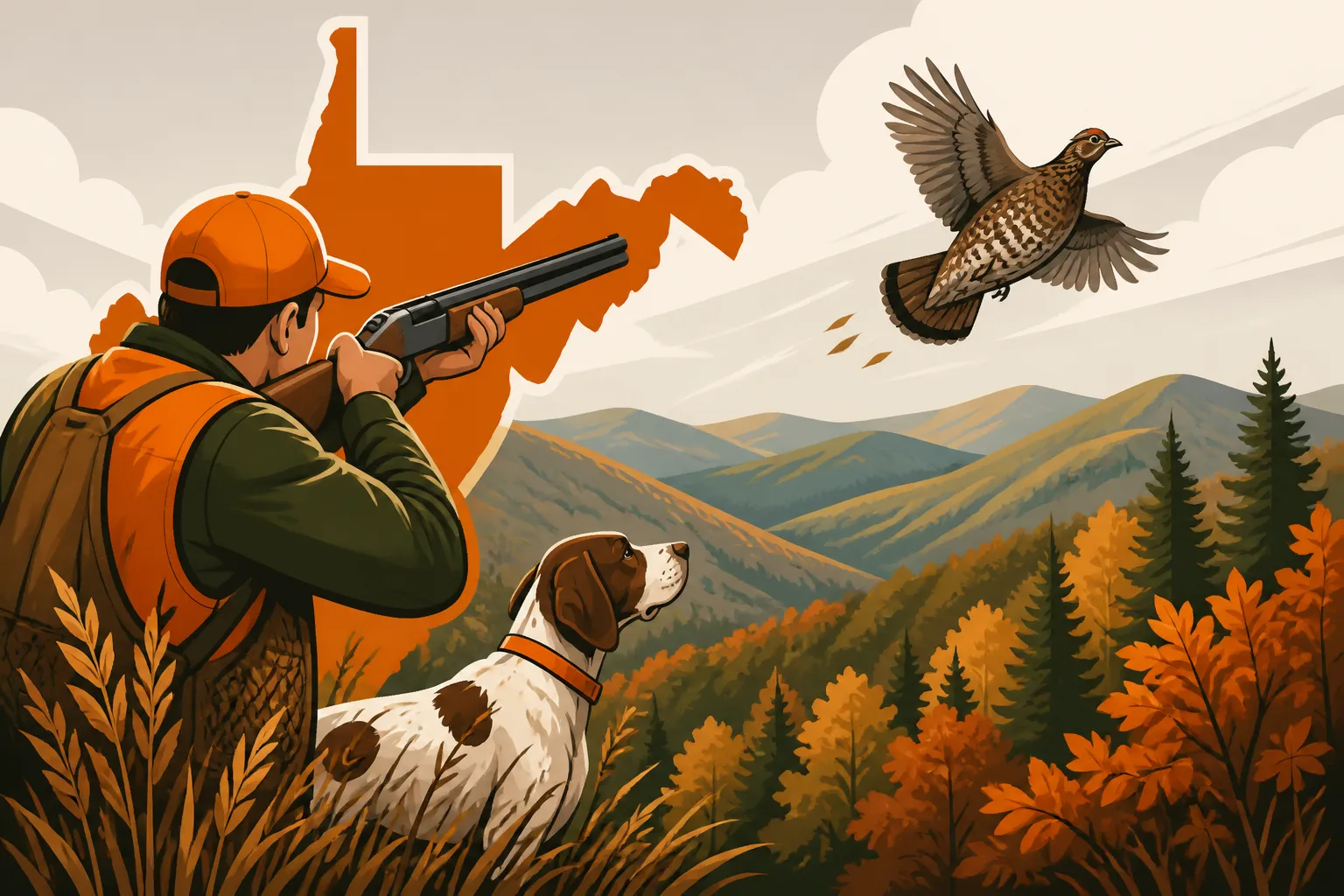
When we talk about West Virginia's highlands grouse habitat, we're picturing a very specific kind of landscape. Think young aspen thickets, dense laurel and rhododendron patches, forgotten clear-cuts that are now choked with brush, and the edges of mature hardwood forests. These areas are often found on steep hillsides, in creek bottoms, or along remote benches in places like the Monongahela National Forest. This isn't manicured land; it's wild, rugged, and requires a certain amount of physical exertion just to navigate. The birds themselves are masters of concealment, preferring to hold tight until you're practically stepping on them. This means your shots are almost always at incredibly close range, often through a latticework of branches and leaves. You're not looking for a gun that can reach out and touch something at 50 yards; you need something that can get on target instantly and deliver a dense pattern at 15-25 yards. For more on these elusive birds, check out Ruffed Grouse in the West Virginia Highlands.
The Nature of the Grouse Flush
The ruffed grouse flush is legendary for a reason. One moment, all is quiet, save for the crunch of leaves underfoot or the distant murmur of a mountain stream. The next, a bird explodes from under your feet or a nearby thicket, sounding like a helicopter taking off right next to your ear. It’s an adrenaline-inducing experience that often leaves even seasoned hunters startled. This isn't a slow, graceful rise; it's an immediate, high-speed dash for cover, often twisting and turning through trees. Your window of opportunity is incredibly short – sometimes just a second or two – before the bird vanishes behind a screen of foliage. This demands a shotgun that is quick to shoulder, points instinctively, and allows for rapid target acquisition. If your gun feels sluggish or unwieldy in hand, you'll be consistently behind the bird, watching it disappear into the next holler. The challenge is amplified if you're Flushing Grouse Without a Dog, where the element of surprise is even more pronounced.
Shotgun Gauges: Balancing Power and Portability
Choosing the right gauge is one of the most debated topics among grouse hunters. Each option has its devotees, and for good reason. What feels right for one hunter might be cumbersome for another, especially in the demanding terrain of West Virginia.
The Classic 12 Gauge in Thick Cover
The 12 gauge is, without a doubt, the most popular shotgun in America, and many West Virginia grouse hunters carry one. Its primary advantage is its versatility: it can throw a heavy pattern of shot, offering a forgiving spread, and it's readily available in nearly any configuration imaginable. For grouse, a 12 gauge loaded with lighter upland loads (like 1 oz or 1 1/8 oz of #7.5 or #8 shot) can be highly effective. The sheer volume of shot it delivers can be an asset when you're shooting through small gaps in thick cover. However, the downside in dense grouse habitat is often its weight and bulk. A heavier 12 gauge, especially a semi-auto or pump with a longer barrel, can feel sluggish to bring to bear quickly. When you're constantly pushing through laurel thickets, climbing steep grades, and navigating blowdowns, every ounce feels like a pound. You might find yourself missing quick opportunities because you couldn't get the gun up and pointed fast enough. While a 12 gauge can certainly get the job done, many grouse hunters opt for something a bit lighter and faster handling to match the pace of the hunt.
The Nimble 20 Gauge for Fast Action
For many dedicated grouse hunters in West Virginia, the 20 gauge is considered the sweet spot. It offers a significant reduction in weight and recoil compared to a 12 gauge, without a drastic compromise in effective pattern density at typical grouse ranges. A well-patterned 20 gauge, especially with modern high-performance loads, can throw enough shot to cleanly bag grouse out to 30 yards, which is often beyond the average shot distance in our dense cover. The lighter overall weight of a 20 gauge shotgun, especially in an over/under or side-by-side configuration, makes it incredibly quick to shoulder and swing. This speed is paramount when a grouse flushes directly underfoot and zips through the trees. You'll appreciate the reduced fatigue at the end of a long day of walking steep ridges and busting brush. For example, a quality 20 gauge double gun provides a very different experience than a heavy 12 gauge semi-auto. We’ve even discussed specific preferences in 20 Gauge Doubles for Aspen Cover. The balance and maneuverability of a 20 gauge often mean more successful shots and a more enjoyable hunting experience in the demanding West Virginia highlands.
The Often-Overlooked 28 Gauge and .410
While less common, the 28 gauge and the .410 bore each have their passionate advocates in the grouse woods. The 28 gauge is truly a gentleman's gun – lightweight, elegant, and with very little recoil. It throws a surprisingly effective pattern for its size, especially with 3/4 oz or 7/8 oz loads of #7.5 or #8 shot. At the close ranges typical for grouse, a 28 gauge can be absolutely devastating, and its feather-light feel makes it a joy to carry and swing all day. The main drawbacks are the higher cost and sometimes limited availability of ammunition, though this has improved.
The .410 bore is the smallest of the shotgun gauges, often considered a specialist's tool or a beginner's gun. For grouse, it demands extreme precision. With its minimal shot payload (typically 1/2 oz or 11/16 oz), you need to be dead on target, and your pattern needs to be exceptionally tight and even. However, a skilled hunter with a well-patterned .410 can certainly harvest grouse, and the guns themselves are incredibly light and fast handling. While it's a challenging choice, for those who truly master it, the .410 offers an unparalleled sense of accomplishment. Hunters considering these smaller gauges should understand the limitations and be realistic about their shooting abilities in the heat of the moment.
Choke and Patterning for Upland Success
Once you've settled on a gauge, the next critical component is your choke. This dictates how your shot spread behaves, and for West Virginia grouse, where shots are generally close and through dense cover, an open choke is usually your best friend.
Open Chokes for Close-Quarters Flushes
Given the explosive, close-range nature of a grouse flush in West Virginia, you absolutely want a more open choke constriction. Think Improved Cylinder (IC) or even Skeet 1 (SK1) in your primary barrel if you're shooting a double gun. For a single-barrel shotgun, an IC choke is generally the most versatile choice. A wider pattern at short range increases your chances of hitting a fast-moving bird as it weaves through the trees. If you're using a double barrel, many hunters will run a Skeet 1 or Improved Cylinder in the first barrel (for that immediate, close flush) and a Light Modified (LM) or Modified (M) in the second barrel for a potential follow-up shot if the bird gets out a bit further. Using a Full or even Modified choke in thick grouse cover is often counterproductive; your pattern will be too tight at 15-20 yards, leading to missed birds or excessive shot damage if you do connect. Remember, the goal is to pepper the bird effectively, not to vaporize it with a dense core of shot. We delve into this further in Choke Choice for Fast Flushes.
The Importance of Patterning Your Shotgun
You can read all the articles and listen to all the advice in the world, but nothing replaces patterning your own shotgun with your chosen ammunition. This is a non-negotiable step for any serious upland hunter. Take your shotgun and a box or two of your preferred shells (e.g., #7.5 or #8 shot) to a shooting range. Set up large paper targets at realistic grouse distances, usually 20 and 30 yards. Shoot several patterns with each choke you plan to use. What you're looking for is an even distribution of shot across the target, free of large holes or clumping.
Every gun and choke combination, even of the same make and model, can pattern slightly differently. A specific brand or load of ammunition might also perform better or worse through your particular barrel. By patterning your gun, you gain confidence in its capabilities and understand exactly what kind of spread you can expect when that grouse thunders out. It’s also important to note if your point of impact aligns with your point of aim. Sometimes, a shotgun will shoot slightly high or low, or off to one side. Knowing this allows you to adjust your aim instinctively in the field.
Shot String and Effective Range
Beyond the static pattern on paper, understanding "shot string" is also beneficial, although harder to visualize. When a load of shot leaves the barrel, it doesn't travel as a perfect, flat circle. Instead, the pellets string out lengthwise in flight, forming an elongated cloud. This effect can actually be an advantage on fast-crossing or quartering birds, as the longer shot string provides a slightly more forgiving "window" in time for the bird to fly into. However, the density of this string diminishes the further the shot travels.
Your "effective range" for grouse, therefore, is the distance at which your choke and shot combination can consistently deliver enough pellets with sufficient energy to cleanly kill a bird. For most open-choked shotguns with upland loads, this is usually between 20-35 yards. Beyond that, pellet density drops, and individual pellet energy might be insufficient for a clean kill, leading to wounded birds. In the close confines of West Virginia grouse cover, you'll rarely be taking shots at the absolute edge of your gun's effective range, but knowing this limit is crucial for ethical hunting.
Barrel Length and Action Type: Speed and Swing
The physical dimensions and mechanics of your shotgun play a huge role in how it handles in the field, especially when you're traversing challenging terrain and need to make quick shots.
Shorter Barrels for Maneuverability
For grouse hunting in West Virginia, shorter barrels are overwhelmingly preferred. A barrel length between 24 and 26 inches is ideal for maneuvering through dense thickets, pushing through laurel tangles, and swinging quickly on birds that flush from tight cover. A longer barrel, say 28 or 30 inches, might offer a smoother swing on open-field shots, but it becomes a hindrance in the grouse woods. It snags on branches, feels unwieldy to bring up fast, and can make you feel constantly off-balance when you're navigating steep terrain. The slight velocity increase or minor improvement in sight radius from a longer barrel is completely negated by the loss of maneuverability in this environment. The goal is to get the gun pointed at the bird and shot off before it disappears, and a shorter barrel facilitates this speed. This is a topic often discussed in Barrel Length for Walking Thick Cover.
Over/Under and Side-by-Side: Traditional Choices
Double-barrel shotguns, both over/under (O/U) and side-by-side (SxS), are classic upland choices and for good reason. Their main advantages are balance and aesthetics. They tend to be inherently well-balanced, swinging smoothly and pointing naturally. The lack of a reciprocating bolt or a pump action means they maintain their balance during firing. For grouse, a key benefit is having two barrels, allowing you to choose different chokes (e.g., IC/LM) for varied shot opportunities. A SxS often feels even quicker to shoulder due to its wider receiver and open sight plane, while an O/U might offer a slightly more precise sight picture. Both designs are typically lighter than semi-autos or pumps, contributing to less fatigue over a long hunting day. They are also incredibly reliable, with fewer moving parts susceptible to dirt or debris. Many hunters feel a deep connection to the tradition of hunting with a fine double gun in the grouse woods.
Semi-Automatics and Pumps in the Grouse Woods
While double guns hold a certain mystique, semi-automatic and pump-action shotguns are also perfectly viable and popular choices for West Virginia grouse. Semi-automatics offer reduced recoil, which can be a comfort after many shots, and the ability to fire three rounds quickly (if allowed by regulations, which typically means a plug for migratory birds). A lightweight semi-auto with a 24-26 inch barrel can be a very effective grouse gun. Pumps are renowned for their rugged reliability and affordability. They can take a beating in the brush and keep working, which is a big plus in demanding conditions. However, both semi-autos and pumps can sometimes feel a bit heavier or less naturally balanced than a double gun. The pump action requires a manual manipulation that, while fast for a practiced shooter, can still slow down follow-up shots compared to a semi-auto or double. Ultimately, personal preference, familiarity, and a gun's fit to the shooter are more important than its action type.
| Shotgun Action Type | Pros for Grouse Hunting | Cons for Grouse Hunting |
|---|---|---|
| Over/Under | Excellent balance, two choke options, fast follow-up shots, traditional feel, reliable. | Often higher cost, limited capacity (2 shots). |
| Side-by-Side | Superb balance, wide sight plane, classic aesthetics, two choke options, fast follow-up shots. | Can be more expensive, limited capacity (2 shots), barrels can get hot. |
| Semi-Automatic | Reduced recoil, fast follow-up shots, often higher capacity (3 shots with plug). | Can be heavier, can be more complex to clean, some models can be finicky with light loads. |
| Pump-Action | Extremely reliable, durable, affordable, good capacity (3 shots with plug). | Requires manual action for follow-up shots (can interrupt swing), often heavier than doubles. |
Shot Shells and Lead vs. Non-Toxic Requirements
The ammunition you choose is just as important as the gun itself. Getting the right shot size and understanding local regulations will ensure you're both effective and compliant.
Choosing the Right Shot Size
For ruffed grouse, the vast majority of hunters opt for smaller shot sizes. Number 7.5 or 8 shot are the most popular choices. These smaller pellets create a denser pattern, increasing the likelihood of hitting a small, fast-moving bird. They also carry sufficient energy to cleanly kill a grouse at typical upland ranges without over-penetrating or causing excessive meat damage. Some hunters might use #6 shot, especially later in the season when foliage is thinner and shots might be a bit longer, but for the tight cover of West Virginia, #7.5 or #8 is generally preferred. The specific load (e.g., 1 oz, 1 1/8 oz in 12 gauge, or 7/8 oz, 1 oz in 20 gauge) will also influence pattern density and recoil. Experiment with different brands and loads when patterning your gun to find what works best for you and your shotgun. You can find more specific advice on this in Shot Size for Grouse and Woodcock.
Lead Versus Non-Toxic Zones
This is a critical point that every hunter needs to be aware of. While most upland hunting across private lands in West Virginia still permits lead shot, there are specific areas where non-toxic shot is required. This is primarily in waterfowl hunting areas, but sometimes extends to certain public lands or Wildlife Management Areas (WMAs) depending on specific rules designed to protect sensitive ecosystems. Always check the current West Virginia hunting regulations booklet or the WVDNR website before heading out to a new area. It’s your responsibility as a hunter to know and follow these rules. If you find yourself in a non-toxic zone, steel shot, bismuth, or tungsten-matrix loads are viable alternatives. Steel shot is typically lighter and performs differently than lead, so you might need to use a size or two larger (e.g., #6 steel instead of #7.5 lead) to achieve similar downrange energy and pattern density. Always pattern your gun with non-toxic loads if you plan to use them.
Carrying Enough Ammo
In the grouse woods, you're not typically burning through boxes of shells like you might at a clay range. Shots are fewer and far between, though intense. However, it's wise to carry enough ammunition for a full day of hunting. A typical vest or shell belt usually holds 25-50 rounds, which is more than sufficient for even the busiest grouse day. What's more important than sheer quantity is how you carry it. You want shells readily accessible but secure. A good upland vest with large, easy-to-access shell pockets is invaluable. You don't want to be fumbling for more shells when a second bird flushes unexpectedly from the same thicket, a scenario that happens more often than you'd think. Consider a vest with dedicated compartments that keep different shot sizes or lead/non-toxic shells separate if you plan on hunting in varied areas. Good gear for this is discussed in Upland Vests With Water Capacity.
Fit, Feel, and Field Durability
Beyond the technical specifications, how a shotgun feels in your hands and how it stands up to the rigors of West Virginia's wilderness are paramount to your success and enjoyment.
The Importance of Shotgun Fit
A shotgun that fits you properly is a game-changer, especially for the instinctive, fast shooting required for grouse. "Fit" refers to how well the gun's dimensions (length of pull, drop at comb, cast) align with your body. When you mount the gun to your shoulder, your eye should naturally align with the rib or sighting plane without having to crane your neck or adjust your head. If the stock is too long, it will be slow to shoulder. Too short, and you'll feel more recoil and potentially struggle with consistent head placement. If the comb is too high or low, your eye won't be in line with the barrel, causing you to shoot high or low.
While a custom stock fitting can be expensive, most shooters can benefit from trying different factory models or making minor adjustments. Even adding a thicker recoil pad can adjust the length of pull. Spend time mounting the gun at home, ensuring it comes up smoothly and consistently to your shoulder and cheek. A gun that fits you well will feel like an extension of your body, allowing you to focus on the bird, not the mechanics of holding the gun. This is absolutely crucial for connecting with those fleeting grouse.
Durability Against West Virginia's Elements
West Virginia's hunting conditions can be tough on gear. You'll encounter rain, sleet, snow, mud, thorny brush, and countless bumps and scrapes. Your upland gun needs to be able to take it. A delicate, highly polished blued finish might look beautiful, but it will quickly show the wear and tear of a season in the thickets. Synthetic stocks and matte finishes are often more practical for hard-core grouse hunting, as they resist scratches and moisture far better than wood and gloss finishes.
Consider the internal mechanisms too. Simple, robust actions are less prone to issues when exposed to dirt, debris, or moisture. While you should always perform regular maintenance, a durable gun will minimize worries about functionality when you're deep in a remote holler. Brands known for their reliability in adverse conditions are often favored by serious upland hunters. The kind of ruggedness you need for hunting on public land, like Monongahela National Forest Hunting, means your equipment must be able to withstand the elements.
Maintenance for Longevity
Even the most durable shotgun requires proper care and maintenance to ensure its longevity and reliable performance. After every hunt, especially in wet or muddy conditions, take the time to clean your gun. This doesn't necessarily mean a full breakdown and deep clean every time, but at least wipe down the exterior, run a bore snake through the barrel, and check for any moisture in critical areas. A light coat of oil on metal surfaces will prevent rust. Pay attention to the action and trigger group, ensuring they are free of debris.
If your gun gets thoroughly soaked, it's essential to disassemble it more completely, dry all parts, and apply appropriate lubricants. Storing your gun in a climate-controlled environment, preferably in a soft case or gun sock to prevent scratches, will protect it from humidity fluctuations that can damage wood stocks or promote rust. A well-maintained shotgun will not only perform better but will also retain its value and be a reliable companion for many seasons to come. Using resources like GoHunt to research cleaning products and maintenance guides can be a great way to stay informed and keep your shotgun in top shape. You want your gun ready for action for years to come, whether you're chasing grouse or pursuing Squirrel and Small Game Hunting in West Virginia.
Disclaimer
This article is for general informational purposes only and does not constitute professional advice. Laws, prices and regulations vary by location and change over time. Consult a qualified professional for guidance on your specific situation.