Broadheads for Timber Shots
Oh, the age-old debate among West Virginia bowhunters: which broadhead reigns supreme when you're tucked into the dense, unforgiving timber that makes our mountains so legendary? It's a real head-scratcher, isn't it? You’re staring at a thick oak stand, maybe a tangle of rhododendron, and you know any shot you get is going to be up close and personal, likely threading a needle through branches. This guide is all about helping you cut through the marketing jargon and choose the right broadhead that will perform flawlessly when that moment of truth arrives in our wild West Virginia woods.
Understanding West Virginia's Timber Challenges for Bowhunters
West Virginia isn't known for wide-open spaces when you're deer or bear hunting with a bow. We're talking about deep hollows, steep ridges covered in mature hardwoods, and dense pockets of mountain laurel that swallow light and sound. These environments present unique challenges that absolutely influence your broadhead choice.
The Reality of Close-Range Shots
Let's be honest, how many times have you set up a treestand in a prime looking spot, only to realize the shooting lanes are narrower than a mountain goat trail? That’s West Virginia bowhunting in a nutshell. Whether you’re Treestand Setups in Monongahela National Forest or creeping along a logging road on a still-hunt, most shots you get will be well within 30 yards, and often much closer. I've had bucks practically rub my stand legs before offering a shot. This isn't your open-field western hunt where you're flinging arrows 50, 60, or 70 yards.
This close-quarters reality means penetration is paramount. You're not relying on high-velocity, long-range ballistics; you're relying on a sharp blade and your bow's kinetic energy to punch through hide, muscle, and potentially bone at relatively short distances. A broadhead that doesn't fly perfectly true or can't hold an edge through a bit of shoulder blade simply won't cut it (pun intended) when a prime buck steps out at 15 yards. You need confidence that your arrow will do its job, even if the shot isn't absolutely perfect.
When you're Bowhunting West Virginia's Long Archery Season, especially in the dense canopy of fall, deer often appear as shadows or flickers through the leaves. They aren't going to stand around posing for you. You need a broadhead that performs without question, giving you the best chance at a quick, ethical harvest when those tight windows open up.
Navigating Brush and Obstacles
It’s inevitable. You draw your bow, target acquired, and just as you release, a stray twig, a hidden sapling, or a laurel branch seems to jump into your arrow's path. These aren’t just minor inconveniences; they can mean the difference between a clean pass-through and a deflecting arrow, leading to a wounded animal and a heartbreaking tracking job.
This is where the broadhead's design and structural integrity become critical. Some broadhead types are more prone to deflection than others, especially if they have a larger profile or delicate blades that can bend or break on impact with brush. A broadhead that can plow through a small twig without losing its trajectory or integrity is a huge advantage in West Virginia's unforgiving cover.
Think about hunting a steep hollow or trying to catch a buck moving through a thick laurel thicket. The deer are constantly weaving, and so are your potential shooting lanes. You’re not just aiming at the deer; you’re aiming through a window of leaves and branches. Having a broadhead designed to handle these minor impacts, maintaining its flight path and blade sharpness, significantly increases your odds of success. It's about minimizing the variables you can't control in an already challenging environment.
Fixed-Blade Broadheads: The Tried and True Workhorses
When you talk about reliability in the timber, fixed-blade broadheads are often the first thing that comes to mind for many seasoned West Virginia bowhunters. They've been around forever for a reason, and their robust nature makes them a favorite for tackling the dense cover we often encounter.
Design and Durability Advantages
Fixed-blade broadheads, at their core, are simple: a sharp tip, a solid ferrule, and two, three, or even four fixed blades. There are no moving parts to worry about, no springs to fail, and no blades to inadvertently deploy. This inherent simplicity translates directly into extreme durability. You can whack these things through a rib, a shoulder blade, and even a small sapling on a poor shot, and they'll often emerge relatively intact, ready to be sharpened and reused (though always inspect for damage!).
The construction of a good fixed-blade broadhead is generally more robust than other types. The blades are typically thicker, and the ferrule (the body of the broadhead that screws into your arrow insert) is often a single, solid piece of machined metal. This strength means they're less likely to bend, break, or deform on impact, especially when encountering bone or the tough hide of a big West Virginia black bear. Their "cut-on-contact" tips or strong chisel points are designed to initiate penetration immediately upon impact, which is a huge advantage in situations where kinetic energy might be marginal or shot angle isn't perfect.
Many hunters swear by fixed blades for these very reasons when facing the challenges of Hunting Steep Allegheny Ridges or the heavy timber of the Monongahela National Forest. They offer peace of mind, knowing that the broadhead is built like a tank and will perform consistently every time.
Penetration and Accuracy Considerations
One of the greatest strengths of a well-designed fixed-blade broadhead is its ability to penetrate. With no energy lost to blade deployment, all of your bow's kinetic energy is focused on driving those sharp blades through the animal. Cut-on-contact designs, in particular, excel here, as their sharpened tip begins cutting immediately, requiring less force to initiate the wound channel. This is especially vital when you consider a tough West Virginia whitetail or a heavy-boned black bear.
However, fixed blades can sometimes be a bit more finicky to get flying perfectly with every bow setup. Unlike a field point, the fixed blades create a small amount of aerodynamic drag, and if your bow isn't perfectly tuned, or if there's any fletching interference, you might see erratic flight. This is why thorough bow tuning – ensuring your arrow rest, nocking point, and cam timing are all spot on – is absolutely essential when shooting fixed blades. Don't just screw them on and assume they'll fly like your field points!
A good practice routine involves shooting your actual broadheads, or at least dedicated broadhead practice points, at various distances to confirm their flight. This process, similar to Zeroing a Rifle for Mixed Distances, ensures that when you're perched in your stand or Saddle Hunting in West Virginia Hardwoods, you have absolute confidence in your arrow's flight path. Companies often provide specific practice tips that perfectly match the flight characteristics of their hunting broadheads, so you don't dull your hunting blades.
Mechanical Broadheads: Pros and Cons in Timber
Mechanical broadheads revolutionized bowhunting for many, promising field-point accuracy and massive wound channels. They certainly have their place, but in the dense timber of West Virginia, their application requires careful consideration.
Deployment and Cutting Diameter Benefits
The primary appeal of mechanical broadheads lies in their "field point accuracy." Because their blades are tucked away during flight, they present a smaller, more aerodynamic profile, theoretically flying just like your practice tips. This can be a huge confidence booster, especially for archers who've struggled to tune fixed blades to fly perfectly. This perceived accuracy makes them very attractive for hunters who prioritize consistent flight characteristics out to longer distances, though in our West Virginia timber, long shots are less common.
Once deployed, mechanical broadheads boast impressive cutting diameters, often significantly larger than most fixed blades. This can create a devastating wound channel, leading to massive blood trails and quicker recoveries. When everything works as it should – a clean shot, full deployment, and sufficient penetration – the results can be incredibly efficient for ethical harvesting. The concept is simple: less resistance in flight, more cutting after impact.
Many hunters using Crossbow Rules During West Virginia Archery Season also gravitate towards mechanicals due to the higher arrow speeds generated by crossbows, which tend to minimize any flight inconsistencies. For those focused purely on creating a large cutting diameter for quick incapacitation, mechanicals are certainly a compelling option, provided the conditions for their optimal performance are met.
Risks of Mechanicals in Heavy Cover
While the benefits sound great on paper, the unique challenges of West Virginia timber can expose the potential weaknesses of mechanical broadheads. The biggest concern is reliable deployment and structural integrity upon impact. If your arrow strikes a branch or heavy bone, there's a risk of the blades not deploying correctly, bending, or even breaking before they can perform their intended function. This can result in a superficial wound, a lost animal, and a truly frustrating experience.
Furthermore, some mechanical designs can deploy prematurely if they brush against heavy cover during the shot. Imagine your arrow flying through thick laurel, and a blade snags and opens mid-flight. That arrow instantly becomes unstable, and its trajectory will be severely compromised. This risk, though mitigated by some newer, more robust designs, is a real concern in areas where shots might require threading the needle through brush. The energy required to deploy the blades also saps some kinetic energy from the arrow, which could be a factor with lower Bow Draw Weight for West Virginia Whitetails or if you're hitting thick bone.
For hunters who prioritize absolute reliability and penetration above all else in challenging timber environments, the mechanical broadhead introduces an extra layer of complexity and potential failure points that must be carefully weighed against its benefits. You have to be confident your setup has enough kinetic energy and that your shots will be clear of obstructions for optimal performance.
Hybrid Broadheads: Seeking the Best of Both Worlds
In an effort to combine the best attributes of both fixed and mechanical designs, hybrid broadheads have emerged on the market. These broadheads aim to offer a balance of reliability, flight accuracy, and generous wound channels, a tantalizing prospect for West Virginia's varied terrain.
Combining Fixed and Mechanical Features
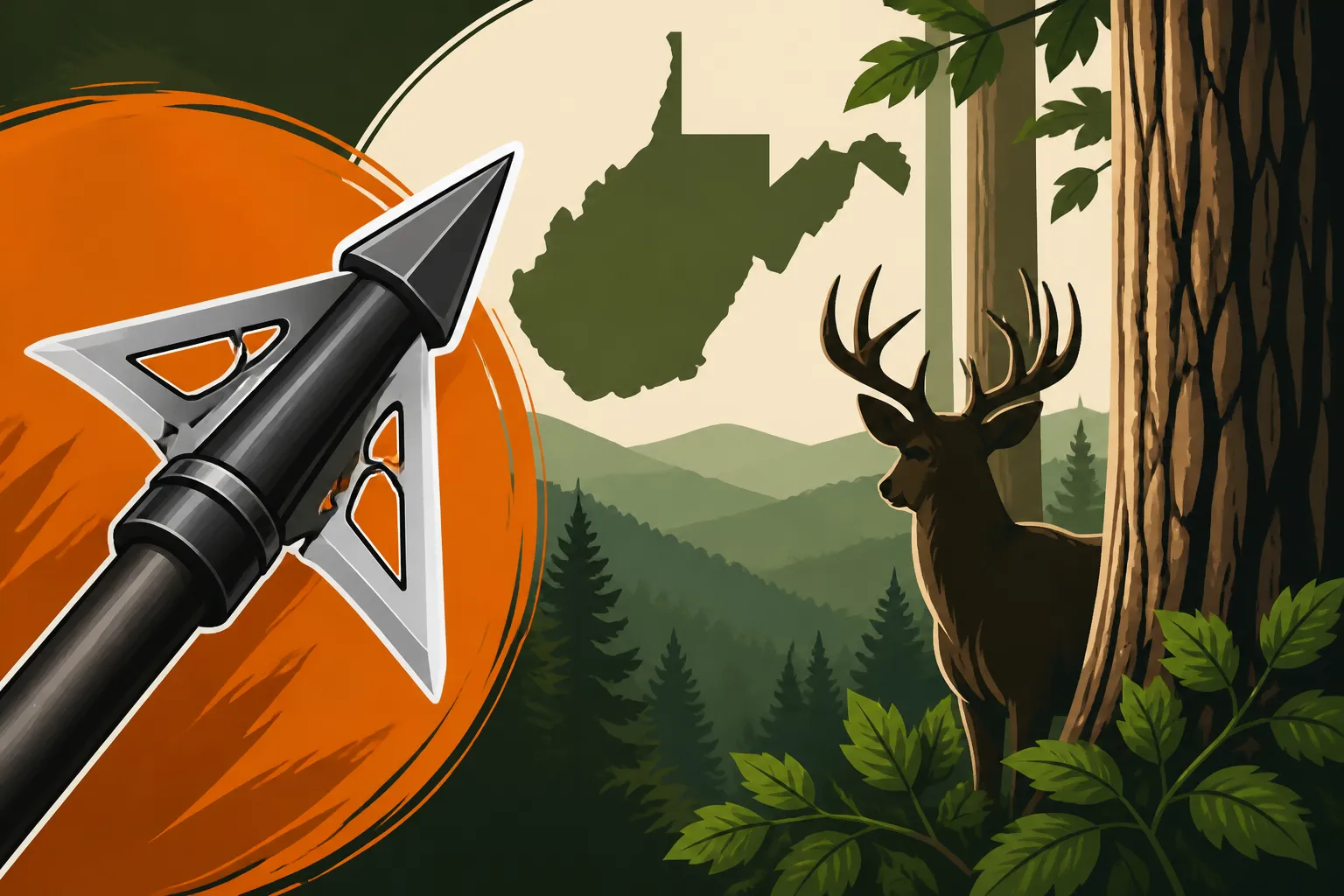
Hybrid broadheads typically feature a primary set of fixed blades, often smaller in profile, combined with a secondary set of mechanical, expandable blades. The idea is that the fixed blades provide immediate, cut-on-contact penetration and robust structural integrity, acting as the primary cutting edge through hide and initial bone. Should the fixed blades encounter resistance, they ensure the arrow continues to penetrate while the expandable blades are designed to deploy after impact, creating a larger wound channel once inside the animal.
This design theoretically mitigates some of the risks associated with pure mechanicals, like non-deployment or premature deployment. The fixed blades act as a failsafe, ensuring some cutting action even if the mechanical blades don't fully open. For a hunter in West Virginia looking for a broadhead that can reliably penetrate a deer or bear in thick cover, but still wants the benefit of a larger cutting diameter, a hybrid might seem like a natural fit.
They offer a compromise, giving you the confidence of a fixed blade’s initial performance while still promising that enhanced blood trail and tissue damage from the mechanical component. This could be particularly appealing if you find yourself hunting a mix of slightly more open timber and incredibly dense thickets, wanting versatility without sacrificing too much performance in either direction.
Evaluating Performance and Complexity
While hybrids aim for the best of both worlds, they also inherently carry some of the trade-offs from both designs. They still have moving parts, albeit often fewer or more protected than some full mechanicals, which means there's still a slight risk of mechanical failure. The complexity of the design can also sometimes lead to higher costs, and the ferrule might not be as indestructible as a solid, single-piece fixed blade. You're adding components, which inherently adds potential points of weakness.
Furthermore, while they are often advertised as flying like field points, any broadhead with a fixed blade component requires good bow tuning to achieve optimal accuracy, similar to a traditional fixed blade. The expandable blades, even if secondary, can still be influenced by subtle inconsistencies in tuning or form. It's crucial not to assume "hybrid" means "no tuning needed." Practice is still king, and you should treat them with the same respect as you would any other hunting broadhead.
For West Virginia timber hunting, the choice to go with a hybrid should come down to how much you value the combined features versus the increased complexity. Are you willing to potentially sacrifice a tiny bit of fixed-blade durability for an increased cutting diameter? Are you confident in your bow's tuning and your shot placement to ensure the mechanical component deploys correctly? These are questions you'll need to answer based on your personal hunting style and confidence in your equipment.
Key Factors for Choosing Broadheads in West Virginia
Beyond the broadhead type, several other critical factors play a huge role in how a broadhead performs in the rugged West Virginia landscape. Overlooking these can undermine even the best broadhead choice.
Matching Broadhead to Bow Setup and Kinetic Energy
Your bow setup is a system, and every component needs to work together, especially when it comes to broadheads and penetration. It’s not just about what kind of broadhead you pick; it's about whether your bow can effectively launch it and deliver the necessary kinetic energy. Bow Draw Weight for West Virginia Whitetails, your draw length, and your arrow's total weight all contribute to your arrow's kinetic energy and momentum. A heavier arrow, for example, will carry more momentum, which is crucial for busting through bone, even at slower speeds.
If you’re shooting a lower poundage bow, say 40-50 lbs, a simpler, durable, cut-on-contact fixed blade might be your best bet to maximize penetration, as mechanicals (especially larger ones) can eat up precious kinetic energy upon deployment. Conversely, a high-poundage setup with a heavy Arrow Weight for Short Shots might offer enough oomph to make almost any broadhead perform well, but you still want efficiency. Programs and resources, perhaps even online tools like those you might find on GoHunt, can help you calculate your kinetic energy and momentum, giving you a better understanding of what your setup can handle. This isn't just theory; it's a practical consideration for clean kills.
Always match your broadhead to your setup's capabilities. Don't fall into the trap of using a broadhead designed for high-energy bows if you're shooting a traditional recurve or a compound at a lower draw weight. The goal is maximum penetration and reliable performance, not just the biggest cutting diameter on the shelf.
Blade Sharpness and Material Quality
This might sound obvious, but it's often overlooked: a dull broadhead is an unethical broadhead. Regardless of whether you choose a fixed, mechanical, or hybrid design, the sharpness of the blades is absolutely paramount. Razor-sharp blades slice through tissue with minimal resistance, maximizing penetration and creating a clean wound channel. A dull blade can push and tear, requiring more energy to penetrate and causing unnecessary suffering.
Beyond initial sharpness, consider the quality of the blade material itself. High-grade stainless steel or carbon steel blades that hold an edge well, even after passing through hide and muscle, are crucial. Some cheaper broadheads use softer steel that dulls quickly or bends on impact, which is completely unacceptable for hunting. Pay attention to the ferrule material as well. A flimsy aluminum ferrule can bend or break, especially on an angled shot or if it encounters bone. Look for robust construction, often made from aircraft-grade aluminum or solid steel, which will stand up to the abuse of West Virginia hunting.
Many fixed blades can be resharpened, which is a big plus for practice and longevity. For mechanicals, you'll often replace the blades, but ensure those replacement blades are just as sharp as the originals. Never go into the woods with anything less than a surgically sharp broadhead. Your ethical responsibility to the animal demands it, and it significantly increases your chances of a quick, clean harvest, even if you’re Calling a West Virginia Gobbler Off the Roost and thinking about turkey broadheads.
Ethical Considerations and Practice
Ultimately, the best broadhead is the one you have practiced with extensively, the one you trust, and the one that flies consistently and accurately from your bow. Our responsibility as hunters is to make the cleanest, most ethical kill possible. This means rigorous practice with your actual hunting broadheads or broadhead-specific practice points. Don’t just shoot field points and assume your broadheads will fly the same.
Shoot from different distances, from a treestand, from your knees, simulating real hunting scenarios. Confirm your Bow Sights for Timber Shots are dialed in for your broadhead choice. Understand how your chosen broadhead performs. Does it fly true at 20 yards, 30 yards, and beyond? Does your bow produce enough energy for it to consistently pass through a block target? Confidence in your gear translates directly into better shot placement under pressure.
Choosing a broadhead for West Virginia timber hunting is a deeply personal decision, influenced by your bow setup, hunting style, and ethical considerations. Whether you lean towards the brute-force reliability of a fixed blade, the large cutting diameter of a mechanical, or the balanced approach of a hybrid, make sure you do your homework and, most importantly, practice, practice, practice. That confidence, combined with a sharp, well-chosen broadhead, is your greatest asset in our wild and wonderful woods, leading to a clean shot and a successful recovery, whether you're targeting a deer or going after Shot Placement on a West Virginia Black Bear.
| Broadhead Type | Durability in Timber | Penetration | Flight Accuracy (Tuned Bow) | Cutting Diameter | Risk of Failure | Ideal Scenarios |
|---|---|---|---|---|---|---|
| Fixed-Blade | Very High | Excellent | High (with tuning) | Moderate | Very Low | Dense cover, heavy bone, bear, lower kinetic energy bows |
| Mechanical | Moderate | Good (if deployed) | High (field point-like) | Large | Moderate (deployment/impact) | More open woods, higher kinetic energy bows, less tuning hassle |
| Hybrid | High | Excellent | High (with tuning) | Large (post-deployment) | Low to Moderate | Mixed cover, wanting fixed reliability with mechanical cutting |
Disclaimer
This article is for general informational purposes only and does not constitute professional advice. Laws, prices and regulations vary by location and change over time. Consult a qualified professional for guidance on your specific situation.