Mineral County CWD Zone Public Ground
Trying to figure out where to hunt in Mineral County, especially with the added layer of Chronic Wasting Disease (CWD) regulations, can feel like you're trying to solve a puzzle with half the pieces missing. The mountains, ridges, and river bottoms here hold some incredible hunting opportunities, but knowing the specific rules for public ground within a CWD zone adds a whole new level of complexity. Many hunters feel overwhelmed by the extra steps and restrictions, worried they might unintentionally break a rule or mishandle a harvest. This guide is going to walk you through exactly what you need to know to successfully hunt public land in Mineral County, focusing on how to navigate those CWD restrictions while still finding great spots and enjoying your time afield.
Understanding Mineral County's CWD Zone and Public Land Base
It's a tough pill to swallow, but CWD is a reality in parts of West Virginia, and Mineral County finds itself right in the thick of it. This means that as hunters, we have an even greater responsibility to understand the landscape, both geographically and regulatory, before we ever step foot in the woods. It's not just about finding deer; it's about being part of the solution to manage this disease.
Mineral County's Position within the CWD Containment Area
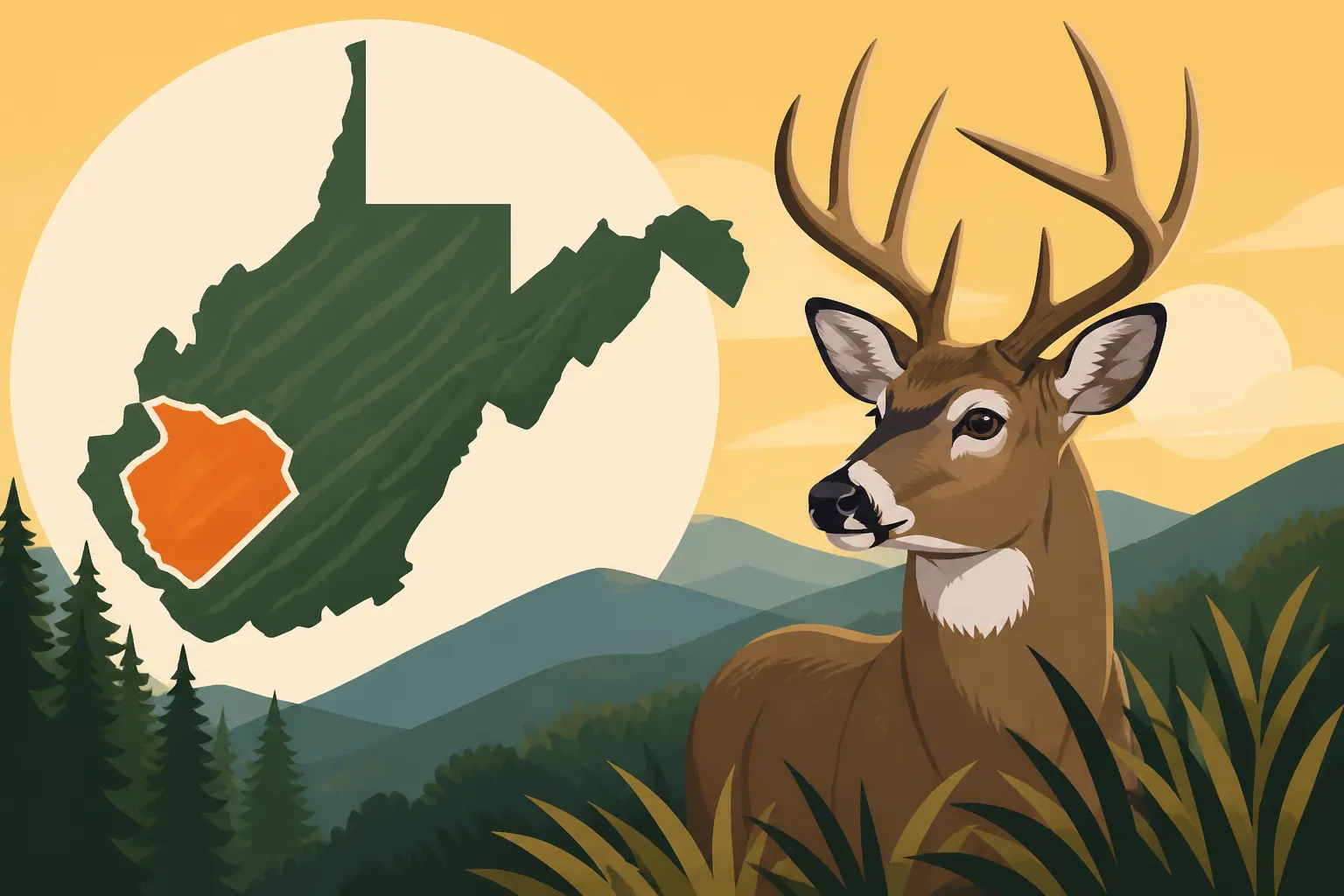
Mineral County is situated firmly within the state's CWD Containment Area. This designation isn't just a label; it carries significant implications for how we hunt, process, and transport deer. For those of us who grew up with simpler rules, these changes can feel burdensome, but they're critical for monitoring and slowing the spread of the disease. The containment area was established because positive cases of CWD were found here and in adjacent counties like Hampshire and Hardy. This means that every deer harvested in Mineral County, whether on private or public land, is subject to specific CWD-related regulations.
It’s crucial to know that CWD isn't uniform across the entire state. There are specific counties where the disease has been detected and thus the stricter rules apply. Mineral County is one of those, making local knowledge and up-to-date information absolutely essential. It’s not enough to know the general West Virginia deer season; you need to be dialed into the specifics for your hunting location. This impacts everything from what parts of a deer you can take home, to mandatory testing periods, and even how you field dress your animal. Understanding West Virginia's Chronic Wasting Disease Counties is a good starting point to grasp the broader picture.
Key Public Hunting Areas in Mineral County
Mineral County might not boast the sheer acreage of public land that some of the more rugged, central mountain counties do, but it still offers some fantastic opportunities for hunters willing to put in the work. These areas often see significant pressure, so smart scouting and flexibility are your best friends.
One of the prominent public land choices is parts of the Sleepy Creek Wildlife Management Area (WMA). While Sleepy Creek primarily lies in Berkeley and Morgan counties, its influence extends westward, and understanding adjacent WMAs is always smart. Closer to Mineral County, you'll find other state-managed lands that offer varied terrain, from rolling woodlands to steeper river breaks along the North Branch of the Potomac River. These WMAs are managed by the West Virginia Division of Natural Resources (WVDNR) for wildlife and public recreation. Each WMA might have slightly different characteristics in terms of habitat, hunting pressure, and access points. Utilizing resources like the WVDNR's online maps or digital mapping tools like onX Hunt can be incredibly helpful for identifying public boundaries, roads, and topography.
Beyond WMAs, there are often smaller tracts of state forest or other public access lands. These can sometimes be overlooked by other hunters, offering a chance for a quieter experience. However, it's paramount to verify boundaries meticulously. Misidentifying public land can lead to trespassing charges, which is a headache no one wants. Always double-check your maps and look for clear signage. Even small woodlots near rural communities can offer surprisingly good hunting, especially if they connect to larger timber blocks. For a general overview of these opportunities, check out Public Hunting Land in West Virginia.
Navigating CWD Regulations While Hunting Public Land
Hunting within a CWD zone adds extra layers of responsibility that go beyond just ethical hunting practices. It's about being a diligent conservationist and following specific protocols designed to help monitor and control this disease. It can be a bit confusing at first, but with a clear understanding, it becomes second nature.
Mandatory Testing and Carcass Restrictions
The most significant change for hunters in Mineral County is the requirement for CWD testing and carcass restrictions. During specific periods, especially during the buck gun and muzzleloader seasons, hunters are often required to submit the heads of harvested deer for CWD testing. This isn't just a suggestion; it's a mandatory part of hunting in these designated zones. The WVDNR sets up sampling stations at various locations, sometimes at WMA offices, local check stations, or even mobile units, to make this process as convenient as possible.
The carcass restrictions are equally important. Generally, you cannot transport certain high-risk parts of a deer – specifically the brain, spinal cord, eyes, and lymphoid tissues – out of the CWD containment area. This means if you harvest a deer in Mineral County, you need to either process it completely within the county (or another CWD county) or leave the restricted parts behind. For many hunters, this might mean a change in their usual processing routine. Instead of bringing a whole deer home to a different county, you might need to bone it out at camp or at a local processor. It’s a bit more work, but it’s essential to prevent the potential spread of CWD to unaffected areas. For more details on these vital rules, refer to West Virginia Carcass Movement Restrictions.
Practical Advice for Compliance on Public Ground
Okay, so what does this all mean when you're actually out there in the woods? It means being prepared and planning ahead. First, always carry a small boning knife and game bags in your pack. If you harvest a deer far from your vehicle, you might opt for the "gutless method" to bone out the meat on the spot, leaving the high-risk carcass parts in the woods where the deer fell. This fulfills the carcass restriction requirements and makes the pack-out much lighter, which is a huge bonus, especially if you're hunting steep terrain.
Second, be aware of where the CWD sampling stations are located and their operating hours. The WVDNR usually publishes this information well in advance of the hunting seasons. Having that knowledge beforehand will save you a lot of stress after a successful hunt. If you use an app like onX Hunt or GoHunt, sometimes WVDNR sampling stations or CWD zone boundaries are marked as layers, which is incredibly useful for on-the-go reference. Make sure your phone is fully charged or carry a portable charger, as cell service can be spotty in some parts of Mineral County. When it comes to knowing precisely Finding a West Virginia CWD Sampling Station, the WVDNR's website is your best friend.
A common frustration is the additional time and effort involved. You’ve just made a great shot, and now you have to think about CWD rules before you even start celebrating. It can feel like a buzzkill. But remember, by complying, you're doing your part for the health of West Virginia's deer herd, and that's something to be proud of.
| CWD Regulation Aspect | Key Rule for Mineral County | Hunter Action Needed |
|---|---|---|
| Testing | Mandatory during specific seasons. | Submit deer head to WVDNR sampling station. |
| Carcass Movement | Brain, spinal cord, eyes, lymph nodes cannot leave CWD zone. | Bone out deer in field, use local processor, or dispose of high-risk parts properly. |
| Processing | Full carcass processing recommended within CWD zone. | Have field dressing tools, game bags, and a plan for bone-out if needed. |
| Information | Regulations subject to change, check WVDNR annually. | Consult WVDNR website, CWD map, and season guides. |
Optimizing Your Hunt in a CWD Environment
Hunting in a CWD zone means being strategic, not just about finding deer, but about making smart choices that align with regulations. Public lands in Mineral County can be challenging due to hunting pressure and topography, but combining solid hunting tactics with CWD compliance is key.
Scouting Strategies for Pressured Public Land
Public land in Mineral County, like much of West Virginia, can see significant pressure, especially during opening weekends. This means your scouting needs to be top-notch. Deer on public land are often nocturnal or move through areas that are less accessible to the average hunter. Start by looking at topo maps and aerial photos long before the season. Apps like onX Hunt are invaluable here, allowing you to identify remote benches, steep draws, and thick cover that other hunters might avoid. Pay close attention to terrain features that create natural funnels or pinch points, like saddles between ridges or narrow strips of timber along a river. Reading Aerial Photos for Eastern Panhandle Deer can give you an edge in identifying these spots.
Pre-season scouting on foot is non-negotiable. Look for fresh sign: rubs, scrapes, tracks, and droppings. In a CWD zone, minimizing human disturbance to deer populations is good practice, so try to scout efficiently. Focus on finding bedding areas, primary travel corridors, and any late-season food sources like acorn flats or lingering browse. Don’t be afraid to walk further than most. Often, the best public land spots are those that require a significant hike, separating you from the road hunters. For a deeper dive into preparation, consider Scouting West Virginia Public Land Before Season. When hunting the county, remember that deer drives are a common tactic, especially if you have a group. If you're hunting alone, focusing on still-hunting or sitting in less-pressured areas might be more effective.
Game Recovery and Processing Considerations
After the shot, game recovery takes on an even greater significance in a CWD zone. You want to recover your animal quickly and efficiently to ensure the meat is handled properly. Carry a reliable headlamp if there's any chance you'll be tracking after dark. West Virginia's terrain can be brutal, with steep hollows and thick rhododendron, making recovery tough.
Once you find your deer, the CWD regulations kick in for processing. If you plan to take meat outside the containment area, you must bone it out. This involves removing all meat from the bone, leaving the spinal column, skull, and other high-risk parts in the field. Having game bags to keep your meat clean during the pack-out is a smart move, especially if you're quartering the animal. Some hunters carry a lightweight tarp or plastic sheeting to lay out meat while boning, helping keep it clean.
If you’re unsure or uncomfortable with field boning, investigate local processors within Mineral County or an adjacent CWD-designated county. They will be familiar with the regulations and can handle the carcass in compliance. For many of us, the convenience of a good local processor is worth the cost, especially after a long day in the woods. Regardless of your method, ensure you report your harvest as required by the WVDNR. This is a critical step in wildlife management and data collection. You can find more information about post-harvest procedures in Field Dressing a Deer in Cold Weather and Butchering a Deer at Camp.
Resources and Responsible Practices for Mineral County Hunters
Being a responsible hunter in Mineral County's CWD zone means leveraging every available tool and actively participating in conservation efforts. It's about being proactive and informed, rather than reactive.
Utilizing Digital Tools for Public Land Navigation
In today's hunting world, digital mapping applications are practically indispensable, especially when navigating public lands and CWD zones. Applications like onX Hunt and GoHunt provide invaluable layers that can display public and private land boundaries, topography, satellite imagery, and even CWD zone overlays if available from the WVDNR. This allows you to visually confirm you're on public ground and to understand if you're within the CWD containment area, even without cell service if you download maps beforehand.
Before heading out, use these tools to identify potential access points, parking areas, and to pre-plan your routes. You can mark waypoints for promising sign, potential stand locations, or even just for your vehicle to ensure you don't get turned around in unfamiliar timber. Many hunters also use these apps to mark CWD sampling stations or local processors. These tools help eliminate guesswork and ensure compliance, reducing the stress associated with hunting in a regulated zone. They truly transform how you approach Scouting West Virginia Public Land Before Season.
Contributing to CWD Management and Data Collection
As hunters, we are often the first line of defense and observation for wildlife health. By actively participating in CWD management, we contribute directly to the health of the deer herd. Submitting deer heads for testing, even if not mandatory for every season or specific tag, provides invaluable data to the WVDNR. This data helps biologists understand the prevalence and spread of the disease, informing future management decisions.
If you notice any deer exhibiting signs of illness, such as extreme emaciation, abnormal behavior, or neurological issues, report it to the WVDNR immediately. Documenting observations with photos and exact locations (via your mapping app, for instance) is incredibly helpful. This kind of active participation shows true stewardship and is a testament to the hunting community's commitment to conservation. It’s not just about filling a tag; it’s about ensuring healthy wildlife populations for future generations to enjoy. The more informed and engaged we are, the better equipped the state is to tackle challenges like CWD.
Disclaimer
This article is for general informational purposes only and does not constitute professional advice. Laws, prices and regulations vary by location and change over time. Consult a qualified professional for guidance on your specific situation.