West Virginia Trespass and Permission Law
One of the trickiest parts of hunting in West Virginia, especially if you're exploring new ground, is figuring out where you can legally be. Nothing sours a hunt faster than realizing you've accidentally crossed onto private property without permission, or worse, having an angry landowner confront you. It’s a huge source of anxiety for many of us, and understanding West Virginia's trespass and permission laws is absolutely essential, not just to stay out of trouble, but to maintain a good relationship between hunters and landowners across our beautiful state. This guide will walk you through the nuances of West Virginia's trespass and permission laws, helping you hunt confidently and ethically.
Understanding West Virginia's Basic Trespass Law for Hunters
West Virginia's trespass laws are designed to protect private property rights, and as hunters, it's our fundamental responsibility to respect those boundaries. This isn't just about avoiding a fine; it's about being a good steward of our hunting heritage and ensuring that landowners continue to feel comfortable sharing their land, or at least being receptive to requests for access. The core of the law revolves around whether land is "posted" or not, and what that means for a hunter.
The Importance of Posted Land and "No Trespassing" Signs
In West Virginia, the law generally assumes that unposted, unenclosed private land is open for public access for lawful activities like hunting, unless the landowner explicitly prohibits it. This is a crucial distinction that sets our state apart from many others where all private land is assumed closed unless permission is granted. However, "unposted" doesn't mean "unowned," and it certainly doesn't mean "anything goes." A landowner can prohibit hunting or other activities on their property in several ways. The most common is through clear and conspicuous posting.
Posted land means the landowner has taken steps to visibly mark their boundaries. This usually involves "No Trespassing" signs placed at regular intervals along the property lines, especially at entry points. These signs need to be reasonably visible and maintained. Sometimes, landowners use purple paint blazes on trees or fence posts at specific intervals as an alternative to signs, which is also legally recognized as a form of posting in West Virginia. The intention is to give fair warning to anyone approaching the property that entry is forbidden without permission. Even if you don't see a sign every ten feet, if the property is clearly marked, you are expected to understand that it's private and off-limits. Entering posted land without prior permission is a direct violation of the law, and there's really no gray area there. You can learn more about these specific requirements in West Virginia Posted Land Rules.
Implicit vs. Explicit Permission: What Hunters Need to Know
This is where things can get a little nuanced. "Implicit" permission refers to the assumption that unposted, unenclosed land is open, as we just discussed. If a landowner hasn't posted their property, it's generally understood that a hunter engaging in a lawful activity has implicit permission to be there. However, this implicit permission can be revoked at any time by the landowner, even verbally. If a landowner approaches you on unposted land and tells you to leave, you must comply immediately. Lingering after being told to leave turns lawful presence into trespass.
"Explicit" permission, on the other hand, is much clearer and always preferable. This means you've directly contacted the landowner and they've given you express permission to hunt their property. This can be verbal, but for your protection and theirs, written permission is always the gold standard. A simple signed note with dates, names, and a description of the land can save a lot of headaches later. It’s a good idea to discuss the specific parameters of your hunt – what you'll be hunting, what methods you'll use, and how long you plan to be there. This clarity helps prevent misunderstandings down the road. Never assume that a past verbal permission extends indefinitely or to different hunting seasons. Always reconfirm. For more in-depth advice on this, check out Do You Need Written Permission in West Virginia?.
Navigating Private Land: The Hunter's Responsibility
The responsibility for knowing where you are and whose land you're on falls squarely on the hunter. It's not up to the landowner to constantly police their boundaries or confront every person they see. Proactive knowledge is your best defense against accidental trespass.
The Burden of Proof: Knowing Whose Land You're On
Imagine you're deep in the Monongahela National Forest, following a fresh deer track. Suddenly, you pop out into a small, old clear-cut that looks a bit too well-maintained for federal land. Is it public? Private? A logging company's lease? This is precisely the kind of situation where the burden of proof is on you. You can't just assume it's public land because you didn't see a "No Trespassing" sign from where you entered the woods a mile back.
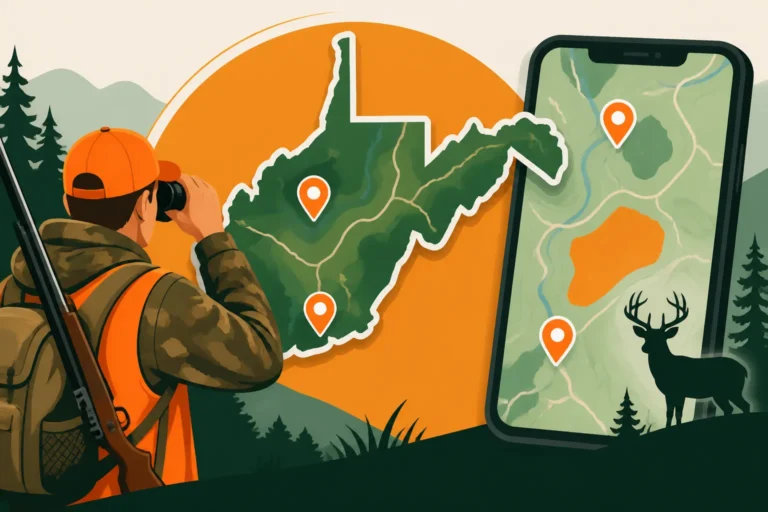
This is where modern technology becomes an indispensable tool. Apps like onX Hunt and GoHunt have revolutionized how hunters navigate property lines. They overlay detailed property boundaries and landowner information onto satellite imagery and topographical maps, turning your smartphone into a powerful land navigation device. Before you even set foot in the woods, you can scout potential hunting areas, identify adjacent private parcels, and even get landowner contact information in some cases. When you're actively hunting, these apps allow you to see your exact location relative to property lines in real-time, helping you avoid accidental trespass. Many experienced West Virginia hunters won't step into unfamiliar territory without checking their onX Layers for West Virginia Land Status first. Trust me, spending a few bucks on one of these apps is a small price to pay compared to the cost of a trespass ticket or the damage to a landowner relationship.
Asking for Permission: Best Practices and Etiquette
Okay, so you've identified a promising piece of private land next to public ground, or maybe you've heard whispers about a big buck seen on Farmer Jones' back forty. How do you approach asking for permission? It can feel intimidating, but a respectful, well-thought-out approach often yields positive results.
First, do your homework. Try to find out the landowner's name and address before you knock on their door. A little personalization goes a long way. Second, timing is everything. Don't show up on a Sunday morning during church hours, or late in the evening. Pick a reasonable time when they're likely to be home and not in the middle of dinner or chores. Third, dress appropriately – clean, respectful attire. You're making a first impression.
When you speak to them, introduce yourself clearly, state your purpose (that you're a hunter interested in their property), and explain why you're asking them specifically. Perhaps you noticed a nice block of timber, or you're trying to avoid crowding on nearby public land. Be honest about your intentions and methods. If you'll be hanging a stand, mention it. If you'll be hunting with a partner, ask if that's okay. Offer to share some of your harvest if you're successful. Emphasize that you will respect their property, pick up any trash, close gates, and be mindful of their livestock or home. Always be prepared for a "no," and accept it graciously without argument or complaint. A polite "no" today might turn into a "yes" next season if you've left a good impression. For more tips on this, read Asking a West Virginia Farmer for Permission.
Special Scenarios and Common Misconceptions
Hunting isn't always black and white, and there are a few specific situations that often lead to confusion regarding trespass law in West Virginia.
Retrieving Game from Adjacent Private Property
This is a scenario that causes a lot of stress for hunters. You've made a great shot on a deer, but it runs just across the property line onto adjacent private land. What do you do? In West Virginia, the law is quite clear: you do not have the right to automatically cross onto private land, even if your game is visible and obviously expired. You must obtain permission from the landowner before entering their property to retrieve your animal.
If you know who the landowner is, your first step is to immediately contact them and explain the situation. Be calm, polite, and explain that you have a wounded or expired animal just over the line. Ask for permission to retrieve it. Most landowners, even if they don't allow hunting, are reasonable and will grant permission for retrieval, especially if you handle the situation respectfully. If you cannot reach the landowner, or if they deny permission, you may need to contact the West Virginia Division of Natural Resources (WVDNR). A Natural Resources Police Officer might be able to assist in mediating the situation or retrieving the animal on your behalf, but they are not obligated to do so. Under no circumstances should you trespass to retrieve game. This could lead to charges and penalties. For specific details, refer to Retrieving Game From Private Land in West Virginia.
Tracking a Wounded Animal Across Property Lines
Similar to retrieving game, tracking a wounded animal across a property line still requires landowner permission. The urgency of a wounded animal might make you feel justified in crossing immediately, but the law doesn't make that distinction. If you wound an animal and it crosses onto land you don't have permission to be on, you must stop, mark the last known point, and seek permission before continuing the track.
This is arguably even more critical than retrieving a dead animal, as you might need more time, might be moving slower, and could potentially be carrying a loaded firearm. Approaching a landowner with a gun in hand, even if it's for a legitimate tracking purpose, without prior warning, can be alarming and lead to escalated tensions. Always unload your firearm and secure it before approaching a private residence. Again, if you can't reach the landowner or are denied permission, contact the WVDNR. They might advise you or even assist, emphasizing respect for property rights while also aiming for the ethical recovery of game.
Roads, Trails, and Easements: Public Access vs. Private Ownership
Not all roads or trails in West Virginia are public access, even if they appear well-traveled. A common misconception is that if a road or trail isn't gated, it's fair game for access. This isn't always true. Many logging roads, old farm lanes, or utility easements are privately owned, even if they aren't explicitly posted. Just because you can drive or walk on an easement doesn't mean you have the right to hunt adjacent to it, or even to step off the easement onto the surrounding private property.
Understanding the difference often requires diligent research, either through county courthouse records (which detail deeded easements and property ownership) or by using detailed mapping apps like GoHunt that can sometimes show public rights-of-way. Always assume private ownership unless you have clear evidence of public access for hunting purposes. If you're on what you believe to be a public road and see a deer on adjacent private land, you still cannot pursue or shoot that deer unless you have specific permission for that private property. The public road offers passage, not hunting rights on adjoining private tracts.
| Scenario | Land Status | Required Action for Hunter | Legal Standing |
|---|---|---|---|
| Hunting | Posted | DO NOT enter. Obtain explicit permission first. | Trespassing (Illegal) |
| Hunting | Unposted | Can enter for lawful activities, but landowner can revoke at any time. | Implicit permission (Legal, conditional) |
| Retrieving Dead Game | Posted/Unposted | DO NOT enter without permission. Contact landowner immediately. | Trespassing without permission |
| Tracking Wounded Game | Posted/Unposted | DO NOT proceed without permission. Contact landowner immediately. | Trespassing without permission |
| Driving/Walking a Private Road | Unposted | Can generally use, but cannot hunt from or step off onto private land. | Public access for passage only, generally |
| Driving/Walking a Private Road | Posted | DO NOT enter. Obtain explicit permission first. | Trespassing (Illegal) |
Consequences of Violating West Virginia's Trespass Law
Ignoring West Virginia's trespass laws isn't just a minor inconvenience; it carries significant legal, financial, and even social repercussions. It's not something to take lightly.
Legal Ramifications: Fines, Penalties, and Loss of Privileges
The immediate consequence of trespassing in West Virginia is often a citation and a fine. The specific amount can vary depending on the nature of the trespass, whether it's a first offense, and if other violations occurred simultaneously (e.g., hunting out of season, hunting without a license). Trespassing is typically a misdemeanor offense. In addition to monetary fines, a conviction for hunting-related trespass can lead to the loss of your hunting privileges, potentially for several years. This means your hunting license and stamps could be revoked, making it illegal for you to hunt anywhere in West Virginia during that period.
Furthermore, if property damage occurs during a trespass incident, you could face additional civil charges from the landowner, requiring you to pay for repairs or replacement of damaged property. Law enforcement, specifically Natural Resources Police Officers, take trespass seriously because it directly impacts landowner relations and the overall perception of hunters. They have the authority to investigate, issue citations, and make arrests. It's a harsh reality, but knowing and respecting the law is the only way to avoid these severe consequences.
Reputational Damage and Community Impact
Beyond the legal penalties, there's a significant social cost to trespassing. When a hunter trespasses, it doesn't just reflect poorly on that individual; it reflects poorly on the entire hunting community. Landowners often have strong feelings about their property, and a negative encounter with one hunter can lead them to close their land to all hunters, even those who ask for permission and follow the rules. This creates a ripple effect, reducing access for everyone.
Word travels fast in rural West Virginia communities. A reputation as someone who doesn't respect property rights can make it incredibly difficult to gain permission on other private lands in the future. It damages the trust between landowners and hunters, which is a vital foundation for preserving our hunting opportunities. By being diligent, respectful, and legally compliant, hunters contribute positively to this relationship, helping ensure that private land access remains a possibility for generations to come. This is why understanding West Virginia Trespass and Permission Law is so important for the long-term health of our hunting traditions.
Utilizing Technology and Resources for Land Navigation
In today's world, there's no excuse for accidental trespass, especially with the incredible tools available at our fingertips. Taking advantage of these resources is a smart, ethical move for any hunter.
Mapping Apps: Your Best Friend in the Field
As mentioned earlier, mapping applications like onX Hunt and GoHunt are truly game-changers for land navigation. They provide precise GPS location tracking, allowing you to see exactly where you are in relation to property boundaries, public land borders (like those for Monongahela National Forest Hunting or West Virginia Wildlife Management Areas), and even specific land features. Many of these apps offer subscription services that provide detailed plat maps, landowner names, and even contact information for private parcels. This isn't just about avoiding trespass; it's about scouting effectively, identifying potential access points, and understanding the layout of an area before you ever step foot in it.
Before your hunt, you can download offline maps to your phone, ensuring you have access to crucial data even when you're deep in a hollow with no cell service. Learning to use these apps proficiently is like adding a seasoned guide to your pack. They eliminate much of the guesswork and anxiety associated with hunting near property lines, allowing you to focus on the hunt itself, rather than constantly worrying about legal boundaries.
County Courthouse and WVDNR Resources
While mapping apps are fantastic for in-the-field navigation, sometimes you need to do a deeper dive into property ownership, especially for larger tracts or complex situations. Your local county courthouse is a valuable resource. The county clerk's office typically maintains public records of deeds, property plats, and tax maps, which can provide definitive information on property boundaries and ownership. This might take a bit more time and effort, but it offers the most accurate legal documentation.
The West Virginia Division of Natural Resources (WVDNR) also provides maps and information related to public hunting areas and specific regulations. While they aren't directly involved in private land disputes unless a violation occurs, their website and offices can be helpful for general questions about hunting regulations and land access. For example, understanding West Virginia Deer Season Structure Explained might guide where you choose to hunt, and the WVDNR website often has maps of public lands like Cranberry Wildlife Management Area. Combining digital mapping tools with these official governmental resources provides the most comprehensive approach to understanding and respecting West Virginia's land access laws.
Disclaimer
This article is for general informational purposes only and does not constitute professional advice. Laws, prices and regulations vary by location and change over time. Consult a qualified professional for guidance on your specific situation.