Why Cranberry Is the Largest WMA Inside a Forest
Ever tried to find a truly expansive, wild place to hunt in West Virginia, only to be met with fragmented maps and confusing boundaries? It's a common frustration, especially when you dream of disappearing into vast, untouched forests. This guide will take a deep dive into Cranberry Wildlife Management Area, exploring why it stands out as the largest WMA actually within a national forest, and what that means for your hunting adventures in the Mountain State.
Unpacking the Grandeur of Cranberry WMA
Cranberry Wildlife Management Area isn't just another parcel of public land; it's a unique and massive expanse that holds a special place in the hearts of West Virginia hunters. Its sheer size, combined with its nested location within the vast Monongahela National Forest, creates a hunting experience unlike almost any other in the region. When you talk about true backcountry hunting in West Virginia, Cranberry is almost always at the top of the list.
More Than Just a Number: Size and Scope
To truly appreciate Cranberry, you have to understand its scale. We're talking about approximately 46,000 acres of prime mountain wilderness. Think about that for a moment – forty-six thousand acres. That's a huge tract of land, enough to get seriously lost in, and certainly enough to find solitude even during peak hunting seasons. This isn't your typical smaller WMA that might encompass a couple of thousand acres; this is a sprawling, rugged landscape. This immense size means that deer, bear, and turkey have ample room to roam, grow, and establish truly wild patterns, far from constant human disturbance. For hunters, it translates to endless opportunities to scout new areas, hike deep, and truly test their woodsman skills. It's the kind of place where a several-mile walk to your stand isn't just a possibility, it's often the expectation.
A Unique Administrative Marriage: WMA Within Monongahela
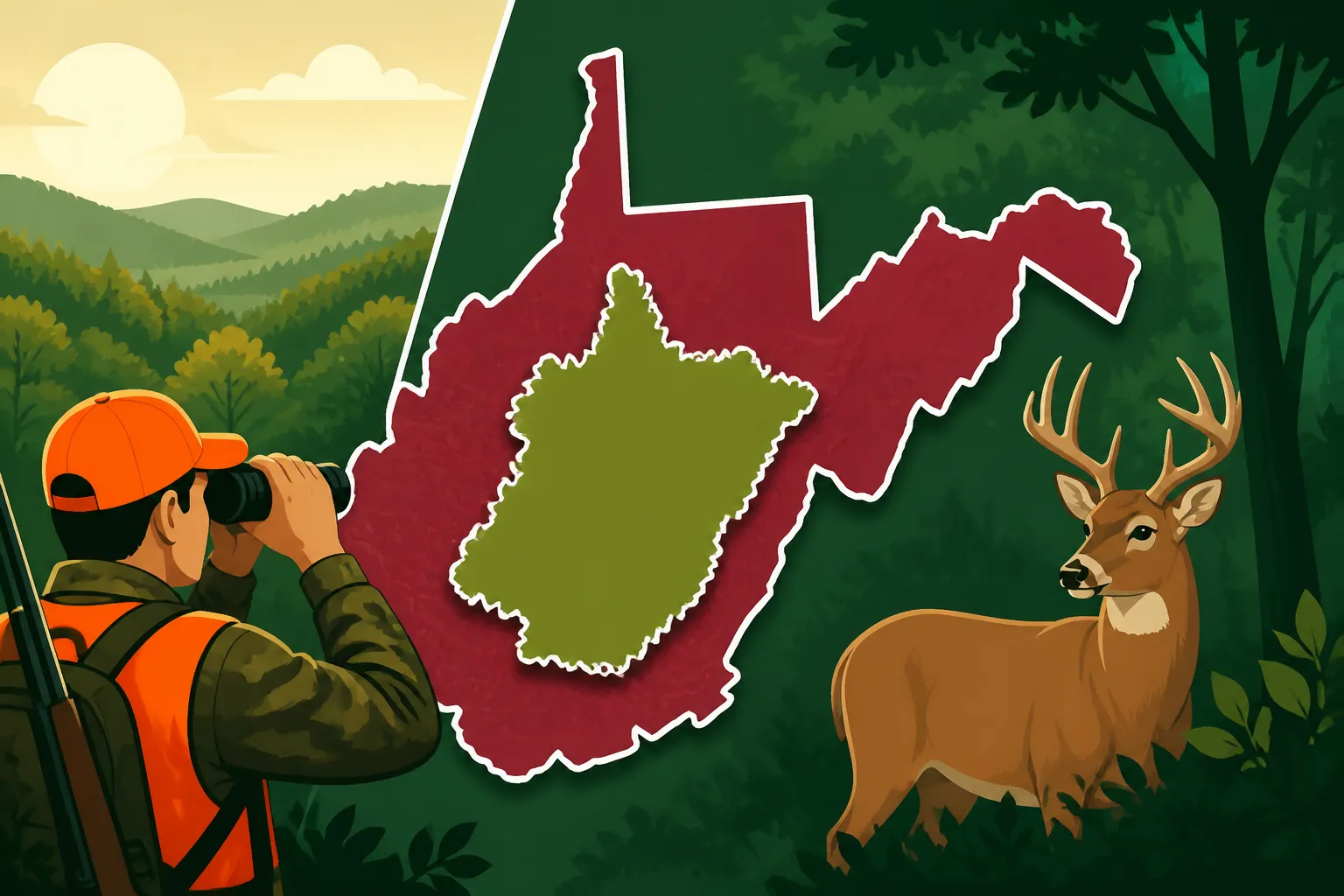
What makes Cranberry truly distinct isn't just its size, but its administrative setup. It's a Wildlife Management Area, managed by the West Virginia Division of Natural Resources (WVDNR), yet it lies entirely within the boundaries of the Monongahela National Forest, which is federal land. This "WMA within a National Forest" status means you get the best of both worlds in many respects. The WVDNR actively manages the wildlife populations and specific hunting regulations, often with a focus on game species and hunter access. At the same time, the broader Monongahela National Forest designation provides a framework of vast, undeveloped forest lands with extensive backcountry areas. This cooperative management often leads to excellent habitat work, accessible roads (though sometimes limited), and a robust game population supported by diverse forest ecosystems. It's a testament to how different agencies can work together to provide exceptional opportunities for sportsmen. Understanding this dual management is key to appreciating the hunting opportunities, and also to knowing which set of rules (WVDNR vs. Forest Service) might apply to certain activities like camping or vehicle use. For more on the larger context, check out Monongahela National Forest Hunting.
The Historical Tapestry of Cranberry
The land that makes up Cranberry WMA has a rich and often rugged history, much like the rest of West Virginia. Before it became the vast hunting ground we know today, this region was heavily impacted by logging in the late 19th and early 20th centuries. Vast tracts of old-growth timber were harvested, leaving behind a scarred landscape. However, through decades of conservation efforts, natural regeneration, and active forest management, the Cranberry area has made a remarkable comeback. This history of logging has actually shaped the current habitat, creating a mosaic of mature timber, regenerating clear-cuts (from more recent selective harvests), and thick, brushy areas that provide excellent cover and browse for wildlife. Understanding this past helps hunters interpret the landscape today. You might find old logging grades that now serve as deer trails, or notice variations in tree age that signal past harvests, all of which influence game movement and habitat use.
The Landscape That Defines Cranberry's Scale
Cranberry WMA isn't flat; it's a quintessential piece of the rugged Allegheny Mountains. This dramatic topography is a primary reason it has remained so wild and expansive. The steep ridges, deep hollows, and high-elevation plateaus all contribute to its character and its ability to hold large numbers of diverse game species, offering a true challenge to anyone who hunts there.
Rugged Topography and Remote Access
When we talk about "rugged topography" in Cranberry, we're not just using a buzzword. We're talking about elevation changes of hundreds, sometimes over a thousand feet, within relatively short distances. Ridges that run for miles, then drop sharply into dark, laurel-choked hollows, only to rise again to another towering peak. This kind of terrain inherently limits human development and makes access challenging, which is precisely why it remains so wild. For the hunter, it means incredible physical demands. You'll be climbing, descending, and side-hilling often. But it also means that pressure is naturally dissipated. Most hunters stick to within a mile or two of a road or trail. Venture further, and you quickly find yourself in truly remote country where game feels less disturbed. Understanding the contours of the land is paramount here. Apps like onX Hunt can be invaluable for understanding the terrain and planning your routes, showing you exactly how steep those climbs will be and where potential funnels and benches might exist. This kind of terrain is exactly what makes Hunting Steep Allegheny Ridges such a vital skill.
Diverse Habitats Born from Elevation and Aspect
The elevation differences within Cranberry WMA, combined with varying slope aspects (north-facing vs. south-facing), create an incredible diversity of habitats. On higher, cooler ridges, you'll find stands of red spruce and northern hardwoods, providing dense cover and specific food sources. As you descend into the warmer hollows, oak and hickory forests dominate, offering crucial mast crops like acorns and hickory nuts, especially important for deer and bear. Then there are the rhododendron and mountain laurel thickets that can be almost impenetrable, providing ideal bedding and security cover.
Consider how sunlight hits different slopes:
- South-facing slopes often receive more sun, leading to earlier green-up in spring and potentially different vegetation. Deer might feed here early in the season.
- North-facing slopes stay cooler and retain moisture longer, often holding thicker, more mature timber and serving as critical thermal cover in winter.
This mosaic of habitats means that wildlife has everything it needs within the WMA: food, water, cover, and breeding grounds. A hunter who can read these habitat shifts and understand how game uses them throughout the season will be at a significant advantage. This diverse habitat is also a key factor in why places like Cranberry support healthy populations of grouse and woodcock.
Waterways: Lifeblood of the Forest
The Cranberry area is crisscrossed by an intricate network of streams, creeks, and rivers, including the headwaters of the Cranberry River itself. These waterways are far more than just scenic features; they are the lifeblood of the entire ecosystem and a critical component for hunters. Not only do they provide essential drinking water for all wildlife, but the riparian zones (the areas along the banks) often host unique vegetation that serves as additional food sources or dense cover.
Furthermore, these drainages often act as natural travel corridors for deer, bear, and turkey, especially in steep terrain where moving along a creek bottom is easier than constantly climbing ridges. Knowing where game crosses these streams, or where thick cover along the banks might hold a hidden buck, can be a game-changer. During dry spells, these water sources become even more critical, drawing animals in from miles around. Hunters should also be mindful of thermals, especially near water, as cold air sinks into hollows and follows drainages, which can give away your presence if not managed carefully.
Ecological Significance and Wildlife Abundance
Cranberry WMA's immense size and diverse habitats contribute to its significant ecological value, making it a critical haven for wildlife. This isn't just a place to hunt; it's a testament to conservation efforts and a vibrant ecosystem supporting robust populations of various game species, particularly black bear.
Old Growth Remnants and Forest Health
While much of Cranberry was logged in the past, certain areas still contain pockets of old-growth timber or forests that have matured considerably since the early 20th-century clear-cutting. These mature forests, particularly around some of the deeper, less accessible hollows, are incredibly important. They provide unique habitat structures, such as large cavity trees for denning animals, a complex understory, and a consistent mast production that younger forests often lack. The presence of these mature forest components indicates a healthy, functioning ecosystem that supports a wide range of biodiversity, from various bird species to large mammals. For hunters, these areas can be prime spots, as mature timber often means good mast crops and older, wiser bucks and bears that seek out undisturbed sanctuary. Identifying these areas, sometimes subtly different on aerial maps or even on the ground, can be key to finding success, especially when Scouting West Virginia Public Land Before Season.
The Bear's Domain: Habitat and Population
Cranberry WMA is, without a doubt, premier black bear country. West Virginia has seen an incredible comeback in its black bear population, and Cranberry has been a cornerstone of that success. The vast, remote, and often dense cover, combined with abundant natural food sources like acorns, beechnuts, and berries, provides ideal habitat for bears to thrive. The sheer lack of human disturbance in the interior parts of the WMA allows bears to live relatively unmolested lives, leading to healthy populations and the opportunity for hunters to pursue genuinely wild, mature animals. Hunting bear here often means long hikes, patience, and a deep understanding of their movements between feeding and bedding areas. Hunting Bears Over Natural Mast in the Mountains is an art form that truly comes alive in places like Cranberry, where natural food sources dictate much of a bear's behavior. The density and wildness of the bear population here are a major draw for hunters seeking an authentic mountain bear hunt.
Deer, Turkey, and Small Game Paradise
While bears get a lot of attention in Cranberry, the WMA also offers excellent opportunities for other popular game species. White-tailed deer are abundant, especially in areas with a mix of mature timber and regenerating clearings that provide both food and cover. While you might not find the sheer numbers of deer per square mile as in some agricultural areas, the deer here are often truly wild and can grow to impressive sizes, particularly if they can avoid hunting pressure deep in the backcountry. For those interested in White-Tailed Deer Across West Virginia, Cranberry offers a different perspective on their behavior.
Wild turkeys also flourish within Cranberry's diverse forest environment. The mix of mature hardwoods for roosting and foraging, along with openings and clearings, creates excellent turkey habitat. Spring gobbler hunting here can be a true challenge, requiring hunters to navigate steep terrain and learn the subtle nuances of calling in big mountain birds. You can learn more about general turkey behavior in Wild Turkeys in West Virginia.
Furthermore, small game like squirrels and grouse thrive in the varied timber stands and thickets. The presence of ruffed grouse, in particular, speaks to the health of the forest, as they require specific early successional habitats that are carefully managed within the WMA. For hunters seeking a broader challenge or simply enjoying a day afield pursuing various species, Cranberry offers a rich and rewarding experience.
Hunting the Vastness: Strategies for Success
Hunting an area as massive and rugged as Cranberry WMA requires a different approach than smaller, more accessible public lands. It demands physical fitness, strategic planning, and a reliance on modern tools, but it also rewards those who embrace the wilderness ethic and are willing to put in the effort.
Embracing the Backcountry Mentality
To truly succeed in Cranberry, you need to adopt a "backcountry mentality." This means being self-sufficient, prepared for anything, and willing to go where others won't. It's about more than just taking a long walk; it's about understanding that help might be hours away, and that you are responsible for your own safety and success. This often means carrying a heavier pack with emergency supplies, extra water, and navigation tools. The rewards, however, are immense: less pressured game, stunning solitude, and the profound satisfaction of earning your harvest in truly wild country.
Here's what that mentality entails:
- Physical Conditioning: The steep terrain will test you. Regular exercise, especially hiking with a pack, is crucial.
- Self-Reliance: Bring what you need. Don't expect cell service or readily available amenities once you leave the main roads.
- Mental Toughness: Long days, difficult climbs, and sometimes disappointing results are part of the game. Resilience is key.
- Respect for the Land: Pack out everything you pack in. Leave no trace. Preserve the wilderness for future generations.
It's a complete immersion experience, and one that many hunters crave. For more on navigating this kind of land, think about strategies like Hunting Steep Allegheny Ridges.
Navigating Without Trails: The Role of Technology
While old logging roads and some designated trails exist, much of Cranberry WMA is truly off-trail. This is where modern navigation technology becomes not just a convenience, but a necessity. Relying solely on a paper map can be daunting in such vast, featureless (to the untrained eye) terrain, especially when thick canopy obscures distant landmarks.
- GPS Devices: A dedicated GPS unit provides reliable location data even without cell service. Ensure you have extra batteries.
- Smartphone Apps: Apps like
onX Huntare incredibly powerful. They offer detailed satellite imagery, topographic maps, and can show public/private land boundaries, helping you stay legal and find prime habitat. You can download maps for offline use, which is critical in areas with no signal. This ability to layer information, from property lines to potential bedding areas gleaned from topography, is what makesonX Huntindispensable for navigating vast public lands. Another useful tool for general planning is Using the Go Wild West Virginia Map Tool, which can show you WMA boundaries and regulations. - Compass and Map: Never neglect the fundamentals. Always carry a physical compass and a waterproof map as a backup. Knowing how to use them is a non-negotiable skill when you're miles from the nearest road.
Effective navigation means not just knowing where you are, but anticipating where you need to go, identifying pinch points, saddles, and water sources, and planning your entry and exit routes carefully. This proactive approach to navigation, using onX Hunt to visualize the land before you ever set foot on it, can save hours of wasted effort and prevent you from getting disoriented in the thick stuff. The depth of mapping available, from contour lines to timber types, is akin to having a personal guide to every acre. Remember, good boots are essential for those long walks; consider Boots for West Virginia Hollows and Ridges.
| Navigation Tool | Pros | Cons | Best Use Case |
|---|---|---|---|
| onX Hunt App | Offline maps, topo, satellite, property lines, tracking | Requires smartphone battery, subscription | Primary navigation, scouting, boundary awareness |
| Dedicated GPS | Rugged, long battery life, reliable in all conditions | Steeper learning curve, typically less detailed maps | Backup navigation, waypoint marking, long expeditions |
| Paper Map/Compass | No battery needed, universally understood | Requires skill, can be cumbersome in wind/rain, less detail | Essential backup, fundamental skill development |
| Go Wild WV App | Official WVDNR info, regulations, reporting | Less detailed navigation, primarily informational | Checking regulations, reporting harvests |
Dealing with Pressure and Finding Solitude
One of the biggest advantages of Cranberry's size is the potential to escape hunting pressure. While parking areas near main roads can be busy, the vast majority of hunters don't venture far from their vehicles. This creates a natural "pressure gradient."
- Walk Deeper: The simplest strategy is often the most effective. Be willing to walk further than most. Every extra half-mile you put in drastically reduces the number of other hunters you'll encounter.
- Seek Out Difficult Access: Look for areas that are hard to get to, whether it's crossing a difficult creek, navigating a steep, laurel-choked ridge, or simply an area without an obvious trail. These are often forgotten pockets that hold undisturbed game.
- Hunt Mid-Week: If your schedule allows, hunting Cranberry on a Tuesday or Wednesday will almost always provide more solitude than a Saturday or Sunday, especially during peak seasons like buck gun season.
- Utilize Topography to Your Advantage: Think about how people move through the landscape. Most will follow drainages or ridge tops. Find the benches, the side hollows, or the steep faces that are just too much effort for many, and you'll likely find deer and bear that feel safer.
The feeling of being truly alone in the mountains, hearing nothing but the wind and the rustle of leaves, is a reward in itself and a core reason why so many hunters return to Cranberry year after year.
Planning Your Cranberry Adventure
A successful hunt in Cranberry WMA is built on meticulous planning. This isn't a place you just "show up and hunt." From the gear you pack to understanding the specific rules, every detail matters when you're venturing into such a wild and expansive environment.
Essential Gear for Remote Mountain Hunting
Your gear list for Cranberry WMA needs to prioritize durability, functionality, and emergency preparedness. This is not the place to skimp on quality or forget essentials.
- High-Quality Boots: This is paramount. You'll be covering miles of steep, uneven, and often wet terrain. Waterproof, supportive, and well-broken-in boots are non-negotiable. Think about Boots for West Virginia Hollows and Ridges.
- Layered Clothing System: West Virginia mountain weather can change dramatically. A good layering system allows you to adapt to temperature swings, rain, and snow. Include good base layers, insulating mid-layers, and a waterproof/windproof outer shell. For late season, check out Cold-Weather Sitting Strategy in the Mountains.
- Navigation Tools: As discussed,
onX Hunton your phone, a dedicated GPS unit, and a physical map and compass are essential. - Headlamp with Extra Batteries: Critical for walking in before dawn or out after dark, which will be common.
- First-Aid Kit: A comprehensive kit, especially for scrapes, blisters, and minor emergencies, is a must. Consider how long you might be from assistance.
- Water and Filtration: Carry plenty of water and a reliable water filter or purification tablets. You'll sweat more than you think on those climbs.
- Food/Snacks: High-energy, non-perishable food to sustain you throughout long days.
- Game Processing Tools: Sharp knife, game bags, paracord. If you tag out miles deep, you'll be quartering the animal. A sturdy pack for hauling meat is also important; consider Choosing a Daypack for a Backcountry Bear Hunt or a dedicated frame pack.
- Emergency Shelter/Fire Starter: A lightweight tarp, space blanket, and fire-starting kit can be life-saving if you get caught out after dark or in unexpected weather.
- Communication: A satellite messenger or two-way radio (if hunting with a partner) is highly recommended where cell service is unreliable.
Regulations Unique to a WMA in a National Forest
Because Cranberry is a WMA within a National Forest, you'll encounter a blend of regulations. It's crucial to be aware of both WVDNR rules and U.S. Forest Service rules.
- WVDNR Regulations: These govern hunting seasons, bag limits, weapon restrictions, and checking requirements for deer, bear, and turkey. Always check the current West Virginia Hunting & Trapping Regulations booklet before you go.
- U.S. Forest Service Regulations: These apply to broader activities within the Monongahela National Forest, such as camping restrictions, motorized vehicle use on specific roads, and rules regarding tree stands or ground blinds. For instance, temporary tree stands are generally allowed on national forest land but must be removed after the season. Camping rules often apply universally across the forest.
- WMA Specific Rules: Some WMAs have additional rules, such as special sign-in procedures or restrictions on target shooting. While Cranberry is generally open access, it's always wise to double-check.
Always consult the official WVDNR website and the Monongahela National Forest website for the most current information. Ignorance of the rules is never an excuse, especially when you're in a remote area where enforcement might be sparse but the consequences of breaking rules can be severe. Remember that Public Hunting Land in West Virginia often comes with its own set of guidelines.
Respecting the Wilderness Ethic
Hunting in Cranberry WMA is more than just harvesting an animal; it's about connecting with the wild and upholding a strong wilderness ethic. This means preserving the natural state of the area and minimizing your impact.
- Leave No Trace: This principle is vital. Pack out everything you pack in, including all trash, spent casings, and any flagging you might use to mark a trail. Leave the area as if you were never there.
- Respect Wildlife: While you are hunting, also appreciate the broader ecosystem. Don't disturb non-game animals or damage vegetation unnecessarily.
- Be Considerate of Others: You might encounter other hunters, hikers, or even wildlife watchers. Share the woods respectfully. This includes proper blaze orange wearing during firearms seasons to ensure safety.
- Ethical Hunting Practices: Follow fair chase principles. Ensure you have a clear, ethical shot, and make every effort to recover any animal you hit. This becomes particularly challenging, but also most important, in vast, steep terrain.
- Practice with Your Gear: Before heading into the backcountry, ensure your rifle is zeroed, your bow is tuned, and you are proficient with all your navigation and safety gear. The wildness of Cranberry isn't the place for trial and error.
By adhering to these principles, you contribute to the ongoing preservation of Cranberry WMA as a truly special place for generations of hunters and outdoor enthusiasts.
Disclaimer
This article is for general informational purposes only and does not constitute professional advice. Laws, prices and regulations vary by location and change over time. Consult a qualified professional for guidance on your specific situation.