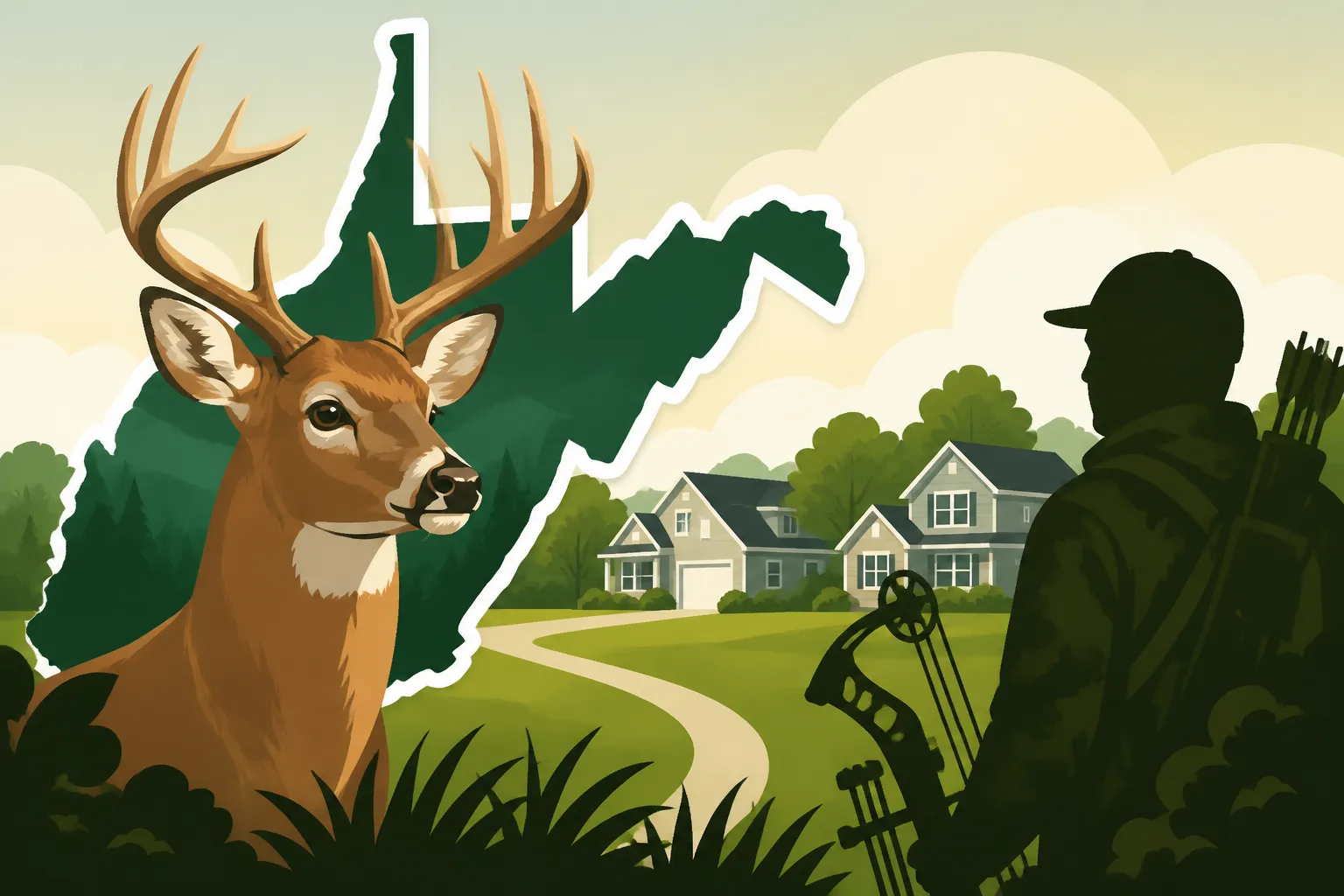
West Virginia Suburban Deer Management Permits
Navigating the complexities of deer management in West Virginia's burgeoning suburban landscapes can feel like an uphill battle. Homeowners often face frustrating property damage from deer browsing, while the risk of deer-vehicle collisions escalates, all while traditional hunting seasons often fall short in addressing these localized overpopulation issues. This comprehensive guide is designed to demystify West Virginia's Suburban Deer Management Permit program, offering clarity on its purpose, application process, and how it provides a vital tool for communities grappling with these challenges.
Understanding West Virginia's Suburban Deer Challenge
The wild beauty of West Virginia is one of its greatest assets, but as development expands, the line between wild and residential blurs. Our beloved white-tailed deer, once primarily creatures of the deep woods, have adapted remarkably well to suburban environments, often to the detriment of both deer and humans. This adaptation has created a unique set of problems that require innovative solutions beyond what standard hunting regulations can offer.
The Growing Problem of Urban Deer Overpopulation
It’s a scene many of us have witnessed: a beautiful doe and her fawns munching on expensive landscaping, or a buck rubbing his antlers raw on a young sapling, effectively destroying it. Beyond the garden woes, the sheer number of deer in suburban areas poses significant safety concerns. Deer-vehicle collisions are not just an inconvenience; they can result in serious injuries or even fatalities, not to mention substantial vehicle damage. The proximity of deer to human populations also raises concerns about disease transmission, though less common. Our state's deer population has thrived, and in some localized areas, it has become unsustainable for the available habitat within these pockets of human development. This is a far cry from the dynamics of deer in our more remote forests, where natural predators and expansive forage keep populations in check. Understanding the scope of the problem is the first step in appreciating the need for specialized management. You might be interested in our deeper dive into the broader topic of White-Tailed Deer Across West Virginia to see how these localized issues fit into the larger state picture.
Limitations of Traditional Hunting Seasons in Developed Areas
For most of West Virginia, deer hunting is a deeply ingrained tradition, a crucial part of managing our deer herd. However, the traditional archery, muzzleloader, and buck gun seasons, as effective as they are in rural settings, often aren't suitable for suburban environments. The primary reasons are safety and public perception. Discharging firearms or even broadheads within densely populated areas or near schools and parks presents unacceptable risks. Land parcels are often smaller, fragmented, and interspersed with homes, making typical hunting methods impractical or outright illegal due to municipal ordinances. Property boundaries are complex, and the concept of "fair chase" often clashes with the reality of deer living virtually unmolested in backyards. Even when homeowners want to allow hunting, finding a hunter willing and able to navigate these limitations is tough. That’s why programs like the Suburban Deer Management Permits are so important – they bridge this gap, offering a controlled, safe, and often quieter alternative. Our article on West Virginia Deer Season Structure Explained provides excellent context for these broader regulations versus the specific needs of suburban programs.
What Are Suburban Deer Management Permits?
Recognizing the unique challenges of deer management in urban and suburban landscapes, the West Virginia Division of Natural Resources (WVDNR) developed the Suburban Deer Management Permit program. This initiative isn't about general hunting; it's a targeted, science-based approach to mitigate the specific issues arising from deer overpopulation in developed areas. It represents a collaborative effort between state wildlife agencies, local municipalities, and property owners to find sustainable solutions where traditional methods fall short.
Purpose and Scope of the Program
The core purpose of these permits is to provide a flexible and effective means for municipalities or organized groups of landowners to reduce deer populations in designated areas where deer have become a nuisance or safety hazard. Think of it as a precision tool rather than a blunt instrument. The program allows for deer removal outside of regular hunting seasons, often with methods that are safer for densely populated areas, such as archery or even controlled sharpshooting by certified professionals. The scope is inherently local; permits are not statewide but are issued for specific, approved management areas. These areas are typically defined by municipal boundaries or contiguous private landholdings where deer impact is severe. The goal isn't eradication but rather bringing deer populations down to a level that is more ecologically sustainable and minimizes negative human-deer interactions, improving both public safety and ecological balance in these unique habitats.
Who Can Participate and Where They Apply
Participation in the Suburban Deer Management Permit program is primarily driven by local government entities – towns, cities, or even county commissions – or through a formally organized group of landowners. An individual homeowner, unfortunately, cannot simply apply for one of these permits for their backyard alone. The WVDNR requires a comprehensive application from the governing body or a recognized land management organization, demonstrating a significant deer problem and a well-thought-out plan for mitigation. This plan must include details on the proposed management area, the estimated deer population, the methods to be employed, safety protocols, and how carcasses will be handled.
Geographically, these permits apply to areas that are typically unsuitable for conventional hunting due to safety concerns or local ordinances. This often includes well-developed residential zones, municipal parks, green spaces, and other areas where human activity is prevalent. For instance, a city like Charleston might apply for a permit to manage deer within certain city limits where deer are causing widespread issues. While a tool like GoHunt can be incredibly useful for understanding property boundaries and topography in a general hunting scenario, in the context of these specific permits, it's the applying entity that maps out the precise management zones for approval by the WVDNR. The program emphasizes community involvement and transparency, ensuring that local residents are informed and their concerns are addressed.
The Application and Approval Process for Permits
Securing a Suburban Deer Management Permit is a structured, multi-step process designed to ensure safety, efficacy, and community buy-in. It's not as simple as walking into the WVDNR office and asking for one; instead, it requires careful planning, documentation, and coordination. This rigorous approach is necessary given the sensitive nature of deer management in developed areas, where public safety and perception are paramount.
Key Steps to Secure a Management Permit
The journey to obtaining a Suburban Deer Management Permit typically begins with a local municipality or a large, organized group of landowners identifying a significant deer overpopulation problem. Here’s a general outline of the steps involved:
- Initial Assessment and Problem Identification: The applying entity must first thoroughly assess the extent of the deer problem. This often involves collecting data on deer sightings, property damage reports, deer-vehicle collisions, and resident complaints. This evidence forms the basis for demonstrating the need for special management.
- Developing a Management Plan: This is arguably the most critical step. The plan must detail:
- The specific management area: Clear boundaries must be delineated, often using maps.
- Estimated deer population: How many deer are believed to be in the area, and what is the desired reduction?
- Proposed methods: Will it be archery-only, sharpshooting by trained personnel, or another approved method? This choice heavily influences safety protocols.
- Safety protocols: This includes details on safe shooting zones, buffer areas, public notification, and personnel training.
- Carcass disposal plan: How will harvested deer be processed, utilized, or disposed of? Many programs partner with local food banks to donate venison.
- Public outreach: How will the community be informed and engaged?
- WVDNR Application Submission: The complete management plan, along with a formal application, is submitted to the West Virginia Division of Natural Resources. This application is comprehensive, often requiring detailed maps and legal descriptions of the area.
- WVDNR Review and Approval: WVDNR staff meticulously review the application for adherence to state regulations, safety considerations, and the scientific justification of the proposed plan. They may request additional information, modifications to the plan, or conduct site visits.
- Permit Issuance: If approved, the WVDNR issues the Suburban Deer Management Permit, which will specify the duration of the program, authorized methods, reporting requirements, and any special conditions. The conditions are usually very precise, ensuring all participants operate within strict guidelines. Navigating property lines and potential public access points during the planning phase is crucial, and while tools like GoHunt are generally for individual hunters, the principles of map analysis are very similar when an organization is drafting its management area.
Specific Regulations and Reporting Requirements
Once a Suburban Deer Management Permit is issued, the permit holder (the municipality or organized group) is bound by a strict set of regulations and reporting requirements. These are in place to ensure accountability, safety, and the collection of valuable data.
- Authorized Methods: Permits will explicitly state which methods are permitted. Many suburban programs are West Virginia Suburban Archery-Only Zones to enhance safety, minimizing the risk of projectiles traveling beyond the intended target area. Some programs might allow for controlled sharpshooting by certified law enforcement or wildlife personnel, particularly in very dense areas or when a large number of deer need to be removed quickly.
- Operating Hours and Locations: Specific times and precise locations for deer removal will be outlined to minimize public disturbance and maximize safety. This might mean operations occur during specific windows when parks are closed or during nighttime hours in certain industrial areas.
- Safety Zones: Strict safety zones around residences, roads, and public facilities are mandated. These zones prohibit any deer removal activity to prevent accidents.
- Personnel Requirements: Individuals involved in the deer removal process must often meet specific training or certification standards. If volunteers are used (e.g., experienced archers), they typically undergo a rigorous vetting process.
- Deer Checking and Reporting: Every deer harvested under the permit must be properly checked and reported to the WVDNR, often through a dedicated system or by a designated program coordinator. This is similar to, but often more detailed than, the West Virginia Deer Reporting Requirements for regular hunting seasons. This data is critical for the WVDNR to monitor the program's effectiveness and track deer health.
- Carcass Handling and Donation: Details on how harvested deer are to be handled, processed, and potentially donated to local food banks are usually a key part of the permit. This ensures humane treatment and beneficial use of the meat. Our article on Donating Venison in West Virginia can provide more context on the general process.
- Public Notification: The permit holder is typically required to provide public notice about the program, its duration, and any specific safety measures or temporary closures that might affect residents. Transparency is key to maintaining public trust.
The WVDNR maintains oversight throughout the program, and failure to comply with these regulations can lead to the revocation of the permit. This structured approach helps ensure that suburban deer management is conducted ethically, safely, and effectively.
| Permit Type | Applying Entity | Primary Goal | Typical Methods Allowed | Key Considerations |
|---|---|---|---|---|
| Suburban Deer Management Permit | Municipality/Organized Landowners | Reduce localized overpopulation & conflicts | Archery, Controlled Sharpshooting | Public safety, community buy-in, precise mapping |
| Deer Damage Permit (Farmer) | Individual Farmer | Mitigate agricultural crop damage | Firearms (specific rules), Trapping | Crop protection, only on affected private land |
Note: This table highlights general characteristics. Specific regulations for each permit type can vary and are determined by the WVDNR.
Benefits and Considerations for Localities and Hunters
Implementing a Suburban Deer Management Permit program is a significant undertaking, but the benefits for communities struggling with deer overpopulation can be substantial. However, it's also crucial to consider the various aspects, including public perception and the ethical responsibilities that come with such a program. This isn't just about removing deer; it's about fostering a healthier coexistence between wildlife and human populations in shared spaces.
Addressing Community Concerns and Property Damage
The most immediate and tangible benefit of a well-executed suburban deer management program is the noticeable reduction in deer-related conflicts. For residents, this means less damage to gardens, shrubs, and trees, saving money and frustration. For commuters, it translates to a reduction in the alarming number of deer-vehicle collisions, making roads safer. Beyond the practical benefits, these programs often provide a sense of relief and empowerment to communities that felt helpless against the encroaching deer population. When residents see proactive steps being taken by their local government or homeowner associations, it can significantly improve morale and trust in local leadership.
Furthermore, these programs can indirectly improve the health of the remaining deer population by reducing overcrowding and competition for food, which can sometimes lead to issues like EHD die-offs if populations become too dense. While it might seem counterintuitive, managing deer numbers through controlled removal can contribute to a healthier ecosystem within these suburban green spaces. Our extensive article on West Virginia's Chronic Wasting Disease Counties also highlights the importance of managing deer populations, as CWD prevalence can be higher in areas with dense deer herds, adding another layer of complexity to population management in certain zones.
Ethical Hunting Practices and Public Perception
The phrase "deer management" often conjures strong emotions, particularly in developed areas where some residents may not be accustomed to hunting or wildlife management. Therefore, maintaining strict ethical hunting practices and carefully managing public perception are absolutely paramount for the success and longevity of any Suburban Deer Management Permit program.
- Professionalism and Respect: All personnel involved, whether WVDNR staff, hired professionals, or vetted volunteer archers, must operate with the utmost professionalism and respect for both the animals and the community. This includes quiet operations, quick and clean harvests, and discreet carcass removal.
- Transparency and Communication: Open and consistent communication with the public is vital. Clear signage, public meetings, and readily available information about the program's goals, methods, and safety protocols can help alleviate fears and build understanding. Explaining why the program is necessary, backed by data on property damage and accidents, is critical. Highlighting partnerships with local food banks for venison donation can also garner positive public support.
- Humane Methods: The methods chosen for deer removal must always be humane. Archery, when executed by skilled and ethical hunters, offers a precise and relatively quiet method suitable for many suburban settings. Controlled sharpshooting, while more direct, is conducted by trained professionals to ensure swift and humane dispatch. The program is never about sport hunting, but rather about population control executed humanely.
- Safety First: Absolutely nothing is more important than public safety. This means strict adherence to safety zones, clear lines of sight, and ensuring that all activities occur in a manner that poses no risk to non-participants. For hunters participating in these programs, having a strong understanding of their equipment and surroundings is critical. Using accurate rangefinders and knowing precise shot placement, as discussed in topics like Bow Draw Weight for West Virginia Whitetails or Crossbow Scopes for West Virginia Timber Ranges, becomes even more essential in these sensitive environments.
- Beyond the Harvest: While deer removal is a component, a comprehensive program might also include community education on deer-resistant landscaping, proper waste disposal to avoid attracting deer, and other non-lethal deterrents. The goal is a holistic approach to human-deer coexistence.
By prioritizing ethical practices, transparency, and public safety, West Virginia's Suburban Deer Management Permit programs can effectively address local deer overpopulation while maintaining community support and upholding the highest standards of wildlife management. It’s a delicate balance, but one that is essential for the health of both our communities and our wildlife.
Disclaimer
Please remember that hunting regulations and wildlife management policies in West Virginia can change. The information provided in this article is intended for general guidance and informational purposes only. It is crucial to always consult the most current West Virginia Division of Natural Resources (WVDNR) hunting regulations, official publications, and local ordinances before participating in any hunting or deer management activities. Always prioritize safety and adhere to all legal requirements.