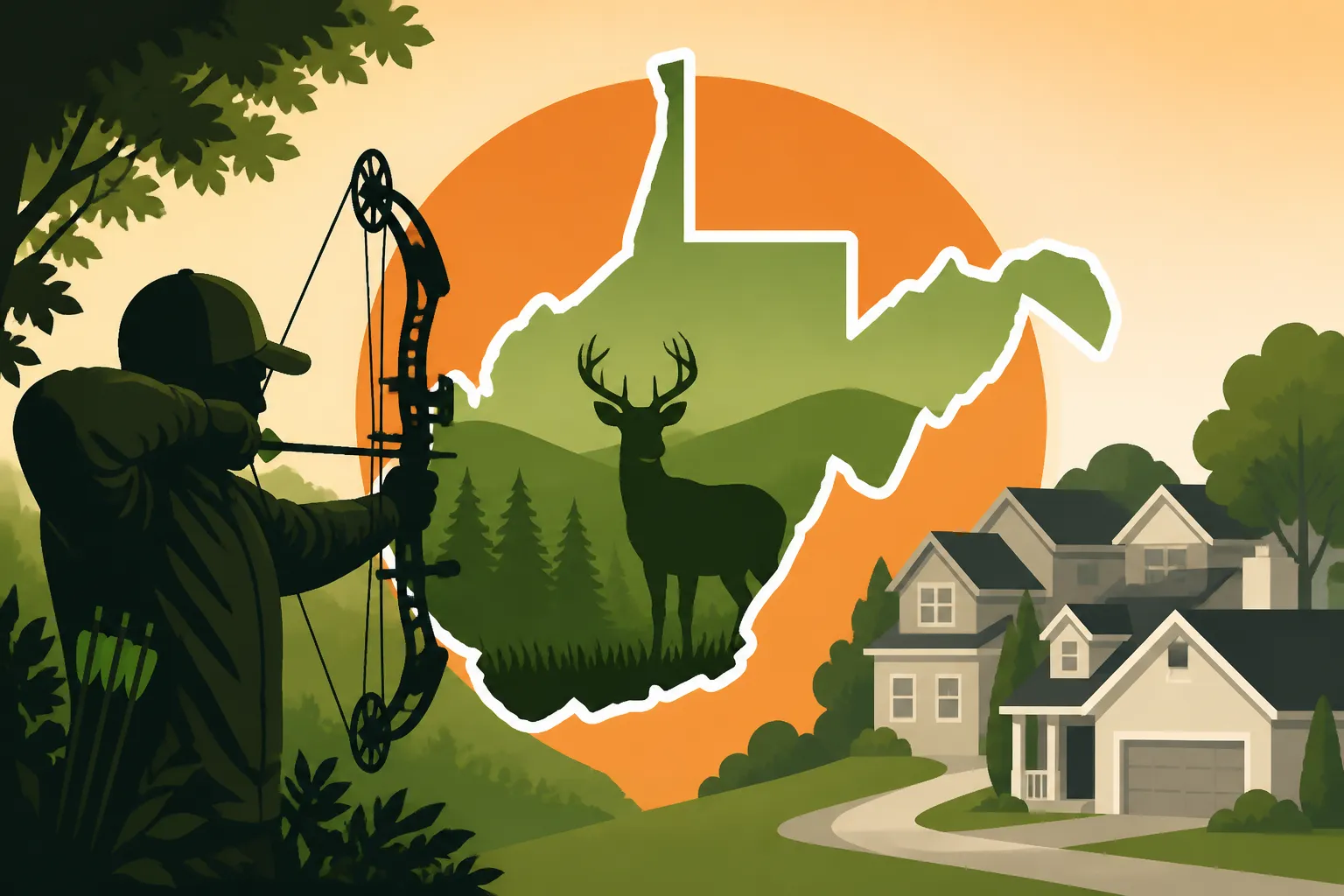
West Virginia Suburban Archery-Only Zones
The thought of chasing whitetails in the rolling hills of West Virginia is often painted with images of vast national forests and sprawling mountain ranges. But for many of us living closer to town, the reality is that deer are often found right in our backyards, quite literally. This presents a unique challenge and opportunity, often leading to confusion about where and how it's even legal to hunt within or near populated areas. This guide is here to demystify West Virginia's suburban archery-only zones, helping you understand the rules, navigate the nuances, and pursue deer safely and ethically closer to home.
The Landscape of Suburban Archery Hunting in West Virginia
Hunting in suburban environments isn't like heading deep into the Monongahela National Forest. It's a completely different ballgame, driven by unique challenges and specific regulations. You're dealing with different pressures, different deer behavior, and a much closer relationship with non-hunting residents. Understanding this distinct landscape is the first step to becoming a successful and responsible suburban archer.
Why Suburban Zones Are Necessary
As West Virginia's towns and cities expand, so does the interface between human habitation and wildlife habitat. This often leads to a significant increase in deer populations within suburban and even urban areas. With fewer natural predators and abundant landscaping acting as an all-you-can-eat buffet, deer can thrive, sometimes to the detriment of local ecosystems, agricultural interests, and even public safety through increased deer-vehicle collisions. These suburban archery-only zones are a critical tool for wildlife management, allowing for regulated deer harvest to control populations in areas where traditional firearm hunting would be impractical or unsafe due to population density. It's about finding a balance, keeping deer numbers healthy and manageable, while also addressing concerns from residents.
Many municipalities, even those without explicit "archery-only zones," often implement specific ordinances that restrict firearm discharge but allow archery within city limits, provided certain conditions are met. This often creates de facto suburban archery zones that fall under the umbrella of broader state archery regulations. It’s a pragmatic solution to a growing problem, recognizing the inherent safety of archery equipment compared to high-powered rifles in densely populated settings.
Identifying Your Local Regulations and Opportunities
Navigating the patchwork of local ordinances and state regulations can feel like trying to untangle a fishing line after a big snag. There isn't a single, statewide map highlighting every "suburban archery-only zone" in West Virginia. Instead, you'll need to do some localized homework. Start by checking with your specific city or county government. Many municipalities, particularly those that have experienced issues with overpopulated deer, will have specific ordinances on their websites or available through their clerk's office.
The West Virginia Division of Natural Resources (WVDNR) provides the overarching state framework, outlining general archery and crossbow season dates and regulations, but local rules often add another layer of complexity. For instance, some areas might have specific acreage requirements for private land hunting, or mandates on how far from a dwelling you must be to discharge an arrow. Don't assume that because it's legal in one part of West Virginia, it's legal everywhere. For hunters looking to explore these local opportunities, tools like the GoHunt platform can sometimes offer insights into property boundaries and even landowner contact information, which is invaluable when trying to secure permission. Remember, ignorance of the law is no excuse, so invest the time to research thoroughly.
Permitting and Special Requirements
Beyond your standard West Virginia hunting license and deer stamps, some suburban archery zones might require additional permits or have specific application processes. This isn't universal, but it's common in more formalized urban deer management programs. For example, some cities might run specific quota hunts or managed hunts on city-owned parkland or other tracts. These often involve an application period, a drawing, and then specific rules that are even tighter than general archery season.
Even if a formal city permit isn't required, you will almost certainly need written permission from any private landowner whose property you intend to hunt. This is a crucial step that cannot be skipped, especially in areas where neighbors are close by. Always carry this written permission with you when hunting. Some areas might also mandate specific reporting requirements for harvested deer beyond the standard state reporting through the Go Wild West Virginia system. It's important to understand if there are any additional checking stations or forms required by local authorities. These extra steps are designed to ensure safety and accountability in a sensitive hunting environment.
Crucial Safety and Ethical Practices for Suburban Archery
Hunting close to homes and businesses carries a heightened responsibility. It's not just about following the rules; it's about upholding the integrity of hunting and ensuring the safety and comfort of non-hunting residents. Your actions in a suburban setting directly reflect on the broader hunting community, so practicing impeccable safety and ethics is paramount.
Weaponry, Setbacks, and Public Safety
In West Virginia's suburban archery-only zones, the "archery-only" part is, naturally, key. This means you'll be limited to bows and crossbows. Thankfully, West Virginia has clear guidelines for both. You can find detailed information on these requirements in resources like the Bow and Crossbow Setups for West Virginia guide, which explains legal draw weights, arrow types, and broadhead restrictions. It’s important to remember that even with archery equipment, safety is critical.
A major component of public safety in these areas revolves around setback distances. State law and often local ordinances dictate how far you must be from occupied dwellings, roads, and other public areas to discharge an arrow. These distances can vary, but generally, you're looking at distances that ensure an arrow cannot accidentally leave the property you're hunting or pose a risk to nearby structures or people. Always understand and strictly adhere to these minimum distances. When you're setting up a stand or blind, always consider your shooting lanes and what lies beyond your target, ensuring a safe backdrop. Never take a shot if you are unsure of what is behind your intended target, especially in a developed area. This diligence helps prevent accidents and maintains good relations with your non-hunting neighbors.
Securing Permission and Respecting Boundaries
This cannot be stressed enough: always get explicit, written permission before hunting on private land, especially in suburban settings. Knocking on doors and building relationships with landowners is often the most effective way to gain access. Be prepared to explain your intentions, your commitment to safety, and how you plan to manage any harvested deer discreetly. Emphasize that you are an archery hunter, which is often less intrusive and perceived as safer than firearm hunting.
Once you have permission, it's your responsibility to strictly adhere to the property boundaries. Tools like GPS mapping apps, such as those available on the GoHunt platform, or printed county plat maps can be incredibly useful for pinpointing exact property lines. There's nothing that will lose you hunting privileges faster than trespassing, even accidentally. Moreover, be mindful of how your presence impacts the landowner and their neighbors. Park your vehicle discreetly, avoid making excessive noise, and always leave the property cleaner than you found it. This respect extends to retrieving game. If a deer crosses onto an adjacent property, you must obtain permission from that landowner before pursuing it. This is a critical point that helps maintain a positive image for hunters. You can find more comprehensive advice in our guide on Getting Private Land Permission in West Virginia.
Maintaining a Positive Public Image
The perception of hunting in suburban areas is often a hot-button issue. Your behavior, whether you realize it or not, becomes a direct representation of all hunters. Therefore, maintaining a positive public image isn't just a courtesy; it's a responsibility. This means being discreet in your movements, especially when going to and from your stand. Avoid walking down suburban streets with an uncased bow or a harvested deer in plain sight if possible. Use game carts or sleds to transport deer discreetly, or consider quartering the animal in the field if permitted by the landowner and practical.
Engage courteously with any non-hunters who approach you with questions or concerns. Education and respectful dialogue can go a long way in dispelling misconceptions and building understanding. Remember, in these environments, you're not just a hunter; you're an ambassador for the entire hunting community. Your efforts to be a good neighbor can help ensure these valuable hunting opportunities continue to exist.
Tactics and Logistics for Success in Populated Areas
Hunting in suburban zones requires a different approach than what you might typically employ in vast wilderness areas. Deer in these environments are often well-fed, accustomed to human presence, and can be incredibly nocturnal. Adapting your tactics and understanding the unique logistics of these areas will significantly increase your chances of success.
Scouting and Understanding Urban Deer Behavior
Suburban deer are masters of adapting. They learn to navigate backyards, green spaces, and small woodlots with incredible stealth. Their primary drivers are still food, water, and cover, but the sources and locations are often different. Instead of vast stands of oak, they might be frequenting ornamental shrubs, garden plots, or even bird feeders. Small creek bottoms and dense hedgerows become their superhighways and bedding areas.
When scouting, don't overlook the obvious. Drive or walk quietly through neighborhoods (where legal and appropriate) and look for obvious signs: browse lines on bushes, tracks in soft ground, and droppings. Use mapping applications, like GoHunt, to identify small pockets of cover, utility easements, or drainage ditches that might not look like prime hunting ground on a traditional topo map but can be deer havens in a suburban context. Focus on transition areas where dense cover meets food sources. Deer often feel secure moving in these narrow corridors. Remember that deer here are likely to move more during low-light hours, so early mornings and late evenings are often your best bets. Even seemingly small patches of woods can hold significant numbers of deer, especially if they offer thick bedding cover. Our Scouting West Virginia Public Land Before Season guide, while focused on larger tracts, offers principles that can be adapted for identifying sign and patterns in smaller, fragmented habitats.
Strategic Stand Placement and Concealment
Given the proximity to homes and people, stand placement becomes even more critical in suburban zones. Your primary goals are safety, concealment, and maximizing your shot opportunity within legal parameters. Ground blinds can be incredibly effective here, offering excellent concealment and preventing your silhouette from being seen against the skyline. If using a ground blind, brush it in thoroughly to make it blend seamlessly with the environment, as detailed in Brushing In a Blind on a Field Edge. Consider using natural cover like thick hedgerows or dense thickets as your backdrop.
If you opt for a treestand, choose a tree that offers natural concealment from multiple angles, not just from the deer's perspective, but also from human eyes. Think about sightlines from nearby homes or roads. Safety harnesses are non-negotiable, always, but especially when hunting where a rescue might be complicated by property access or public attention. Setting up quietly and discreetly is vital. Many urban deer become accustomed to human sounds like traffic, but sudden, loud noises can still spook them. Always consider your entry and exit routes to minimize disturbance to both deer and residents. For more traditional stand advice, concepts from Treestand Setups in Monongahela National Forest can be adapted to smaller, fragmented suburban woodlots, emphasizing secure setup and concealment.
Efficient Game Recovery and Reporting
One of the most sensitive aspects of suburban archery is game recovery. You absolutely need to have a plan in place for quick, efficient, and discreet recovery. This means taking ethical shots that offer the highest probability of a quick, clean kill and short blood trail. After the shot, give the deer adequate time before tracking. However, don't wait so long that the blood trail becomes impossible to follow or the deer moves onto a property where you don't have permission.
In West Virginia, all harvested deer must be reported. The West Virginia Deer Reporting Requirements explain the process, usually through the Go Wild West Virginia website or app. If you're in a specific urban management program, there might be additional local reporting steps. Once recovered, the animal should be processed quickly and discreetly. If quartering in the field, have a plan for transporting the meat out in game bags, minimizing public visibility of the carcass. Our guide on Field Dressing a Deer in Cold Weather offers practical advice on handling game in the field, which can be adapted for quick and clean work in any setting. Remember, every step of the process, from shot to table, should be handled with respect for the animal and consideration for your surroundings and neighbors.
Here's a quick comparison of general archery rules versus typical suburban zone considerations:
| Feature | General West Virginia Archery Season | Suburban Archery-Only Zones (Typical Considerations) |
|---|---|---|
| Weaponry | Bows and crossbows (refer to Crossbow Rules During West Virginia Archery Season) | Bows and crossbows ONLY (firearms typically prohibited) |
| Season Dates | Set by WVDNR, typically long (see West Virginia Archery and Crossbow Season Dates) | Follows WVDNR dates, but local ordinances might restrict specific days/hours |
| Public Land Access | Extensive on WMAs, National Forests, etc. | Very limited; often specific city-managed areas or none at all |
| Private Land Access | Requires permission, often less strict on proximity in rural areas | ALWAYS requires written permission, often with strict setback rules |
| Acreage Minimums | Generally none for private land (statewide) | Often specific local minimum acreage requirements (e.g., 2+ acres) |
| Setback Distances | State-mandated distances from roads, dwellings, etc. | Often increased local setback distances from dwellings, property lines |
| Special Permits | General hunting license + deer stamp | May require additional city/county permits or participation in a managed hunt |
| Reporting | WVDNR Go Wild system (see West Virginia Deer Reporting Requirements) | WVDNR system, plus potential additional local reporting requirements |
| Blaze Orange/Pink | Not required for archery season (but recommended for safety) | Not legally required, but safety and discretion are paramount |
| Public Perception | Varies, generally understood | Highly sensitive; discretion and ethical behavior are critical |
Disclaimer
Please remember that hunting regulations, including those concerning suburban archery zones, can change. Always consult the most current West Virginia Hunting and Trapping Regulations synopsis issued by the West Virginia Division of Natural Resources (WVDNR) and check with local city or county ordinances before hunting. This guide is for informational purposes only and does not constitute legal advice.