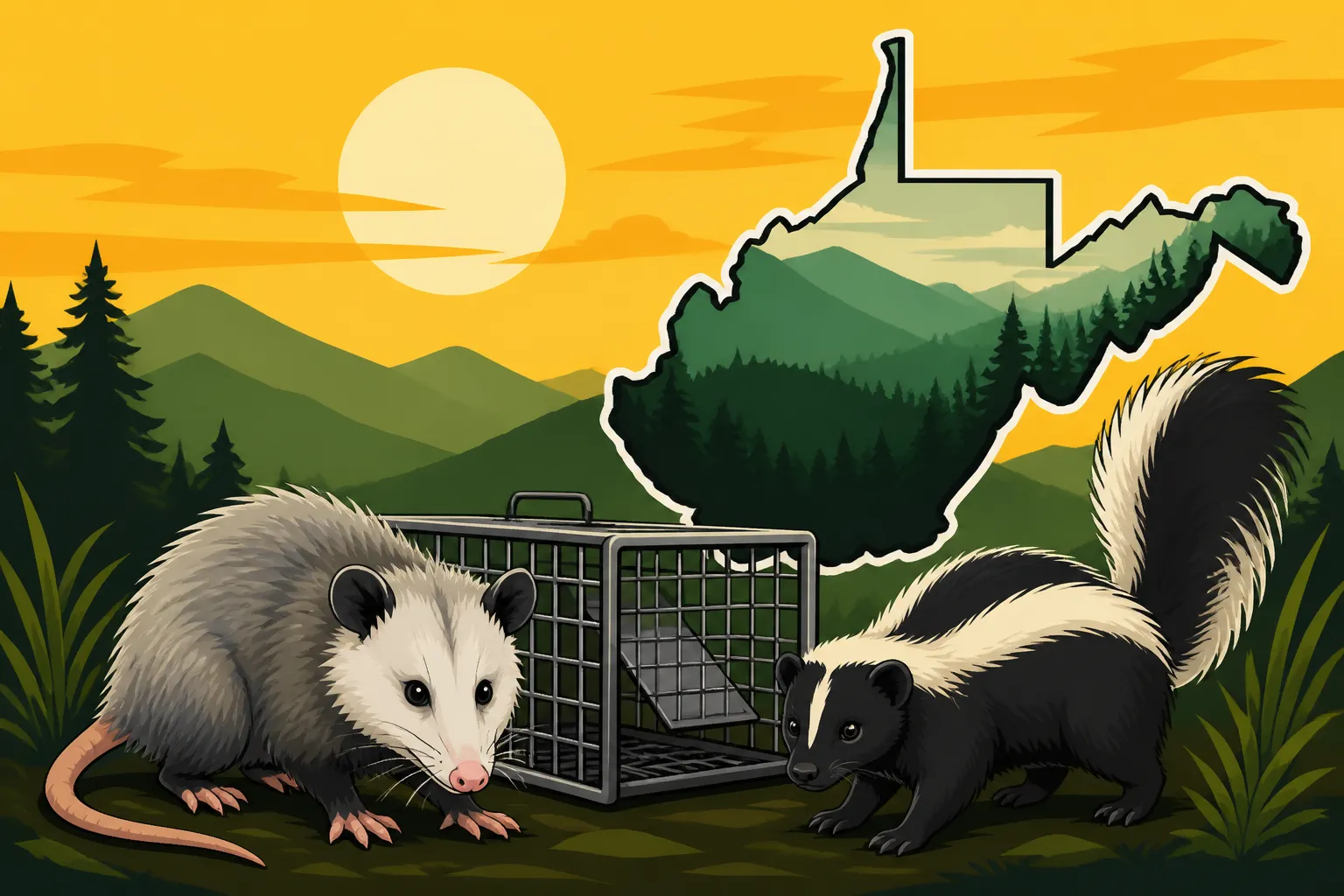
West Virginia Opossum and Skunk Trapping
It's incredibly frustrating to find your chicken coop raided, your pet food dish emptied, or your yard smelling like a rotten egg factory because opossums and skunks have decided your property is their new five-star resort. These critters, while a natural part of West Virginia's ecosystem, can become serious nuisances, causing damage, spreading disease, and, in the case of skunks, leaving an unforgettable stench. This guide will walk you through the specifics of effectively and ethically trapping opossums and skunks in the Mountain State, offering practical advice to address these unwelcome guests.
Understanding Opossum and Skunk Behavior in West Virginia
Before you even think about setting a trap, it's crucial to understand the habits of opossums and skunks. Knowing what makes them tick – where they like to hide, what they eat, and when they're most active – is the first step in successful and humane removal. West Virginia's diverse landscape, from dense forests to suburban backyards, offers plenty of opportunities for these adaptable creatures to thrive, often right alongside us.
Opossum Habits and Habitat Preferences
Opossums are truly unique, North America's only marsupial, and they've perfected the art of opportunism. If you've got an opossum problem, it's usually because you're offering them something they can't resist: food or shelter. They are omnivores through and through, meaning they'll eat just about anything. Think about it: garden vegetables, fallen fruit, pet food left outside, carrion, insects, small rodents, bird eggs – nothing is off the menu. This wide-ranging diet makes them highly adaptable to various environments, from deep woods to bustling urban centers.
Their habitat preferences are equally flexible. Opossums aren't typically den builders; instead, they prefer to use existing shelters. This could mean hollow logs, abandoned burrows dug by other animals, brush piles, or, to our dismay, under our sheds, decks, or even in our attics and garages. They are largely nocturnal, meaning they do most of their foraging and moving under the cover of darkness. If you're seeing an opossum during the day, it's not necessarily a sign of rabies (though caution is always warranted); it could simply be a nursing mother out searching for extra food or an animal whose den was disturbed. Look for signs like knocked-over trash cans, missing pet food, or droppings that resemble those of a small dog, often with berries or seeds visible.
Skunk Habits, Dens, and Activity Patterns
Skunks are probably most famous for their potent defensive spray, but understanding their habits can help you avoid a smelly encounter. Like opossums, skunks are nocturnal omnivores, and they're also highly adaptable. Their diet consists largely of insects, grubs, and larvae – a real boon for your garden if you can tolerate their presence – but they'll also readily consume berries, nuts, eggs, small rodents, and, of course, your pet's kibble. Their presence is often identified by small, conical holes dug in lawns where they've been searching for grubs, or, more obviously, by that unmistakable odor wafting through the air.
Skunks are more prone to digging their own dens than opossums, though they'll happily use abandoned burrows, rock crevices, hollow logs, or spaces under buildings, sheds, and porches. These dens provide crucial shelter, especially during the colder months when they might go into a state of torpor (not true hibernation, but a period of reduced activity). Their activity peaks during twilight hours and throughout the night. If you encounter a skunk, remember their spray is a last resort. They'll usually give warning signs first, such as stomping their front feet, hissing, and raising their tail. Respect these warnings, back away slowly, and avoid sudden movements, and you can often avoid getting sprayed.
West Virginia Regulations and Licensing for Trapping
Trapping nuisance wildlife isn't a free-for-all, even if they're causing problems on your property. West Virginia has specific regulations in place to ensure trapping is done legally and ethically. Ignoring these rules can lead to fines, confiscation of equipment, and other legal troubles. It’s always best to be informed and compliant. For detailed, up-to-the-minute information, checking the official West Virginia Division of Natural Resources (WVDNR) website or the current hunting and trapping regulations summary is always your best bet.
Essential Licenses and Permits
Generally speaking, if you're trapping furbearers in West Virginia, you're going to need a valid trapping license. This applies to traditional furbearers like fox, raccoon, mink, muskrat, and bobcat. Opossums and skunks are also considered furbearers. For residents, this typically means a Class EE trapping license or a Class X or X3 combination license which includes trapping privileges. Non-residents have their own specific license requirements, often including a Class O non-resident trapping license. Don't assume that because they're a "nuisance" you can forgo the license; the law is usually quite clear on requiring proper licensing for taking any wild animal.
However, there can be exceptions for landowners or their immediate family members trapping on their own property for animals causing damage, but these exceptions are often quite narrow and might still require reporting or specific methods. Always verify these details with the WVDNR directly if you believe you fall into an exception. It's also worth noting that if you're running a trapline, especially for commercial purposes, additional permits or reporting might be necessary. For broader context on permits, you might find information on related topics like West Virginia Trapping License Requirements useful.
Legal Trapping Methods and Setbacks
West Virginia regulations specify not only who can trap but also how and where. For opossums and skunks, cage traps (live traps) are often the preferred and most legally straightforward method, especially for nuisance removal around homes. Body-grip traps (like Conibear-style traps) and foothold traps, while legal for some furbearers, often come with strict size, setting, and location restrictions, particularly near public roads, trails, or residences. These restrictions are in place to prevent accidental injury to pets, children, or non-target wildlife. For example, some body-grip traps might be restricted to certain sizes or require an enclosure if set on land.
A common regulation is the setback rule, which dictates how close a trap can be set to a public road, dwelling, or public hunting area boundary. These distances can vary, so always consult the current regulations. You certainly don't want to accidentally catch a neighbor's dog or a passing hiker's foot. Additionally, all traps must typically be checked daily, within a specific timeframe (e.g., once every 24 hours), to ensure the humane treatment of any captured animals. Failing to check your traps can lead to an animal suffering unnecessarily and is a serious violation. Understanding these rules is vital to avoid West Virginia Wildlife Violation Penalties.
| Animal | Common Nuisance Issue | Preferred Trap Type (Nuisance) | Common Bait Suggestions | General Activity Time |
|---|---|---|---|---|
| Opossum | Pet food, trash, chicken coop | Live Trap (cage trap) | Cat food, fruit, marshmallows | Nocturnal |
| Skunk | Grubs, dens under structures, spray | Live Trap (solid-sided cage) | Peanut butter, sardines, grubs | Nocturnal |
Effective Trapping Strategies for Opossums
Trapping opossums can be relatively straightforward once you understand their opportunistic nature. The goal is usually to remove them from an area where they are causing problems, rather than for their fur. This means humane, live-capture methods are generally the most appropriate choice, especially in residential or suburban settings.
Best Setups and Bait for Opossums
Live traps, often called cage traps, are your best friend when it comes to opossums. These are wire cages with a spring-loaded door that snaps shut once the animal steps on a trigger plate inside. The beauty of these traps is that they allow you to catch the animal unharmed, giving you the option to release it elsewhere (where legal and appropriate) or humanely dispatch it if necessary. When choosing a trap, look for one that's at least 10" x 12" x 30" to comfortably accommodate an adult opossum.
Placement is key. Set the trap directly in areas where you've seen opossum activity. This could be near a trash can, along a fence line they use, close to a chicken coop, or under a shed where they've been denning. Make sure the trap is on a flat, stable surface so it doesn't wobble or tip, which could spook the animal. Baiting is relatively easy, given their varied diet. Canned cat food, especially fish-flavored, is a powerful attractant. Other good options include sweet fruits (like apples or grapes), marshmallows, or even leftover scraps of meat. Place a small amount of bait just inside the entrance to entice them, and then a larger portion past the trigger plate to ensure they step on it. You can even create a "bait trail" leading to the trap with small pieces of food to build their confidence. Remember to check your trap frequently, ideally first thing in the morning, as opossums are largely nocturnal.
Handling and Relocating Opossums Safely
Once you've successfully trapped an opossum, the next steps require careful handling. Even though opossums are generally docile and more likely to play dead than attack, they still possess sharp teeth and claws. Always wear heavy gloves when approaching the trap. If the opossum is indeed "playing possum," it might appear lifeless; however, it's just a defensive mechanism, and they can snap out of it quickly.
Relocation is often the desired outcome, but it's important to understand the regulations regarding this practice. In West Virginia, as in many states, it can be illegal to relocate wildlife without specific permits due to concerns about spreading disease or disrupting ecosystems. Always verify current WVDNR regulations on relocation. If relocation is permitted, transport the animal in the closed trap to a suitable, distant wild area (at least 5-10 miles away) away from human habitation. Choose a spot with natural cover, food, and water. Carefully open the trap door and allow the opossum to exit on its own. Never try to prod or force it out. If relocation isn't allowed or feasible, humane dispatch should be considered as per WVDNR guidelines, often involving methods that ensure quick and minimal suffering.
Effective Trapping Strategies for Skunks
Dealing with a skunk problem requires a slightly different approach, primarily due to the obvious risk of being sprayed. The goal remains the same: humane and effective removal from your property. Being prepared for the potential odor, and taking steps to mitigate it, is paramount.
Specialized Skunk Traps and Baits
When it comes to skunks, a standard wire cage trap can work, but it comes with a high risk of getting sprayed. The skunk, feeling exposed and threatened, is likely to unleash its defensive weapon. This is where specialized skunk traps truly shine. These are often solid-sided live traps, made from materials like heavy plastic or sheet metal, with only small openings for air and a solid door. The solid sides make the skunk feel more secure and less threatened once captured, significantly reducing the likelihood of a spray. If a skunk can't see what's outside, it often won't feel the need to spray.
Placement of these traps should be similar to opossums: near known dens (under sheds, porches), along travel routes, or where they've been digging for grubs. Baiting is crucial. Skunks are highly attracted to strong-smelling foods. Sardines (packed in oil), canned cat food (fish or liver flavors are great), peanut butter, or even fresh grubs (if you can find them) make excellent attractants. Place a small amount of bait in front of the trigger plate and a larger amount beyond it. Some trappers swear by placing a small piece of fabric soaked in vanilla extract near the trap to help mask any human scent. For general scouting and understanding animal movement, tools like GoHunt or similar mapping applications can help identify likely travel corridors or den sites on larger properties.
Minimizing Spray Risk and Dealing with Caught Skunks
The key to dealing with a caught skunk is minimizing stress and surprise. When approaching a solid-sided skunk trap, move slowly and deliberately. Avoid sudden movements, loud noises, or directly looking into any small openings. The goal is to keep the skunk feeling calm and safe within its enclosed space. Once you confirm a skunk is inside, you can often slowly drape an old blanket or tarp over the entire trap before moving it. This further reduces the visual stimulation for the skunk and makes it feel even more secure, further reducing the spray risk.
Transport the covered trap gently to a suitable relocation site (again, adhering to all WVDNR regulations on relocation, which are often stricter for skunks due to rabies concerns). When releasing, place the covered trap on the ground, slowly open the door, and then walk away quietly. The skunk will eventually emerge when it feels safe. If, despite your best efforts, a skunk does spray, act quickly. For pets, a mixture of hydrogen peroxide, baking soda, and dish soap is often recommended as an effective odor neutralizer. For yourself and your clothes, specialized skunk odor removers or a similar homemade mixture applied thoroughly can help. Always remember to check your local regulations, as relocating animals such as skunks can be problematic due to disease transmission risks. If you're dealing with a consistent nuisance problem, especially on a farm, you might also want to look into broader strategies like West Virginia Deer Damage Permits for Farmers for context on managing wildlife issues.
Common Challenges and Ethical Considerations
Trapping wildlife, even nuisance animals, comes with responsibilities. It’s not just about setting a trap and walking away. Ethical trapping practices are crucial for the well-being of the animals and to maintain a positive public perception of hunting and trapping. Furthermore, being prepared for unexpected situations can save you a lot of headache and heartache. When considering a broader approach to wildlife management on your property, remember resources like GoHunt can help you understand habitat features.
Dealing with Non-Target Catches
One of the most common challenges in trapping is catching something you didn't intend to. This could be a raccoon, a stray cat, a curious bird, or even a small game animal like a rabbit. When this happens, it's vital to handle the situation calmly and humanely. First, identify the animal from a safe distance. If it's a domestic animal, like a cat or dog, check for tags and try to contact the owner. If no owner is found, contact your local animal control or humane society.
For wild, non-target species, the goal is a quick and safe release. Approach the trap slowly, speak softly, and keep a calm demeanor. Wear heavy gloves to protect yourself from bites or scratches. Often, simply opening the trap door will allow the animal to exit on its own. Stand clear and allow it to leave without chasing or cornering it. To minimize non-target catches, consider trap placement and bait. Placing traps away from common pet routes, using specific baits (e.g., strong-smelling meat for skunks, sweets for opossums), and using proper trap sizes can help. Regularly checking your traps (at least once every 24 hours, as often required by law for humane reasons) also reduces the stress and potential harm to non-target animals.
Humane Dispatch and Carcass Management
While the ideal scenario is always relocation, there are times when humane dispatch becomes necessary, especially if relocation is illegal, the animal is injured, or if disease is a concern. The most humane methods involve ensuring the animal experiences minimal pain and stress. This typically means a quick, decisive blow to the head or a carefully aimed shot with a small-caliber firearm, if it is safe and legal to discharge a firearm in your area. Always know your local ordinances and consult WVDNR guidelines for the most appropriate and legal methods of dispatch. Never use methods that could cause prolonged suffering.
After an animal has been dispatched, proper carcass management is essential. This prevents the spread of disease, discourages scavengers, and maintains sanitary conditions. Carcasses should be buried deeply (at least 2-3 feet) where they won't be dug up, or double-bagged and disposed of according to local waste management regulations. Never leave carcasses exposed. Consider the potential for diseases like rabies, especially with skunks and opossums. Wear gloves when handling any wild animal, dead or alive, and wash your hands thoroughly afterward. For farmers or landowners dealing with persistent nuisance issues, general guidelines about West Virginia Landowner Deer Permit Rules or even West Virginia Nuisance Bear Reporting Rules can offer perspective on the state's approach to managing problem wildlife on private property, which may extend to smaller furbearers.
Disclaimer
This article is for general informational purposes only and does not constitute professional advice. Laws, prices and regulations vary by location and change over time. Consult a qualified professional for guidance on your specific situation.