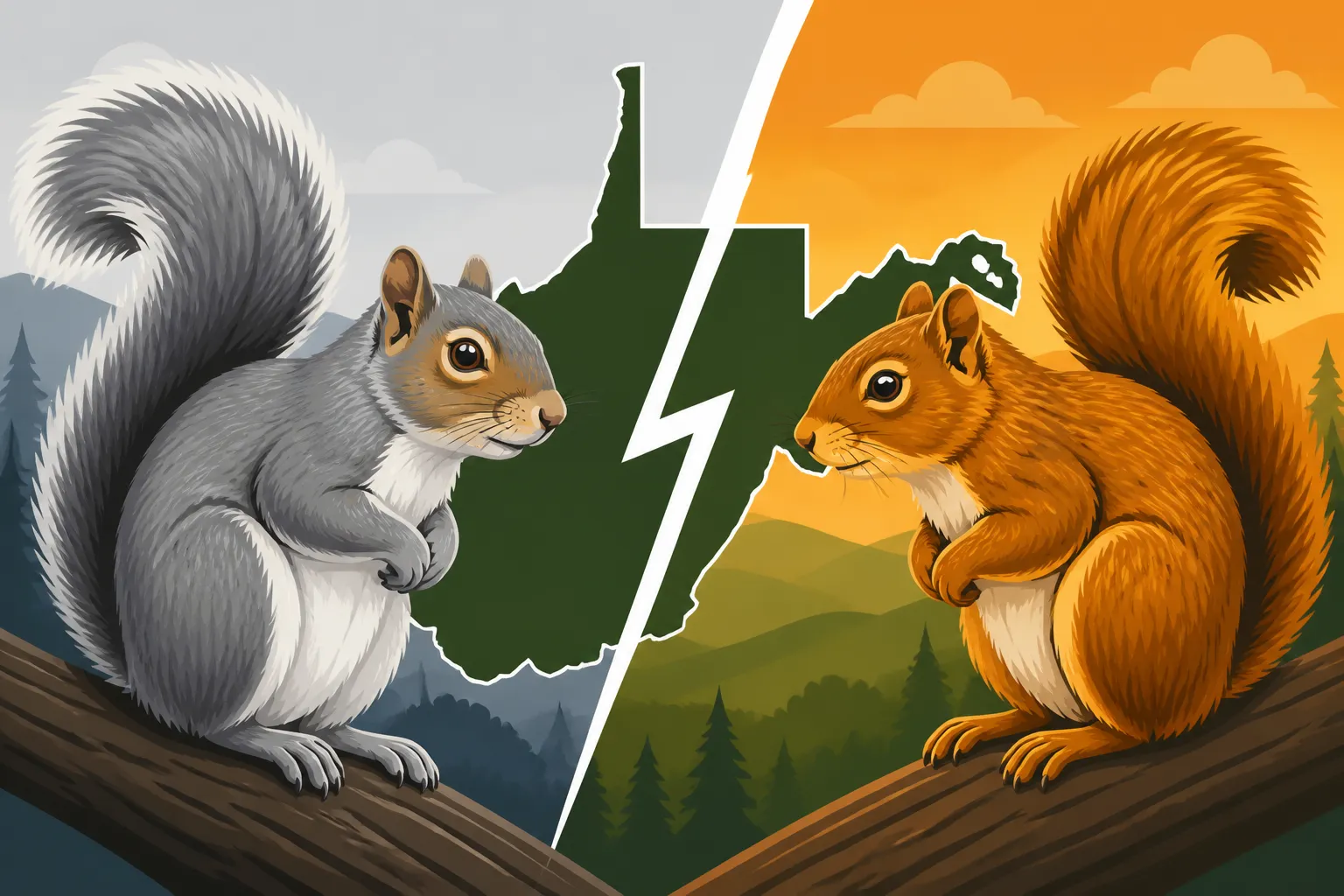
Gray Versus Fox Squirrels in West Virginia
When you're out in the woods of West Virginia, especially during small game season, it's not uncommon to spot a flurry of bushy tails scrambling up an oak or darting across the forest floor. But for many hunters, myself included, there's often a moment of pause: "Is that a gray squirrel or a fox squirrel?" It might seem like a minor detail, but understanding the differences between these two common woodland inhabitants can genuinely change how you approach your hunt, from where you scout to the tactics you employ. This guide is all about helping you confidently tell these two fantastic game animals apart, understanding their unique habits, and ultimately, becoming a more successful and knowledgeable West Virginia small game hunter.
Understanding the Common West Virginia Squirrels
West Virginia is truly a paradise for squirrel hunters. Our diverse forests, from the high Alleghenies to the river bottoms, provide ample habitat for both the ubiquitous Eastern Gray Squirrel and its larger, more distinctly colored cousin, the Eastern Fox Squirrel. While both offer thrilling hunts and delicious table fare, they have distinct personalities and preferences that are worth exploring.
The Eastern Gray Squirrel: Our Acrobatic Woodland Dwellers
The Eastern Gray Squirrel (Sciurus carolinensis) is probably what most folks picture when they think of a squirrel. They're the ones you see scampering through suburban parks, raiding bird feeders, and performing incredible aerial feats between tree branches. In West Virginia, they thrive in mature hardwood forests, particularly those with a strong mast crop of oaks, hickories, and beeches. These squirrels are, as their name suggests, predominantly gray, but don't let that fool you into thinking they're bland. Their bellies are typically white, and you'll often see a rusty or brownish tinge on their flanks, especially in their winter coats.
What makes gray squirrels so fascinating to hunt is their sheer numbers and their incredible agility. They are arboreal masters, moving through the canopy with astonishing speed and grace. If you spook a gray squirrel, it's likely to flatten itself against a tree trunk on the opposite side, playing a game of peek-a-boo, or disappear into a tangle of vines high above. They're social creatures, and where you find one, you'll often find several others nearby, making them excellent targets for patient still-hunting or methodical drives. Their diet primarily consists of nuts and seeds, which they bury for later retrieval, along with buds, fungi, and sometimes even insects. They're constantly busy, which makes them visible, but also makes them challenging to get a bead on. You can learn more about hunting these agile creatures in Squirrel Hunting West Virginia Bottomland Hardwoods.
The Eastern Fox Squirrel: Our Larger, More Terrestrial Cousins
The Eastern Fox Squirrel (Sciurus niger) is a different beast entirely, both in appearance and demeanor. While they share our West Virginia woods with grays, they generally prefer more open, mature hardwood stands with less dense undergrowth, often on the edges of agricultural fields or along river bottoms where big, widely spaced trees provide both food and escape routes. They're noticeably larger than gray squirrels, often appearing almost twice the size, with a robust body and a very long, bushy tail that often has a reddish-orange hue. Their fur coloration is highly variable – hence the common confusion – ranging from grizzled gray with orange underparts to almost entirely reddish-brown or even black in some areas. However, a key identifier is usually their reddish or yellowish belly, flanks, and the underside of their tail, which often lacks the crisp white belly of the gray squirrel.
Fox squirrels are less arboreal than grays, spending a significant amount of time foraging on the ground. When startled, they might climb a tree, but they're just as likely to run along the ground for a considerable distance, sometimes leading you on a merry chase. They tend to be more solitary than grays, making them a prize for a hunter who spots one. Their diet is similar to gray squirrels, heavy on mast, but they also incorporate more agricultural crops like corn and soybeans when available. Their preference for more open timber means that while they might not be as acrobatic, they can be harder to approach undetected in their preferred habitat. Understanding the subtle West Virginia Fox Squirrel Color Variations can really help you out in the field.
Key Differences: Telling Gray from Fox in the Field
When you're out in the woods, especially with that early morning light playing tricks on your eyes, it can be tough to distinguish between squirrel species. You need clear, concise cues that you can rely on. I’ve spent countless hours trying to make that split-second identification myself, and it really comes down to a few consistent features. Forget trying to identify them just by a quick flash of movement; you need to look for specific traits.
Size and Body Proportions
This is often the most immediate and reliable indicator, provided you have something for scale or see them side-by-side (which sometimes happens!).
- Eastern Gray Squirrels: Think "medium-sized." They typically measure about 18-20 inches from nose to the tip of their tail, with their body being roughly 9-10 inches and the tail making up the rest. They usually weigh between 1 to 1.5 pounds. When you see a gray squirrel, they appear nimble, almost delicate, in their movements through the branches. Their body is lean and built for speed and agility in tight spaces.
- Eastern Fox Squirrels: These are the "big boys" of the West Virginia squirrel world. They are substantially larger and heavier than grays, often appearing almost massive in comparison. A typical fox squirrel will be 20-27 inches long, with their body length reaching 12-15 inches. Their weight can easily push 2 to 3 pounds, sometimes even more. Their build is more robust, almost stocky, and their tail is noticeably longer and bushier in proportion to their body than a gray squirrel's. This larger size often translates to a slightly slower, more deliberate movement, especially on the ground. When they climb, they appear to lumber more than scamper.
Coloration and Fur Patterns
While size might be the most obvious, color is where things get interesting and sometimes tricky. As mentioned earlier, fox squirrels, in particular, can have quite a range of colors.
- Eastern Gray Squirrels: The clue is in the name! Their back and sides are generally a salt-and-pepper gray, often with a subtle brownish or rusty wash, especially on their face, head, and feet, and sometimes down their flanks. Their belly and the insides of their legs are almost always pure white or off-white. The tail is typically gray, heavily frosted with white-tipped hairs, giving it a somewhat "salt-and-pepper" appearance similar to their body, but often lighter at the edges. This white frosting on the tail is a very good distinguishing feature.
- Eastern Fox Squirrels: This is where it gets complex. Their coloration is far more variable. They often have grizzled gray or brownish-gray fur on their backs, but their underparts (belly, chest, and sometimes the insides of their legs) are typically shades of orange, reddish-brown, or yellowish-tan. This warm-toned belly is a primary characteristic that sets them apart from the white-bellied gray. The tail is usually a mix of rusty orange, black, and sometimes yellow hairs, often appearing more uniformly reddish or yellowish overall, lacking the distinctly white-frosted edges of the gray squirrel's tail. In some parts of their range, you'll find "melanistic" (all-black) fox squirrels, though these are less common in West Virginia than other color phases. Pay close attention to the belly color and the general absence of distinct white on the tail for fox squirrels.
Habitat Preferences and Behaviors
Beyond looks, understanding where and how these squirrels prefer to live and act can be a huge help in identifying them, and in finding them!
- Eastern Gray Squirrels: These are true forest dwellers. They prefer dense, mature deciduous or mixed forests with a good understory and plenty of canopy cover. Think vast tracts of oak-hickory woods, particularly those with a diverse mix of tree ages that offer both old den trees and younger growth for cover. They are highly arboreal, spending most of their active hours high in the trees, navigating branches with astounding agility. When alarmed, they will typically ascend the nearest tree and either freeze on the backside or disappear into a den hole. They are more social, and you'll often see multiple grays feeding or chasing each other in close proximity. If you're hunting in the thick timber of the Monongahela National Forest, you're likely chasing grays. I often find them by listening for their chattering, or the distinct sound of acorns hitting the dry leaves below as they cut them from the branches. This is a tell-tale sign I write about in Reading Cuttings Under an Oak.
- Eastern Fox Squirrels: Fox squirrels prefer more open, park-like stands of mature timber, often on the edges of fields, orchards, or along stream and river bottoms. They like areas where trees are more widely spaced, providing clear sight lines but still offering robust den trees. While they can climb, they are much more terrestrial than grays, spending a significant amount of time foraging on the ground. When startled, a fox squirrel might run along the ground for quite a distance before deciding to climb a tree, or they might just flatten themselves against a large limb rather than immediately fleeing. They tend to be more solitary, though you can find multiple fox squirrels in a prime habitat area, they often don't interact as closely as grays. If you're hunting the edges of farmland in the Eastern Panhandle, or the more open stands near the Ohio River Valley, you're more likely to encounter fox squirrels. I’ve seen many a fox squirrel bolt across a field to the safety of the nearest woodlot.
Here's a quick comparison table to keep in mind when you're afield:
| Feature | Eastern Gray Squirrel | Eastern Fox Squirrel |
|---|---|---|
| Average Size | 18-20 inches (total length), 1-1.5 lbs | 20-27 inches (total length), 2-3+ lbs |
| Body Build | Lean, agile, built for canopy navigation | Robust, stocky, built for ground foraging |
| Back/Sides | Salt-and-pepper gray, sometimes with rusty wash | Grizzled gray/brown, often reddish-brown or yellowish |
| Belly Color | Pure white or off-white | Orange, reddish-brown, or yellowish-tan |
| Tail Color | Gray, heavily frosted with white-tipped hairs | Mix of rusty orange, black, yellow; lacks distinct white frosting |
| Habitat | Dense, mature deciduous/mixed forests, thick canopy | Open, park-like timber, forest edges, agricultural areas |
| Behavior | Highly arboreal, agile climbers, social, den trees | More terrestrial, often runs on ground, more solitary, den trees/ground burrows |
Why It Matters to West Virginia Hunters
Understanding the distinctions between gray and fox squirrels isn't just an academic exercise; it's practical knowledge that can significantly impact your success and enjoyment as a small game hunter in West Virginia. From obeying regulations to optimizing your hunting strategy, knowing your squirrels pays off. West Virginia Small Game Season Rules outlines everything you need to know about the overarching regulations.
Bag Limits and Regulations
While West Virginia is generous with its squirrel seasons, particularly the West Virginia Squirrel Season Opening Day often overlapping with other seasons, it's always critical to know if there are any specific regulations that differentiate between species. In most areas of West Virginia, the regulations for gray and fox squirrels are unified, meaning the daily bag limit and possession limit apply to both species collectively. You don't usually have a separate limit for grays and another for fox squirrels.
However, a savvy hunter always stays current with the official West Virginia Division of Natural Resources (WVDNR) hunting regulations. While rare, regulations can change, or specific areas (like certain Wildlife Management Areas or special hunts) might have unique rules. The general consistency for both species across most of the state makes things simpler, but a quick check of the current year's digest is non-negotiable before heading out. When you're using a tool like GoHunt to scout and plan, it's a great habit to double-check the latest WVDNR updates for any nuances that might affect your specific hunting zone.
Tailoring Your Hunting Tactics
This is where identifying your target truly shines. Knowing whether you're in prime gray squirrel or fox squirrel country can guide your entire approach.
- For Gray Squirrels: If you're deep in dense, mature timber, surrounded by towering oaks and hickories, you're likely in gray squirrel heaven. Your tactics should lean heavily on still-hunting and patient observation. Move slowly, stopping often to scan the tree canopy and listen for cutting nuts or rustling leaves. Grays are masters of disappearing on the far side of a tree, so move to circle the tree quietly or use a squirrel call to coax them into showing themselves. I often find that finding a good stand of cutting nuts and sitting still for 20-30 minutes, especially in the early morning, will eventually result in grays showing themselves. Their numbers mean if you bust one, another might not be far off. Sometimes, a well-placed squirrel bark from a call can make a nervous gray think another squirrel is there, causing it to peek out from behind a limb. For more traditional tactics, Squirrel Hunting a West Virginia Oak Ridge offers some great advice.
- For Fox Squirrels: If your hunting grounds are more open, perhaps a woodlot bordering a cornfield or an older forest with less undergrowth, prepare for fox squirrels. Because they spend more time on the ground and can cover distance quickly, spot-and-stalk can be very effective. Get up high on a ridge or find a vantage point to glass open timber areas or field edges. Once you spot one, plan your approach carefully, using available cover. Fox squirrels are often more skittish than grays, so a quiet, deliberate stalk is key. They might also hold tighter to a tree if they feel secure, sometimes flattening out on a large limb. Don't be surprised if a fox squirrel runs a hundred yards along the ground before climbing a tree, so be ready for longer shots if you're carrying a rifle or a fast follow-up with a shotgun. Since they are often more solitary, if you harvest one, don't assume the area is "shot out"—another could be nearby, just not as obvious. When using mapping tools like GoHunt, look for areas with less dense canopy cover and proximity to agricultural fields to target fox squirrels.
Managing Habitat for Both Species
For those fortunate enough to manage private land or participate in habitat improvement projects, understanding the preferences of both gray and fox squirrels allows for more effective conservation and hunting opportunities.
- For Gray Squirrels: Focus on preserving and enhancing mature hardwood stands. This means protecting mast-producing trees like oaks and hickories, promoting a diverse age structure within the forest, and ensuring a healthy understory for cover. Creating den trees by leaving some dead snags (if safe) or installing squirrel boxes can also benefit them. Maintaining contiguous blocks of forest is also important, as grays thrive where they can travel through the canopy without touching the ground.
- For Fox Squirrels: Habitat management for fox squirrels often involves promoting more open understories and maintaining mature trees that produce large mast crops. Thinning out overcrowded timber can create the open, park-like conditions they prefer. Planting or protecting larger nut-bearing trees like black walnuts or bur oaks along field edges can also draw them in. Integrating habitat management with agricultural practices, such as leaving some crop residue or planting food plots along timber edges, can also be beneficial, providing both food and cover where they spend a lot of their time on the ground. When planning your hunting trips, tools like GoHunt can help you identify these specific habitat types on public or private land. For instance, knowing where mature hardwoods meet clearings can be a hotspot.
Ultimately, whether you're a seasoned squirrel hunter or just starting, distinguishing between gray and fox squirrels isn't just about identifying a species; it's about understanding the nuances of their lives. It's about respecting the game you pursue, improving your hunting skills, and connecting more deeply with the diverse ecosystems of West Virginia.
Disclaimer
This article is for general informational purposes only and does not constitute professional advice. Laws, prices and regulations vary by location and change over time. Consult a qualified professional for guidance on your specific situation.