West Virginia Apprentice Hunter License Rules
It can feel like there are so many hurdles to clear when you're just starting out in hunting, especially when the thought of sitting through a hunter education course feels like another barrier before you even get into the woods. Thankfully, West Virginia understands this initial hesitation and offers a fantastic solution: the Apprentice Hunter License. This guide will walk you through everything you need to know about these rules, making it easier for aspiring hunters to get out there safely and legally with an experienced mentor.
Understanding the West Virginia Apprentice Hunter License
Getting into hunting for the first time can be a bit daunting. You hear about hunter education courses, licensing requirements, and all sorts of regulations, and it's easy to feel overwhelmed before you've even picked up a shotgun or bow. That's where the West Virginia Apprentice Hunter License comes in – it's designed specifically to ease new folks into the experience, allowing them to participate in the field under the direct supervision of an experienced hunter before they complete their formal hunter education. It’s a bridge, not a permanent solution, offering a taste of the hunting tradition with safety at its core.
The whole idea behind this license is to provide a practical pathway into hunting, fostering mentorship and hands-on learning. It acknowledges that some of the best lessons are learned in the field, side-by-side with someone who knows the ropes. It's a way for parents, grandparents, and seasoned friends to introduce new generations or adult newcomers to the outdoor lifestyle without the immediate pressure of passing a course beforehand. Think of it as a probationary period where learning and safety are paramount.
Who is Eligible for an Apprentice License?
The beauty of the apprentice license is its broad eligibility, aimed at those who haven't yet completed the mandatory hunter education course. This means if you're 8 years old or 80, and you want to try hunting in West Virginia but haven't taken the class, this license is for you. There isn't an age cap, but rather a focus on your hunter education status.
To qualify, the primary condition is that you have not already obtained a certificate of hunter education. This isn't a workaround for those who simply forgot their certificate or don't want to re-take the course; it's genuinely for newcomers. You will, of course, need to purchase the appropriate hunting license for the species you intend to pursue, alongside the apprentice designation. For instance, if you're planning on deer hunting, you'd buy a Class A resident license or Class E nonresident license, along with a deer stamp, and specify it as an apprentice license when purchasing. The state wants to make sure you're legally covered for the game you're after.
How Long Does the Apprentice License Last?
This isn't a one-and-done, single-day permit. The West Virginia Apprentice Hunter License is valid for two full license years. This provides a generous window to get acquainted with hunting, gain some practical experience, and, most importantly, complete your hunter education course. It’s not meant to be a permanent substitute for getting certified. The state wants you to eventually become a fully independent, hunter-education-certified hunter.
After these two license years, the expectation is that you will have completed your official hunter education. This transition is critical because, after the apprentice period, you will no longer be eligible for another apprentice license. The program is specifically designed as a temporary learning phase. Many find that once they've had a positive experience in the field, they're much more motivated to complete the formal education, as they now have a deeper appreciation for why those rules and safety principles are so vital. It’s all about creating responsible, knowledgeable hunters for the future.
Key Rules and Requirements for Apprentice Hunters and Mentors
The apprentice hunter program thrives on a clear set of rules designed to prioritize safety and responsible behavior. It's not just about the apprentice; the mentor plays an absolutely crucial role, bearing significant responsibility for the safety and conduct of the apprentice. This partnership is what makes the program work, ensuring that new hunters get a solid foundation in ethical and safe hunting practices.
One of the cornerstones of safe hunting in West Virginia is adhering to proper West Virginia Blaze Orange Requirements. This is especially true for apprentice hunters and their mentors, as visibility in the field is paramount. Even if you're just scouting or walking to a stand, wearing the proper amount of blaze orange is a non-negotiable safety measure that both mentor and apprentice must observe, making them highly visible to other hunters.
Mentor Requirements and Responsibilities
If you're going to be a mentor, you're signing up for more than just showing someone how to hold a rifle or call a turkey. You are legally and ethically responsible for that apprentice hunter. First and foremost, a mentor must be at least 21 years old. This isn't just an arbitrary number; it ensures that the mentor has a level of maturity and experience to handle the responsibility.
Furthermore, the mentor must be a fully licensed hunter themselves and either possess a valid hunter education certificate or have been born before January 1, 1971. This latter date signifies the point when hunter education became mandatory in West Virginia. So, if you're an old hand who was grandfathered in without the formal course, you can still mentor, assuming you meet the age and licensing requirements.
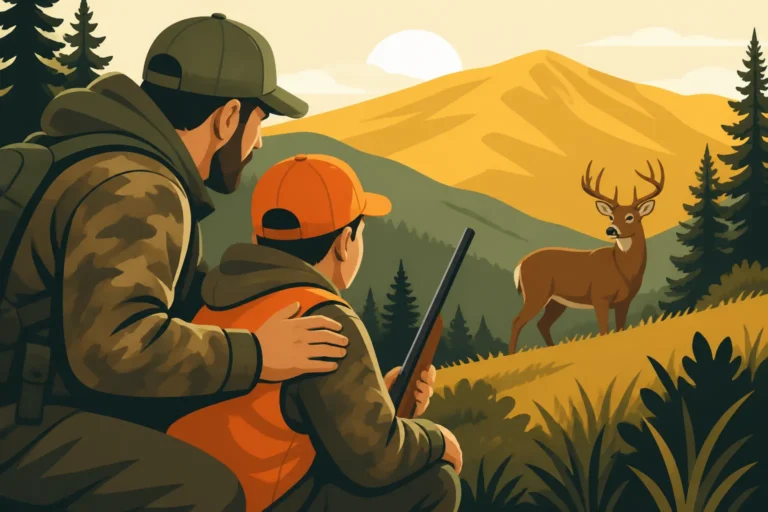
The most critical rule for mentors is direct supervision. This means the mentor must be "within arm's reach" of the apprentice hunter at all times while hunting. This isn't just about being in the same general area; it's about being close enough to physically intervene if a safety issue arises, to offer immediate instruction, or to help with target identification. This close proximity ensures that every shot, every movement, and every decision is made with the immediate guidance and oversight of an experienced individual. The mentor is not just a guide; they are the apprentice's immediate safety net and instructor in the field. This level of supervision is paramount, as detailed in discussions around How Close a West Virginia Mentor Must Stay.
Apprentice Hunter Restrictions
While the apprentice license opens the door to hunting, it comes with important restrictions that must be followed strictly for safety and legal compliance. The most significant restriction, tied directly to the mentor's responsibility, is that an apprentice hunter can never hunt alone. They must always be under the direct, within-arm's-reach supervision of their qualified mentor. This isn't just a suggestion; it's a legal requirement that underpins the entire program.
Apprentice hunters are also subject to all other statewide hunting regulations, including season dates, bag limits, legal weapons, and tagging requirements. For example, if you're an apprentice hunter participating in West Virginia's Buck Gun Season, you still need to know the proper caliber restrictions and follow all the specific rules for that season. This isn't a free pass to ignore regulations; it's an opportunity to learn them firsthand with guidance.
It's also important to note that the apprentice license generally does not permit hunting migratory birds (like ducks, geese, or doves). These species often have additional federal requirements, including HIP certification and federal duck stamps, which typically require a full hunter education course. So, while you might be able to chase squirrels or deer with your mentor, make sure to check species-specific regulations carefully if you're considering other game. Understanding West Virginia Legal Firearms for Deer Hunting is a good starting point for learning what weapons are permissible under supervision.
Obtaining and Utilizing Your West Virginia Apprentice License
Getting your apprentice license is a straightforward process, designed to remove as many bureaucratic barriers as possible. The goal is to get new hunters into the field, safely learning from a mentor, rather than bogging them down with paperwork. Once you have it, knowing how to leverage this unique opportunity is key to a successful introduction to hunting.
The Application Process
The easiest way to get your West Virginia Apprentice Hunter License is directly through the official state licensing system. You can purchase it online via the Go Wild West Virginia portal, which many hunters affectionately refer to as GoHunt. This digital platform streamlines the process, allowing you to select the appropriate resident or nonresident hunting license (like a Class A for residents or Class E for nonresidents), and then add the apprentice designation. You'll also need to purchase any required stamps for the game you plan to hunt, such as a deer or turkey stamp.
When purchasing, you’ll typically declare your intent to hunt as an apprentice, affirming that you have not completed hunter education. It’s quick, efficient, and ensures you're legally ready for the field. You can also purchase licenses at various authorized license agents across the state, such as sporting goods stores, county clerk's offices, or other retail locations. Always be sure to carry proof of your license while in the field, whether it's a physical copy or stored digitally on your phone, as covered in Carrying Proof of License on Your Phone.
Let's look at a quick comparison of the common resident licenses:
| License Type | Hunter Education Required? | Mentor Required? | Can Hunt Alone? | Duration | Primary Use |
|---|---|---|---|---|---|
| Class A (Resident) | Yes (or born before 1971) | No | Yes | 1 Year (July-June) | General Hunting, Small Game, Deer, Turkey |
| Class X (Resident Combo) | Yes (or born before 1971) | No | Yes | 1 Year (July-June) | Hunting & Fishing Combo |
| Apprentice (w/Class A/E) | No | Yes (21+, H.E. or born before 1971) | No | 2 License Years | Supervised Introduction to Hunting |
| Class E (Nonresident) | Yes (or born before 1971) | No | Yes | 1 Year (July-June) | General Hunting, Small Game, Deer, Turkey |
Transitioning from Apprentice to Certified Hunter
The apprentice license is a fantastic entry point, but it's crucial to view it as a stepping stone. The ultimate goal is to complete your formal hunter education course within those two license years. This transition is important not just for legal reasons, but for your development as a safe and confident hunter. The knowledge gained in a hunter education course, whether taken online or in person, goes far beyond just what's legal; it delves into wildlife conservation, ethical considerations, field dressing, survival skills, and a deeper understanding of responsible firearm handling.
Once you complete your hunter education, you'll receive a certification card. This card, along with your regular hunting license and any required stamps, signifies your full qualification to hunt independently in West Virginia. At this point, you'll no longer need a mentor within arm's reach and can enjoy the full freedom and responsibility of a certified hunter. The WVDNR provides resources through the GoHunt website to help you locate and register for hunter education courses, whether you prefer an online format or a traditional in-person class. Taking West Virginia Hunter Education Requirements seriously is the final step in becoming a truly independent hunter.
Benefits and Considerations of the Apprentice Program
The West Virginia Apprentice Hunter License isn't just another piece of paper; it's a carefully crafted program designed to nurture new hunters and ensure the continuation of our rich hunting heritage. It provides significant advantages, but like any program, it's essential to approach it with the right mindset and understand its true purpose.
Why the Apprentice License is a Game-Changer
For many, the biggest hurdle to starting hunting isn't a lack of interest, but the perceived complexity of getting started. The apprentice license dramatically lowers this barrier. Imagine a teenager or an adult who's always wanted to try hunting but just hasn't had the time or opportunity to complete the full hunter education course. This license allows them to step into the field immediately, under guidance, and experience hunting firsthand. This practical, real-world introduction can solidify their interest and motivation in a way that a classroom setting alone might not.
It also strongly promotes mentorship, which is perhaps the most valuable aspect of the program. Hunting traditions are often passed down through generations, and the apprentice license formalizes this process. An experienced hunter can share not just technical skills, but also the ethics, conservation values, and deep respect for nature that are central to hunting. This direct, one-on-one teaching helps new hunters build confidence and a strong foundation in responsible hunting practices from day one. It's a fantastic way to engage with the younger generation and ensure the legacy of hunting continues to thrive, even through special events like the West Virginia Youth Deer Weekend Rules.
Common Misconceptions and Best Practices
One common misconception is that the apprentice license is a permanent solution or an "easy way out" of hunter education. This couldn't be further from the truth. As mentioned, it's valid for only two license years, and the expectation is that you will complete hunter education during that time. It's an introductory pass, not a permanent exemption. Another misunderstanding might be that the mentor's responsibility is casual; however, the "within arm's reach" rule is strict and legally binding, underscoring the mentor's critical role in safety.
For best practices, communication between mentor and apprentice is paramount. Discuss expectations, safety rules, and hunting plans thoroughly before stepping into the field. Mentors should continually reinforce gun safety, shot placement, ethical considerations, and game identification. For the apprentice, ask questions, pay close attention, and absorb every lesson. Utilize resources like the official GoHunt website to understand all the regulations, find hunter education courses, and even explore public hunting opportunities. While under supervision, you might even learn basic scouting techniques that will prove invaluable once you can hunt independently, such as Scouting West Virginia Public Land Before Season. Remember, this program is about building a foundation for a lifetime of safe and responsible hunting.
Disclaimer
The information provided in this guide is for general informational purposes only and is not legal advice. Hunting regulations can change, and it is the sole responsibility of the hunter to be aware of and comply with all current West Virginia hunting laws and regulations. Always consult the official West Virginia Division of Natural Resources (WVDNR) regulations and guidelines before hunting.