Night Hunting Rules for West Virginia Coyotes
Many West Virginia hunters find themselves grappling with frustrating coyote populations, especially when these cunning predators become most active under the cover of darkness. The question of whether it's even legal to hunt coyotes at night, and what specific rules govern such activity, often creates confusion. This comprehensive guide aims to demystify the regulations surrounding night hunting coyotes in the Mountain State, ensuring you can manage these animals effectively and within the bounds of the law.
Understanding West Virginia's General Night Hunting Regulations
Before diving into the specifics of coyote hunting, it’s essential to grasp West Virginia's overarching rules for hunting after dark. The state takes a very deliberate approach to hunting hours for most game species, and understanding this general framework helps clarify why coyotes are treated differently.
Defining "Night" in Hunting Terms
For the vast majority of game animals in West Virginia – think deer, bear, turkey, and small game – the legal hunting day is very precisely defined. It extends from one-half hour before sunrise to one-half hour after sunset. This isn't just a suggestion; it's a hard and fast rule. Anything outside of this specified window is legally considered "night." This window is typically based on official sunrise and sunset times, which you can find in your annual hunting regulations booklet or often on reliable hunting apps like GoHunt, which integrate this crucial time-sensitive data.
The intention behind these strict daylight-only hours for most species is multi-faceted. It promotes fair chase, prevents the poaching of other regulated game, and significantly enhances hunter safety by ensuring adequate visibility for target identification and shot placement. If you're out in the woods for any species other than those explicitly exempted, you must adhere to these daylight hours. Taking a shot just a few minutes after the official close of legal shooting light, even if you still feel you have good visibility, could put you in violation of state hunting laws.
Exceptions to the General Rule
While the default is daylight-only, West Virginia hunting regulations do carve out specific, narrow exceptions. These exceptions are typically for species that are considered nuisance animals, those that pose a threat to livestock or other wildlife, or in very controlled management scenarios. Feral hogs, for instance, have some special provisions that allow for extended hunting opportunities due to their destructive nature. These exceptions are not widespread, and hunters should never assume that if one species has an exception, another does.
Historically, the WVDNR has been cautious about expanding night hunting opportunities to prevent potential abuses, ensure public safety, and protect non-target species. It’s important to understand that if a species isn't explicitly listed as having night hunting allowances, then the general daylight rule applies. Trapping, which is a passive method, generally operates 24 hours a day and is distinct from active night hunting with firearms. These limited exceptions lay the groundwork for understanding why coyotes are treated with a different set of rules, acknowledging their unique ecological role and management needs.
Specific Rules for Night Hunting Coyotes
Coyotes fall into a special category in West Virginia due to their year-round presence and status as an unregulated species in terms of traditional hunting seasons and bag limits. This distinction is key when it comes to night hunting.
Legal Hours and Seasons for Coyotes
Here’s the good news for predator hunters: coyotes in West Virginia can generally be hunted year-round. There isn't a closed season for them, reflecting the WVDNR's strategy to allow for continuous management of their populations. More importantly for our topic, night hunting for coyotes is indeed permitted. However, this permission comes with a very critical caveat: night hunting coyotes is only legal on private land and with the express permission of the landowner.
This distinction is non-negotiable. You cannot legally hunt coyotes at night on public lands, such as Wildlife Management Areas (WMAs) or the Monongahela National Forest. Public lands are managed under a different set of regulations that generally uphold the daylight-only rule for all hunting activities, regardless of species. On private land, however, once you have that permission, you are not bound by the typical half-hour before sunrise to half-hour after sunset rule for coyotes. This means you can pursue them throughout the nocturnal hours, which is often when these wary predators are most active and vulnerable to calling tactics. Learning more about Coyote Calling in West Virginia Farm Country can significantly enhance your success during these prime hours.
Required Permits and Landowner Permission
To legally engage in night hunting for coyotes in West Virginia, you must meet a few specific requirements. First, possessing a valid West Virginia hunting license is non-negotiable. Even though coyotes are often considered nuisance animals, you still need to be a licensed hunter. There isn't a separate, specific "night hunting permit" for coyotes; your general license covers it.
Second, and this cannot be overstated, obtaining clear, explicit permission from the private landowner is absolutely crucial. While verbal permission is legally binding, securing written permission is always a safer practice. This documentation can prove invaluable if you encounter any questions from law enforcement or game wardens, providing clear evidence that you are hunting legally and with consent. Many landowners are keen to have coyote populations reduced due to concerns about livestock depredation or impact on deer fawns, so approaching them respectfully and professionally with a clear plan can often yield positive results.
Without proper landowner permission, you are trespassing, which can lead to significant legal penalties, including fines and the potential loss of hunting privileges, as detailed in West Virginia Wildlife Violation Penalties. Tools like GoHunt can be extremely helpful for identifying land ownership boundaries, assisting you in making initial contact with property owners. Always prioritize maintaining a positive relationship with landowners by respecting their property, understanding West Virginia Posted Land Rules, and adhering strictly to their wishes.
Navigating Equipment and Restrictions for Night Hunting
The advancements in hunting technology have opened new avenues for night hunting, but hunters must understand the specific rules governing equipment use in West Virginia.
Use of Artificial Lights and Illumination Devices
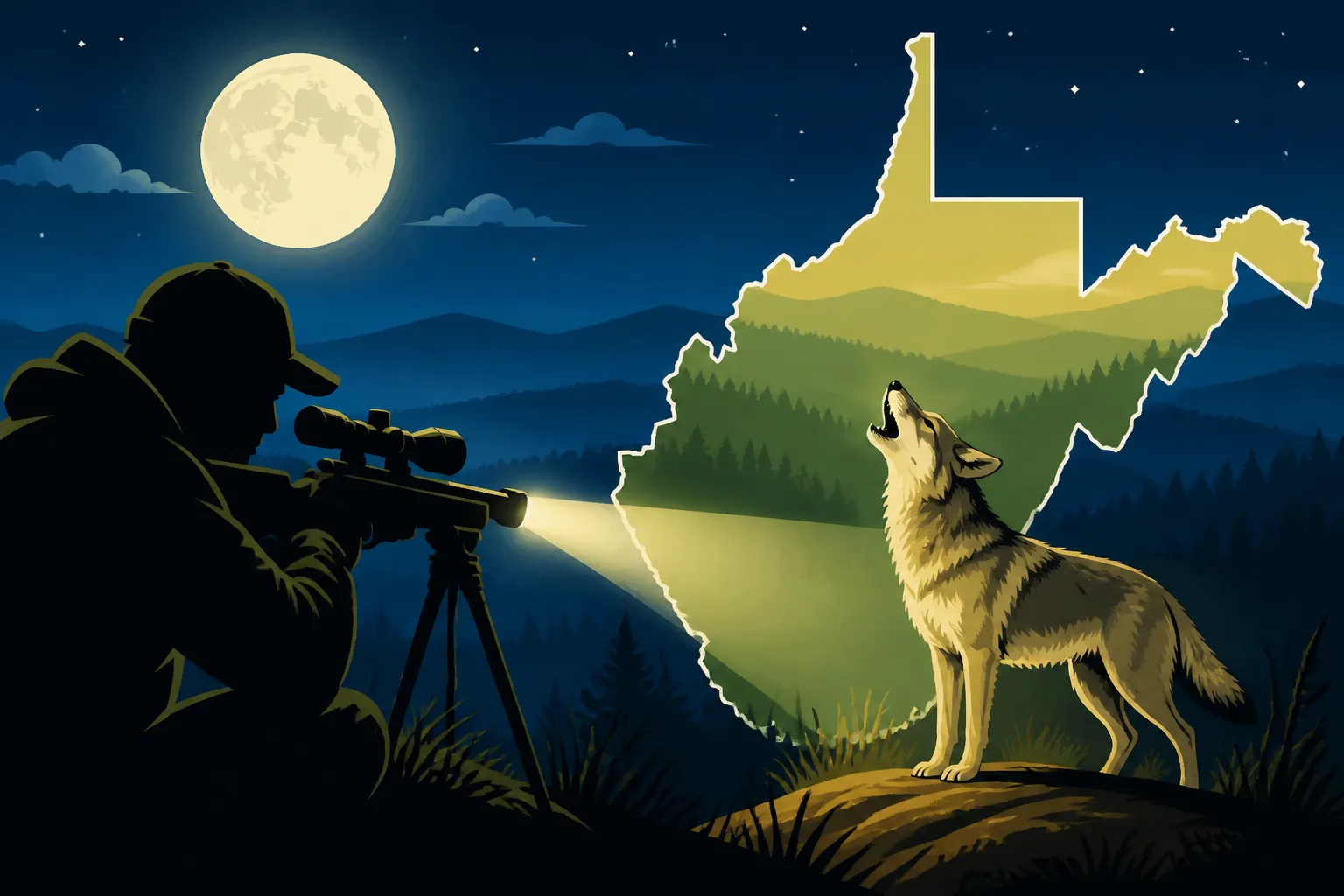
One of the significant advantages of night hunting coyotes on private land in West Virginia is the legal ability to use artificial lights. This means spotlights, flashlights, headlamps, or weapon-mounted lights are permitted. This is a crucial distinction from deer hunting, where shining a light on a deer after dark is illegal and often considered a poaching offense. For coyotes, these illumination devices become an invaluable tool for spotting, identifying, and taking a shot.
When using artificial lights, ethical considerations and safety must always be paramount. While legal, you should avoid shining powerful lights towards inhabited residences or public roadways in a way that could cause alarm, nuisance, or safety hazards. Many predator hunters opt for red or green filtered lights, believing these are less likely to spook coyotes or cause them to react negatively compared to bright white light. Understanding the terrain you're hunting in during daylight hours, knowing where property lines lie, and identifying potential backstops will allow you to use lights safely and effectively in the dark.
Thermal and Night Vision Devices
The world of thermal and night vision technology has truly transformed night hunting, and West Virginia recognizes its utility for coyote control. For night hunting coyotes on private land with landowner permission, the use of both night vision and thermal imaging devices is generally permitted. These sophisticated optics allow hunters to either amplify ambient light (night vision) or detect heat signatures (thermal), providing a distinct advantage in locating and tracking nocturnal coyotes. Many hunters integrate these devices, using handheld thermal scanners to locate animals and then switching to night vision or illuminated optical scopes for positive identification and shooting. You can delve deeper into Thermal and Night Vision Rules in West Virginia for broader insights.
Despite the technological edge these devices provide, they do not negate the fundamental rules of safe and ethical hunting. Positive target identification remains critical. A thermal device might show a clear heat signature, but it might not differentiate between a coyote, a fox, a domestic dog, or even a small bear from a distance in certain conditions. Always strive for a visual confirmation if possible, and be absolutely certain of your target and what lies beyond it before taking a shot. The investment in these devices is significant, but for dedicated predator hunters, they can be game-changers.
Firearm and Ammunition Restrictions
For night hunting coyotes, the general firearm regulations for hunting in West Virginia apply. There are no specific restrictions on the caliber of firearm you can use for coyotes, which differs from some states that have limits for night hunting. Popular choices for coyote hunters often include centerfire rifles known for their accuracy and flat trajectory, such as a .223 Remington, .22-250, or .243 Winchester. Shotguns loaded with buckshot or specialized predator loads can also be highly effective at closer ranges, particularly when calling coyotes into tight cover. The key is to select a firearm and ammunition that allows for a humane kill and can be safely operated within your hunting environment. For general firearm guidance, refer to West Virginia Legal Firearms for Deer Hunting.
While state law permits night hunting coyotes under the specified conditions, it's always prudent to be aware of any local ordinances. Some municipalities or heavily populated areas might have specific noise restrictions or firearm discharge setbacks that could affect your ability to hunt, even on private land. Always check with local authorities if you have any doubts about potential conflicts with local laws. Ensure any magazines used comply with state hunting capacity limits. Safe and responsible firearm handling is always paramount, regardless of the species or time of day.
| Equipment Type | Legality for Night Coyote Hunting (Private Land, with Permission) | Notes |
|---|---|---|
| Valid West Virginia Hunting License | Required | Mandatory for all hunting activities in the state. |
| Landowner Permission | Required | Express permission (written is highly recommended) from the private landowner. |
| Artificial Lights | Permitted | Spotlights, flashlights, weapon-mounted lights, and headlamps are allowed. Use responsibly, avoiding residences or public roads. |
| Night Vision Devices | Permitted | Can be handheld or weapon-mounted. Aids in low-light target detection and identification. |
| Thermal Imaging Devices | Permitted | Can be handheld or weapon-mounted. Excellent for detecting heat signatures, but always confirm target visually if possible. |
| Firearms (Rifles, Shotguns) | Permitted (General WV Hunting Regulations Apply) | No specific caliber restrictions for coyotes. Choose appropriate firearm/ammunition for ethical and safe take. Check local discharge ordinances. |
| Suppressors/Silencers | Legal to Own and Use | Legal in West Virginia for hunting. Helps reduce noise pollution, especially important for night hunting near populated areas. |
| Vehicle-Mounted Lights | Permitted (for spotting, not shooting from vehicle) | Can be used to scan fields from a vehicle on private land, but generally illegal to shoot from a vehicle, especially on or across a public road or right-of-way. |
Safety Considerations and Ethical Practices for Night Hunting
Night hunting introduces unique challenges and responsibilities. While the thrill of pursuing coyotes under the stars is undeniable, safety and ethical conduct must always come first.
Identifying Your Target and Backstop
The diminished visibility inherent in night hunting significantly elevates the importance of positive target identification and knowing your backstop. In daylight, you have the benefit of a broader field of view and clearer details. At night, even with the best lights, thermal, or night vision, shadows, distance, and environmental factors can make identification tricky. It is absolutely unethical and dangerously irresponsible to take a shot if there is any doubt whatsoever about what you are aiming at. An unknown target could be a domestic animal, another hunter, or even a non-target game animal.
Before you ever head out for a night hunt, it is crucial to thoroughly scout the area during daylight hours. Understand the terrain, identify any roads, trails, structures, or potential hazards that might not be visible in the dark. Pay close attention to elevation changes and any natural backstops like hillsides or dense forest lines that could safely stop a projectile. Remember, Reading Aerial Photos for Eastern Panhandle Deer also applies to understanding the layout of any hunting ground, especially at night. When you do spot a target, take your time. Ensure it is undeniably a coyote. If hunting with partners, always communicate your movements and intentions clearly to avoid any accidental incidents.
Respecting Private Property Boundaries
While you’ve secured landowner permission for the property you’re on, the lines become significantly blurrier in the dark, and respecting all property boundaries is paramount. Even with a GPS device or a mapping app like GoHunt (which is excellent for displaying property lines, even offline if maps are downloaded), boundary markers can be hard to see at night. It is your absolute responsibility to know exactly where the property lines are and to ensure that any shot taken, and any animal pursued, remains within the bounds of where you have permission to hunt.
Crossing a property line, even unintentionally, can lead to serious legal repercussions and irreparable damage to your reputation as a hunter, as well as the crucial relationships between hunters and landowners. If there's any uncertainty about whether a coyote is on your permitted property or a neighbor's, or if your shot might carry onto adjoining land, you must err on the side of caution and refrain from shooting. Consider marking critical boundary points with reflective tape or other visible markers during the day that will be visible with your lights at night. Maintaining excellent landowner relations ensures continued access and helps foster a positive image for hunting in West Virginia.
Disclaimer
Please remember that hunting regulations in West Virginia can change. It is your responsibility to review the most current West Virginia hunting regulations published by the West Virginia Division of Natural Resources (WVDNR) annually before heading afield. This guide is for informational purposes only and should not be considered legal advice.