Deer Carts on Forest Roads
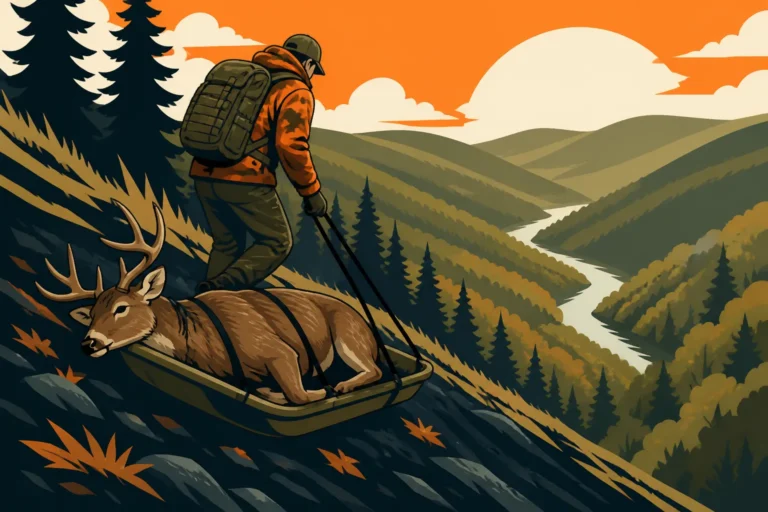
Dragging a deer out of the West Virginia woods after a successful hunt can be an absolute grunt, especially when you're deep in a hollow or high on a ridge. Even when you've managed to get your buck down near a forest road, the thought of wrestling that dead weight over uneven gravel, through mud, and up gentle inclines can make your back ache just thinking about it. This guide is all about how deer carts can transform that grueling recovery into a much more manageable and less painful experience, specifically when you're lucky enough to be hunting near those crucial forest road access points that crisscross our beautiful state.
Why a Deer Cart is a Game-Changer on West Virginia's Forest Roads
Let's be real, a successful hunt is exhilarating, but the work often truly begins after the shot. For many of us, the hardest part of deer hunting isn't the cold sit or the long walk in, it's getting that animal from where it fell back to the truck. West Virginia's terrain, even on what we consider "roads," is notoriously unforgiving. Those old logging roads and forest service paths are rarely flat and smooth; they're often a mix of loose rock, washouts, fallen branches, and sticky mud. This is precisely where a good deer cart earns its keep, turning what could be an exhausting, multi-hour ordeal into a more efficient task.
Alleviating the Back-Breaking Burden
Think about the last time you tried to drag a mature buck, maybe 150 pounds dressed, over a mile of rough ground. The strain on your lower back, shoulders, and knees is immense. Every rock, every root, every slight incline becomes a personal battle. It can be absolutely brutal, leaving you so wiped out that you question if you even want to hunt the next day. I've seen more than one seasoned hunter get sidelined with a pulled muscle or an aching back from a deer drag that went wrong. It's not just about getting the deer out; it's about preserving your body for the rest of the season and the rest of your life.
A deer cart takes that direct physical impact off your body. Instead of literally dragging the deer with your own strength, you're pushing or pulling a cart that distributes the weight over wheels. This makes a monumental difference. You're no longer fighting the friction of the deer's hide against the ground, which can feel like trying to pull a rug across gravel. The wheels roll over obstacles, making progress significantly smoother and less energy-intensive. This is especially true when you're navigating the countless small rises and dips that characterize almost every forest road in our state. You still exert yourself, of course, but it's a pushing or pulling motion that's far more efficient and less damaging to your body than a direct drag.
Efficiency and Speed on Accessible Routes
Time is of the essence after a successful harvest, especially if the weather isn't cooperating. Warmer temperatures or a long recovery can quickly impact the quality of your venison. Every minute saved in getting that deer out and properly cooled down is a minute gained in terms of meat care. Dragging a deer, even with a partner, is a slow process. You stop frequently, adjust your grip, and constantly fight the terrain.
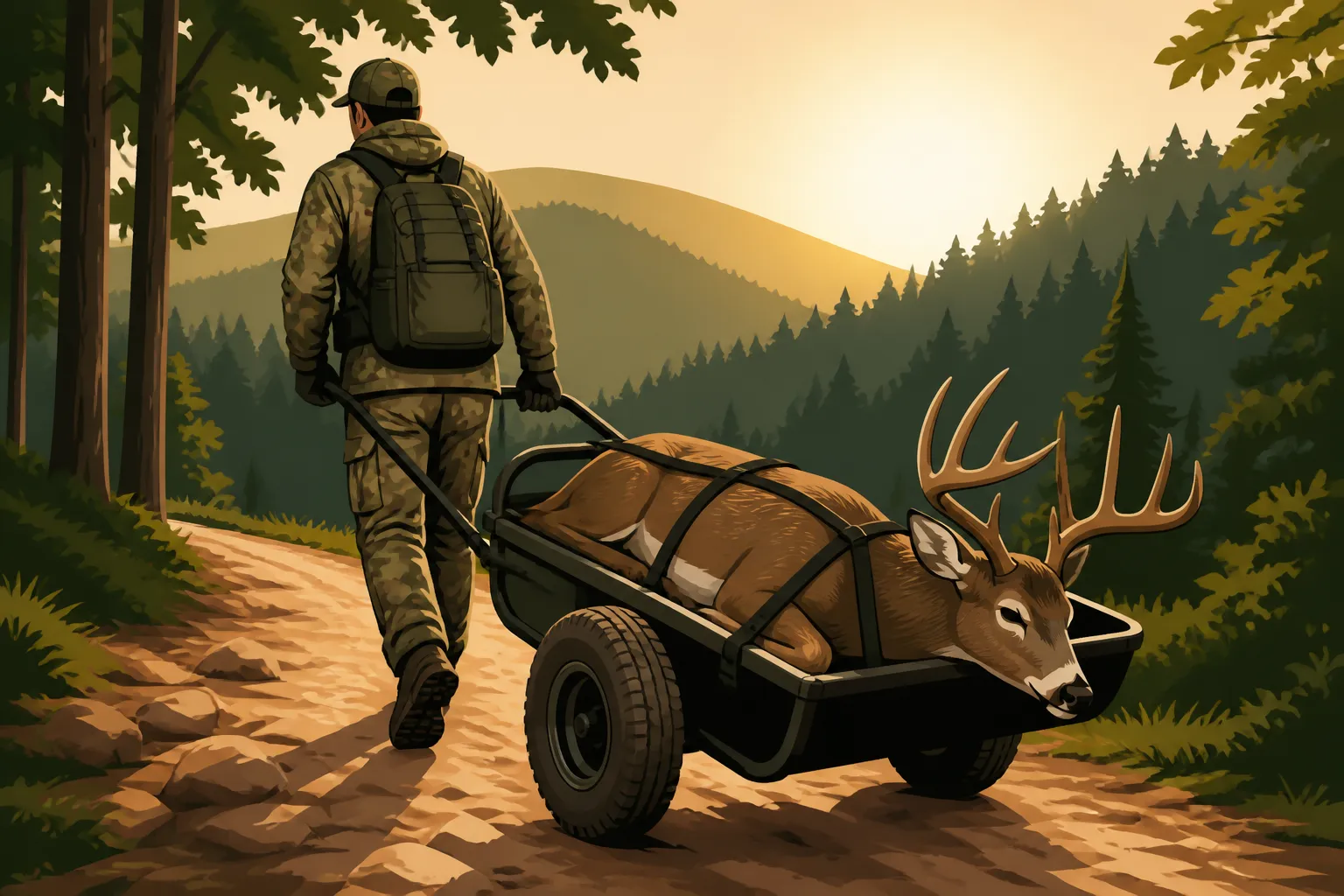
A deer cart dramatically speeds up the process on forest roads. Once the deer is loaded and secured, you can cover ground at a much quicker pace. Instead of a snail's crawl, you're moving at a steady walk, even a brisk pace on downhill sections. This means getting your deer back to the truck, field-dressed and ready for processing, in a fraction of the time it would take to drag it. Quicker recovery also means less time spent in the woods after dark, which is a significant safety benefit, especially when you're hunting in remote areas like the Monongahela National Forest Hunting. Plus, covering ground faster reduces your overall disturbance in the woods, which can be a courtesy to other hunters in the area.
Key Features to Look for in a West Virginia Deer Cart
Not all deer carts are created equal, and what works well on a manicured trail in another state might absolutely fail you on a rugged West Virginia forest road. When you're looking to invest in a cart, you need to consider the specific challenges of our hunting grounds. Durability, maneuverability, and practical design are paramount.
Wheel Type and Size for Variable Terrain
This is, arguably, the most critical feature. Those small, solid plastic wheels you see on some cheaper carts? Forget about them. They'll bog down in mud, get hung up on rocks, and struggle to roll over even small branches. You need substantial wheels with real tires if you plan on navigating West Virginia's forest roads, which are rarely smooth.
Look for carts with large-diameter pneumatic (air-filled) tires, similar to bicycle tires but much sturdier. A diameter of 18-20 inches is a great starting point. Larger wheels handle obstacles better, rolling over roots, rocks, and ruts with less effort. The pneumatic tires absorb shock, making the ride smoother for you and the deer, and providing much-needed traction on slippery surfaces like wet leaves or mud. While you might still benefit from Trekking Poles for Steep Ridge Access for your personal stability, good cart wheels will make the cart itself much easier to manage. Ensure the tires have a decent tread pattern for grip, and always check the air pressure before you head out. Losing a tire in the middle of a recovery can turn a good day bad very quickly.
Frame Construction and Weight Capacity
The frame of your deer cart needs to be robust. West Virginia deer, especially mature bucks, can be heavy. You need a cart that can handle a significant amount of weight without flexing, bending, or failing mid-haul. Materials typically include steel or aluminum. Steel frames are often heavier but incredibly strong and durable, while aluminum frames are lighter, making the cart easier to transport before the kill, but can sometimes come with a higher price tag.
Consider the maximum weight capacity stated by the manufacturer. You want something that can comfortably handle a 200-pound animal, even if you mostly harvest smaller deer. Better to have too much capacity than not enough. Look for a sturdy axle that won't bend under load and strong welds or bolted joints in the frame. A wide wheelbase will also contribute to stability, reducing the chance of the cart tipping over on uneven terrain, which is a common issue on our sloping forest roads.
Foldability and Transportability
Getting the deer cart to and from your hunting spot is also a consideration. If you drive a small vehicle, or if you have to hike a significant distance to the forest road before you even consider loading a deer, a bulky, non-folding cart can be a hassle. Many quality deer carts are designed to fold flat or break down into more compact components, making them much easier to store in the bed of a truck, the trunk of a car, or even strapped to a pack for a short walk-in.
Think about how much space you have in your vehicle alongside your other gear like your rifle or bow, and your Packs for a Monongahela Forest Day Hunt. A cart that can easily fold up and be secured out of the way before the hunt, then quickly deployed when needed, is a huge advantage. Some designs even allow the wheels to be easily removed for an even smaller profile. This might seem like a minor point, but struggling to fit your cart into your vehicle every time you hunt can quickly become frustrating.
Straps, Bungees, and Securing Your Harvest
This is often an overlooked detail, but absolutely crucial. Once you get that deer loaded onto the cart, you need to be able to secure it firmly. Nothing is more frustrating than having your hard-earned buck slide off the cart halfway back to the truck, especially if you're navigating a steep section or a particularly bumpy stretch of road.
Some carts come with integrated straps or bungees, which can be convenient. However, often these are either too short, too weak, or not positioned ideally. It's almost always a good idea to invest in a few high-quality ratchet straps or heavy-duty bungee cords to supplement whatever your cart comes with. You want to be able to cinch the deer down tightly, ensuring it won't shift or roll off. Positioning the deer strategically on the cart, perhaps with its head facing forward over the axle, and then using multiple anchor points for your straps will help keep it stable. This is especially important for preserving meat quality and ensuring the deer isn't jostled unnecessarily.
Tactics for Using Your Deer Cart Effectively on West Virginia's Forest Roads
Owning a deer cart is one thing; using it effectively in the rugged landscape of West Virginia is another. A little planning and technique can make all the difference between a smooth recovery and a frustrating struggle.
Scouting Roads and Access Points
Pre-season scouting is not just for finding deer; it's also for finding recovery routes. Before you ever pull a trigger or release an arrow, spend time studying maps and, ideally, walking the forest roads in your hunting area. Identify which roads are maintained, which are overgrown, and where the easiest access points are. Digital mapping tools like GoHunt or the Scouting With the WVDNR App can be invaluable here. Use satellite imagery to spot clearings, turnarounds, or areas where the terrain looks less severe.
Consider where you're likely to get a deer down in relation to these roads. While you can't predict exactly where a deer will fall, knowing which ridges or hollows are closest to an accessible road can influence your stand placement or still-hunting direction. Marking potential routes and parking spots on your GPS or mapping app is a smart move. Remember, "forest road" can mean anything from a graded gravel path to a barely discernible two-track, so knowing the specific conditions of the roads in your area is key. This planning can save you immense effort when the moment of truth arrives and you need to Recovering a Deer From a Steep Hollow or a dense thicket.
Loading and Securing Your Deer
Getting a heavy, limp deer onto a cart, especially if you're hunting alone, can be a challenge. The key is often leverage and technique. Instead of trying to deadlift the entire animal, position the cart alongside the deer. Roll the deer onto its back, then carefully lift one side and slide the cart underneath as far as possible. Then, roll the deer over the cart, using the cart itself as leverage. Another method is to lift the head and shoulders first, get them onto the cart, then pivot the rear end up.
Once the deer is on, take your time to position it centrally over the axle to distribute the weight evenly. This prevents the cart from feeling front-heavy or back-heavy, which makes pushing or pulling much harder. Then, use those strong ratchet straps or bungees to secure it. Wrap them tightly around the deer and the cart frame, crisscrossing them if possible, to prevent any shifting. Double-check everything before you start moving. A properly secured deer won't move, even over bumps and dips, ensuring a stable and efficient haul. Remember to consider your Field Dressing a Deer in Cold Weather process before loading, as it will reduce overall weight and cool the carcass quicker.
Navigating Different Road Conditions
West Virginia's forest roads are a mixed bag. You might encounter stretches of smooth gravel, deep mud, rocky climbs, or sections choked with fallen leaves and branches. Each presents its own challenge. When going uphill, it's often easier to push the cart from behind, using your legs to power it. For particularly steep sections, having a buddy is invaluable, with one person pulling and another pushing. If you're alone, you might need to take frequent short breaks.
For muddy sections, try to find the shallowest path or use the firmer ground on the edges of the road. Larger wheels with aggressive tread will truly shine here. On rocky stretches, go slow and watch where the wheels are going, trying to avoid sharp rocks that could puncture a tire. Downhill sections require control; don't let the cart run away from you, especially if the ground is slick. Use the cart's handles to slow its descent, walking behind it or to the side. Always be mindful of your footing, especially when you're tired and focused on the cart.
Maintenance and Care for Longevity
A deer cart is an investment, and like any piece of hunting gear, it needs care to last. After each use, especially if you've been in mud or rain, take the time to clean it thoroughly. Mud and grit can get into moving parts and accelerate wear. Wipe down the frame, especially around the joints, and clean the wheels and axles.
Check the tire pressure regularly. Under-inflated tires make the cart harder to push and more prone to punctures. Inspect all bolts, nuts, and moving parts for looseness or wear. Tighten anything that feels wobbly. If your cart folds, check the hinges and locking mechanisms. Store your cart in a dry place to prevent rust, especially if it has a steel frame. With proper care, a quality deer cart can serve you for many West Virginia hunting seasons. You want it ready when you finally get to utilize it after all your hard work of Hunting the West Virginia Rut in November.
Alternatives to Deer Carts and When They Shine
While deer carts are fantastic for forest roads, they aren't always the perfect solution for every recovery scenario in West Virginia. Sometimes, the terrain is just too gnarly, or you're too far from any semblance of a road. It's good to know your options and when to deploy them.
Dragging Sleds
Dragging sleds are essentially large, durable plastic tubs or sheets with a tow rope. They're designed to reduce friction and allow you to slide a deer over various surfaces. They excel in specific conditions where a cart might struggle. For instance, if you're dealing with deep snow, a sled will glide over it much more easily than wheels trying to push through. They are also excellent for really brushy, thick terrain where a cart might snag on every third branch.
The main limitation of a sled is that it still requires significant physical effort to pull the weight directly, especially on dry ground or uphill. On dry, rocky forest roads, a sled will offer far more resistance than a cart. However, if you're just dragging a short distance to get to the forest road where you'll then transfer to a cart, or if you're hunting in particularly remote, trackless areas, a durable sled can be a lifesaver.
Game Sleds and Drags
Sometimes, the old-fashioned way is still the only way. A simple drag rope, perhaps with a harness for your shoulders, is the most basic tool for deer recovery. For very short distances, or in incredibly steep, rugged, and brush-choked areas where even a sled would be difficult to maneuver, direct dragging might be your only choice. Think of areas where you have to literally climb over downed trees or navigate dense laurel thickets.
This is where understanding how to effectively Dragging a Deer Off a Steep Ridge comes into play. You might have to quarter the animal or bone it out on the spot to lighten the load, carrying it out in pieces in a frame pack. While this is the most physically demanding option, it requires the least amount of specialized equipment and can get the job done when other methods are impractical. It's a fundamental skill every West Virginia hunter should know, even if you own a cart.
Calling for Backup (Hunter's Helper)
Never underestimate the power of a good hunting partner or a friend on call. Even with a deer cart, a second set of hands can make a massive difference, especially when loading a heavy deer or navigating a tricky section of road. If you hunt with a group, organizing Deer Drives With Three or Four Hunters can also simplify recovery, as multiple people can assist with getting a downed animal out.
Having someone who can meet you at a predetermined access point, even if just to help with the last half-mile of carting or loading the deer into your truck, can be a huge relief. Building a network of hunting buddies or reliable friends is often the best "gear" you can have in West Virginia. Sometimes, the biggest asset isn't a piece of equipment, but good old-fashioned teamwork.
Here's a quick comparison of these recovery methods:
| Feature | Deer Cart | Dragging Sled | Traditional Dragging (Rope) |
|---|---|---|---|
| Best Use | Forest roads, gravel paths, established trails | Snow, muddy fields, dense brush, short distances | Very steep/rough terrain, short distances, no gear |
| Effort Level | Low-Medium (on suitable terrain) | Medium-High | High (most strenuous) |
| Speed | Fast (on suitable terrain) | Medium | Slow |
| Meat Preservation | Good (quicker egress) | Fair (can accumulate mud/debris) | Fair-Poor (slow, can damage hide) |
| Terrain Issues | Extreme mud, very steep slopes, dense brush | Dry ground, large rocks, very steep climbs | Everything! |
| Portability | Varies (some fold/break down) | High (flat or rollable) | Excellent (just a rope) |
| Cost | Medium-High | Low-Medium | Very Low |
Regardless of your chosen method, remember that safety always comes first. Be aware of your surroundings, especially if you're moving a deer after dark. Using a headlamp and being mindful of other hunters or vehicles on forest roads is crucial. Make sure you check your deer in online or through the app as required by West Virginia Deer Reporting Requirements once it's safely back at your camp or vehicle.
Disclaimer
This article is for general informational purposes only and does not constitute professional advice. Laws, prices and regulations vary by location and change over time. Consult a qualified professional for guidance on your specific situation.