Marsh Boats and Push Poles
Navigating the unique waterways of West Virginia for hunting can be a real headache. Whether you're chasing elusive ducks and geese in a shallow backwater or trying to set traps for beaver and muskrat deep within a marsh, you've probably found yourself in situations where a traditional boat just won't cut it, and wading is either too risky or impossible. This guide is all about tackling those tricky spots, showing you how marsh boats and push poles can unlock access to areas you once thought unreachable, turning frustration into successful outings.
Why Traditional Boats Fall Short in West Virginia Marshes and Backwaters
Picture this: you've scouted a killer spot, ducks are piling into a hidden slough, or a beaver dam promises a great set. You load up your trusty Jon boat, motor humming, only to feel that sickening scrape and grind as your prop chews through mud or your hull gets hung up on a submerged log. It’s a common scenario in West Virginia’s diverse water habitats, and it highlights why conventional watercraft often fail us in these specialized environments.
The Frustration of Shallow Water and Obstacles
Our rivers and creeks, especially after a dry spell or when you venture into oxbows and feeder creeks, can become incredibly shallow. A deep V-hull boat, designed for open water, might float high, but it still draws too much water for many prime hunting spots. Outboard motors, with their lower units, are notoriously vulnerable to shallow water. A prop striking rocks or a mud bank isn't just annoying; it can lead to costly damage and leave you stranded. I've spent more than my fair share of time pulling on a rope, trying to free a prop from thick river grass or a stubborn mud flat, feeling those precious minutes of prime hunting light slip away.
Beyond just the lack of depth, these areas are often riddled with hidden obstacles. Submerged logs, discarded tires, ancient stumps, and dense mats of vegetation like smartweed or lily pads create a minefield for any vessel not specifically designed to glide over or through them. Trying to row through these obstacles with conventional oars often results in them getting tangled or simply not reaching the bottom for effective propulsion. It's a dance of frustration, where you spend more time wrestling your boat than actually hunting. It really makes you appreciate specialized gear like a well-designed marsh boat when you're trying to get into those secret honey holes.
The Limitations of Wading or Bank Hunting
"Why not just wade in?" you might ask. And indeed, for some areas, wading is perfectly viable, even preferred. But West Virginia's water systems are often deceptive. What looks like a shallow edge can quickly drop off into chest-deep mud, making wading treacherous or impossible. The water might be too cold, especially in late fall and winter, posing a serious hypothermia risk if you take an unexpected dip. Plus, wading through thick muck is exhausting, creating noise and stirring up sediment that can spook waterfowl or alert furbearers to your presence long before you're in position.
Hunting from the bank has its own set of drawbacks. Your mobility is severely limited. You can only cover the game that comes to your immediate vicinity. For waterfowl, this means setting decoys within a very restricted range, often where birds might not naturally want to land. For trapping, it means you're confined to easily accessible bank sets, potentially missing out on prime locations deeper in the marsh or across a narrow channel. And then there's the problem of retrieval. Downed ducks or geese, or animals in traps, often fall into inaccessible water, leaving you scrambling to find a way to get them back. Trying to retrieve a drake mallard from the middle of a beaver pond without a boat can be a wet, frustrating, and often unsuccessful endeavor. This is where specialized tools like marsh boats and push poles really shine, allowing you to bridge that gap between land and inaccessible water. If you're looking for more general waterfowl gear, check out Waterfowl Gear for Ohio River Bottoms.
Understanding Marsh Boats: Design and Advantages for West Virginia Terrain
Marsh boats are a different breed altogether. They aren't designed for speed or whitecap-crossing comfort; they're built for stealth, stability, and navigating the places other boats simply can't reach. For anyone serious about hunting or trapping in West Virginia's countless shallow water environments, understanding their design is key to unlocking new possibilities.
Key Features of a Purpose-Built Marsh Boat
The most striking feature of a marsh boat is its flat or nearly flat bottom. This design allows the boat to float in incredibly shallow water, often just a few inches deep, and to glide over submerged vegetation and soft mud without getting hung up. Unlike a V-hull that plows through water, a flat bottom skims across the surface, reducing drag and making it easier to propel with a push pole or a small, shallow-running outboard. This flat design also contributes to its stability, allowing hunters to stand up to shoot or navigate with confidence, which is a huge advantage when you're trying to spot birds or set traps.
Another critical element is the low freeboard, meaning the sides of the boat are not very high. This reduces the boat's profile, making it much easier to conceal among reeds, cattails, or brush. Many marsh boats come in camouflage patterns or are designed with features that allow for easy brushing in, transforming them into mobile, stealthy blinds. Materials vary, but you'll typically find them made from durable, lightweight materials like aluminum, fiberglass, or rotomolded plastic. Aluminum offers ruggedness, fiberglass a smoother finish and easier repair, and rotomolded plastic is virtually indestructible. Brands like Beavertail, for instance, are known for their rotomolded designs that can take a beating from stumps and rocks, a definite plus in some of our rougher West Virginia backwaters. The light weight is also crucial for ease of transport and, if necessary, portaging over dry ground or beaver dams. When you're considering a new boat, definitely look at how you'll be Layout Blinds and River Boats in different environments.
The Benefits of Using a Marsh Boat in West Virginia
The advantages of deploying a marsh boat in West Virginia's unique landscape are numerous and game-changing for specific types of hunting and trapping. First and foremost is the improved access to those notoriously shallow, vegetated areas that are often wildlife sanctuaries because they're so hard to reach. Imagine slipping silently into a secluded beaver pond, ringed by thick alders, where ducks have been undisturbed all season. Or navigating a winding backwater slough on the Ohio River, reaching pockets of flooded timber that gun hunters or bank walkers simply can't get to. This expanded access translates directly into finding more undisturbed game and setting up in prime locations.
Secondly, marsh boats offer superior concealment. Their low profile and camouflage capabilities make them excellent mobile blinds. You can brush them in with natural vegetation or use a pop-up blind system to virtually disappear into the marsh. This stealth is invaluable for waterfowl hunting, allowing you to get much closer to birds without spooking them. For furbearer trapping, it allows you to approach sets more quietly and observe sign from the water, which often gives you a better perspective than stumbling through the bankside cover. Furthermore, marsh boats significantly increase your gear capacity compared to wading. You can carry more decoys, a heavier trap bag, extra layers of clothing, and all the other essentials without bogging yourself down or making multiple trips. This is particularly important for longer hunts or when you need to deploy a sizable decoy spread. Finally, they provide a crucial safety net in areas with deep mud or hidden drop-offs. Instead of risking a fall or getting stuck in knee-deep muck while wading, you can safely navigate these treacherous zones from the stable platform of your boat. For those exploring larger systems, understanding Hunting Ohio River Valley Bottomland can really inform your approach.
| Feature | Traditional Jon Boat (V-Hull/Modified V) | Marsh Boat (Flat Bottom) |
|---|---|---|
| Draft (Water Depth) | Moderate (6-12+ inches) | Very Shallow (2-6 inches) |
| Propulsion | Outboard motor, Oars | Push pole, Small shallow-running outboard |
| Stealth | Moderate (motor noise, higher profile) | High (silent push pole, low profile) |
| Stability (Standing) | Moderate to good | Excellent (designed for standing) |
| Obstacle Navigation | Poor (snags on logs, fouls props) | Good (glides over vegetation, mud) |
| Concealment | Moderate (requires significant brushing) | Excellent (low profile, camouflaged) |
| Gear Capacity | High | Moderate to High (depends on boat size) |
| Portability | Low (often requires trailer) | Moderate to High (lighter, car-toppable models) |
Mastering the Push Pole: Your Silent Propulsion in West Virginia's Backwaters
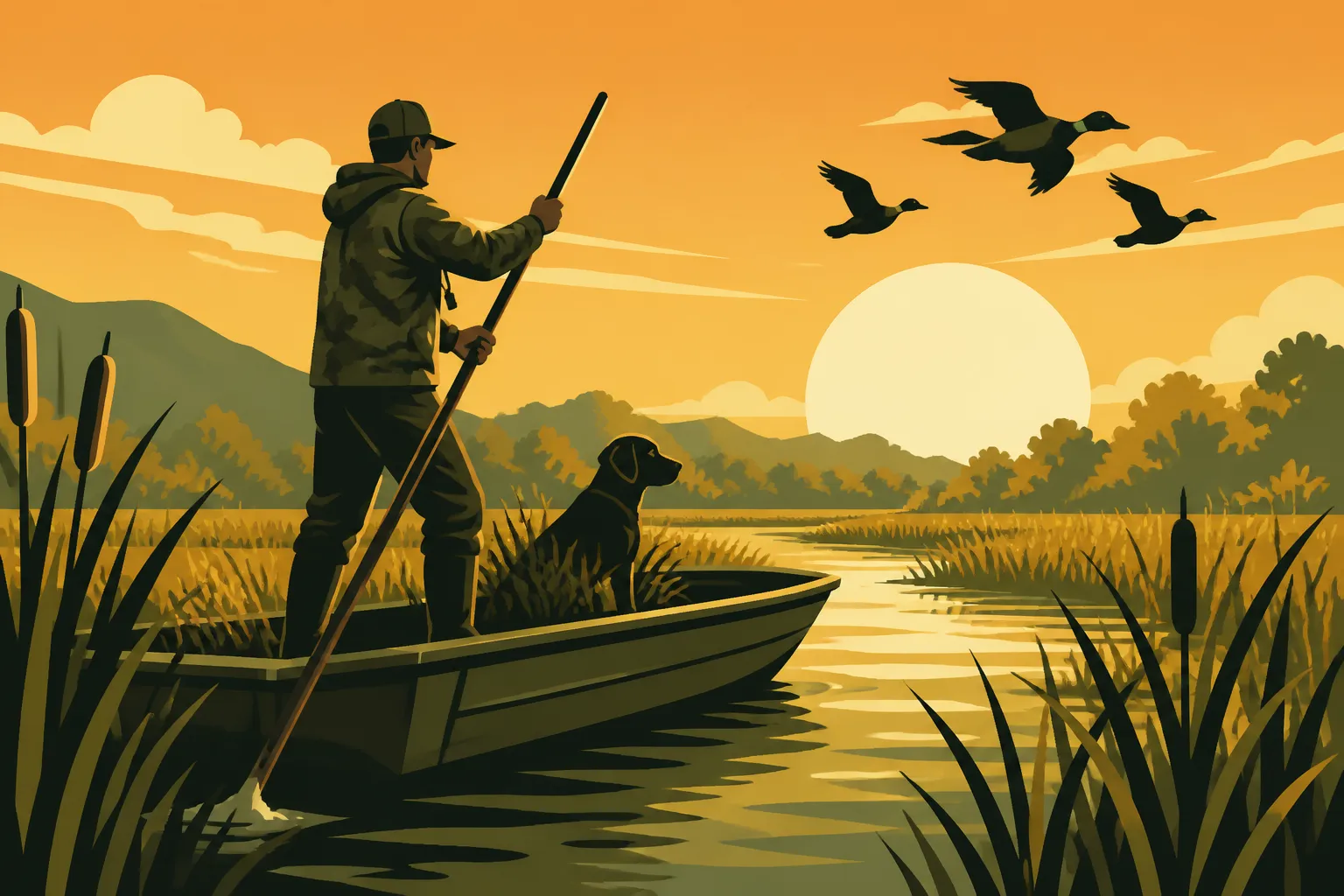
While the marsh boat gets you floating, it's the push pole that truly defines the "marsh hunting" experience. This simple yet incredibly effective tool is your silent partner, allowing you to glide through water so shallow or vegetation so dense that any motor would bog down or spook game. It's an art form, a dance between balance, power, and observation, crucial for successful hunting and trapping in West Virginia's specific aquatic environments.
Push Pole Construction and Proper Technique
Push poles are designed for a specific purpose, and their construction reflects that. Most are made from fiberglass, aluminum, or composite materials. Fiberglass offers a good balance of strength, flexibility, and a relatively quiet push against the bottom. Aluminum can be lighter but might be noisier if it scrapes against rocks. Composites often provide the best of both worlds, being strong, light, and quiet. Lengths typically range from 12 to 20 feet, with the ideal length depending on your boat's height and the average depth of the water you hunt. You want a pole long enough to reach the bottom comfortably when standing, without being unwieldy.
The foot design is critical. A "duck foot" or "spoon" shaped foot spreads the pressure, preventing the pole from sinking too deep into soft mud and providing better traction. Some poles have a "spike" tip, which is great for hard bottoms but can get stuck in mud. Many modern poles feature convertible tips or a combination design.
Now for the technique: the key is to be smooth and quiet. Stand in your marsh boat, facing the direction of travel. Plant the pole firmly on the bottom, usually just off the stern or side of the boat, and push forward, transferring your body weight into the pole. As you near the end of your push stroke, lift the pole quickly and quietly, swinging it forward for the next plant. To steer, you can push harder on one side or drag the pole lightly on the opposite side of the desired turn. Pivoting in tight spots is done by planting the pole and swinging the boat around it. The beauty of the push pole is its silent operation. There's no sputtering motor, no splashing oars – just the gentle glide of the boat, allowing you to approach game without alerting them. This silent approach is invaluable whether you're easing into a duck blind or trying to get close to a beaver lodge. When heading out, make sure you've also packed proper Waders for River Bottom Hunting if you anticipate needing to step out.
When and Where the Push Pole Excels Over Motors
The push pole truly shines in scenarios where traditional motor propulsion is simply not feasible or desirable. It's your ticket to accessing areas too shallow or choked with thick weeds for even a shallow-running outboard. Many of West Virginia's smaller rivers, creeks, and sloughs have extensive mud flats or dense aquatic vegetation that would quickly foul a prop or leave you high and dry. The push pole glides over these areas, providing continuous, reliable propulsion.
It's also the undisputed king for navigating quiet sloughs and oxbows for waterfowl. The stealth offered by a push pole is unparalleled. Imagine slowly rounding a bend in a narrow creek, seeing a flock of wood ducks resting in the sun, and being able to maintain your approach without a sound, setting up for a shot before they even know you're there. This kind of opportunity is almost impossible with a gas motor. Similarly, for approaching beaver dams or muskrat runs, silence is golden. These furbearers are incredibly wary, and the slightest mechanical noise will send them diving for cover. A push pole allows you to meticulously scout, set, and check traps without disturbing the area or alerting your quarry. Beyond just quiet access, many WVDNR Wildlife Management Areas (WMAs) have specific regulations regarding motor usage in certain zones or during certain times. In these cases, a push pole might be your only legal means of watercraft propulsion, allowing you to comply with regulations while still accessing prime hunting ground. Always double-check specific WMA rules before heading out.
Practical Considerations for Hunting West Virginia with Marsh Boats and Push Poles
Getting a marsh boat and push pole is just the first step; knowing how to use them safely, maintain them, and adhere to regulations ensures a successful and responsible hunting experience. West Virginia's rugged landscape and changeable weather demand preparedness, especially when you're venturing into remote watery areas.
Safety and Essential Gear
Hunting from any boat carries inherent risks, and marsh boats, while stable, are no exception. Life jackets (PFDs) are not just a good idea; they are often legally required, and absolutely essential. Even in shallow water, an unexpected fall into cold water, especially when heavily dressed for hunting, can be life-threatening. Always wear yours. An anchor is another critical piece of gear, not just for holding your position in a duck blind but also for securing your boat if you need to step out or if currents are stronger than anticipated. A simple bailing bucket or pump can save your day if you take on water from rain, splashes, or a minor leak.
For navigation, especially in featureless marshes or winding river bottoms, a GPS unit or a reliable mapping app on your phone (like GoHunt, which can work offline) is invaluable. You can pre-load aerial photos and property lines to help you stay on track and avoid trespassing. Using the Go Wild West Virginia Map Tool is also a smart move for public land hunters. Always be aware of your location. A buddy system is highly recommended; hunting with a partner provides an extra layer of safety, especially if an emergency arises. Be acutely aware of cold water precautions. West Virginia's water temperatures can drop significantly in fall and winter. Dress in layers of synthetic or wool clothing, and avoid cotton, which loses its insulating properties when wet. Finally, carry communication devices. While cell service can be spotty in many remote West Virginia areas, a fully charged phone in a waterproof case or a satellite communicator can be a lifesaver. Before you even launch, make sure your gear is suitable for Cold-Weather Sitting Strategy in the Mountains.
Transport, Storage, and Maintenance
Marsh boats, being lighter than many conventional boats, offer more options for transport. Many smaller models can be car-topped on a roof rack, eliminating the need for a trailer. Larger ones might still require a small utility trailer. Always secure your boat properly for transport, especially on our winding mountain roads. Once you get to your hunting spot, remember that dragging a boat, even a light one, over long distances can be exhausting, so plan your access points wisely.
Storage and maintenance are key to longevity. After each outing, especially if you've been in muddy or silty water, give your boat a good rinse. Cleaning mud and debris not only keeps your boat looking good but prevents abrasive materials from slowly wearing down surfaces or clogging drain holes. Before the season, conduct pre-season checks for any signs of leaks, cracks, or damage, particularly if your boat is made of fiberglass or rotomolded plastic that might develop stress cracks over time. Check all fasteners, seat mounts, and any accessories. When it comes to winter storage, store your boat upside down or with the drain plug removed to prevent water accumulation and potential freezing damage. Keep it out of direct sunlight if possible to prevent UV degradation of plastics or paints.
Regulations and Ethical Use
Hunting in West Virginia means adhering to a specific set of rules, and operating a watercraft is no different. Always be aware of WVDNR regulations for watercraft on public lands. This includes registration requirements for motorized boats, PFD laws, and any specific rules for certain WMAs regarding motor size or usage. You'll want to be familiar with West Virginia WMA Access Sign-In Process if you plan to hunt these areas.
Hunter orange requirements can be tricky on water. While generally not required while hunting waterfowl from a blind, if you're actively moving between hunting spots or retrieving game from land, you may need to display hunter orange, especially during deer or bear gun seasons. Always check the current regulations.
It's also paramount to respect private land boundaries. Just because you're on a public waterway doesn't mean the banks are public. Use your navigation tools to clearly identify property lines and ensure you don't inadvertently trespass, especially when setting decoys or retrieving game. When retrieving a deer, for instance, you might need to know about Retrieving Game From Private Land in West Virginia. Finally, practice ethical use by minimizing disturbance to sensitive habitats. Avoid unnecessary churning of shallow bottoms, be mindful of nesting birds, and always pack out everything you pack in, leaving no trace behind. This ensures these valuable hunting grounds remain healthy and accessible for future generations of West Virginia hunters.
Disclaimer
This article is for general informational purposes only and does not constitute professional advice. Laws, prices and regulations vary by location and change over time. Consult a qualified professional for guidance on your specific situation.