Barrel Length for Walking Thick Cover
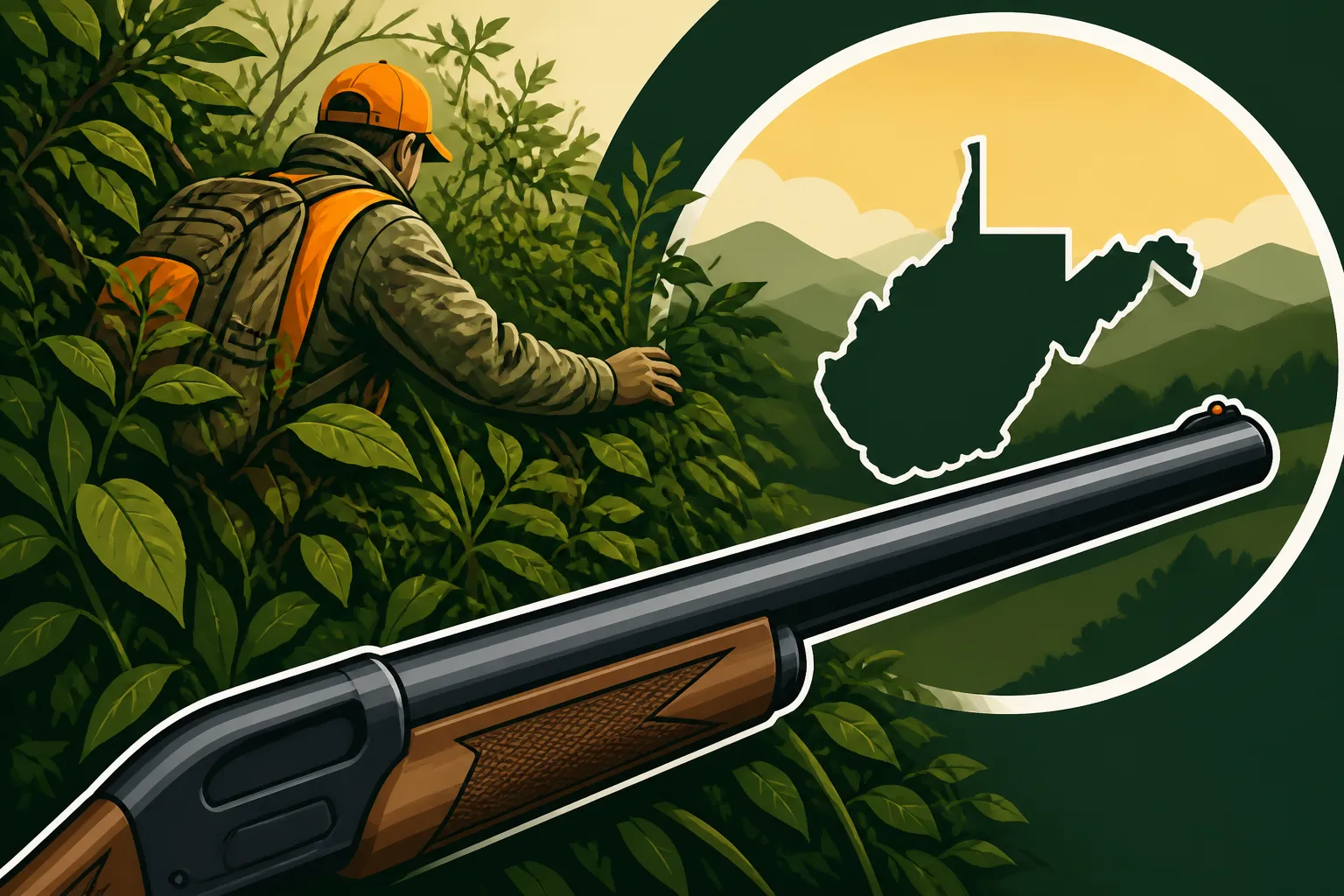
Ah, the age-old dilemma of pushing through West Virginia's famously dense cover with a long gun! It’s a challenge every hunter here knows well, whether you’re trying to slip through a rhododendron hell-hole after a mountain gobbler or still-hunting a deer bedded in a thicket of young timber. A long barrel snagging on every branch can turn a stealthy approach into a wrestling match, spooking game and testing your patience. This guide is all about helping you understand how different barrel lengths impact your hunt in the Mountaineer State's unforgiving landscape, so you can make smarter gear choices.
The Unique Obstacles of West Virginia's Dense Cover
West Virginia isn't called the Mountain State for nothing, and with those mountains come distinct challenges for hunters. It's not just the elevation changes; it's the sheer density of the vegetation in many areas. What looks like harmless woods on a map can quickly become an impassable fortress of tangled branches and thick undergrowth.
Navigating Rhododendron and Laurel Thickets
If you've spent any time hunting the public lands of the Monongahela National Forest or many of our Wildlife Management Areas, you know the pain of "rhodo" and "laurel" thickets. These evergreen shrubs grow incredibly dense, forming nearly impenetrable walls that can be dozens, even hundreds of yards deep. They provide fantastic cover for deer and bear, making them prime hunting spots, but they are a nightmare to move through quietly. Every step is a deliberate effort, and trying to pull a rifle with a 24 or 26-inch barrel through these interwoven branches often results in a loud snap, a tangled mess, or a scraped scope. Your rifle becomes a giant snag hook, preventing you from moving fluidly or taking a quick shot if game flushes nearby.
Steep Terrain and Tight Timber
Beyond the thickets, much of West Virginia's hunting ground features incredibly steep ridges and hollows, often choked with tight timber. Whether you're Hunting Steep Allegheny Ridges or trying to work a creek bottom, the trees themselves can be closely packed. This means you're not just dealing with low-lying brush, but also with standing timber that restricts your swing and visibility. A quick shot at a flushing grouse or a deer slipping between trees requires fast, unhindered movement of your firearm. A long barrel can hit branches as you try to shoulder it, or prevent you from swinging smoothly on a moving target. The constant uphill and downhill trekking also makes overall firearm balance and weight incredibly important, and a long, muzzle-heavy barrel can quickly become a burden.
Shorter Barrels: The Maneuverability Advantage
For many West Virginia hunters, especially those who prefer still-hunting or stalking in tight cover, shorter barrels are often the unsung heroes. They offer a significant advantage when the woods close in, providing a level of maneuverability that longer barrels simply can't match.
Quick Handling in Close Quarters
Imagine you're creeping along a bench in the Cranberry backcountry, and a big buck suddenly busts from his bed just 30 yards ahead, slipping through a maze of saplings. With a shorter barrel—say, 18 to 20 inches on a rifle or 22 to 24 inches on a shotgun—you have a much better chance of shouldering your gun quickly, swinging it onto the moving target, and getting a shot off before the deer disappears. There's less barrel to catch on branches, less forward weight to control, and a quicker, more natural swing. This is crucial for reactive shots in dense woods where engagements are often up close and personal, and fleeting. For Grouse Hunting Highlands Aspen Cuts, a shorter barrel on your shotgun allows for incredibly fast target acquisition when birds flush unexpectedly from tight cover, giving you that split-second edge.
Understanding the Trade-offs: Ballistics and Muzzle Blast
While shorter barrels are fantastic for handling, they do come with some trade-offs that are important to acknowledge. The primary one for rifles is often ballistic performance. A shorter barrel means less time for the powder charge to accelerate the bullet, which can result in slightly lower muzzle velocities compared to longer barrels of the same caliber. For most common West Virginia deer hunting ranges, say out to 150-200 yards, this difference is usually negligible for practical hunting purposes, especially with modern ammunition. You might lose 50-100 fps, but your bullet will still perform effectively. However, if you're taking shots at extended ranges, say across a wide powerline cut or a large field, those lost feet per second could slightly alter trajectory or energy.
Another factor is muzzle blast and flash. Shorter barrels mean the unburnt powder exits closer to the shooter, often resulting in a noticeably louder report and a more pronounced muzzle flash, especially with larger calibers. This is a comfort factor for the shooter and might be something to consider if you're sensitive to noise or hunt in low light where flash could temporarily affect your vision. Recoil can also feel slightly sharper, though the overall weight of the firearm plays a bigger role here.
Longer Barrels: When Range and Smoothness Matter
Despite the allure of compact firearms, longer barrels still hold a significant place in the West Virginia hunter's arsenal. They excel in different situations, offering advantages in ballistics, sight radius, and smooth swing that can be invaluable for certain types of hunting.
The Benefit of a Longer Sight Radius and Follow-Through
For those using iron sights, a longer barrel provides a greater distance between the front and rear sights, which inherently offers a finer aiming picture and can improve accuracy, particularly at longer ranges. While many hunters today rely on optics, the principle of a smoother, more controlled swing still applies. A longer barrel often provides a steadier follow-through on a target, which can be beneficial for consistent shooting, especially with shotguns on crossing birds or for deliberate, aimed rifle shots in more open timber. The added weight further out on the barrel can help dampen natural body tremors, leading to a more stable hold when aiming. If you're using a tool like GoHunt to scout and find more open ground, where longer shots are a possibility, a longer barrel might make sense.
When to Opt for Length: Open Timber and Stationary Hunts
There are certainly times and places in West Virginia where a longer barrel truly shines. If your hunting involves more stationary stands, such as a treestand setup overlooking a food plot or a logging road, or if you're hunting in more open, mature timber where shots might be longer and cover less restrictive, a longer barrel can be an excellent choice. Think about Hunting Potomac Highlands Public Land where you might be glassing across wider valleys or setting up on a larger ridge. The added velocity for rifles can mean a flatter trajectory for those longer shots, and the smoother swing of a longer shotgun barrel is preferred by many for pass-shooting waterfowl or for more deliberate turkey shots from a stationary position. It's a trade-off: you sacrifice some quick handling for enhanced ballistic performance and a more controlled shooting experience in specific scenarios.
Matching Barrel Length to Your West Virginia Hunt
The "best" barrel length isn't a one-size-fits-all answer. It's about aligning your gear with your specific hunting style, the game you pursue, and the typical terrain you'll encounter in West Virginia.
Upland Shotguns for Grouse and Woodcock
For the avid upland hunter chasing ruffed grouse and woodcock in the Allegheny Highlands, a shorter barrel on a shotgun is almost universally preferred. These birds flush fast, often from extremely dense cover like aspen regeneration or thick alder runs. A 24-inch or even 22-inch barrel on a 20 gauge double or a semi-auto is ideal for quick mounting and swinging. This nimbleness is crucial for getting on a bird before it threads its way through a screen of branches. A longer barrel, say 28 inches, can feel cumbersome and slow to maneuver in such tight quarters. The goal isn't long-range accuracy here; it's rapid target acquisition at close range. Upland Guns for Highlands Grouse Cover often emphasize this compact design for maximum agility.
Rifles for Deer in Thick Mountain Laurel
Deer hunting in West Virginia often means still-hunting or stalking through dense areas. If you're picking your way through thick mountain laurel, briar patches, or regenerating clear-cuts, a rifle with an 18 to 20-inch barrel can be a godsend. Classic brush guns, like lever-action .30-30s with 20-inch barrels, were practically made for this kind of hunting. Their compact size makes them easier to carry and quicker to bring to bear when a deer jumps from close range. While modern bolt-action rifles with shorter barrels are also popular, the principle remains the same. You're prioritizing quick, efficient handling over minuscule ballistic advantages at extreme range. For most of the thick stuff, 100-yard shots are the norm, and a shorter barrel performs perfectly. When scouting with tools like GoHunt, pay attention to the cover density on aerial maps – if it looks like a green blob, a shorter barrel might be your friend.
Muzzleloaders for Deep Woods December Hunts
Muzzleloader season in West Virginia often falls in the colder, late-season months of December, after the gun season. By this time, leaf litter is crunchy, and deer are often holed up in the thickest cover they can find. If you're using a traditional muzzleloader, many come with barrels in the 24 to 28-inch range. However, for those looking for more compact options, some modern inline muzzleloaders offer shorter barrels (around 22 inches) that can be a real asset when Hunting Into the Late December Archery Close or during a dedicated muzzleloader hunt. The ability to maneuver through heavy brush while keeping your powder dry and your sights clear is paramount. A shorter barrel reduces snagging and makes the already somewhat cumbersome muzzleloader feel a bit handier in the deep woods, especially when snow might add an extra layer of difficulty to movement. Remember, Muzzleloaders Under West Virginia Rules allow for a variety of options, so research what feels best for your style.
Here's a quick comparison of general barrel length considerations:
| Feature | Shorter Barrels (e.g., 18-22 inches) | Longer Barrels (e.g., 24-28 inches) |
|---|---|---|
| Maneuverability | Excellent, less snagging, quicker handling | Fair, more prone to snagging in thick cover |
| Swing Speed | Fast, easy to get on moving targets | Slower, smoother, better for follow-through |
| Ballistics (Rifle) | Slightly lower velocity, but often sufficient | Higher velocity, flatter trajectory |
| Muzzle Blast | Louder, more flash | Quieter, less flash |
| Accuracy | Excellent at typical hunting ranges | Excellent, can have slight edge at long range |
| Weight Distribution | More balanced, less muzzle-heavy | More muzzle-heavy, can feel front-loaded |
| Ideal Use | Thick cover, reactive shots, stalking | Open timber, stand hunting, longer shots |
Beyond Barrel Length: Other Gear for Navigating Tough Terrain
While barrel length is a significant factor, it's not the only piece of the puzzle. The way you carry your firearm and its overall balance also play a huge role in your comfort and effectiveness when navigating West Virginia's challenging landscapes.
Carrying Your Firearm: Slings and Backpack Systems
A good sling is non-negotiable when hunting in West Virginia. You're going to be walking, climbing, and sometimes crawling through difficult terrain. A poorly designed sling can let your rifle flop around, constantly getting caught on branches or slamming into your back. Look for a wide, comfortable sling that allows you to carry the firearm securely across your back or chest, yet can be quickly deployed when game is spotted. Some hunters even prefer carrying their rifles in specific scabbards or attachment points on their hunting packs when navigating truly treacherous ground, pulling them out only when they expect a shot opportunity. This is especially true if you are on a Long Monongahela Forest Walk to get into remote areas. Tools like GoHunt can help you research different sling options and user reviews to find what works best for your firearm and body type.
Overall Firearm Balance and Weight Distribution
Beyond just barrel length, consider the overall balance and weight of your entire firearm setup. A rifle with a short, pencil-thin barrel might still feel awkward if the stock is too long or the optic is excessively large and heavy. Conversely, a slightly longer barrel that is well-balanced with the action and stock can feel surprisingly agile. Test different firearms to see how they feel in your hands and when you quickly shoulder them. A rifle that feels "dead in the hands" when shouldered quickly, rather than muzzle-heavy or butt-heavy, will be much more pleasant to carry and quicker to shoot in the dense cover West Virginia is famous for. When packing for a Day on Public Land, every ounce and every inch matters, contributing to your fatigue and your ability to react to sudden opportunities.
Disclaimer
This article is for general informational purposes only and does not constitute professional advice. Laws, prices and regulations vary by location and change over time. Consult a qualified professional for guidance on your specific situation.