Turkey Vests With a Kickstand Seat
There’s nothing quite like the sound of a gobbler hammering at first light in the West Virginia hills, but let's be honest, those long sits waiting for him to commit can be brutal on your back and backside. Many turkey hunters struggle with discomfort, constantly shifting, or finding themselves in awkward positions against a tree, which can quickly ruin a hunt. This guide is all about kickstand turkey vests, a game-changing piece of gear designed to keep you comfortable, quiet, and ready to make the shot, even when those mountain gobblers are taking their sweet time.
The Ultimate Comfort on a Turkey Hunt: Why a Kickstand Vest?
Turkey hunting often means waiting. Lots of waiting. You might hear a gobbler fire off a ridge over, make some excited calls, and then… silence. Or maybe he’s hung up just out of sight, testing your patience. In these scenarios, a comfortable, stable setup isn't just a luxury; it's a necessity for success. That's where a kickstand vest truly shines, addressing some of the most common frustrations faced by hunters in the field.
Beating the Back-of-the-Tree Fatigue
Picture this: you've hiked a mile up a steep Allegheny ridge, found the perfect setup against a big oak, and now you’re leaning back, trying to get comfortable. After ten minutes, your lower back starts to ache. Twenty minutes in, your hips are complaining. By the time that gobbler finally steps into range, you're so focused on the discomfort that you might make a fidgety move or rush your shot. This back-of-the-tree fatigue is a real problem. Traditional turkey vests with a simple foam pad offer minimal relief, often slipping or compressing into nothing.
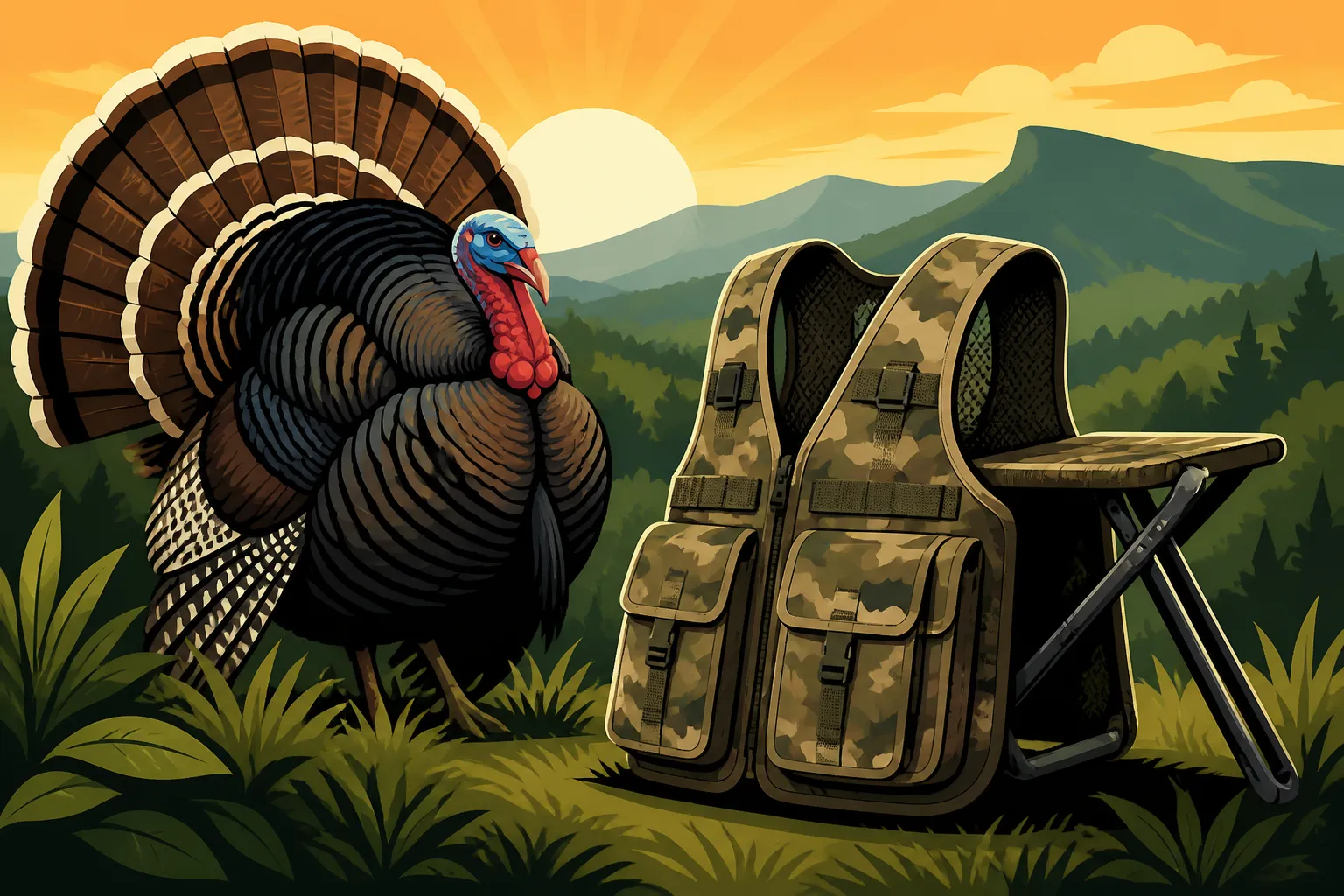
A kickstand vest, however, incorporates a sturdy, collapsible frame that deploys almost instantly, creating a comfortable, elevated seat with back support. It takes the pressure off your spine and hips, allowing you to relax and focus entirely on the hunt. This means less shifting, less noise, and more sustained comfort, whether you're sitting for five minutes or an hour. It’s like bringing your favorite recliner into the woods, just a much lighter and more portable version! This enhanced comfort directly translates to increased patience and better concentration, which are critical traits for any successful turkey hunter, especially on those tough public land birds that demand every ounce of your stealth.
Quick Setup, Quicker Shots
The beauty of a kickstand vest isn't just about sustained comfort; it's about rapid deployment. When a gobbler unexpectedly pops over a knoll or cuts the distance faster than you anticipated, you need to get still, get comfortable, and get your gun up in a hurry. Fumbling with a separate cushion or trying to clear a spot on the forest floor can cost you precious seconds, or worse, expose your movement.
With a kickstand vest, the legs typically fold out from the frame with a simple motion, letting you drop into a seated position almost instantly. You're not fighting with uneven ground, sharp rocks, or damp leaves beneath you. You hit your spot, the kickstand deploys, and you're settled, stable, and ready. This capability is invaluable in dynamic hunting situations, common when you're Run-and-Gun Turkey Tactics on Public Land and birds are moving quickly. Imagine having that perfect setup in seconds, allowing you to get your Turkey Calls Worth Carrying in West Virginia in hand, your shotgun shouldered, and your eyes scanning for that incoming tom, all while feeling completely stable. That quick transition from movement to static, composed readiness can be the difference between a successful hunt and watching a gobbler strut away.
Staying Put in Tricky Terrain
West Virginia's terrain is notoriously rugged. Steep hillsides, rocky outcrops, and uneven ground are par for the course. Trying to find a comfortable, level spot to sit, especially on public land, can be a major challenge. Often, you might be forced to sit on an uncomfortable angle, or worse, compromise your concealment by trying to perch somewhere unstable.
Kickstand vests offer a significant advantage here. Their independent legs can often adjust or adapt to uneven surfaces, creating a level seat even on a slope. This stability is crucial, as it minimizes the chances of you sliding, shifting, or making noise due to an unstable perch. When you're Hunting Steep Allegheny Ridges, every bit of stability counts. Being able to set up discreetly and comfortably, regardless of the topography, gives you a huge edge. You can focus on Calling a West Virginia Gobbler Off the Roost without worrying about sliding down the hill. This stability also aids in shooting accuracy, as you're not struggling to maintain your balance while aiming.
What to Look For: Key Features of a Great Kickstand Vest
Not all kickstand vests are created equal. Just like choosing the right Boots for West Virginia Hollows and Ridges or the proper Rifle Setups for West Virginia Deer Hunting, selecting a turkey vest with a kickstand seat requires careful consideration of several key features. Your comfort, efficiency, and ultimately, your success in the turkey woods depend on it.
Frame Design and Stability
The backbone of any kickstand vest is its frame. This is what provides the structural integrity for the seat and back support. You want something robust yet lightweight. Aluminum frames are a popular choice, offering a good balance of strength and portability. Some vests might use a reinforced polymer, which can also be very durable. The key is that the frame should feel solid when deployed, with no wobble or excessive flex.
Look for a design that allows the legs to lock securely into place, preventing accidental collapse. Some vests have a simple flip-out mechanism, while others might feature spring-loaded or push-button locks. Test these mechanisms in the store or as soon as you get the vest home to ensure they operate smoothly and quietly. A noisy deployment can spook a wary gobbler that's closing the distance. Think about how it handles uneven ground – some designs have articulating feet that pivot, allowing better contact on sloped terrain, which is a big plus when you're trying to get set up quickly on a steep West Virginia hillside. You need to trust that when you lean back, the vest will hold steadfast.
Seat Comfort and Adjustability
While the kickstand frame provides the support, the seat itself is where the rubber meets the road for comfort. Look for generous padding, ideally high-density foam that won't compress completely after a few uses. Some premium vests feature gel inserts or multiple layers of foam for superior cushioning. The size of the seat matters too; a larger, wider seat distributes your weight more effectively, reducing pressure points during those extended waits.
Beyond basic comfort, adjustability can be a game-changer. Can the seat height be altered? Sometimes a slight adjustment can make a world of difference in your comfort and shooting posture, especially if you're Setting Up Against a Big Oak where the base might be a bit uneven. Does the back support recline slightly, or is it a fixed upright position? A slight recline can provide much-needed relief on those all-day hunts. Also, consider the material of the seat fabric. Is it durable, quiet, and water-resistant? Wet fabric against your backside can quickly turn a comfortable sit into a miserable one, especially during a damp spring morning in the mountains.
Storage and Organization for Your Calls and Gear
A turkey vest isn't just a seat; it's a mobile command center for all your gear. Pockets, pouches, and call-specific compartments are essential. A good kickstand vest should offer ample storage that is logically organized and easily accessible, even while seated.
Consider what calls you carry: slate, box, diaphragm, owl hooter, crow call. Does the vest have dedicated, protected pockets for each? Magnetized closures or quiet zippers are a huge bonus, as loud Velcro can ruin a close encounter. Look for external pockets for things you need quickly, like a rangefinder or bug spray. Internal pockets are great for maps, licenses, or snacks. Hydration is also important, so a bladder sleeve or water bottle pockets are a smart addition. Some vests even include a small game bag for that successful hunt. When you're talking about all the essentials you need for Spring Turkey Hunting in West Virginia, from calls to decoys, having everything organized means less fumbling and more focus on the bird. Programs like GoHunt often highlight gear setups that enhance efficiency, and a well-organized vest is definitely part of that.
| Feature Area | Key Considerations | Why It Matters for WV Hunting |
|---|---|---|
| Frame Stability | Lightweight aluminum/reinforced polymer; secure locking legs | Essential for uneven, steep terrain; quick, silent deployment |
| Seat Comfort | High-density foam, gel inserts, generous size, quiet fabric | Sustained comfort on long sits, reduces fidgeting |
| Seat Adjustability | Height adjustment, reclining back support | Adapts to varying tree sizes/slopes, improves shooting posture |
| Storage & Pockets | Call-specific compartments, quiet closures, ample volume | Organizes essential gear, prevents fumbling, quick access |
| Durability | Ripstop fabric, reinforced stitching, rugged zippers | Withstands rough West Virginia brush and weather |
| Quiet Operation | Minimal noise from fabric, zippers, frame deployment | Prevents spooking wary birds at close range |
Practical Considerations: Pros, Cons, and West Virginia Realities
While a kickstand vest offers significant advantages, it's not a one-size-fits-all solution. Understanding its benefits and drawbacks, especially in the context of hunting West Virginia's diverse landscapes, will help you decide if it's the right piece of gear for your turkey arsenal.
The Benefits Beyond Comfort
The immediate comfort of a kickstand vest is undeniable, but its advantages extend far beyond just easing your posterior. One major benefit is improved shooting stability. When you’re comfortably seated and stable, your shooting platform is inherently more consistent. This can translate to better shot placement, especially on a bird that's perhaps a bit further out or presenting a challenging angle. You're not balancing or straining, which reduces movement and allows for a steadier aim.
Another often-overlooked benefit is concealment. By providing a consistent, low profile, a kickstand vest helps you blend into the surroundings more effectively. You’re not trying to find a high point or sitting awkwardly, which can make you stick out. Coupled with good camo, you become part of the woods. This is particularly useful when hunting pressured birds on public land, where every bit of advantage helps. The ability to quickly and quietly get into position, remain motionless for extended periods, and present a stable shooting platform directly increases your odds of success. When Hunting the West Virginia Rut in November for deer, stealth is key, and it's no different for turkeys.
Understanding the Downsides
No gear is perfect, and kickstand vests do come with a few potential downsides. The most common concern is weight. The integrated frame and legs add bulk and poundage compared to a minimalist vest or simply carrying a seat cushion. While many manufacturers strive for lightweight designs, it's still a consideration, especially if you're covering vast distances or climbing extreme inclines. When considering Packs for a Monongahela Forest Day Hunt, every ounce can feel like a pound by the end of the day.
Another potential issue is maneuverability in really thick cover. The wider footprint of the deployed legs, or even the vest itself, can sometimes snag on dense briars or laurel thickets as you move through them. While this is usually a minor inconvenience, it's something to be aware of if your hunting style frequently takes you into the nastiest, deepest brush. The cost can also be a factor; kickstand vests often sit at the higher end of the turkey vest price spectrum due to their more complex design and materials. However, for many hunters, the investment in comfort and efficiency is well worth it.
Adapting to West Virginia's Varied Landscape
West Virginia's turkey hunting landscapes range from the rolling farmlands of the Eastern Panhandle to the steep, timbered mountains of the Allegheny Highlands. A kickstand vest excels in many of these environments. On those big, open timber ridges, finding a suitable tree to back up against can be easy, but the kickstand elevates your comfort exponentially. When you’re doing more run-and-gun tactics in flatter river bottoms or trying to get close to gobblers in Turkey Tactics for Eastern Panhandle Field Edges, the quick setup is invaluable.
However, in truly dense, almost impenetrable rhododendron or laurel thickets, the bulk might be slightly noticeable. The key is to recognize your typical hunting grounds and style. If you primarily hunt areas where you'll be sitting for extended periods or on uneven ground, the kickstand vest is a clear winner. If you're busting brush all day long, rarely stopping, then a lighter, more streamlined vest might be preferable, though you'd sacrifice the incredible comfort. Tools like GoHunt can help you scout and understand the terrain before you go, allowing you to anticipate whether a kickstand vest will be an advantage in your chosen hunting area.
Maximizing Your Kickstand Vest's Potential
Having the right gear is only half the battle; knowing how to use it effectively is the other. A kickstand vest is a tool, and like any tool, practicing with it and understanding its nuances will ensure you get the most out of it when it counts.
Pre-Season Prep and Practice
Just as you'd pattern your shotgun or practice your calls before opening day, spend some time getting familiar with your kickstand vest. First, adjust all the straps and buckles to ensure a snug, comfortable fit. A poorly adjusted vest can feel heavy and awkward, even if it's designed well. Load it up with all your typical gear – calls, snacks, water, rangefinder. Walk around your yard, sit down, stand up, deploy the kickstand, and pack it away. Get a feel for the weight distribution and how quickly you can operate the kickstand mechanism.
Practice deploying the kickstand quietly. Some mechanisms might be stiff at first, but with a little use, they tend to loosen up. You don't want a loud clunk or snap when a gobbler is at 40 yards. Spend time sitting in the vest, practicing shouldering your shotgun from a seated position. Ensure your gun butt clears the ground and that you have a comfortable, stable cheek weld. This pre-season familiarity will make all the difference when you're in the moment, focused on a strutting tom. Consider doing some Scouting West Virginia Public Land Before Season with your vest on to get a real feel for how it performs on different terrains.
Strategic Setup in the Field
When you've located a gobbler and are making your move, your setup is paramount. With a kickstand vest, you have more flexibility, but thoughtful placement is still crucial. Always try to set up with some natural cover behind you – a large tree trunk, a cluster of rhododendrons, or a rock outcrop. This breaks up your outline and provides additional concealment. The beauty of the kickstand is that you don't need a perfect tree to lean against for comfort, allowing you to prioritize the best ambush point.
Consider your shooting lanes. While comfortable, you still need to ensure you have clear lines of sight and fire for where you expect the bird to appear. Think about the sun's position – you don't want it in your eyes or glaring off your gun. Wind and thermals are always a factor in West Virginia; understanding Wind and Thermals on a Steep Ridge can dictate the best approach and setup point. Position yourself so that the gobbler will hopefully come in from a direction that offers you an easy, stable shot. If you're using Turkey Decoys That Work on Pressured Birds, ensure your setup provides a good vantage point over them and that you're far enough back that the incoming tom focuses on the decoys, not you.
Maintenance for Longevity
Your kickstand vest is an investment, and like all good hunting gear, proper maintenance will ensure it serves you well for many seasons to come. After each hunt, especially if it was wet or muddy, take the time to clean your vest. Brush off any dirt, leaves, or mud. If the vest got particularly dirty, a gentle spot clean with mild soap and water might be necessary. Always allow it to air dry completely before storing to prevent mildew and odors.
Check the frame and leg mechanisms periodically for any signs of wear, damage, or rust. Lubricate any pivot points as recommended by the manufacturer. Ensure all zippers are clean and functioning smoothly. Store your vest in a cool, dry place, ideally hanging it up to maintain its shape and allow air circulation. Taking these simple steps will ensure your kickstand vest is always ready for action, providing reliable comfort and support when you need it most in the West Virginia turkey woods.
Disclaimer
This article is for general informational purposes only and does not constitute professional advice. Laws, prices and regulations vary by location and change over time. Consult a qualified professional for guidance on your specific situation.