Ruffed Grouse in the West Virginia Highlands
There's a quiet concern among West Virginia upland hunters, a worry that grows with each passing season: the ruffed grouse, once a common thrill of the mountains, seems to be growing more elusive. The unmistakable thunder of wings exploding from thick cover, that heart-stopping flush, feels less frequent than it once did. This guide is dedicated to exploring the past, present, and challenging future of ruffed grouse in the Mountain State, offering insights for those passionate about pursuing this iconic game bird.
The Fading Drumbeat: Understanding West Virginia's Ruffed Grouse Population
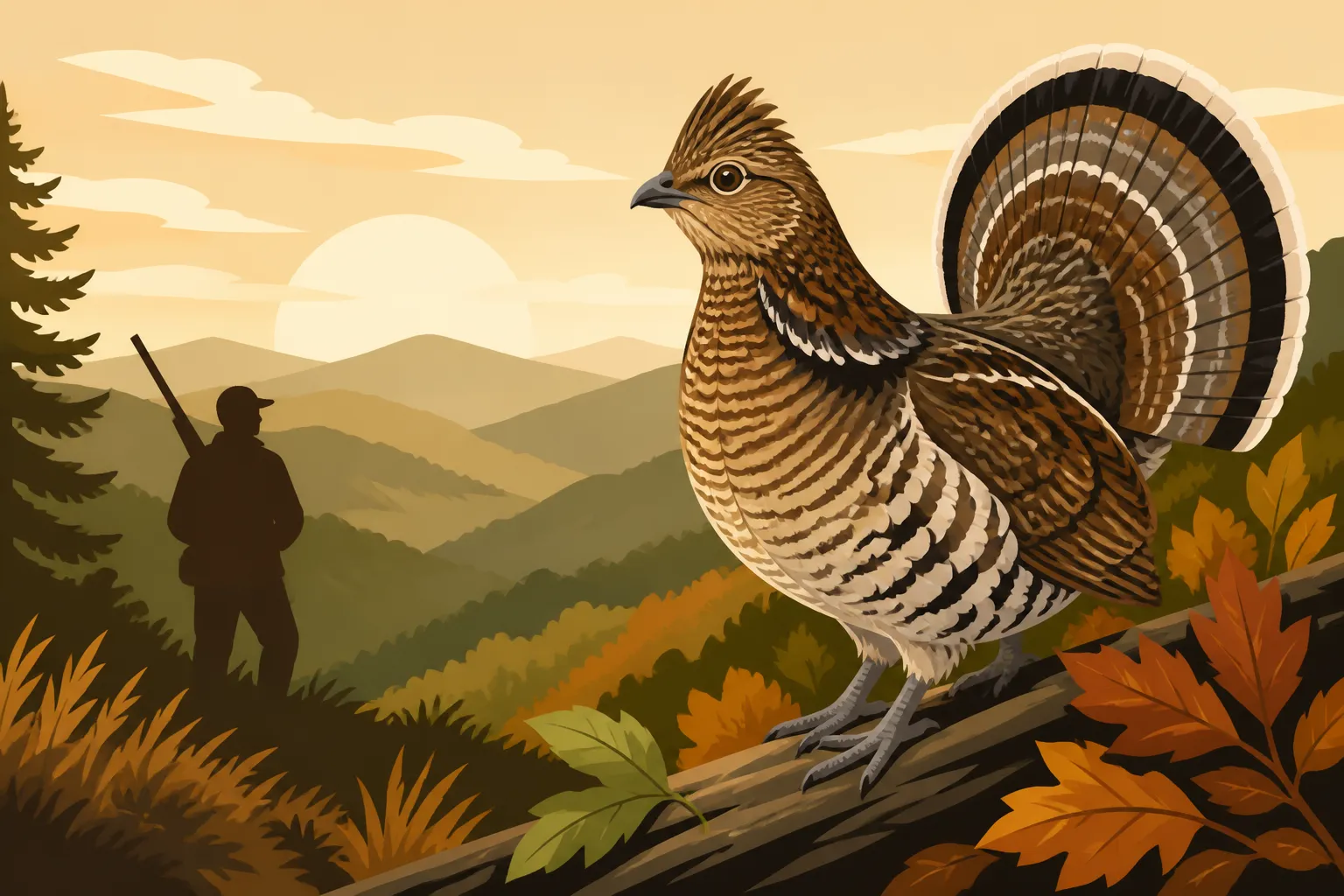
For generations, the ruffed grouse was synonymous with autumn in West Virginia. Its booming drum, a sound unique to the male grouse beating its wings against its body, echoed through the crisp mountain air, signaling the arrival of hunting season. Yet, many hunters today feel a profound shift, noting fewer flushes and a quieter forest. Understanding this decline is the first step toward appreciating the challenges facing this beloved bird.
Historical Abundance and Modern Declines
Decades ago, if you strapped on a pair of boots and ventured into the sprawling timberlands of West Virginia, particularly in the higher elevations and rugged Appalachian terrain, you were almost guaranteed to kick up a grouse or two. Hunters often recounted days with double-digit flushes, a testament to what was once a robust population. The landscape itself, with its mix of timber harvesting practices that created diverse age classes of forest, inadvertently provided prime habitat. As forests matured and land use shifted, so did the fortunes of the grouse.
Today, those memories often feel like distant echoes. While grouse are certainly still present, especially in specific pockets of habitat, their numbers have generally decreased significantly across much of their historic range in the state. This isn't just a West Virginia phenomenon; ruffed grouse populations have been experiencing declines throughout the Appalachians and other parts of their eastern range. It’s a trend that's been observed by seasoned hunters and wildlife biologists alike, prompting widespread concern and a call for better understanding and management. We often find ourselves asking, "Where West Virginia sits in the grouse cycle," and the answer, for now, leans towards a lower point than we'd like.
Factors Contributing to the Downturn
The reasons behind the ruffed grouse's dwindling numbers are complex and multi-faceted, not a single culprit. The primary driver is undeniably habitat loss and degradation. Ruffed grouse are specialists; they thrive in young, regenerating forests – areas often created by timber harvesting, particularly clear-cutting, or natural disturbances like wildfires or ice storms. These areas provide the dense escape cover grouse need to avoid predators like hawks, owls, foxes, and coyotes, as well as crucial food sources from early successional plants and insects.
However, modern forestry practices have shifted, often favoring selective logging or longer rotation cycles that lead to more mature, unbroken forests. While beautiful, mature forests simply don't provide the same quality of grouse habitat. Compounding this, habitat fragmentation due to development, roads, and energy infrastructure further isolates remaining grouse populations, making it harder for them to recover. Other contributing factors include the increase in predator populations that thrive in more mature forests, disease, and even climate change which can affect breeding success and food availability. It's a perfect storm of environmental shifts that makes life harder for a bird that needs very specific conditions to thrive. For a deeper dive into these issues, it's worth exploring the broader topic of "West Virginia Grouse Habitat Loss Causes."
The Importance of Drumming Surveys
To accurately track the health of ruffed grouse populations, wildlife agencies like the West Virginia Division of Natural Resources (WVDNR) conduct annual drumming surveys. These surveys are absolutely critical because they provide a standardized, long-term dataset that helps biologists understand population trends. Here’s how they generally work: trained observers drive established routes during specific times in the spring (typically late April to early May, before leaves fully emerge and during peak drumming activity). They stop at predetermined points along these routes and listen for a set period, recording every grouse drum they hear.
The data collected from these surveys, though not a direct count of individual birds, provides an index of population density and health. A consistent decline in drums heard over several years on the same routes is a strong indicator of a population in trouble. Conversely, an uptick suggests a rebounding population. These numbers guide wildlife managers in making decisions about season lengths, bag limits, and, most importantly, habitat management strategies. Without these dedicated efforts, we'd be largely guessing about the true state of the grouse, and it's thanks to programs like these that we can even begin to address the problem. You can find more specific data on these efforts by looking into "West Virginia Grouse Drumming Surveys."
Prime Grouse Habitat: Where to Find Them in the Highlands
Hunting ruffed grouse in West Virginia's rugged highlands is an experience unlike any other. The steep terrain, dense cover, and often unpredictable weather make it a true challenge. But for those willing to put in the work, understanding where to focus your efforts for prime grouse habitat is paramount. It’s not just about finding any woods; it’s about finding the right woods.
Young Forests and Early Successional Cover
Ruffed grouse are often called "edge" species, but that's a bit of an oversimplification. More accurately, they are "early successional" species, meaning they absolutely thrive in forests that have recently been disturbed and are actively regenerating. Think about areas that were clear-cut 5 to 20 years ago, where thorny briars, dense saplings, and thick brush have exploded. This isn't the pretty, open timber that's easy to walk through; it's a tangled mess, and that's precisely why grouse love it.
These young forests provide a mosaic of essential elements: thick cover for protection from aerial and ground predators, abundant soft mast (berries, wild grapes, dogwood), and the tender buds and catkins that are crucial winter food sources. In the Monongahela National Forest, for instance, you might find these areas along old logging roads, power line cuts, or even recent timber sales. Don’t be afraid to push into what looks like impenetrable thickets; those are often the spots where a grouse will hold tight before exploding into flight. Understanding "How Old a Cut Should Be for Grouse" is crucial for targeting the most productive areas.
Aspen and Alder Thickets: Grouse Magnets
While any dense, young forest can hold grouse, two specific tree species stand out as absolute magnets for them in the West Virginia Highlands: aspen and alder. Aspen stands, often found at higher elevations or in areas with specific soil conditions, provide an ideal mix of food and cover. Grouse feed heavily on aspen buds in winter, and the dense, vertical stems of an aspen regeneration create a perfect escape cover. As you walk through an aspen thicket, the sheer density of the trees makes it difficult for a predator to maneuver or even see a flushing bird, giving the grouse a critical advantage.
Alder runs, typically found in wet, boggy areas or along small stream bottoms and seepages, offer similar benefits. The dense, shrubby growth of alder provides excellent cover, and grouse will feed on their catkins and buds. These areas, though often challenging to traverse with their soft ground and tangled branches, are worth the effort. They frequently concentrate grouse, especially later in the season when other food sources become scarce. The key is to look for these specific habitat types within larger forested areas. For more targeted advice, consider exploring "Grouse Hunting Highlands Aspen Cuts."
Identifying Ideal Cover in the Monongahela National Forest
The Monongahela National Forest, with its vast tracts of public land, is arguably West Virginia's premier destination for grouse hunting. But it's also immense and challenging. Simply wandering into any part of the forest is likely to be unproductive. To find grouse here, you need a strategy, and that starts with identifying ideal cover.
Begin by studying topographical maps or using mapping apps like GoHunt. Look for areas marked as recent timber sales, clear-cuts (sometimes indicated by different shading or tree symbols), or areas with a history of disturbance. Old logging roads that are no longer actively maintained can lead to these forgotten pockets of habitat. Also, pay close attention to elevation. Grouse in the Monongahela often prefer the higher elevations, where aspen and spruce-fir forests are more prevalent, though they can also be found in mixed hardwood stands that have undergone recent cutting. Areas bordering old fields or clearings that are slowly reverting to forest can also be productive. Don't overlook the edges of old burn areas or places where ice storms have heavily damaged the timber, leading to vigorous regrowth. The goal is to find that sweet spot of dense, regenerating cover within the larger mature forest landscape. For detailed insights on navigating this expansive area, check out "Monongahela National Forest Hunting."
Essential Gear and Tactics for Upland Hunters
Chasing ruffed grouse in West Virginia isn't just a walk in the woods; it's a physical endeavor that requires the right equipment and a thoughtful approach. The rugged terrain and the grouse's explosive flight demand specific gear and tactics to increase your chances of success and, more importantly, ensure a safe and enjoyable hunt.
Shotguns, Chokes, and Ammunition Choices
When it comes to shotguns for grouse, the general consensus among experienced upland hunters favors lightweight, fast-handling guns. Grouse flushes are sudden and fleeting, often in extremely thick cover, meaning you need to get the gun to your shoulder and acquire the target almost instantly. Many hunters opt for 20-gauge or even 28-gauge shotguns for their lighter weight and reduced recoil, though a 12-gauge can certainly be effective if it handles well for you. Side-by-sides and over/unders are popular for their two distinct chokes, allowing for a more open shot on the first flush and a tighter one if the bird flies further.
Choke selection is critical for these close-range, fast-action shots. Many hunters will choose an improved cylinder or skeet choke in the first barrel (or barrel with the single choke) for a wide pattern at close distances, and perhaps a modified choke in the second barrel for longer follow-up shots. Ammunition typically involves smaller shot sizes, like 7.5 or 8, as grouse are not heavily feathered birds and a dense pattern of small pellets is more effective than fewer large pellets. You want enough pellets to connect in tight cover without over-penetrating. Always use lead shot unless you are hunting on specific public lands that require non-toxic shot, though this is rare for upland birds in West Virginia. For a comprehensive look at suitable firearms, see "Upland Guns for Highlands Grouse Cover."
Upland Vests, Boots, and Brush Pants
Your attire for grouse hunting needs to be as functional as your shotgun. Forget your quiet deer hunting camo; comfort, durability, and protection are key. An upland vest is indispensable, offering ample storage for shells, water, a first-aid kit, and, crucially, a large game bag in the back to carry any harvested birds. Look for vests with reinforced shoulders for gun mounting and plenty of pockets to keep essentials organized and easily accessible.
Boots are perhaps the most critical piece of clothing. You'll be traversing steep, uneven, and often wet terrain, sometimes for miles. Waterproof, ankle-supporting boots with excellent traction are a must. Many hunters prefer a stiff sole for stability on rocky ground and a high cuff to keep out debris. Brands like Danner, Irish Setter, or Schnee's are popular for their durability and comfort in demanding conditions. Finally, brush pants or chaps are non-negotiable. West Virginia's grouse cover is notorious for its thorns, briars, and sharp branches. Brush pants, often made of durable canvas, Cordura, or reinforced nylon, will protect your legs from countless scratches and tears, allowing you to push through thickets without hesitation. Without them, your hunt will be a miserable, painful experience.
Hunting Without a Dog: Flushing Tactics
While hunting grouse with a well-trained bird dog is a quintessential upland experience, many hunters pursue them successfully without one. This requires a different set of tactics, focusing on covering ground systematically and understanding grouse behavior. When hunting without a dog, you become the primary "flusher." Walk slowly and deliberately, pausing frequently. Grouse often hold tight, especially in dense cover, and a sudden stop or change in pace can sometimes make them nervous enough to flush.
Focus on working parallel to, or through, the densest cover: the thickest briar patches, the tangled regenerating clear-cuts, the alder bottoms. These are the places where grouse feel safest and are most likely to be found. When moving through exceptionally thick areas, a zigzag pattern can help ensure you cover all potential hiding spots. Pay close attention to any subtle signs – old droppings, dusting areas, or even small depressions where they might have roosted. Don't be afraid to circle back or re-walk a promising area from a different angle. Remember, grouse often fly away low and fast through the timber, so be ready to mount your gun and swing quickly. Patience and persistence are your best allies when "Flushing Grouse Without a Dog."
Navigating West Virginia's Grouse Season and Regulations
Understanding the regulations is just as important as knowing the habitat and having the right gear. West Virginia has specific seasons and rules designed to manage grouse populations responsibly, and being informed ensures a legal and ethical hunt.
Season Dates and Bag Limits
The West Virginia ruffed grouse season typically opens in early October and extends through February, offering a long window for hunters to pursue these birds. However, it's crucial to always consult the current year's West Virginia Hunting and Trapping Regulations synopsis, published by the WVDNR, as dates can shift slightly from year to year. Generally, the season runs concurrently with squirrel and other small game seasons, allowing for mixed-bag opportunities.
The daily bag limit for ruffed grouse in West Virginia is usually set at four birds per hunter. The possession limit, which is the maximum number of birds you can have in your possession at any given time (including at home), is typically eight. These limits are set based on population estimates and current ecological conditions to ensure sustainable harvesting. Always double-check these numbers before heading afield, as they are subject to change based on the WVDNR's assessment of the grouse population health. You can find these details under "West Virginia Grouse and Woodcock Season Rules" or "West Virginia Small Game Season Rules."
Public vs. Private Land: Accessing Grouse Cover
West Virginia offers a fantastic amount of public hunting land, which is a blessing for grouse hunters. The Monongahela National Forest, as mentioned, is a prime example, but numerous Wildlife Management Areas (WMAs) across the state also provide excellent opportunities. When hunting public land, always be aware of WMA-specific rules, which might include specific sign-in requirements or restrictions on certain activities. It’s also wise to check for any temporary closures due to timber operations or prescribed burns before you go.
Hunting private land, of course, requires explicit permission from the landowner. While some private timberland owners might grant access, many grouse hunters focus on public lands due to the extensive acreage and less complicated access. If you do seek private land access, always ask for permission well in advance, be respectful of property boundaries, and leave no trace. Building relationships with landowners can unlock fantastic hunting opportunities, but it takes time and trust.
Ethical Hunting and Conservation Practices
Ethical hunting goes beyond simply following the law. It encompasses a deep respect for the game, the land, and fellow outdoors enthusiasts. For grouse hunting, this means practicing good sportsmanship, ensuring quick, humane kills, and making every effort to recover downed birds, even in dense cover. A wounded grouse can be incredibly difficult to find, so quick, accurate shooting is paramount.
Conservation is also a core responsibility. While grouse harvest rates are typically low and not a primary driver of population decline, hunters play a vital role in habitat advocacy. Supporting organizations like the Ruffed Grouse Society (RGS) that actively champion early successional forest management is one way to contribute. These groups work with landowners, state agencies, and federal land managers to implement habitat projects that directly benefit grouse. Additionally, reporting any unusual observations, such as diseased birds or significant habitat changes, to the WVDNR can provide valuable data for their management efforts.
Habitat Management: The Key to Grouse Recovery
It’s easy to feel disheartened by the decline of ruffed grouse, but there is hope. The future of grouse in West Virginia largely hinges on proactive habitat management. This isn't just about preserving existing habitat; it’s about actively creating and maintaining the specific forest conditions these birds need to thrive.
The Role of Timber Harvest and Forest Regeneration
Paradoxically, timber harvest, when done correctly, is one of the most effective tools for creating and sustaining grouse habitat. Ruffed grouse thrive in young, regenerating forests, which result from significant canopy disturbance. Historically, natural events like wildfires, windstorms, and insect outbreaks created these conditions. Today, carefully planned timber harvesting, particularly clear-cutting in specific blocks or patches, mimics these natural disturbances.
When an area is clear-cut, sunlight reaches the forest floor, stimulating the growth of dense shrubs, briars, and saplings. This creates that vital "stem density" that grouse require for protection from predators and provides new food sources. Importantly, it's not just about cutting trees; it's about managing the regeneration process to favor species like aspen, birch, and oak, which also provide food. The key is to create a mosaic of different forest age classes across the landscape, ensuring a continuous supply of young forest habitat as older cuts mature. This type of management requires foresight and strategic planning over decades, a concept often championed by organizations focused on forest health.
Collaborative Efforts and Conservation Groups
The scale of habitat management needed for grouse recovery is immense and often transcends property lines. This is where collaborative efforts become essential. State agencies like the WVDNR work closely with federal partners such as the U.S. Forest Service (which manages the Monongahela National Forest) to implement habitat projects on public lands. These projects might include targeted timber sales, prescribed burning, or shrubland management.
Furthermore, conservation groups play a pivotal role. The Ruffed Grouse Society, for instance, is dedicated specifically to the conservation of ruffed grouse and their habitat. They provide funding, technical expertise, and advocacy for early successional forest management. They work with private landowners to demonstrate habitat improvement techniques and lobby for policies that support active forest management on public lands. Without these partnerships—between government agencies, non-profits, and private citizens—the task of grouse recovery would be insurmountable. By working together, we can achieve more than any single entity could alone.
What Hunters Can Do to Help
As hunters, we have a vested interest in the health of game populations, and there are concrete steps we can take to help the ruffed grouse. First and foremost, support the organizations dedicated to grouse habitat. Becoming a member of the Ruffed Grouse Society or making donations directly contributes to projects on the ground.
Secondly, educate yourself and others. Understand that not all timber harvesting is bad for wildlife; targeted, responsible clear-cutting is often a conservation tool. Advocate for sound forest management practices when discussing land use with local officials or forest managers. Share your observations from the field with the WVDNR—your personal experiences can provide valuable anecdotal data that complements scientific surveys. Consider volunteering for habitat projects, if opportunities arise, to directly contribute to creating more grouse cover. Even small actions, when aggregated, can make a significant difference. Your boots on the ground and your voice can be powerful tools in the fight to bring back the grouse.
The Future of Grouse Hunting in the Mountain State
The path forward for ruffed grouse in West Virginia is undoubtedly challenging, but it's not without hope. While the golden age of abundant grouse flushes may be in the past, dedicated efforts and a shift in perspective can still ensure a future for this iconic bird and the hunting tradition it represents.
Challenges on the Horizon
The challenges facing West Virginia's ruffed grouse are significant and persistent. Habitat loss remains the paramount concern. As forests continue to mature, and as development pressures fragment the landscape, creating and maintaining the necessary young forest habitat becomes increasingly difficult and expensive. Compounding this, climate change introduces uncertainties regarding weather patterns, insect outbreaks, and the overall health of forest ecosystems, which could further impact grouse populations.
Another major challenge is public perception. Active forest management, particularly clear-cutting, is often viewed negatively by those unfamiliar with its ecological benefits for certain species. Educating the public about the necessity of these practices for wildlife like grouse, woodcock, and many songbirds is a continuous uphill battle. Furthermore, funding for habitat projects is always a struggle, relying heavily on grants, conservation organizations, and hunter dollars. Overcoming these hurdles will require sustained effort, innovative solutions, and broad public support.
A Glimmer of Hope: Persistent Efforts
Despite the formidable challenges, there's a definite glimmer of hope for West Virginia's ruffed grouse. The dedicated work of the WVDNR, the U.S. Forest Service, and conservation groups like the Ruffed Grouse Society continues to make a difference. Habitat projects, though often localized, are actively creating and enhancing grouse cover in key areas, particularly within the Monongahela National Forest and various WMAs.
There's also a growing awareness among forest managers and landowners about the importance of early successional habitat, leading to more targeted and beneficial timber harvests. Hunter recruitment and retention efforts also play a role, as a strong base of engaged hunters provides vital funding through license and stamp sales for wildlife management. While a return to historical abundance may not be realistic, sustained, strategic efforts can ensure healthy, huntable populations persist in the Mountain State for generations to come.
Embracing the Experience, Regardless of the Harvest
Perhaps the most important shift for grouse hunters in West Virginia is to embrace the experience itself, sometimes placing it above the sheer number of birds in the vest. The thrill of a grouse flush, whether you connect or not, is a singular experience. It’s about the crisp autumn air, the vibrant fall foliage, the challenging terrain, and the opportunity to walk through some of the wildest parts of the state.
A day spent pursuing grouse is a day spent immersed in nature, observing the intricate ecosystems of the highlands. It’s an opportunity to connect with the land, with the traditions of upland hunting, and perhaps with fellow hunters. While a filled game bag is certainly a satisfying outcome, the true reward of grouse hunting often lies in the journey, the challenge, and the fleeting, heart-pounding moments in the thickets. By cherishing these aspects, we ensure that the spirit of ruffed grouse hunting remains alive, even as we collectively work towards a more secure future for the bird itself. For many of us, it’s about the joy of being out there, just as much as it is about the hunt.
West Virginia Grouse Season Overview
To help you plan your next upland adventure, here's a general overview of West Virginia's ruffed grouse season structure. Always verify current dates and limits with the official WVDNR regulations.
| Category | Details |
|---|---|
| Season Dates | Typically October through February (specific dates vary annually, consult WVDNR regulations) |
| Daily Bag Limit | 4 birds |
| Possession Limit | 8 birds |
| Hunting Hours | One-half hour before sunrise to one-half hour after sunset |
| Required License | Valid West Virginia hunting license (e.g., Class A, X, XJ) with applicable stamps (e.g., WV Migratory Bird if hunting woodcock concurrently) |
| Legal Weapons | Shotguns (10, 12, 16, 20, 28 gauge, .410 bore) with shot sizes generally 7.5 or 8. |
| Blaze Orange | Not required for small game, but highly recommended for safety, especially during concurrent deer seasons. |
| Primary Habitat | Young, regenerating forests, aspen stands, alder thickets, clear-cuts (5-20 years old) |
| Key Regions | Monongahela National Forest, higher elevation WMAs in the Potomac and Allegheny Highlands |
Disclaimer
Please be aware that hunting regulations, season dates, and bag limits are subject to change. Always consult the most current West Virginia Hunting and Trapping Regulations issued by the West Virginia Division of Natural Resources (WVDNR) before engaging in any hunting activities. This guide is for informational purposes only and should not be considered a substitute for official regulations. Ensure you have all required licenses and stamps, and adhere to all safety guidelines.