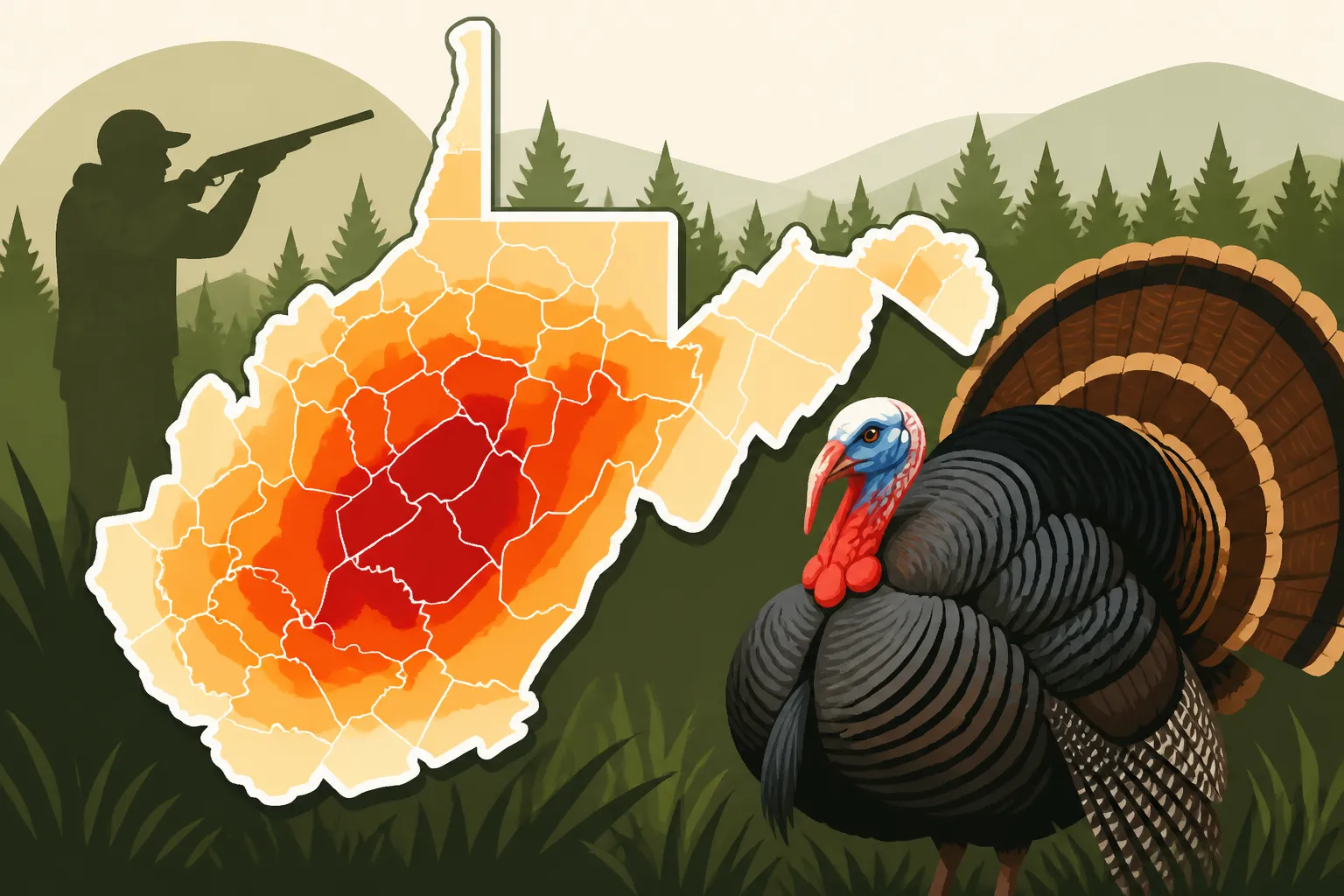
Where West Virginia Turkeys Are Densest
For turkey hunters in West Virginia, few things are more frustrating than spending hours traversing ridges and hollows, only to hear nothing but the wind. You want to know where the turkeys actually are, where the gobblers are sounding off consistently, and where your chances of success are highest. This guide is dedicated to pulling back the curtain on West Virginia's turkey hotspots, helping you understand the landscapes and factors that contribute to dense turkey populations so you can focus your scouting and hunting efforts in the most promising areas.
Understanding What Makes a West Virginia Turkey Hotspot
Before we dive into specific regions, it’s crucial to understand the foundational elements that contribute to a healthy, dense wild turkey population in the Mountain State. West Virginia is incredibly diverse, from the rolling farmlands of the Eastern Panhandle to the steep, rugged mountains of the Alleghenies, and turkeys thrive in different ways across these varied terrains. It's not just about a pretty woods; it's about a complete ecosystem that supports their entire life cycle.
Ideal Habitat Components for Wild Turkeys
Wild turkeys are quite particular about their real estate, especially when it comes to raising their young and finding food throughout the year. The best areas are a mosaic, not a monoculture. Think of it like a carefully planned neighborhood for turkeys. They need mature hardwood forests for roosting, especially those big, sturdy oaks and hickories that offer good cover and strong branches for safety. But they can’t live in just big timber. Adjacent to these mature woods, they need open or semi-open areas like old fields, logging clear-cuts, or powerline rights-of-way. These clearings are crucial for bugging and foraging, especially for poults who rely heavily on insects. The edges where these two habitat types meet are often where you’ll find the most activity.
Furthermore, turkeys rely heavily on a diverse understory. Areas with thick brush, briars, and young saplings provide essential nesting cover for hens to lay their eggs safely away from predators. This kind of cover also offers excellent refuge from adverse weather and predators once poults hatch. Without this nesting and brood-rearing cover, even abundant food and roost trees won't be enough to sustain high turkey numbers. A healthy population depends on consistent nesting success and poult survival rates, which are directly tied to these specific habitat features. If you're looking to understand more about these trends, checking out resources on West Virginia Turkey Nesting Success can give you deeper insights.
Food Sources Supporting High Densities
Turkeys are opportunists when it comes to food, but certain foods allow for a greater carrying capacity, meaning more birds in a given area. Hard mast, primarily acorns from various oak species, is king. White oaks, red oaks, chestnut oaks – if you find a ridge or a hollow heavy with these trees, especially in a good mast year, you're likely to find turkeys. Acorns provide critical carbohydrates and fats, particularly heading into winter and through the early spring when other food sources might be scarce. After a good mast crop, you’ll often see an uptick in the overall health and population numbers of turkeys, as well as deer and bears.
Beyond acorns, turkeys feast on a wide array of other foods. Soft mast like wild grapes, black gum berries, and dogwood berries are important seasonal treats. They also consume seeds from grasses and weeds, and famously, insects like grasshoppers, beetles, and spiders. These protein-rich insects are absolutely vital for growing poults. Areas with abundant insect life, often found in lush pastures, field edges, or recently disturbed areas, are magnets for turkey broods. Agricultural fields, particularly those planted in corn, soybeans, or wheat, can also draw in turkeys, especially if they have nearby woodlots for roosting and cover. These fields provide consistent and concentrated food, making them prime spots for late-season foraging.
Key Regions and Areas for Dense Turkey Populations
West Virginia is a turkey hunter's paradise in many ways, but certain regions consistently hold higher densities of birds due to a confluence of habitat, food availability, and management practices. It’s not just about looking at a map, it’s about understanding the land.
Eastern Panhandle Farmland and Woodlots
The Eastern Panhandle, encompassing counties like Berkeley, Jefferson, and parts of Hampshire and Hardy, is renowned for its excellent turkey hunting. Unlike the rugged, unbroken forests of the central mountains, this region is characterized by a mix of rolling agricultural fields, interspersed with mature woodlots and river bottoms. This patchwork of habitat creates ideal conditions for turkeys. They can feed in expansive crop fields – corn, soybeans, and wheat stubble provide endless foraging opportunities – and then retreat to the safety and roosting cover of the adjacent timber.
The availability of consistent food, combined with milder winters compared to the higher elevations, often leads to higher poult-to-hen ratios here, signifying strong reproductive success. While much of this land is private, securing permission on even small woodlots bordering agricultural fields can put you in a prime position. Public lands in this region, though often smaller and more pressured, can still be productive if you scout thoroughly. Knowing how to read a ridge for Eastern Panhandle deer, for example, can also give you clues to turkey movement, as many of their habitat needs overlap. This diverse landscape generally supports a robust turkey population, making it a perennial favorite for hunters willing to do their homework.
Potomac Highlands and Allegheny Front
Moving west into the Potomac Highlands, including counties like Pendleton, Grant, and parts of Randolph and Pocahontas, you’ll find a different kind of turkey country, but equally productive. This region is defined by its steep, forested ridges, deep hollows, and higher elevations, part of the larger Allegheny Mountain range. While it lacks the expansive farm fields of the Panhandle, it makes up for it with vast tracts of unbroken hardwood forest. These forests are rich in mast-producing trees, especially various oak species, which are critical for supporting large turkey populations.
Here, turkeys rely more on natural mast crops and forest insects. Look for areas with a mix of mature timber, particularly on south-facing slopes that receive more sunlight and warm up faster in the spring. Also, seek out areas that have undergone selective timber harvesting in the past, creating smaller clearings and younger growth that provide vital brood habitat. The key to hunting these areas is often covering ground and listening. Turkeys here can be more spread out but are often found in strong numbers when you locate pockets of ideal habitat. Hunting the Potomac Highlands often means embracing challenging terrain, but the rewards can be significant. Understanding West Virginia Turkey Roost Tree Preferences can be a huge advantage in these big woods.
Central and Southern Mountain Counties
Counties in the central and southern parts of the state, such as Nicholas, Webster, Fayette, and parts of Greenbrier and Summers, also boast excellent turkey numbers. These areas tend to be rugged and heavily forested, similar to parts of the Potomac Highlands, but often with a greater presence of reclaimed mine lands or areas with a history of logging that has created diverse forest stages. The key here is to find the "edge habitat" within these vast forests. Look for transitions where older timber meets younger regrowth, often along logging roads, power lines, or the edges of old clear-cuts.
These transitional zones provide a perfect blend of roosting trees, foraging areas, and nesting cover. Mast crops are still incredibly important, so scouting for oak flats and hickory ridges is paramount. Areas with accessible water sources, such as creek bottoms and small springs, will also attract birds, especially during drier periods. While the hunting pressure can sometimes be higher in more accessible areas, getting a little deeper into the woods can often yield fantastic results. Using mapping tools, like those you might find on GoHunt, can help you identify these transition zones and potential pockets of prime habitat even before you set foot in the woods. These tools are invaluable for Scouting West Virginia Public Land Before Season.
Leveraging Tools and Strategies for Turkey Location
Finding dense turkey populations isn't just about knowing where on a map; it's about understanding how to locate them effectively once you're in the field or even planning your trip. Modern tools and classic scouting methods go hand-in-hand.
Utilizing Mapping and Scouting Apps
In today's hunting world, digital mapping applications are indispensable, especially when trying to pinpoint high-density turkey areas. Programs like GoHunt or other popular mapping apps allow you to analyze aerial imagery, topo maps, and land ownership data right from your phone or computer. You can identify crucial habitat components mentioned earlier: mature timber for roosting, clearings for foraging, and dense cover for nesting. Look for features like prominent ridge lines that might serve as travel corridors, creek bottoms that provide water and insect activity, and those critical habitat transitions.
Before you ever lace up your boots, you can digitally "walk" the terrain, marking potential roost sites, feeding areas, and pinch points. For public land hunting, this is especially vital for finding ground others might overlook. You can identify potential access points, anticipate where other hunters might be, and plan your approach accordingly. Layers showing timber cuts or even historical satellite imagery can reveal areas of regrowth that might be perfect for turkeys now. This upfront work is a game-changer, helping you narrow down vast tracts of land to the most promising turkey habitats. For those specifically hunting public lands, Using the Go Wild West Virginia Map Tool can provide additional insights into WMA boundaries and regulations.
Pre-Season and In-Season Scouting Techniques
No amount of digital scouting can replace boots-on-the-ground effort. Pre-season scouting, typically in late winter or very early spring before green-up, is crucial. Look for physical sign: droppings (often found under roost trees), shed feathers, tracks in mud or soft earth, and scratchings in the leaf litter where turkeys have been foraging. If you find multiple signs concentrated in an area, you're on the right track. During this time, it’s also easier to identify specific roost trees before the leaves fully emerge.
Once the season approaches, in-season scouting shifts to listening. Early morning listens from high vantage points can reveal gobbling activity, giving you a real-time indication of where birds are actively calling. Use locator calls—owl hoots, crow calls—to try and elicit shock gobblers, even at midday. Listen for the subtle clucks, purrs, and yelps as birds move through the woods. Observing turkey behavior, like where they fly down from the roost, where they go to feed, and where they loaf during the day, will help you understand their patterns. Remember, turkeys are creatures of habit, and finding those habits in dense areas is key to consistent success.
Considering Annual Fluctuations and Population Trends
Turkey densities aren't static; they fluctuate from year to year based on several factors, most notably weather patterns during nesting and poult rearing, and the availability of mast crops. A cold, wet spring can significantly impact poult survival, leading to lower turkey numbers the following season. Conversely, a warm, dry spring often results in higher poult survival and an increase in the overall population. Mast crop failures can also push turkeys to seek food in different areas, concentrating them in places with more consistent forage.
Staying informed about these trends can help you adjust your hunting strategy. State wildlife agencies often conduct turkey brood surveys, and the results of these surveys can provide insight into regional reproductive success. While specific numbers for West Virginia Turkey Population Estimate might not be readily available for every county, understanding the general health of the herd in your target area is important. Hunters who connect with local landowners, farmers, or even other seasoned hunters often gain valuable anecdotal information about local turkey activity and population health, which can guide their efforts to the densest areas.
Here's a quick look at general characteristics of areas likely to hold dense turkey populations in West Virginia:
| Characteristic Area | Key Features for Turkeys | Why It Holds High Densities | Best Time to Scout/Hunt |
|---|---|---|---|
| Eastern Panhandle | Mix of large agricultural fields, mature woodlots, river bottoms. | Abundant food (crops, insects), diverse cover for nesting/roosting, milder winters. | Early spring for gobbling, fall for field feeding. |
| Potomac Highlands | Steep, unbroken hardwood ridges, deep hollows, high elevations. | Rich mast crops (oaks/hickories), vast secure habitat, less human disturbance in remote areas. | Spring for listening on ridges, fall for mast hunting. |
| Central/Southern Mtns. | Rugged, forested, often with reclaimed mine lands or varied timber cuts. | Habitat diversity from past disturbance, good mast in mature timber, edge habitat concentration. | Spring for active gobblers, fall near clear-cuts or mast. |
| River Valleys | Mature bottomland hardwoods, adjacent agricultural fields, water access. | Excellent roosting trees, consistent food sources, water availability. | Spring near fields/roosts, fall for foraging. |
Final Thoughts on Finding West Virginia’s Densest Turkey Populations
Finding where West Virginia turkeys are densest is an ongoing pursuit, a blend of studying maps, understanding habitat, and putting in the time both before and during the season. It’s not always about finding the most remote spot, but often about finding the right spot—the one that offers that perfect blend of food, cover, and security. The Eastern Panhandle offers a unique blend of agriculture and timber, while the Potomac Highlands and central mountains offer vast, mast-rich forests. Each presents its own challenges and rewards.
Remember to leverage every tool at your disposal, from detailed mapping applications like GoHunt to old-fashioned boot leather and keen ears. Connect with the land, learn its rhythms, and you'll dramatically increase your odds of locating those vocal gobblers. Good luck out there, and may your Vest Virginia turkey hunts be filled with tight patterns and loud drumming! For more detailed tactics, you might want to look into Run-and-Gun Turkey Tactics on Public Land or even Calling a West Virginia Gobbler Off the Roost.
Disclaimer
This article is for general informational purposes only and does not constitute professional advice. Laws, prices and regulations vary by location and change over time. Consult a qualified professional for guidance on your specific situation.