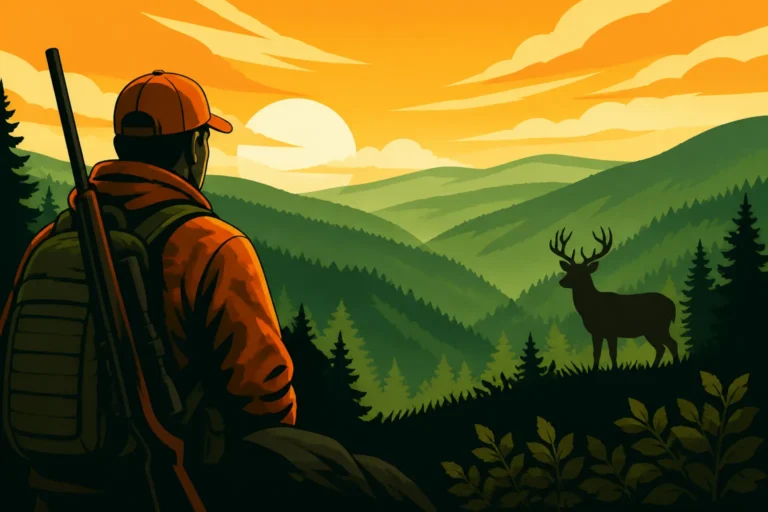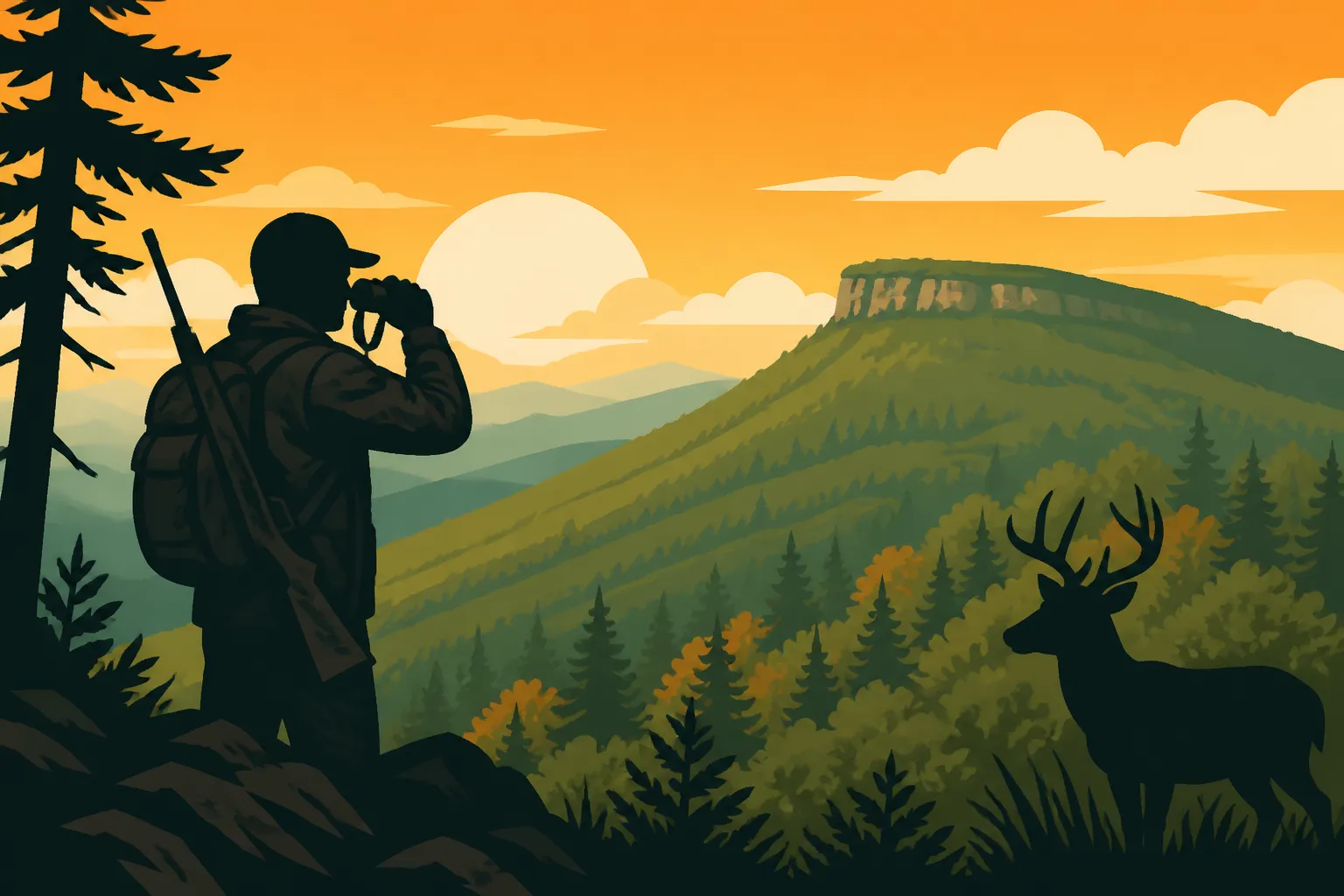
Hunting Spruce Knob Adjacent Terrain
Hunting the rugged, high-elevation terrain adjacent to Spruce Knob presents a unique set of challenges that can make even the most seasoned hunter feel overwhelmed. The sheer steepness, unpredictable weather, and dense cover demand a different approach than hunting lower-elevation areas. This comprehensive guide will walk you through understanding this formidable landscape, scouting effectively, implementing successful hunting strategies, and equipping yourself properly to pursue game in West Virginia's highest peaks.
Understanding Spruce Knob's Unique Landscape
Spruce Knob, standing proudly as West Virginia's highest point at 4,863 feet, isn't just a scenic overlook; it's the heart of some of the most challenging and rewarding hunting ground in the state. The terrain immediately surrounding it, nestled within the Monongahela National Forest, is characterized by its dramatic elevation changes, diverse forest types, and often harsh microclimates. Understanding these features is the first step to success.
High-Elevation Habitat and Challenges
When you're thinking about hunting the high country around Spruce Knob, you're not just dealing with "hills" anymore; you're dealing with mountains. The elevation itself impacts everything from vegetation types to animal behavior. Up here, you'll encounter a mix of red spruce and various hardwoods like oak, maple, and cherry. The spruce thickets, especially at higher elevations, can be incredibly dense, providing nearly impenetrable cover for deer and bears, making it tough for hunters to navigate quietly.
The challenges are manifold. First, the air is thinner, and the climbs are relentless. What looks like a short distance on a map can translate to a grueling vertical ascent. Second, weather systems in the mountains are notoriously fickle. A sunny morning can quickly turn into a bone-chilling fog, sleet, or even snow, even in the early fall. Wind is a constant factor, swirling through hollows and over ridges, playing havoc with scent control. Third, food sources can be scattered. While oak flats on benches can offer acorns, much of the high country might have less abundant or consistent food compared to lower river bottoms, meaning deer might travel more extensively to feed. This requires hunters to adapt their scouting and tactics significantly.
Key Topographical Features to Scout
Before you even set foot on the mountain, familiarize yourself with the topography. The terrain around Spruce Knob is a maze of ridges, hollows, and benches, each playing a crucial role in how game animals move and live. Learning to read a ridge for Eastern Panhandle deer, or in this case, a Spruce Knob deer, is invaluable.
- Ridges and Saddles: Ridges act as natural highways for deer and bear, especially during the rut. Animals often travel along the spine of a ridge to get from one area to another without losing too much elevation. Saddles, which are dips or low points in a ridge, are absolute magnets for movement. They funnel game from one side of the mountain to the other and offer ideal ambush points. Identifying these key saddles is paramount.
- Benches: These are flat or gently sloping areas that break up the steepness of a mountainside. Deer love benches because they provide easier travel, often hold more desirable vegetation, and offer security cover. They're often overlooked by hunters who stick to the very top or bottom of a mountain. A good bench can be a sanctuary.
- Hollows and Drainages: The steep hollows and drainages are where water runs, and they often contain denser cover and sometimes different vegetation. These can be travel corridors, especially when animals are trying to move undetected, or escape routes when pressured. Learning to interpret the wind and thermals on a steep ridge will be critical in these areas.
- Rock Outcrops and Cliffs: While they can be formidable barriers, these features also create natural funnels or pinch points. Game animals will use the easiest path around them, which can concentrate movement into predictable areas.
Scouting and Pre-Season Preparation
You wouldn't attempt a challenging climb without planning, and hunting Spruce Knob's adjacent terrain is no different. Effective scouting and preparation are the bedrock of a successful hunt, drastically increasing your odds of finding and harvesting game.
Leveraging Topo Maps and Aerial Imagery
Your hunting season starts long before opening day, often from the comfort of your home, with maps. Online mapping tools, like those provided by GoHunt, offer invaluable insights into the terrain around Spruce Knob. You can pore over detailed topographical maps to identify elevation changes, pinpoint saddles, benches, and drainages, and even estimate travel times and difficulty.
Look for areas where different habitat types converge, like where dense spruce gives way to oak hardwoods. These "edge" areas are often high-activity zones. Pay close attention to subtle changes in contour that might indicate a hidden bench or a gentle slope in an otherwise vertical landscape. Aerial imagery provides another layer of detail, allowing you to identify logging roads, clear cuts, and variations in timber density. While satellite imagery can be outdated, it still offers a great starting point for understanding canopy cover and potential food sources. Mark potential stand locations, bedding areas, and travel corridors on your digital map, creating a detailed plan for your initial boots-on-the-ground reconnaissance.
Boots-on-the-Ground Reconnaissance
Once you've done your homework with maps, it's time to hit the woods. Scouting West Virginia public land before season is an absolute must, especially in an area as complex as Spruce Knob. This isn't just a leisurely hike; it's an investigative mission.
Look for fresh sign: rubs, scrapes, tracks, and droppings. On Spruce Knob's steep slopes, pay particular attention to old logging roads, bench systems, and saddles, as deer will often utilize these easier travel routes. In the dense spruce thickets, you might not find a ton of ground sign, but look for game trails snaking through the undergrowth – animals will still follow paths of least resistance. For bears, look for overturned rocks, claw marks on trees, and scat, particularly near mast-producing oaks or berry patches. Consider where Monongahela Forest bucks bed; they often choose secluded areas with thick cover and good escape routes, often just below the crest of a ridge or on a protected bench. Spend time observing wind patterns and how thermals rise and fall with the sun, as this will directly influence your hunting strategy.
Effective Hunting Strategies for Adjacent Terrain
Hunting Spruce Knob adjacent terrain isn't about sitting in one spot and waiting. It requires active engagement with the landscape, adapting to the elements, and understanding how animals navigate this challenging environment.
Still-Hunting and Glassing Tactics
Given the vastness and ruggedness of the terrain, still-hunting can be an incredibly effective strategy. This means moving slowly, deliberately, and quietly through the woods, pausing frequently to observe, listen, and glass. Don't cover ground too quickly; instead, focus on dissecting a specific area. Use your binoculars to pick apart thick cover on opposing slopes or to check every shadow beneath the spruce canopy. High-quality optics are essential here; consider binocular power for mountain hunting that can handle low light and long distances.
When still-hunting, always consider the wind and thermals. In the mornings, thermals typically rise, carrying your scent uphill. In the evenings, they fall, carrying your scent downhill. Position yourself accordingly, using the terrain to your advantage. Focus your still-hunt along benches, parallel to ridge lines, or through sparse timber connecting thicker cover. Always be ready to stop and set up for a shot at a moment's notice.
Stand Placement on Mountain Benches and Saddles
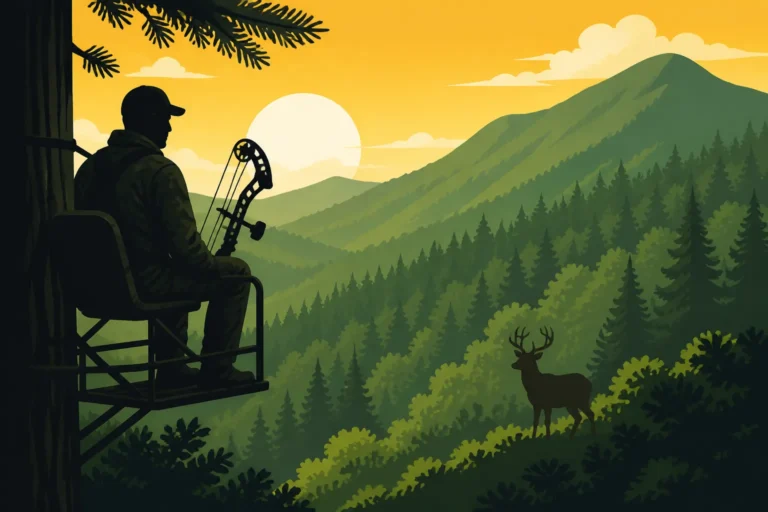
While still-hunting is productive, strategic stand placement can be deadly, particularly if you've identified consistent travel patterns during your scouting. For deer and bear, saddles are prime locations, acting as funnels between larger drainages or ridge systems. Hanging a stand on a steep Allegheny ridge in a well-defined saddle can be very effective, as animals are often forced into predictable corridors.
Benches are another excellent choice. A flat or gently sloping bench interrupting a steep slope offers easier travel for game and often provides more reliable food sources or bedding cover. Look for sign concentrated on a bench, such as numerous trails, rubs, or old scrapes. Consider putting a stand along a major travel trail on a bench that connects a bedding area to a feeding area. When setting up, always ensure your entry and exit routes are quiet and keep you out of the animal's line of sight and scent cone.
Dealing with Weather and Thermals
The mountain weather around Spruce Knob can be brutal and change in an instant. A sunny morning can give way to heavy fog, rain, or even snow by midday. Dressing in layers is non-negotiable, and having good rain gear is paramount. Keeping powder dry in wet snow for muzzleloader season, or just staying warm and comfortable, can make or break your hunt.
Thermals are the rising and falling air currents that are critically important in steep terrain. Understanding them is key to scent control, especially when you're hunting a funnel between two hollows. As the sun rises and warms the earth, air flows uphill; as it sets and the earth cools, air flows downhill. Factor these into your hunting plans. For example, in the morning, hunt higher up on a ridge or saddle where your scent will blow up and over any game below you. In the evening, reverse that, hunting lower as your scent falls down and away from animals higher up. Always be aware of crosswinds, which can make thermals even more unpredictable.
Recovering Game from Steep Terrain
Let's be realistic: if you harvest an animal on Spruce Knob's adjacent terrain, you're in for a workout. Recovering a deer from a steep hollow can be one of the most physically demanding parts of the hunt. This is where planning and proper gear become absolutely critical.
Before you even take a shot, mentally plan your recovery route. Where will the animal likely go if hit? Is there an easier path down a bench or an old logging road nearby? Consider the time of day; trying to drag a deer off a steep ridge after dark in West Virginia is a dangerous and exhausting endeavor. Having a quality pack, like those suitable for a day on public land, and even a deer sled or a strong rope, can make a huge difference. For larger game like bear, or for long hauls, consider boning out the animal and carrying it out in sections with a frame pack. Always have a buddy system if possible, as teamwork significantly eases the burden.
Essential Gear for Spruce Knob Hunts
The challenging environment around Spruce Knob demands robust, reliable gear. Skimping on essentials here can lead to a miserable, or even dangerous, experience.
Footwear and Clothing for Extreme Conditions
Your feet are your most important asset when hunting rugged mountain terrain. Invest in high-quality, waterproof, insulated boots that provide excellent ankle support. Boots for walking West Virginia ridges need to stand up to sharp rocks, mud, and potentially snow. Break them in well before your hunt to avoid blisters.
Layered clothing is paramount. Start with a moisture-wicking base layer, add insulating mid-layers (fleece or wool are excellent for wet conditions), and top it off with a waterproof and windproof outer shell. Wool is especially recommended for wet snow and quiet movement because it retains warmth even when damp. Consider insulated boots for all-day sits in cold weather, and don't forget waterproof gloves and a warm hat. Blaze orange requirements for archery hunters and gun hunters alike mean you'll need highly visible outer layers, or at least a vest.
Navigation and Safety Equipment
Cell service can be spotty or non-existent in the Spruce Knob backcountry, so relying solely on your phone for navigation is a gamble. A dedicated GPS unit or a robust offline mapping app on your phone (like GoHunt) with pre-downloaded maps is essential. Always carry a physical compass and a paper map as a backup, and know how to use them. Mark your truck, your stand, and any potential landmarks.
Beyond navigation, a comprehensive first aid kit is non-negotiable for remote highlands ground. Include items for cuts, blisters, sprains, and any personal medications. A headlamp or two with extra batteries is crucial for walking out after dark. A whistle for signaling, a small fire-starting kit, and a personal locator beacon (PLB) or satellite messenger like a Garmin InReach could be life-savers in an emergency. Always let someone know your hunting plan, including where you'll be and when you expect to return.
Packs and Game Retrieval Systems
For day hunts, a well-fitting pack capable of carrying water, snacks, extra layers, a first aid kit, and your harvested game is vital. Look for packs designed for hunting, with silent zippers and durable materials. If you anticipate boning out an animal or carrying heavy loads, a good frame pack is worth its weight in gold.
Game retrieval systems are also a must. A simple deer drag or rope can suffice for smaller animals over gentler terrain, but on Spruce Knob's steep slopes, a more robust system is often needed. Deer sleds for steep country can make a world of difference, allowing you to slide an animal down rather than drag it over obstacles. For very large animals or extreme terrain, having specialized game bags for warm September days or even a wheeled deer cart (if you have an access road) can save you hours of back-breaking labor.
| Feature / Aspect | Lower Elevation/Flatland Hunting | Spruce Knob Adjacent Terrain Hunting |
|---|---|---|
| Terrain | Gentle slopes, open woods, agricultural fields. | Extremely steep, rugged, rocky, dense spruce thickets. |
| Elevation | Minimal changes, easier walking. | Significant and rapid elevation changes, strenuous climbs. |
| Weather | More predictable, less extreme variations. | Unpredictable, sudden shifts; fog, wind, snow common. |
| Food Sources | Often concentrated in fields, consistent mast crops. | Scattered; mast crops on benches, spruce for browse, requires searching. |
| Visibility | Often good, easier to spot game at a distance. | Limited by dense cover and steep angles, requires close-range hunting. |
| Navigation | Often straightforward, good cell service. | Challenging; limited cell service, reliance on topo maps, GPS. |
| Game Recovery | Easier to drag or cart, less strenuous. | Very physically demanding, often requires specialized gear and methods. |
| Physical Demands | Moderate. | High – requires excellent physical conditioning. |
Disclaimer
Hunting is an inherently risky activity. Always prioritize safety, adhere to all West Virginia hunting regulations, and respect the environment. The information provided in this guide is for informational purposes only and should not replace proper hunter education, local knowledge, or personal judgment. Be prepared for emergencies, tell someone your plans, and know your limits.