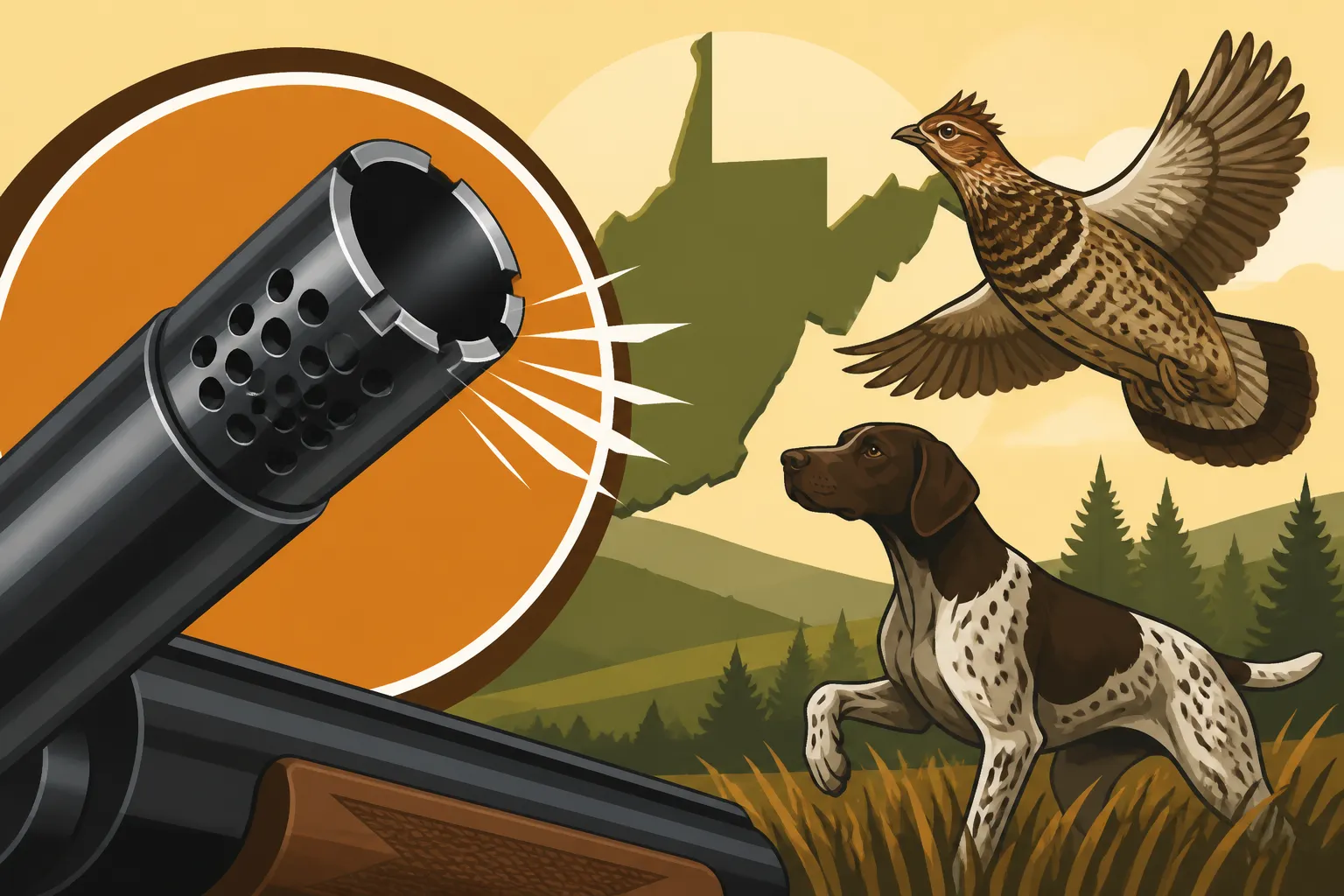
Choke Choice for Fast Flushes
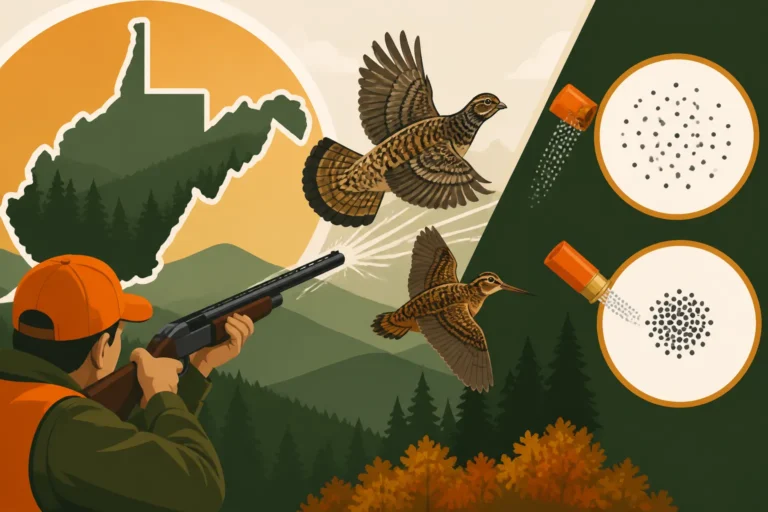
Hunting fast-flushing upland birds in West Virginia's dense cover can be one of the most exhilarating—and frustrating—experiences afield. You spend hours meticulously picking your way through thickets, anticipating every step, only for a grouse or woodcock to explode from literally under your boots, offering a split-second window for a shot that often feels impossible to connect with. This guide will dive deep into understanding choke tube selection, helping you pattern your shotgun for those lightning-fast flushes and increase your success in the Mountain State's challenging terrain.
The Unique Challenge of West Virginia's Fast-Flushing Upland Birds
There's nothing quite like the heart-stopping rush of a wild grouse or woodcock flush. One moment, you're enjoying the quiet crunch of leaves underfoot, the next, a feathered rocket bursts from cover, twisting and turning through the branches as if it were a ghost. This suddenness, combined with the incredibly thick habitat these birds call home in West Virginia, creates a unique set of challenges that can make even seasoned wingshooters feel like beginners. You're often shooting at ranges so close you could practically reach out and touch the bird, leaving almost no time to react.
The Thrill and Frustration of Grouse and Woodcock Flushes
West Virginia's ruffed grouse and American woodcock are masters of camouflage and evasive flight. Grouse, in particular, prefer dense, young timber, rhododendron thickets, and regenerating clearcuts. When they erupt, it's typically with a deafening roar of wings, and they immediately dive into the nearest available cover, creating a fleeting target. You might only catch a glimpse, a blur of brown and grey, as it disappears into the next tangle of greenbrier. It's a testament to their survival instincts, and it's also why many hunters find themselves walking back to the truck with an empty game vest, despite having several birds flush. The frustration is real; you did all the hard work to find the bird, but the shot itself was too quick, too close, or too obscured.
Woodcock, while often found in similar cover, prefer damper areas like alder runs and creek bottoms. Their flight is typically less explosive than a grouse, often described as a "fluttery" or "whirring" ascent before they level out and zip through the trees. However, they are still incredibly fast and offer similarly tight, quick shot opportunities. You might be working a dog through a thick patch of alders, expecting a bird, but when it goes, it's still a surprise. Connecting with these birds requires not just skill, but also having your gear optimized for the scenario – and that starts with your shotgun's choke.
How Shotgun Chokes Influence Close-Range Success
At its most basic, a shotgun choke is simply a constriction at the muzzle end of your barrel that controls how quickly your shot pattern spreads after leaving the gun. Think of it like a nozzle on a garden hose: a tighter nozzle (tighter choke) makes the water stream out more narrowly, while a wider nozzle (more open choke) lets the water spread out quickly. For those quick, close-range shots on grouse and woodcock, you don't want a tight, concentrated pattern. Why? Because the window of opportunity is so small, and the target is moving so fast, that a tight pattern drastically reduces your margin for error.
An open choke allows the shot charge to spread out faster, creating a wider pattern at short distances. This wider pattern effectively gives you a larger "kill zone" or "cushion" in the air, increasing the likelihood that at least some of your pellets will connect with the bird, even if your lead or swing isn't absolutely perfect. If you're consistently missing those incredibly close flushes, it might not be entirely your shooting; your choke might be working against you by delivering too tight a pattern for the job at hand. For a sport that demands instant reflexes and pinpoint accuracy, having a choke that complements the chaos of a flush is absolutely essential.
Deciphering Choke Constrictions for Upland Hunting
Understanding the various choke constrictions available is key to making an informed decision for West Virginia's upland birds. Each choke is designed to provide a specific pattern density at a given range, and for fast-flushing game, we're primarily concerned with how wide and forgiving that pattern is at very close quarters.
Understanding the Open Chokes: Cylinder and Skeet
When we talk about hunting fast-flushing birds in dense cover, Cylinder and Skeet chokes are often the first two that come to mind. These are the most open, least restrictive chokes you can put in your shotgun, and for good reason.
A Cylinder choke is essentially no constriction at all—the bore diameter is consistent from breach to muzzle. This means your shot pattern starts spreading out almost immediately after leaving the barrel. At typical grouse and woodcock ranges of 15-25 yards, a cylinder choke will produce a very wide, relatively sparse pattern. While it might seem counterintuitive to want a "sparse" pattern, the sheer width of it dramatically increases your chances of hitting a bird that's zigging through trees at high speed. You’re not trying to put every pellet into a tiny spot; you're trying to put enough pellets into a large moving target. It gives you a bigger "net" to catch the bird. This choke excels in situations where birds are flushing within 10-15 yards, often in incredibly tight cover where you literally only get a glimpse.
The Skeet choke, sometimes labeled "Skeet 1," offers a very slight amount of constriction, just a hair tighter than a true Cylinder. Historically, it was designed for the specific ranges and presentations of skeet shooting, which mimics many upland bird scenarios. At 20-25 yards, a Skeet choke will give you a beautiful, evenly distributed pattern that's still quite wide but has a touch more density around the edges than a pure Cylinder. Many seasoned upland hunters swear by a Skeet choke for their first barrel in a double gun, or as their sole choke in a pump or semi-auto, especially when working through thick alder bottoms. For birds that get up and are immediately swallowed by the cover, like those found in Woodcock Hunting West Virginia Alder Runs, the Skeet choke offers an ideal blend of spread and enough pellet count for clean kills.
The Sweet Spot: Improved Cylinder and Light Modified
While Cylinder and Skeet are fantastic for those ultra-close encounters, sometimes you need a choke that offers a little more versatility, especially in West Virginia's varied cover where a bird might flush at 10 yards or 30 yards. That's where the Improved Cylinder (IC) and Light Modified (LM) chokes come into play.
Improved Cylinder is arguably the most popular all-around choke for upland hunting, and for good reason. It provides a noticeable step up in constriction from Skeet, resulting in a denser pattern at the same range, but still with plenty of spread for wing shooting. At 25-35 yards, an Improved Cylinder choke offers a pattern that is dense enough to consistently put multiple pellets into a bird, while still being forgiving enough for moving targets. It’s a fantastic choice if you're unsure of your typical shot distance, or if you find yourself hunting areas where some birds flush incredibly close, while others might get up 25-30 yards out. It's the "jack of all trades" for many West Virginia grouse and woodcock hunters, allowing for effective shots in a wider range of scenarios without being overly restrictive.
Light Modified is a less common designation but falls exactly between Improved Cylinder and Modified. It offers a slightly tighter pattern than IC, giving you a bit more reach and pellet density at the 30-40 yard mark, but it’s still more open and forgiving than a full Modified choke. For hunters who feel IC might be a touch too open for their average shot, or who sometimes push birds a little further before they flush, LM can be an excellent compromise. Many gun manufacturers (and choke tube makers like GoHunt-compatible brands) produce LM chokes specifically for upland birds that might offer slightly longer, though still quick, shots. It's a nuanced choice, but one that can make a difference in specific hunting styles or cover types.
When Tighter Chokes Like Modified Might Be Considered (and Why They're Less Common)
While the focus for fast-flushing birds is on open chokes, it's worth briefly touching on the Modified choke. This choke is significantly tighter than the ones we've discussed, offering a denser pattern with more effective range, typically out to 40 yards or so. For birds that hold tight and then flush when you're well within typical shotgun range, a Modified choke is often too restrictive. The pattern is simply too small to reliably connect with a rapidly moving, twisting target at 10-25 yards. The margin for error is razor-thin, and misses become far more common.
However, there are very specific, less common scenarios where a Modified choke might find a place in an upland hunter's setup, usually as a second barrel in a double gun. Imagine a scenario where you flush a grouse, take a shot with your open first barrel, and the bird somehow avoids the pattern and flies straight away, clearing the immediate dense cover into a more open stand of timber. In this follow-up shot, a Modified choke in your second barrel could give you the necessary reach and pattern density to make a clean kill at a slightly longer distance. This is much less common with woodcock, who rarely offer a "straight away" long shot, but grouse can sometimes pull it off. Even so, for the vast majority of West Virginia upland hunting, a Modified choke for your primary shot is going to lead to more frustration than success. It's a tool best reserved for different game, or very specific secondary shots.
Strategizing Choke Selection for West Virginia's Diverse Cover
West Virginia is a state of diverse and often challenging terrain, and the cover types for upland birds are no exception. From the suffocating density of rhododendron thickets to the more open mature hardwoods, each environment presents its own set of challenges that influence optimal choke selection.
Navigating Brushy Bottoms and Thick Laurel: The Case for Max Spread
If you've ever pushed through a West Virginia rhododendron thicket or a patch of greenbrier so thick you felt like you were swimming, you know exactly how close a bird can flush. In these environments, grouse and woodcock often hold incredibly tight, waiting until you're practically on top of them before bursting out. When they do, your shot will likely be within 10-20 yards, possibly even closer. This is where maximizing your spread with the most open chokes available truly shines.
For these super-dense covers, Cylinder or Skeet chokes are your best friends. The goal isn't to put a tight pattern on a bird, but to throw a broad enough "wall" of pellets that the bird has nowhere to go. Imagine a grouse flushing from a tangle of grapevines and laurel. You swing, fire, and the bird goes down. Often, when you pick it up, you'll see a scatter of pellets across its body, not a concentrated group. That's the open choke doing its job – providing a forgiving pattern that increased your chances of connecting in that split-second explosion. Brands often cater to these specialized needs, with many choke tube manufacturers designing their most open chokes specifically for this type of tight cover hunting. This approach is absolutely vital when you're Grouse Hunting Highlands Aspen Cuts or in similar overgrown areas, where the cover is so thick you might only see a silhouette for a fraction of a second.
Hunting Edge Cover and Sparser Woods: Versatility is Key
Not all West Virginia upland hunting happens in impenetrable jungles. You might find yourself working logging roads, hiking along creek bottoms with slightly less dense vegetation, or hunting the edges of regenerating clearcuts that offer a mix of thick and slightly more open patches. In these scenarios, birds might still flush close, but there's a greater chance they could get up a little further out, perhaps 25-35 yards away, or even offer a slightly longer follow-up shot. This is where versatility becomes paramount, and the Improved Cylinder choke often proves to be the ideal choice.
An Improved Cylinder choke provides a fantastic balance. It's still open enough to be very effective on those 15-20 yard flushes, giving you a good pattern spread. However, it tightens up just enough to maintain sufficient pattern density at slightly longer ranges, say 30-35 yards, for birds that manage to put a little more distance between themselves and your muzzle. If you're hunting varied habitat throughout the day, perhaps transitioning from a thick creek bottom where you expect woodcock to a more open hardwood ridge for squirrels or grouse, the Improved Cylinder keeps you prepared for a wider array of shot opportunities. For example, when you're Squirrel Hunting West Virginia Bottomland Hardwoods, you might jump a grouse from a brush pile that offers a slightly longer shot than a bird in a dense thicket, and an IC choke handles both well. It minimizes the need to constantly swap chokes if you’re carrying an interchangeable system, letting you focus more on the hunt itself. Many veteran hunters I know keep an Improved Cylinder in their gun 90% of the time for these exact reasons.
The Advantage of Dual Chokes for Over/Under or Side-by-Side Shotguns
For hunters who carry an over/under or side-by-side shotgun, there’s a distinct tactical advantage: the ability to set up with two different chokes. This allows you to tailor your choke choice to the specific progression of a flush, offering a wider pattern for the initial close shot and a tighter pattern for a potential follow-up. This setup is particularly effective for game like grouse, which can occasionally put on an incredible burst of speed and distance after the first shot.
A classic and highly effective combination for West Virginia upland hunting is to run a Skeet or Cylinder choke in your first barrel and an Improved Cylinder or Light Modified in your second barrel. When a bird explodes from cover right in front of you, you take the first shot with the open choke, maximizing your chances of a hit in that immediate, chaotic moment. If, by some miracle, the bird somehow evades that first pattern and continues to gain distance, your second barrel, with its slightly tighter choke, is ready to deliver a denser pattern at the increased range. This gives you a better chance of connecting with a bird that has cleared the initial thick stuff and is now flying through more open timber, perhaps 30-45 yards out. This dual-choke strategy recognizes that not every flush is the same, and it allows you to adapt on the fly without physically changing anything on your gun. It’s an old-school trick that still holds significant value for today’s upland hunters, giving you a layered approach to dealing with those notoriously quick birds.
Optimizing Your Setup: Beyond Just the Choke
While selecting the right choke is a huge step toward success with fast-flushing birds, it's really just one piece of the puzzle. To truly optimize your setup for West Virginia's challenging upland hunting, you need to consider how your choke interacts with your ammunition and, most importantly, your own shooting ability. A great choke won't overcome poor fundamentals, but combining the right choke with thoughtful ammunition and practice will dramatically increase your odds.
The Critical Step of Patterning Your Shotgun
I cannot stress this enough: you absolutely must pattern your shotgun with your chosen choke and ammunition. Trusting the generic "Improved Cylinder" stamping on your choke tube without seeing how your gun performs with your preferred load is like guessing the recipe for a cake. Every shotgun, even two identical models from the same manufacturer, is a unique system. Barrel characteristics, forcing cones, and choke tube dimensions all contribute to how a shot charge patterns.
To pattern your gun, grab a large sheet of paper or cardboard (at least 3×3 feet), mark a clear aiming point in the center, and shoot at distances typical for your upland hunting, usually 20-30 yards. Fire several shots, aiming consistently at the center. What you're looking for is the distribution of pellets. Is the pattern evenly spread? Is it too dense in the center with thin edges, or is it too sparse overall? Does it throw consistently low or high? By seeing the actual spread, you can confirm if your chosen choke and load are delivering the forgiving, wide pattern you need for fast flushes. You might discover that your "Skeet" choke actually performs more like an "Improved Cylinder" with a certain brand of shells, or vice-versa. Websites like GoHunt often feature articles and user reviews about patterning different loads, which can be a useful resource for comparing notes on what other hunters are seeing. This step is non-negotiable for serious upland hunters.
Ammunition Choice: Complementing Your Choke
Your ammunition choice is intrinsically linked to your choke selection. The choke restricts the shot, but the characteristics of the shot itself—size, material, and payload—also dictate pattern performance and effectiveness.
For fast-flushing upland birds, particularly grouse and woodcock, smaller shot sizes are generally preferred. This means #7.5, #8, or even #9 shot. Why smaller shot? Because you want a dense pattern. Smaller pellets mean more individual projectiles in a given payload (e.g., 1 ounce of #8 shot contains many more pellets than 1 ounce of #4 shot). This increases the statistical likelihood of multiple pellets hitting the relatively small target area of a grouse or woodcock, ensuring a clean, humane kill. While individual pellets are lighter and carry less energy, at the close ranges typical for these birds, the sheer number of pellets ensures sufficient energy transfer.
Also consider shot material. Most upland loads are lead, which patterns reliably. However, if you're hunting near water where non-toxic shot might be required, be aware that steel or bismuth shot patterns differently than lead due to density and hardness. Steel tends to pattern tighter than lead through the same choke, so you might need to go even more open with your choke if using steel. Make sure to pattern your gun with any non-toxic loads you plan to use. By combining the right choke with appropriate small-shot upland loads, you create a system that maximizes your chances on those quick shots. This is crucial for maximizing your success when considering your Shot Size for Grouse and Woodcock.
Mastering the Swing: Chokes Can't Do It All
Let's be real: no choke tube, no matter how perfectly selected, can make up for poor shooting fundamentals. The most important "gear" you bring to the woods is your skill. Upland bird hunting demands a smooth, decisive swing and good gun mount. When a bird flushes, your instinct might be to stop your swing and "point" the gun. Resist that urge! You need to continue your swing through the bird, allowing your momentum to carry the barrel ahead of the target before pulling the trigger.
Practice is key. Whether it's dry-firing at home, shooting clay pigeons on the skeet field (which, coincidentally, uses very open chokes and mimics upland flushes well), or simply mounting your gun repeatedly, consistent practice will build muscle memory. The goal is for your gun to feel like an extension of your body, swinging naturally to the target. An open choke offers a wider margin for error, but you still have to put that wider pattern in the vicinity of the bird. Combine the forgiving nature of an open choke with a solid, fluid swing, and you'll find yourself connecting with more of those fleeting targets. For tips on maximizing your shot opportunities, even when the bird is working away quickly, consider insights from Best Shotgun Gauge for West Virginia Grouse which often emphasizes quick, decisive action.
On-the-Fly Adaptability with Screw-In Chokes
Modern shotguns, especially those designed for versatility, almost universally come equipped with interchangeable screw-in choke tubes. This is a game-changer for upland hunters, offering incredible adaptability to changing conditions or even different species throughout the day. Gone are the days of being stuck with a fixed choke barrel, forcing you to compromise on pattern.
The beauty of screw-in chokes is their convenience. You can literally swap a choke in less than a minute. Heading into a super-thick rhododendron patch where you know the shots will be under 15 yards? Screw in that Skeet or Cylinder. Moving out to a more open, mixed-hardwood area where you might get a slightly longer shot? A quick swap to an Improved Cylinder is simple. Many hunters carry a small pouch on their belt or in their vest with a few common choke tubes and the necessary wrench. This allows for genuine "on-the-fly" adaptability. You can even experiment with different chokes in a single hunt to see what feels most effective for the terrain you're covering. GoHunt and similar communities often have discussions about carrying systems for chokes and other small gear, which can offer practical ideas for how to keep your spare chokes secure and accessible. This flexibility means you're always optimized for the conditions, rather than just hoping your fixed choke is "good enough."
Choke Performance Summary for West Virginia Upland Hunting
Here's a quick overview of how different choke constrictions typically perform and their ideal applications for hunting fast-flushing birds in West Virginia. Remember, these are general guidelines, and patterning your individual shotgun is always the best practice.
| Choke Constriction | Percentage of Pellets in 30" Circle at 40 Yards (Approx.) | Typical Effective Range for Upland Birds | Ideal West Virginia Upland Scenario | Pros | Cons |
|---|---|---|---|---|---|
| Cylinder | 20-30% | 0-25 yards | Ultra-dense cover, very close flushes | Maximum pattern spread, high forgiveness | Low pellet count at range, poor for longer shots |
| Skeet | 25-35% | 10-30 yards | Dense cover, average close flushes | Excellent pattern spread, good density | Limited range beyond 30 yards |
| Improved Cylinder | 35-45% | 15-35 yards | Mixed cover, versatile distances | Good balance of spread and density, versatile | Can be too tight for under-10-yard shots, too open for 40+ |
| Light Modified | 40-50% | 20-40 yards | Slightly more open cover, longer shots | Better range than IC, still forgiving | Less forgiveness on very close flushes |
| Modified | 50-60% | 25-45 yards | Open woods, longer shots (second barrel) | More range and pellet density | Too tight for most fast-flushing primary shots |
Choosing the right choke for fast-flushing birds in West Virginia isn't just about throwing lead; it's about throwing it smart. By understanding how each choke performs and matching that to the demanding environments of the Mountain State, you can significantly improve your chances of success on those notoriously quick grouse and woodcock. Take the time to pattern your gun, select your ammunition thoughtfully, and keep practicing your swing. You'll be amazed at the difference it makes.
Disclaimer
This article is for general informational purposes only and does not constitute professional advice. Laws, prices and regulations vary by location and change over time. Consult a qualified professional for guidance on your specific situation.