Turkey Shotgun Gauge Choice
Choosing the right shotgun gauge for West Virginia turkey hunting can feel like stepping into a labyrinth of opinions, gear debates, and well-meaning but often contradictory advice. You want to make sure you have enough punch to put down a stubborn gobbler, but you also don't want to carry a cannon up and down those steep ridges all day. It’s a classic dilemma for hunters trying to balance power, portability, and practicality in the mountains and hollers of the Mountain State. This guide will walk you through the various shotgun gauge choices, break down their pros and cons, and help you make an informed decision so you can step into the spring woods with confidence.
The Age-Old Debate: 12 Gauge vs. 20 Gauge for Turkeys
For generations, the 12 gauge reigned supreme as the undisputed king of turkey hunting shotguns. It was the standard, the benchmark, the "if you want to kill a turkey, you use a 12 gauge" mantra. But things change, technology advances, and the 20 gauge has stepped up in a big way, prompting a serious reevaluation for many West Virginia hunters.
The Mighty 12 Gauge: Power and Tradition
The 12 gauge has earned its reputation for a reason. Historically, it offered the largest payload of shot, meaning more pellets in the air and a greater chance of hitting the small, vital head and neck area of a gobbler. This sheer volume of shot translated into more forgiving patterns and often extended effective ranges, giving hunters a perceived advantage, especially when a longbeard might hang up just out of comfortable range.
When you're perched on a ridge in the Monongahela National Forest Hunting or trying to call in a bird across a wide field in the Eastern Panhandle, that extra oomph and pattern density can feel like a safety net. Modern 12-gauge loads, especially those packed with high-density shot like TSS (Tungsten Super Shot), are incredibly potent. They can throw a pattern that's absolutely devastating at ranges that would have been unthinkable just a couple of decades ago with traditional lead shot. Many West Virginia hunters have a deep connection to their trusty 12 gauges, perhaps inherited from a father or grandfather, and there's something to be said for the confidence that comes with tradition. However, the downside is often recoil. A heavily loaded 12 gauge, especially a lighter model, can kick like a mule, which can be a real distraction during patterning sessions and even in the moment of truth in the woods. Carrying a heavier 12-gauge shotgun up and down the rugged terrain can also take its toll as the day wears on.
The Nimble 20 Gauge: Modern Performance, Less Punishment
The 20 gauge has experienced a renaissance in turkey hunting, largely thanks to advancements in ammunition technology, specifically TSS shot. What was once considered a "youth" or "small game" gun for turkeys is now a legitimate, high-performing option capable of cleanly taking birds at ranges comparable to, or even exceeding, what older 12-gauge loads could achieve.
The primary appeal of the 20 gauge for turkey hunters, particularly those navigating the challenging topography of West Virginia, is its lighter weight and reduced recoil. When you're Run-and-Gun Turkey Tactics on Public Land through laurel thickets or scrambling up a steep hollow to cut off a strutting tom, every ounce counts. A lighter 20 gauge is easier to carry, quicker to shoulder, and less fatiguing over a long day. The reduced recoil makes it far more enjoyable to shoot, which translates into more comfortable and productive patterning sessions at the range. This comfort often leads to better shooting fundamentals and greater confidence when that gobbler finally steps into range. For hunters who might be sensitive to recoil or newer to the sport, the 20 gauge offers a fantastic balance of power and shootability. Don't let anyone tell you it's not "enough gun." With the right modern loads, a 20 gauge is a truly formidable turkey slayer.
Beyond the Big Two: Smaller Gauges and Specialty Options
While the 12 and 20 gauge dominate the turkey woods, there are other options out there, each with its own niche. Understanding their strengths and limitations is key to finding your perfect fit.
The .410 Bore: The Ultimate Challenge (with a Twist)
The .410 bore was once exclusively for dedicated small game hunters, or perhaps a child's first shotgun. In the turkey woods, it was practically unheard of for serious hunters. But then came TSS. This revolutionary shot material, with its incredible density, allows even the tiny .410 to deliver a sufficient number of lethal pellets to a turkey's head and neck at responsible ranges.
For the minimalist, the recoil-averse, or the hunter looking for the ultimate challenge, the .410, especially with specialized turkey-specific loads, can now be a viable option. Imagine stalking a gobbler in the Hunting the Ohio River Valley Bottomland with a shotgun so light it feels like a toy, yet knowing it holds the power to drop a bird with precision. The recoil is practically non-existent, making it incredibly fun to shoot and perfect for younger hunters or those with physical limitations. However, it's crucial to understand that the .410 is still a specialist's tool. Its pattern is much smaller, requiring extreme precision and limiting effective range significantly compared to a 12 or 20 gauge, even with TSS. Shot placement becomes paramount, and there's very little room for error. You'll want to spend considerable time at the range, and perhaps use a platform like GoHunt to scout public land areas where you know shots might be closer. This isn't a gauge for someone who wants a forgiving pattern.
The Beastly 10 Gauge: Old School Heavy Hitter
At the other end of the spectrum is the 10 gauge. Once popular for waterfowl and, in some circles, for turkey hunting due to its massive payload capacity, it has largely faded from mainstream use. A 10 gauge throws an impressive amount of lead, far more than a 12 gauge, which historically translated to incredible pattern density and extended range.
However, the downsides are significant. Ten-gauge shotguns are typically heavy, cumbersome, and deliver punishing recoil, even with lighter loads. Ammunition can also be harder to find and more expensive. For the typical West Virginia turkey hunter who's often moving quickly and calling aggressively, the weight and bulk of a 10 gauge can be a major hindrance. While it certainly has the power to anchor any gobbler, most hunters find that modern 12 and 20 gauge loads, particularly with high-density shot, offer comparable or superior performance in a much more user-friendly package. Unless you have a specific reason or a deep love for the classic big bore, it's generally not the most practical choice for today's turkey woods.
Patterning Your Turkey Gun: The Ultimate Test
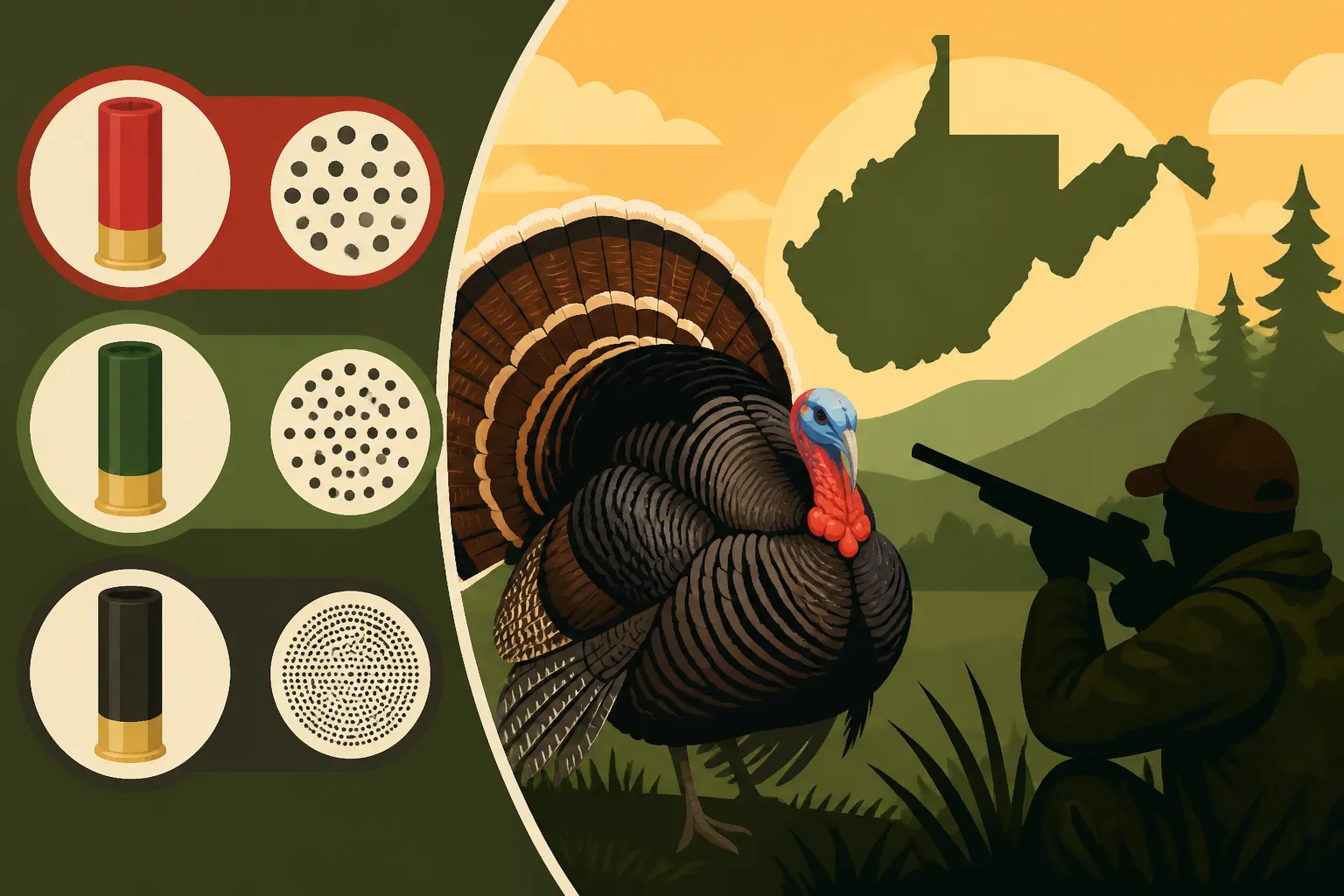
No matter what gauge you choose, the single most critical step is patterning your shotgun. This isn't just about shooting at a target; it's about seeing exactly how your specific gun, choke, and ammunition combination performs. You simply cannot skip this step and expect consistent results in the field. I've seen too many hunters head into the spring woods with a new gun or new ammo, only to be disappointed because they assumed it would "just work."
Why Patterning Matters More Than Anything Else
Think of it like this: your turkey gun isn't designed to throw a wide pattern like a duck gun. You're aiming for a small target – the head and neck of a turkey – and you need a dense, concentrated pattern in that tiny kill zone. A pattern that looks good at 20 yards might blow out completely at 40 yards, or have large holes a gobbler could easily stick his head through. Patterning reveals the truth. You're looking for enough pellets (typically 100+ for TSS) within a 10-inch circle at your maximum comfortable range, usually 30-40 yards. For more details on this, check out Patterning a Turkey Gun at 40 Yards.
The Process: Chokes, Loads, and Range Time
Start with a clean barrel. Then, experiment. You'll want to try different brands and shot sizes of turkey-specific ammunition. If you're using a 12 or 20 gauge, consider a good aftermarket choke tube designed specifically for turkey hunting. These "extra-full" or "super-full" chokes constrict the shot column more aggressively than standard chokes, leading to tighter patterns. Turkey Shotguns and Chokes delves deeper into these options.
Head to the range with large sheets of paper or cardboard. Set up targets at 20, 30, and 40 yards. Shoot at each distance, carefully marking where you aimed versus where the pattern hit. This helps you identify if your gun shoots high, low, left, or right with that particular load. Then, draw a 10-inch circle around the densest part of the pattern and count the pellet hits. Compare different loads and chokes until you find the combination that gives you the most consistent, dense pattern at your desired range. Don't be afraid to try multiple brands of ammunition or choke tubes. Sometimes, a gun will prefer one specific load over all others, and finding that sweet spot is key. This is where patience pays off, and it's a great excuse to spend a sunny afternoon at the local range. Remember, a good pattern is more about the density and consistency within that critical 10-inch circle than it is about the overall spread.
Making Your Final Choice: Considerations for West Virginia Hunters
Ultimately, the "best" turkey shotgun gauge is the one that you shoot most effectively and confidently. There's no one-size-fits-all answer, especially in a state with such varied terrain and hunting styles as West Virginia.
Your Physical Build and Recoil Tolerance
Be honest with yourself about recoil. If you flinch every time you pull the trigger, your accuracy will suffer. A lighter-kicking 20 gauge or even a .410 with TSS might be a better choice for you than a heavy-recoiling 12 gauge. The objective isn't to withstand the most recoil; it's to place your shot accurately. Confidence comes from comfort and familiarity, not from bruising your shoulder. This is especially true if you plan on extended patterning sessions, which are absolutely crucial.
Hunting Style and Terrain
Consider how you hunt in West Virginia. Are you primarily sitting in a blind overlooking a field edge in the Eastern Panhandle Farmland Deer, waiting for a bird to come to you? Or are you a run-and-gunner, constantly moving and trying to get into position on the steep, timbered slopes of the Potomac Highlands Public Land? If you're covering a lot of ground, a lighter 20 gauge can make a huge difference in your energy levels and ability to respond quickly. If you prefer to set up and wait, the extra weight of a 12 gauge might not be as much of a factor, and the potential for a slightly longer ethical shot could be appealing. The goal is to match your gear to your strategy.
Ammunition Availability and Cost
While TSS has revolutionized small-gauge turkey hunting, it's still generally more expensive and sometimes harder to find than traditional lead turkey loads for 12 and 20 gauge. The sheer volume of options for 12 and 20 gauge means you'll almost always be able to find suitable ammunition. While specialty loads are fantastic, sometimes having reliable access to standard, effective loads is a practical consideration. You might be able to find good deals if you look for them, but some of the Tungsten Turkey Loads Worth the Price can certainly be an investment. Check with local sporting goods stores or large retailers that stock hunting supplies to gauge availability before you commit to a specific setup.
Confidence is King
No matter what the ballistic charts say or what your buddy uses, your confidence in your chosen setup is paramount. If you love the feel of your 12 gauge, know it patterns perfectly, and aren't bothered by the recoil, stick with it! If you feel more agile and accurate with a 20 gauge, that's your ticket to success. Spend time at the range, find what feels natural, and build that confidence. That's the real secret to being effective in the West Virginia turkey woods. A confident hunter, with a well-patterned gun they trust, is far more likely to punch their tag than someone second-guessing their equipment. Tools like those accessible through GoHunt can help you scout and plan, but the trigger time is all on you.
| Feature | 12 Gauge | 20 Gauge | .410 Bore (with TSS) | 10 Gauge |
|---|---|---|---|---|
| Payload/Density | Very high, especially with modern loads | High, excellent with modern TSS loads | Limited, but effective with TSS | Extremely high |
| Effective Range | Excellent (40-60+ yards with modern loads) | Very good (35-50+ yards with modern loads) | Limited (25-35 yards, requires precision) | Excellent (potentially 60+ yards) |
| Recoil | Moderate to heavy | Light to moderate | Very light | Heavy to severe |
| Weight/Portability | Moderate to heavy, depending on model | Light, very maneuverable | Very light, extremely nimble | Very heavy, cumbersome |
| Ammo Availability | Excellent, widely available | Excellent, widely available | Specialist loads for turkey, less common | Limited, often harder to find |
| Cost (Ammo) | Moderate to high | Moderate to high | High (TSS loads) | High |
| Ideal User | Traditionalists, those prioritizing range/power | Mobile hunters, recoil-sensitive, youth, general purpose | Minimalists, experienced, recoil-sensitive, youth | Niche users, not common for modern turkey hunting |
Ultimately, the best turkey shotgun gauge for you in West Virginia depends on a combination of personal preference, hunting style, and ammunition advancements. With today's technology, both the 12 and 20 gauge are incredibly effective, offering distinct advantages. The .410 has also found a new, albeit specialized, place. Take the time to pattern your chosen setup, and you'll be well on your way to a successful spring turkey hunt in the beautiful Mountain State. When you're hearing that first gobble echoing across the hills, you want to be thinking about the bird, not your gear.
Disclaimer
This article is for general informational purposes only and does not constitute professional advice. Laws, prices and regulations vary by location and change over time. Consult a qualified professional for guidance on your specific situation.