Arrow Weight for Short Shots
One of the most common frustrations bowhunters face in West Virginia is the sudden, close-range shot opportunity that evaporates if your gear isn't dialed in. From thick laurel patches to deep, steep hollows, deer and bear often appear much closer than anticipated, leaving little time for error. This guide will walk you through the critical considerations for optimizing your arrow weight specifically for these crucial short shots, ensuring maximum penetration and ethical harvests when it matters most.
Understanding Arrow Weight Basics for West Virginia Hunting
When we talk about arrow weight, it's not just a number on a scale; it's a critical component of your entire bowhunting system that dictates how your arrow performs downrange. For West Virginia's rugged terrain and dense cover, where shots are often up close and personal, understanding the nuances of arrow weight can be the difference between a clean pass-through and a tough tracking job.
The Interplay of Kinetic Energy and Momentum for Close-Range Shots
Many new bowhunters focus heavily on kinetic energy, often chasing the fastest arrow possible. Kinetic energy, which is a measure of an object's energy due to its motion, certainly plays a role, especially in flatter trajectories at longer distances. However, for those tight, short shots common in West Virginia, momentum often takes center stage. Momentum, a product of mass and velocity, is crucial for penetration, particularly when encountering resistance like bone, heavy muscle, or even a branch deflection.
Imagine a heavy bowling ball hitting pins versus a light tennis ball. The bowling ball, despite moving slower, carries far more momentum and drives through obstacles with greater force. The same principle applies to your hunting arrow. A heavier arrow, even if it leaves the bow slightly slower, will retain more momentum upon impact, driving deeper into the animal. This is especially vital when a whitetail buck or a bruiser black bear might present a less-than-perfect angle or when you're aiming for a pass-through to maximize blood trails. In the thick timber of the Monongahela National Forest or the brushy bottoms of the Ohio River Valley, a solid pass-through is your best friend.
How FOC Front of Center Affects Arrow Flight and Penetration at Short Distances
Beyond just total arrow weight, another critical factor for optimizing performance, particularly for close-range and demanding shots, is Front of Center, or FOC. FOC refers to the percentage of an arrow's total weight that is located in the front half of the arrow. A higher FOC means more weight is concentrated towards the broadhead end.
While FOC is often discussed in the context of long-range stability, its benefits for short-range penetration are equally significant. A higher FOC arrow tends to stabilize more quickly out of the bow, which is great for instant accuracy. More importantly, it creates a "nose-heavy" effect that helps the arrow drive straight forward, acting like a self-aligning projectile. This enhanced stability becomes a huge advantage if your arrow happens to glance off a small twig or piece of brush on its way to the target, helping it maintain a truer path and less energy loss before impact. For West Virginia hunters, where shots frequently involve navigating small gaps in the foliage, a higher FOC can dramatically improve your arrow's ability to punch through and deliver maximum energy where it counts. Many discussions on GoHunt forums often highlight how tweaking FOC can lead to noticeable improvements in field performance for different setups.
Optimizing Arrow Weight for Typical West Virginia Short Shots
West Virginia's hunting landscape is defined by its rugged beauty and challenging terrain. From the high ridges of the Allegheny Mountains to the dense creek bottoms, hunting here means being ready for dynamic, often close-quarters encounters. Understanding these typical scenarios is key to selecting the right arrow weight.
Defining "Short Shots" in West Virginia's Varied Terrain
When we talk about "short shots" in West Virginia, we're not just thinking about a wide-open field at 20 yards. We're picturing a mature buck slipping silently through a rhododendron thicket at 15 yards, or a black bear ambushing a bait site (where legal) at point-blank range. These aren't textbook shots. They're quick, often obstructed, and demand maximum efficiency from your arrow.
In deep hollows, dense laurel thickets, or along logging roads where visibility can be limited to just a few yards, most shots on deer and bear occur well within 30 yards. Many experienced West Virginia bowhunters will tell you a significant percentage of their successful encounters happen at 20 yards or less. The steep topography can mean that even a 25-yard shot is on a steep angle, either uphill or downhill, adding another layer of complexity. Whether you're patiently waiting in a Treestand Setups in Monongahela National Forest or still-hunting through a Hunting a Funnel Between Two Hollows, the chances of a quick, close shot are high. This close proximity means that extreme speed, which often comes at the cost of arrow weight, is less critical than the raw penetrating power a heavier arrow provides.
Ideal Arrow Weight Ranges for Whitetail Deer and Black Bear
For hunting West Virginia's whitetail deer and black bears, a common recommendation for total arrow weight (including broadhead) often falls into the 400-550 grain range for compound bows. Traditional archers might push this even higher. While some hunters go lighter for blazing speed, the benefits for short-range penetration with a heavier arrow are substantial.
Consider this: a 450-grain arrow traveling at 280 feet per second (fps) will carry significantly more momentum and deliver a harder blow than a 350-grain arrow at 320 fps, especially if it hits bone. For deer, hitting a shoulder blade or the far-side rib cage can halt a lighter arrow, leading to poor penetration. For bears, which have thicker hides and denser bones, that extra momentum from a heavier arrow is an absolute game-changer. You're looking for clean pass-throughs, which not only inflict more damage but also create two holes for a better blood trail – something incredibly valuable when tracking a West Virginia deer through dense undergrowth or up a steep grade. Finding the sweet spot within this range often involves testing different components to see what shoots best out of your specific bow. Insights shared on GoHunt often delve into hunters' personal experiences with different arrow weights for these specific game animals.
The Role of Broadhead Selection with Arrow Weight for Penetration
Your broadhead isn't just the tip of your arrow; it's the business end that initiates the wound channel and contributes significantly to your overall arrow weight and FOC. When optimizing for short shots and maximum penetration, the type and weight of your broadhead are paramount.
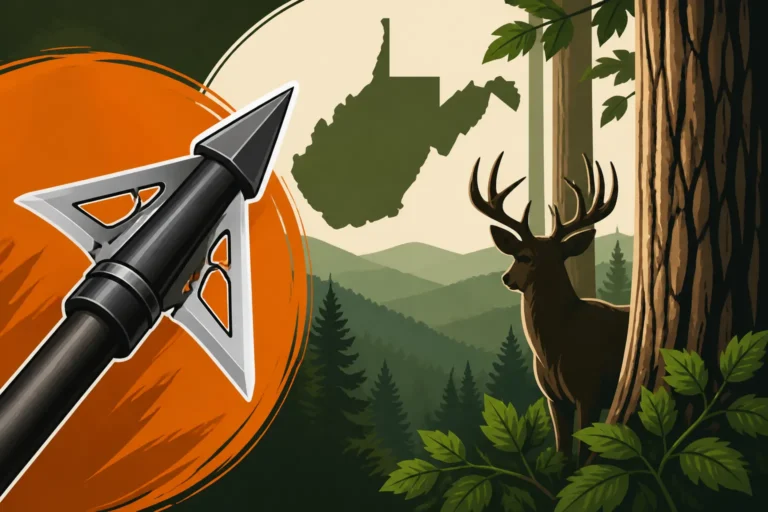
Heavier broadheads, typically ranging from 125 grains to 200 grains or more, contribute directly to increasing your total arrow weight and, subsequently, your FOC. This shift in weight forward aids in penetration by ensuring the arrow remains stable and drives through with maximum force. Fixed-blade broadheads, especially those with minimal cutting surfaces and a sturdy design, are often favored by hunters prioritizing penetration over extreme cutting diameter. These broadheads maintain their structural integrity better upon impact with bone or heavy tissue, ensuring the energy from your heavier arrow is fully utilized. While mechanical broadheads can create larger entry holes, their blades can sometimes deploy prematurely or break on heavy bone, hindering penetration. For the rugged conditions and potentially tough hide of a West Virginia black bear or a big rutting buck, a robust fixed-blade broadhead paired with a heavier arrow is a formidable combination. For more on this, check out Fixed Versus Mechanical Broadheads.
Practical Considerations and Testing for Your Setup
Getting your arrow weight right for West Virginia's short shots isn't just about picking a number; it's about making sure your entire system works in harmony. This involves tuning, understanding real-world scenarios, and rigorous field testing to build confidence.
Tuning Your Bow for Optimal Arrow Flight with Heavier Arrows
Switching to a heavier arrow, or even just a heavier broadhead, will undoubtedly change how your bow shoots. Your bow needs to be properly tuned to launch that arrow efficiently and accurately. Arrow spine, which is its stiffness, is particularly crucial here. A heavier arrow requires a stiffer spine, or a slightly weaker spine than you might expect, depending on your bow's draw weight and cam system. If your arrow spine is too weak for your heavier arrow, it will flex excessively as it leaves the bow, leading to poor flight, erratic broadhead accuracy, and a loss of energy.
Paper tuning is a common method where you shoot through a piece of paper to analyze the tear pattern, indicating whether your arrow is flexing correctly (known as "archer's paradox") or if there's a tuning issue. Bare shaft tuning, where you shoot an arrow without fletching, is another excellent way to ensure your bow is perfectly aligned to propel your chosen arrow weight. A properly tuned bow ensures that every ounce of energy stored in your limbs is transferred efficiently into your arrow, driving it straight and true, even with a heavier setup. This meticulous tuning process is what makes all the difference when you're Bowhunting West Virginia's Long Archery Season.
Real-World Scenarios and GoHunt Insights on Arrow Weight
Let's imagine you're tucked into a ground blind near a well-used game trail, maybe in the Allegheny Highlands, and a sizable deer steps out at 18 yards. It's quartering away slightly, but there's a small sapling between you and the sweet spot. With a lighter, faster arrow, you might hesitate, worrying about deflection and penetration. However, with a heavier, high-FOC arrow, that sapling becomes less of a concern, and your confidence in achieving a pass-through is significantly boosted. Or picture a bear shuffling through a thick stand of evergreens, offering only a brief, 25-yard window before disappearing. In these rapid-fire, high-pressure moments, the forgiving nature and raw penetrating power of a heavier arrow setup become invaluable.
Many West Virginia hunters have shared their experiences and setup recommendations on platforms like GoHunt, detailing how a slight increase in arrow weight or FOC dramatically improved their ethical harvest rates. These community discussions often highlight the specific challenges of hunting in areas like the Potomac Highlands or the Southern Coalfields, where shot distances are routinely under 30 yards. Engaging with these resources can provide invaluable perspectives and help you fine-tune your own setup based on proven strategies. Don't underestimate the power of shared knowledge among fellow hunters.
Field Testing Your Chosen Arrow Setup
The most critical step after selecting and tuning your arrow weight is extensive field testing. Don't just shoot a few arrows at a bag target and call it good. Practice shooting at realistic distances you expect to encounter, which, for West Virginia, means most of your practice should be within 30-40 yards.
Practice from different positions: standing, kneeling, sitting, and from an elevated stand if that's how you hunt. Shoot at foam blocks designed to mimic animal tissue, especially those that can simulate bone resistance. This will give you a real feel for how your heavier arrow penetrates and handles. Pay attention to how your broadheads fly. Do they group consistently with your field points? If not, more tuning is needed. Understanding how your specific setup feels, sounds, and performs under various conditions will build immense confidence. When the moment of truth arrives, whether you're Hunting the Rut in Mid-November or chasing late-season deer, you'll want that unwavering confidence in your equipment.
Here’s a quick comparison of light versus heavy arrow characteristics for typical short-range hunting scenarios:
| Feature | Lighter Arrow (e.g., <400 grains) | Heavier Arrow (e.g., 400-550+ grains) |
|---|---|---|
| Speed | Higher velocity, flatter trajectory | Lower velocity, more noticeable arc at longer ranges |
| Kinetic Energy | Can be higher at certain speeds | Often lower than a very fast light arrow, but effective for impact |
| Momentum | Lower, less driving force | Higher, superior for penetration |
| Penetration | Good for soft tissue, can struggle with bone/heavy hide | Excellent for bone, heavy hide, and pass-throughs |
| FOC Impact | Less pronounced, less forgiving on slight deflections | More pronounced, enhances stability and driving force |
| Wind Drift | More susceptible due to less mass | Less susceptible, holds line better |
| Sound | Quieter flight due to faster speed (less time in air) | Can be slightly louder due to lower speed (more time in air) |
| Typical Use | Open country, long-range targets, smaller game | Dense cover, short-range, larger game (deer, bear, hogs) |
| West Virginia Suitability | Less ideal for common short-range, tough conditions | Highly recommended for West Virginia's typical hunting scenarios |
Choosing the right arrow weight for short shots in West Virginia isn't about sacrificing speed entirely, but rather prioritizing momentum and penetration, which are vital for ethical and successful harvests in this state's unique hunting environment. By understanding the basics, optimizing your setup, and rigorously testing your gear, you'll be well-prepared for whatever the Mountain State throws your way.
Disclaimer
This article is for general informational purposes only and does not constitute professional advice. Laws, prices and regulations vary by location and change over time. Consult a qualified professional for guidance on your specific situation.