Thermal and Night Vision Rules in West Virginia
It's a common dilemma for modern hunters: you see all this amazing thermal and night vision gear out there, promising incredible advantages, but you're left scratching your head, wondering if any of it is even legal to use in the West Virginia woods. The technology advances so fast, it feels like the rules are always a step behind, and trying to decipher the legal jargon can be as challenging as still-hunting a savvy old buck. This guide is here to untangle the confusion surrounding thermal and night vision rules for hunting in our beautiful Mountain State.
Understanding the Landscape of Modern Hunting Optics in West Virginia
The world of hunting has changed dramatically, hasn't it? Gone are the days when a simple pair of binoculars and a rifle scope were the height of optical technology. Now, with thermal imaging and night vision, hunters have access to tools that can quite literally change the way they perceive the woods. But with great technological power comes, well, a whole lot of questions about legality and ethics, especially here in West Virginia where tradition runs deep.
Why the Rules Exist: Balancing Opportunity and Fair Chase
At its core, West Virginia's hunting regulations, much like those in many other states, aim to strike a delicate balance. On one hand, the wildlife agencies want to provide hunters with reasonable opportunities and allow for the use of effective tools for management. On the other, there's a deep-seated commitment to the concept of "fair chase" and the conservation of our game species. This commitment is often where the line gets drawn with advanced optics like thermal and night vision.
The ethical debate around these technologies is robust. Many traditionalists argue that using devices that allow hunters to see in absolute darkness or detect heat signatures through thick cover removes the challenge and skill inherent in hunting, tilting the odds too heavily in the hunter's favor. This concern often extends to fears of overharvesting, particularly for species like deer and bear, which are already managed carefully through established seasons and bag limits. The WVDNR grapples with these concerns, attempting to create regulations that uphold the spirit of hunting while acknowledging the realities of modern equipment.
Regulations often struggle to keep pace with the rapid advancements in technology. A few years ago, night vision was bulky and expensive; now, digital night vision is more affordable and readily available. Thermal imaging, once the exclusive domain of military or law enforcement, is now marketed directly to hunters. This rapid evolution means that laws written even a decade ago might not fully address the capabilities of today's gear, leading to the kind of confusion we're trying to clear up.
The Technology: Thermal, Night Vision, and Digital Night Vision
Before we dive into the nitty-gritty of the rules, let's quickly clarify what we're talking about. These aren't just fancy flashlights. They represent different ways of "seeing" in conditions where the human eye struggles.
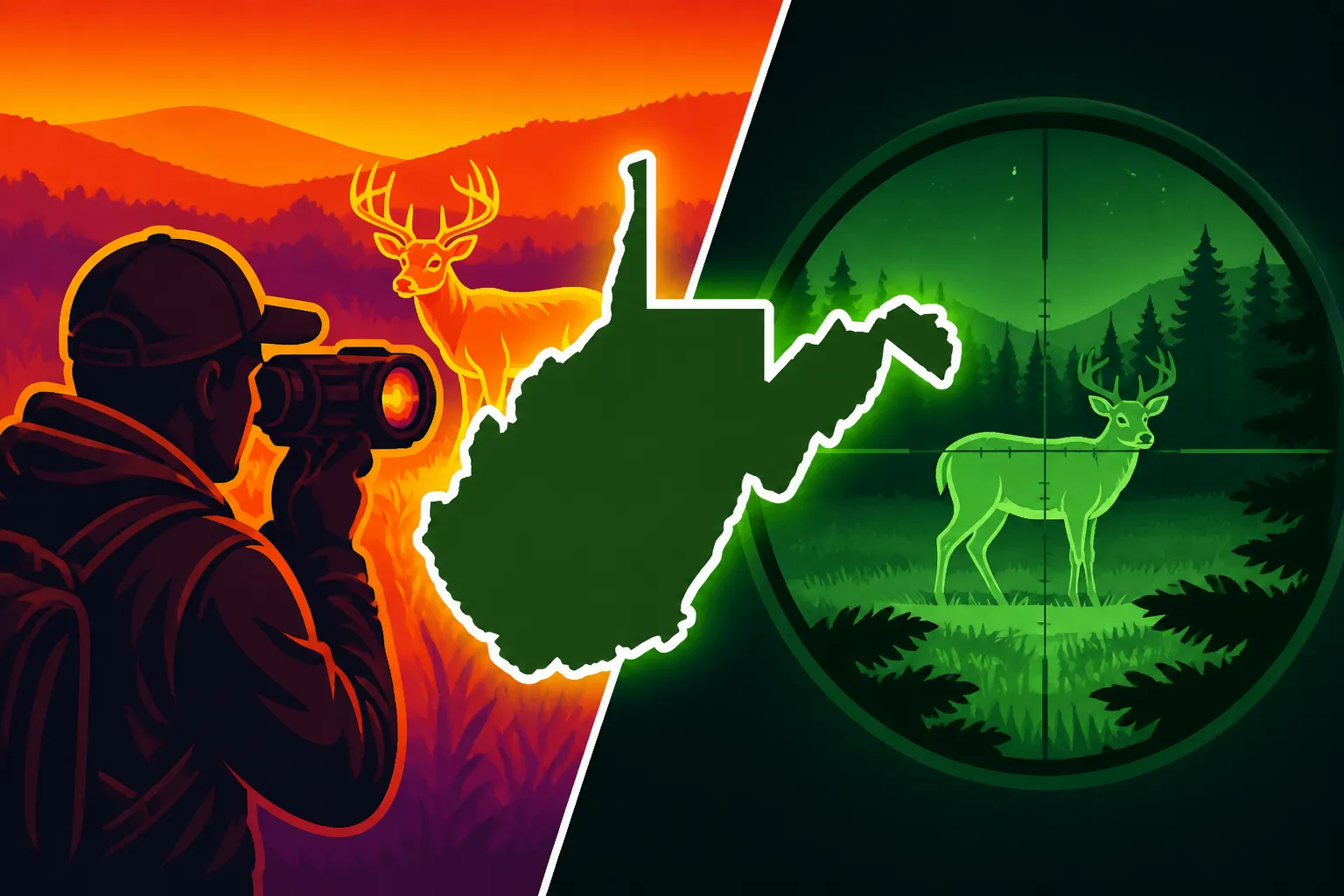
Traditional night vision devices (often green-hued images) work by amplifying existing ambient light—think starlight, moonlight, or even distant city glow. They gather these tiny photons and multiply them thousands of times, presenting an image to your eye that allows you to discern shapes and movement in low-light conditions. They need some light to work, even if it's minimal. For improving your visibility in typical hunting conditions, these are a step up from traditional Rifle Scopes for Low-Light Hollows or even high-end Binocular Choice for West Virginia Whitetails when the sun dips below the horizon.
Thermal imaging, on the other hand, is a completely different beast. It detects infrared radiation, or heat signatures, emitted by objects. Every living creature, and even inanimate objects, gives off some heat. Thermal devices translate these temperature differences into a visual image, often displayed in various color palettes (like white-hot, black-hot, or rainbow). Crucially, thermal doesn't need any light to work; it can "see" in absolute darkness, through smoke, fog, and even light brush. This ability to cut through cover and darkness is precisely what makes it so powerful—and often, so controversial—in hunting circles.
Digital night vision combines aspects of both, often using a digital sensor to capture and process light, displaying it on a screen. Some models can record video and function in extremely low light, though they generally don't have the same clarity as traditional analog night vision or the heat-detecting capabilities of thermal. Understanding these distinctions is crucial because sometimes the regulations might treat them differently, or the spirit of the law might be interpreted based on the specific capabilities of each device.
Navigating West Virginia's Regulations for Thermal and Night Vision
So, let's get down to the brass tacks: what's allowed and what's not in the Mountain State? West Virginia's hunting regulations are designed to be quite clear on these advanced optics, particularly when it comes to big game.
General Prohibitions for Big Game
For species considered "big game" in West Virginia—namely deer, bear, and turkey—the use of thermal or night vision devices mounted on a weapon or used in conjunction with taking the animal is generally prohibited. This means you cannot have a thermal or night vision scope on your rifle, shotgun, or crossbow when you are actively hunting or attempting to take a deer, bear, or turkey. This prohibition extends to using such a device to illuminate or locate these animals for the purpose of taking them. The intent is to prevent hunters from having an unfair advantage over animals that are naturally most active during low-light hours or have evolved to use darkness for safety.
It's a nuanced point, but an important one: there's often a distinction between possessing such a device and using it for hunting. You might own a pair of thermal binoculars, and you might even have them in your pack while Hunting the West Virginia Rut in November, but if you actively use them to locate a deer you intend to shoot, or if they are attached to your weapon, you're likely stepping across the line. The law is primarily concerned with the act of taking game with these devices.
Consider a scenario: you've made a shot on a deer just before dark, and you're struggling to find the blood trail in fading light. While you might be tempted to use your thermal scanner to locate the animal's heat signature, attaching it to your rifle to do so, or even using it to actively track and finish off a wounded animal if it's still considered "hunting," could put you in a sticky situation. The spirit of the law aims to prevent the targeting and killing of big game using these technologies. It's always best to err on the side of caution and consult current regulations or a local conservation officer if you're unsure about a specific situation involving West Virginia Deer Season Structure Explained or West Virginia's Liberal Bear Season Rules.
Exceptions and Permitted Uses: What You Can Do
While big game hunting with thermal and night vision is largely off-limits, there are crucial exceptions and permitted uses that every West Virginia hunter should know about. These exceptions usually revolve around nuisance wildlife control and the hunting of certain varmint or predator species.
For example, in West Virginia, it is legal to use artificial lights, including night vision or thermal imaging, to hunt certain nuisance animals like Hunting West Virginia's Year-Round Feral Hogs and predators like Predator Hunting in West Virginia (specifically coyotes). This is a game-changer for folks dealing with crop damage or livestock predation. You'll often see specific regulations for this, such as needing to be on private land with landowner permission, and restrictions on discharging firearms near residences. For a deep dive into specific legalities, you'll want to review Night Hunting Rules for West Virginia Coyotes.
This distinction between spotting an animal and aiming with the device mounted on a weapon is really important. Even if you're hunting coyotes at night, you might use thermal binoculars to locate the animal, but then transition to a different sighting system on your weapon (like an illuminated reticle scope or a red dot) for the actual shot, if the regulations demand it. However, for species where night hunting is fully permitted, you can often mount and use the devices directly on your firearm. Always double-check the latest regulations for the specific species you're pursuing.
Here's a quick reference table to help visualize the general rules, but remember, laws can change, so always verify with the official WVDNR sources!
| Species Category | Thermal/Night Vision Mounted on Weapon (for taking game) | Thermal/Night Vision for Scouting/Locating (not mounted, not for taking) | Other Notes |
|---|---|---|---|
| Big Game (Deer, Bear, Turkey) | Generally PROHIBITED | Generally PROHIBITED for active hunting pursuit. Permitted for non-hunting uses like shed hunting or blood trailing if not attached to a weapon and not for taking. | Strict "fair chase" interpretation. |
| Feral Hogs | Generally PERMITTED on private land with landowner consent. | PERMITTED | Focus on nuisance control. |
| Coyotes | Generally PERMITTED on private land with landowner consent. | PERMITTED | Focus on predator control. |
| Small Game (Squirrel, Rabbit, Grouse, etc.) | Generally PROHIBITED (as hunting usually occurs during daylight) | PROHIBITED for hunting. Permitted for non-hunting observation. | Most small game hunting rules don't address night vision as a primary concern. |
Specific Scenarios and Practical Advice for West Virginia Hunters
Understanding the general rules is one thing, but how do they play out in real-world West Virginia hunting situations? Let's talk about where this technology truly shines and where you absolutely need to exercise caution.
Using Thermal and Night Vision for Feral Hogs and Coyotes
If you're looking for where thermal and night vision truly become legal, ethical, and highly effective hunting tools in West Virginia, it's in the realm of Hunting West Virginia's Year-Round Feral Hogs and Predator Hunting in West Virginia for coyotes. These animals can be incredibly destructive to crops and livestock, and their nocturnal habits make them a perfect target for these advanced optics.
For hog hunters, thermal is a game-changer. Hogs blend into the darkness and can be incredibly elusive, but their distinct heat signature practically glows through the cover of night. You'll want to ensure you have specific landowner permission for night hunting and that you understand any local ordinances regarding firearm discharge after dark. When pursuing hogs, a mounted thermal scope can allow for precise shot placement in low light, significantly increasing your effectiveness in controlling these invasive animals. Many hunters will set up near known hog travel routes or feeding areas, often using feeder lights or bait (where legal) to draw them in, then use their thermal gear for the final approach and shot.
Coyote hunters also benefit immensely. Coyotes are notoriously wary, and calling them in during daylight hours can be a real challenge, especially in pressured areas. By shifting your efforts to after dark, using thermal or night vision to scan fields and ridges, you can often catch them off guard. This is where a good scanning thermal monocular paired with a weapon-mounted night vision or thermal scope can make all the difference. Remember, for both hogs and coyotes, the year-round, often liberal, regulations reflect the WVDNR's goal of managing these populations, and modern technology is a recognized tool in that effort. Always check the specifics of Night Hunting Rules for West Virginia Coyotes before heading out.
When you're dealing with night hunting, safety is paramount. You need to be acutely aware of your surroundings, your backdrop, and any potential structures or roads beyond your target. Using a reliable mapping tool, like the features you'd find on GoHunt, can be invaluable for understanding property lines, topography, and potential hazards, especially when visibility is limited. It provides an extra layer of confidence that you're staying within legal hunting areas and being responsible.
Scouting, Recovery, and Other Non-Hunting Uses
Even if you're strictly a deer or bear hunter and never plan to use thermal or night vision for taking game, these devices can still be incredibly useful tools for other aspects of your time in the woods. This is where the "not mounted on a weapon and not for taking game" distinction becomes important.
Think about scouting during the off-season. You might be out Scouting West Virginia Public Land Before Season for deer sign, or looking for shed antlers. A thermal monocular can reveal deer or other wildlife movement you'd never see with the naked eye, even during daylight, helping you understand patterns without disturbing the animals. Similarly, after a deer season closes, you could use a thermal device to locate shed antlers that might be obscured by leaf litter or snow, as antlers will often have a slightly different temperature signature than their surroundings. This is a far cry from actively hunting game.
Perhaps one of the most practical and ethically sound uses for thermal, when not attached to a weapon, is for game recovery. If you've made a good shot on a deer just as legal shooting hours end, and you're confident it's a fatal hit but are having trouble locating the animal in the dark, a thermal scanner can be an incredible asset. The heat signature of a downed animal can be easily picked up, often saving hours of searching and preventing spoilage. However, it's critical that the device is not mounted on your weapon and that you are using it strictly for recovery, not to finish off a still-living animal if that would constitute an illegal taking under the specific circumstances. Always prioritize safe and swift recovery, but be mindful of the law's intent. Using apps like GoHunt can help you mark the last known location of a wounded animal, giving you a better starting point for a thermal assisted search.
Staying Compliant and Up-to-Date
The key to successfully incorporating modern optics into your West Virginia hunting endeavors, without running afoul of the law, is diligent research and a commitment to ethical hunting.
The Importance of Checking Current Regulations
I can't stress this enough: regulations change. What was legal last year might not be this year, and vice versa. Wildlife agencies, including the WVDNR, constantly review and update their rules based on population data, public feedback, and technological advancements. Relying on old information or campfire stories could land you in serious trouble.
The absolute best sources for current regulations are the official West Virginia Division of Natural Resources (WVDNR) website or their annual hunting and trapping regulations digest. This digest is usually available online and in print wherever hunting licenses are sold. Always check the specific sections pertaining to legal methods of take and specific species regulations. Sometimes a subtle wording change can have a big impact. If you have any doubt, calling your local WVDNR office or speaking directly with a conservation officer is always the smartest move. They are there to help you understand the rules, not just enforce them. Many hunting apps, like GoHunt, strive to integrate up-to-date regulations or provide direct links to official sources, making it easier to access this critical information on your phone in the field. This can save you a lot of headaches, especially when you're far from a cell signal and trying to verify a rule.
Ethical Considerations Beyond the Law
Beyond the letter of the law, there's the spirit of fair chase that many West Virginia hunters hold dear. Just because something might be legal doesn't necessarily mean it aligns with your personal hunting ethics or the values of the broader hunting community. For many, hunting is about the challenge, the connection to nature, and the hard-earned success that comes from skill and patience.
Using technology that significantly reduces the challenge, particularly for big game, can diminish that experience for some. It's a personal decision, but one worth pondering. As hunters, we are stewards of the land and the game, and part of that stewardship involves maintaining the integrity and tradition of hunting. While technology can be a great aid for Reading West Virginia Mud for Fresh Deer Movement or helping with Blood Trailing After Dark in West Virginia, understanding where to draw the line for yourself is an important part of the hunting journey. Our reputation as responsible hunters often hinges on these shared values, so consider the bigger picture when deciding how and when to use these powerful tools.
Disclaimer
This article is for general informational purposes only and does not constitute professional advice. Laws, prices and regulations vary by location and change over time. Consult a qualified professional for guidance on your specific situation.