Rifle Scope Magnification for West Virginia Deer
Stepping into the vast, wild expanse of West Virginia with your deer rifle, you quickly realize that the terrain can change dramatically in a matter of miles, sometimes even hundreds of yards. From dense laurel thickets where a shot might be a mere 30 feet, to wide-open powerline cuts or distant ridgetops across a hollow, your rifle scope's magnification choice isn't just a preference—it's critical for success. This guide will walk you through understanding what magnification truly means for a West Virginia deer hunter, helping you pick the perfect glass for our unique challenges.
Understanding West Virginia's Diverse Terrain and Shot Opportunities
West Virginia is a state of stunning, rugged beauty, but that beauty often translates into challenging hunting conditions. Unlike the flatlands of the Midwest or wide-open Western expanses, our deer often live in habitats where shot opportunities can vary wildly within a single hunting trip, or even a single stand location. This constant change is why a thoughtful approach to scope magnification is so important. You’re not just picking a number; you’re picking an advantage for the specific places you’ll hunt.
Thick Cover and Close Shots
Anyone who has hunted our state knows the feeling of being swallowed by dense woods. From the almost impenetrable rhododendron thickets of the Allegheny Mountains to the tangled briars and saplings found in regenerating clear-cuts, West Virginia is full of places where deer live their lives within spitting distance. Here, a shot might be a quick 20-yard snap shot as a buck slips through a laurel tunnel or a 40-yard opportunity as a doe steps out from behind a stand of hemlock.
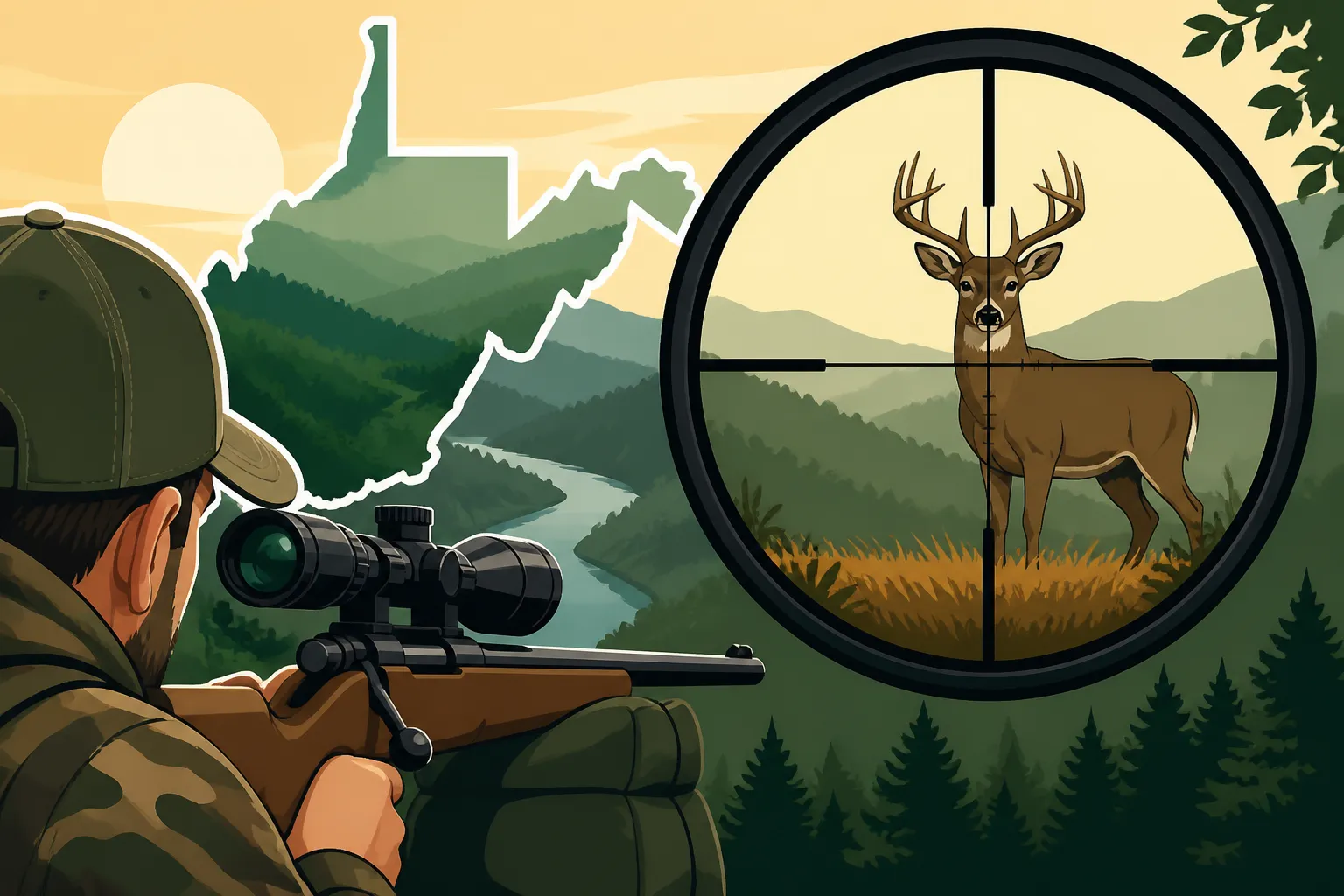
In these close-quarters scenarios, too much magnification can be your worst enemy. Imagine trying to find a deer moving quickly through thick brush at 9x or 12x power—it's like looking through a straw! Your field of view is drastically reduced, making it incredibly difficult to acquire a moving target or even locate a stationary one that's close by. For hunters who spend most of their time still-hunting tight areas or sitting on treestands in dense timber, a lower base magnification is essential. You need to see the whole picture, not just a magnified snippet. This is particularly true if you're engaging in Deer Drives With Three or Four Hunters where quick reactions are paramount.
Long-Range Mountain Engagements
While many West Virginia deer encounters happen up close and personal, our state also offers plenty of opportunities for longer shots. Think about those sprawling logging clear-cuts that dot the landscape, offering lines of sight that stretch for hundreds of yards. Or consider sitting on a high ridge overlooking a vast hollow in the Monongahela National Forest Hunting, where a deer might be feeding on the opposite slope 250 or 300 yards away. Powerline cuts, old gas well pads, and even some of the more open bottomlands along rivers like those in the Ohio River Valley Bottomland can present significant distances.
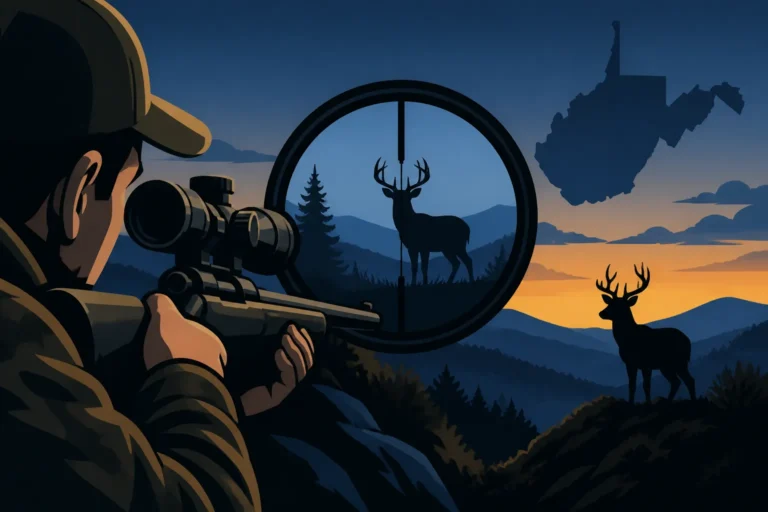
For these longer engagements, having enough magnification becomes crucial. At 250 yards, a deer can look pretty small, and identifying antler points or ensuring a clean shot placement requires a clear, magnified image. You want to be confident that you’re shooting at a legal buck and that your bullet will land precisely where you intend. This isn't about bragging rights on yardage; it's about ethical hunting and making a clean kill. Before heading out, I always recommend checking out resources like GoHunt to study topographical maps of your chosen Public Hunting Land in West Virginia to anticipate potential shot distances.
Open Fields and Powerline Cuts
Then there's the in-between, often found at the fringes of our more agricultural regions, particularly in the Hunting the Eastern Panhandle. Here, deer might be crossing an open field to access bedding cover, or stepping out into a vast powerline right-of-way at dawn or dusk. These situations often present shots in the 75 to 200-yard range.
In these scenarios, you need a scope that offers a good balance. You don't want to be fumbling with extreme magnification if a deer pops out at 70 yards, but you also need enough power to clearly see a deer standing at the far end of a cornfield. The critical element here, especially at first light or last light, is not just magnification but also light gathering capability and clarity, which allows you to make out details when ambient light is low.
Variable vs. Fixed Power Scopes: Making the Right Choice
When you walk into a sporting goods store or browse online, you'll primarily see two types of rifle scopes: variable power and fixed power. Understanding the pros and cons of each is foundational to making an informed decision for hunting West Virginia deer. Most hunters lean one way, but there are valid reasons for both.
Advantages of Variable Power for Versatility
The vast majority of modern hunting scopes are variable power, and for good reason—they offer incredible versatility. A variable power scope, such as a popular 3-9×40 or 4-12×40, allows you to change the magnification with a simple twist of a ring. This means you can dial down to 3x or 4x when you're slipping through dense timber, providing that wide field of view needed for close, fast shots. Then, if you suddenly find yourself looking across a wide-open cut or a long hollow, you can crank it up to 9x or 12x to make a precise shot.
This adaptability is a huge advantage in West Virginia's varied landscape. You might start your morning sitting in a tight treestand where 4x is perfect, but then decide to still-hunt a ridge where a 100-yard shot down a logging road might present itself. A variable power scope lets you adapt to the situation rather than being limited by your optics. Many of these scopes offer a great balance for the typical shots encountered, from close up to several hundred yards, making them a fantastic all-around choice for a hunter who doesn't want to be specialized for just one type of terrain. When researching different scope models, a platform like GoHunt can provide detailed specifications and user reviews, helping you compare various magnification ranges and features tailored for conditions in places like Monongahela National Forest Hunting.
When Fixed Power Scopes Shine
While variable power scopes dominate the market, fixed power scopes still have a loyal following, and for certain applications, they can truly shine. A fixed power scope has only one magnification setting, like a 4x or a 6x. There's no twisting a ring to change power; what you see is what you get.
The primary advantages of fixed power scopes are simplicity, ruggedness, and often, a lighter weight and lower cost. With fewer moving parts, they tend to be incredibly durable and less prone to mechanical issues. For a hunter who primarily hunts in very specific conditions—say, exclusively in dense, thick woods where shots are rarely beyond 75 yards—a fixed 4x or 6x scope can be an excellent choice. It forces you to master that one magnification, ensuring you're always ready for the conditions you've prepared for. It's often easier to quickly acquire a target through a fixed power scope because the sight picture doesn't change as you might expect it to with a variable scope that's been adjusted. For a minimalist hunter, or someone building a dedicated rifle for tight cover, a good fixed power optic can be a remarkably reliable and effective tool.
Practical Magnification Ranges for Different Scenarios
Let's get down to the brass tacks: what actual numbers should you be looking for, and where do they make the most sense in West Virginia? There's no single "best" magnification, but rather an optimal range for specific hunting styles and environments.
Low Magnification for Brush and Quick Shots
When we talk about low magnification, we're generally looking at scopes with a minimum power setting of 1x to 4x, or perhaps variable scopes that go from 1.5x-6x. These scopes offer the widest field of view, which is absolutely critical for quick target acquisition in thick cover. Imagine hunting deer in dense laurel patches or chasing after them on a dog drive; having that expansive view allows you to pick up movement much faster.
At 1x or 2x, some scopes are almost like a red dot sight, allowing for incredibly fast, instinctual aiming with both eyes open. This is a huge advantage when a deer bursts out of a thicket only 30 yards away. Even at 4x, the field of view is generous enough to track moving game or quickly find a stationary animal in heavy timber. For those challenging Treestand Setups in Monongahela National Forest where shots are often 60 yards or less, keeping your scope dialed down to its lowest setting is almost always the smart play.
Mid-Range Power for Most Hunting Situations
For many West Virginia deer hunters, the sweet spot lies in the mid-range magnification options. Scopes like a 3-9×40 or a 2-10×42 have been mainstays for decades, and for good reason. They strike an excellent balance between a wide field of view at the low end and enough magnification for precision at moderate distances. The 3-9×40, in particular, is often considered the quintessential deer hunting scope.
On its lowest setting (3x or 2x), you have plenty of field of view for shots inside 100 yards, which covers a vast majority of West Virginia deer encounters. When you need to reach out a bit further, say to 200 or 250 yards across a field or down a logging road, dialing up to 7x, 8x, or 9x provides ample magnification to make an accurate shot. This range is incredibly versatile and handles everything from a close-range surprise in thick woods to a more deliberate shot across a small clearing. It’s a great choice for hunters who experience a mix of terrain and shot distances, which is common in our rolling hills and varied forests. For dialing in your gear, consider how the scope's magnification impacts your ability to hold steady on target; sites often feature discussions on optimal scope choices, and with tools from GoHunt, you can even explore how different calibers pair with various optics. You’ll want to practice Zeroing a Rifle for Mixed Distances to get the most out of these versatile scopes.
High Magnification for Precision and Open Country
While the majority of West Virginia deer hunting doesn't require extreme magnification, there are definitely scenarios where scopes with higher top-end power, like 4-16x, 3-18x, or even 6-24x, can be beneficial. These are typically chosen by hunters who anticipate longer shots consistently, perhaps in areas with expansive clear-cuts, large agricultural fields, or vast mountain vistas like those you might find Hunting a High Elevation Mountain Bench.
At 16x, 18x, or even 24x, you gain significant detail and precision for very long shots, allowing you to clearly distinguish antler points, assess shot placement on a distant animal, or pick out tiny gaps in cover. However, this comes with trade-offs. The field of view at these higher magnifications becomes very narrow, making it difficult to find and track moving targets. Any handshake or movement is greatly exaggerated, and mirage (heat waves) can distort the image on warm days. Moreover, scopes with very high magnification tend to be heavier and bulkier, which can be a consideration when packing into remote areas. For the average West Virginia hunter, anything beyond 12x or 14x on the top end is often more than is truly needed, and might even be a hindrance in the predominantly timbered environment.
| Magnification Range | Typical WV Shot Distance | Ideal West Virginia Terrain | Pros | Cons |
|---|---|---|---|---|
| 1-4x / 1.5-6x | 10-150 yards | Dense woods, thickets, brush, dog drives | Wide field of view, fast target acquisition | Limited long-range detail, harder for ID |
| 2-10x / 3-9x | 50-300 yards | Mixed timber, smaller clearings, fencelines | Highly versatile, good balance of view/power | May lack max power for very long shots |
| 3-15x / 4-16x | 100-400+ yards | Open hollows, powerline cuts, large fields | Excellent precision at distance, good for ID | Narrower field of view, can be heavier |
| 5-20x / 6-24x | 200-500+ yards | Long-range specialized, extensive glassing | Extreme precision, fine target identification | Very narrow field of view, mirage issues, bulky |
Other Scope Features to Consider Beyond Magnification
While magnification is what we've focused on, it's just one piece of the puzzle. A great scope for West Virginia deer hunting integrates several features that work together to give you the best possible view, especially during those critical low-light moments. You can have all the magnification in the world, but if the image is dark and blurry, it's useless.
Objective Lens Size and Light Gathering
The objective lens is the front lens of your scope, the one closest to the muzzle. Its diameter, typically measured in millimeters (e.g., the "40" in a 3-9×40), directly impacts how much light the scope can gather. In West Virginia, where deer are often most active at dawn and dusk, and deep hollows can hold shadows even at midday, a scope's ability to transmit light is incredibly important. A larger objective lens generally gathers more light, resulting in a brighter, clearer image in low-light conditions. This is a huge advantage when trying to distinguish a deer from dense brush as the sun dips below the ridge.
However, bigger isn't always better. A larger objective lens means a heavier, bulkier scope that often needs higher scope rings to clear the rifle barrel. This can affect the rifle's balance and how well it shoulders. A 40mm or 42mm objective lens is often a great compromise for typical hunting situations, providing excellent Low-Light Performance in a Scope without adding excessive weight or making the rifle unwieldy. Unless you are specifically building a dedicated long-range setup or strictly hunting wide-open fields, going much larger than 50mm might be more of a hindrance than a help in our thick country.
Reticle Types and Their Utility
The reticle is the aiming point inside your scope—the crosshairs, dots, or lines that you place on your target. While not directly related to magnification, the type of reticle can significantly impact how effectively you use your chosen magnification, especially under pressure. A simple duplex reticle, with thick lines tapering to fine crosshairs, is incredibly popular for its uncluttered view and quick acquisition, particularly good for those unexpected, fast shots in dense cover.
More complex reticles, like BDC (Bullet Drop Compensating) reticles, mil-dot, or MOA (Minute of Angle) retles, offer aiming points for different distances, which can be useful for longer shots without having to adjust your turrets. However, in West Virginia's often tight, fast-paced hunting environments, an overly busy reticle can be a distraction. For many hunters, simplicity reigns supreme. An illuminated reticle, which lights up the center of your crosshairs, can be a game-changer in those truly dark moments at the edge of legal shooting light or when trying to find your reticle against a dark-colored animal in deep shadow. This feature can make a huge difference in Illuminated Reticles for Dark Timber and ensure you have a clear aiming point when it matters most.
Ultimately, the best rifle scope magnification for you will depend on your specific hunting style, the terrain you frequent, and your personal preferences. Consider where you typically hunt and the types of shots you anticipate. Investing in quality optics is always a good decision, but making an informed choice about magnification will ensure that investment truly pays off in the West Virginia deer woods.
Disclaimer
This article is for general informational purposes only and does not constitute professional advice. Laws, prices and regulations vary by location and change over time. Consult a qualified professional for guidance on your specific situation.