.30-30 in Thick Highlands Cover
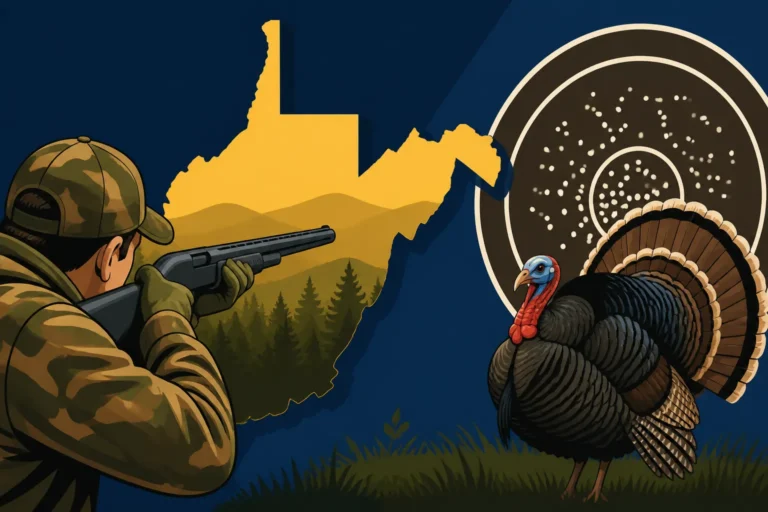
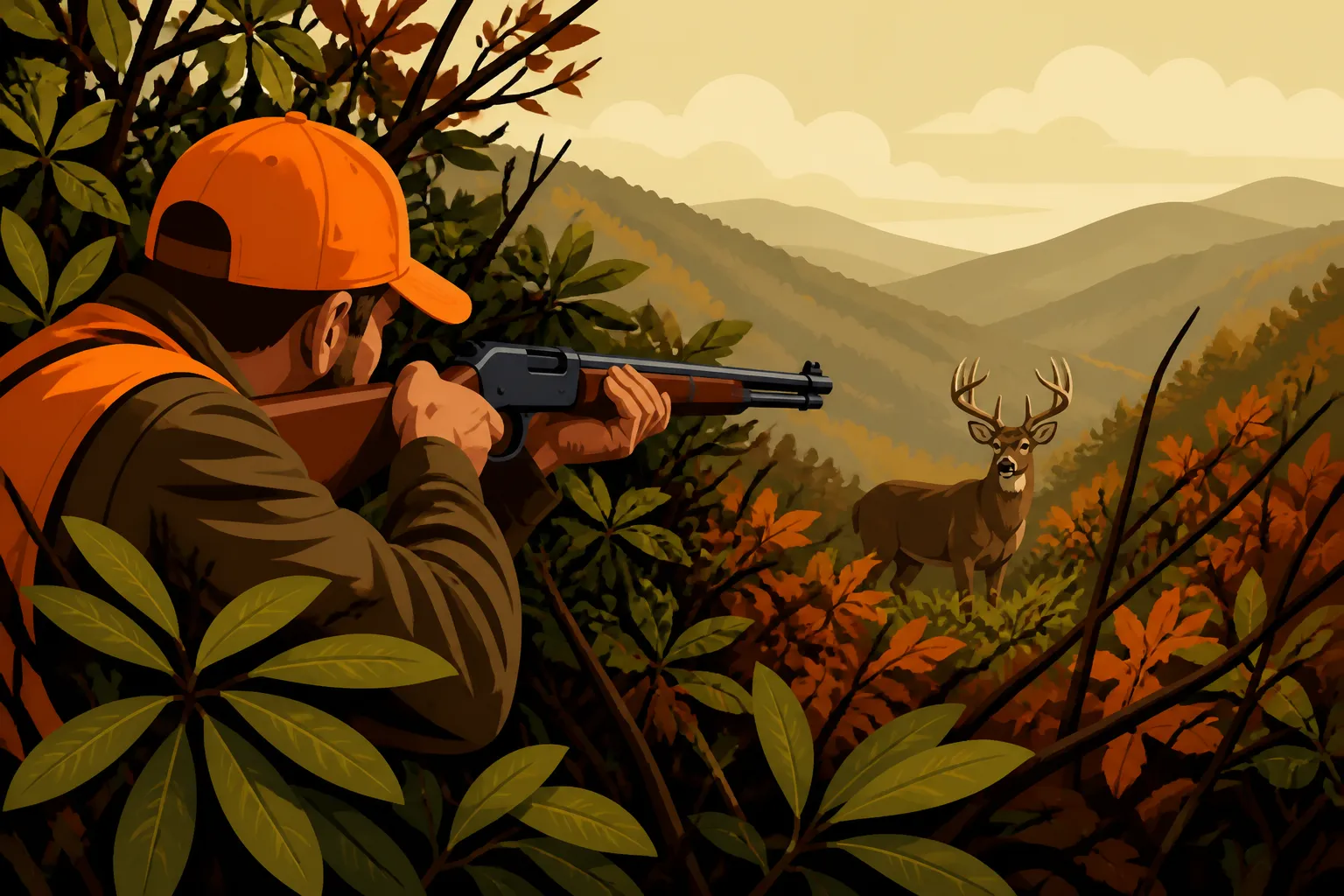
When you think about hunting West Virginia, especially in the rugged, laurel-choked highlands, many folks immediately picture long-range bolt-action rifles. But let's be honest, those wide-open shots are often a fantasy here. More often than not, you're looking at a whitetail that's suddenly materialized within 75 yards, if not closer, weaving through thick timber. This guide is all about embracing a classic, the venerable .30-30 lever action, and understanding why it remains an absolute powerhouse for hunting in West Virginia's dense cover.
Why the .30-30 Still Shines in Thick Cover
There's something undeniably nostalgic about a .30-30, but its continued relevance in the modern hunting world, especially in places like West Virginia's Allegheny Mountains, isn't just about tradition. It's about practical effectiveness in specific environments. When you're busting through rhododendron hells or still-hunting thick stands of oak, a long, heavy rifle can be more of a hindrance than a help. The .30-30, often housed in a nimble lever-action platform, truly comes into its own in these scenarios.
The Ballistics and Practical Range for West Virginia Woods
Let's talk brass tacks about ballistics. The .30-30 isn't designed for extreme long-range accuracy. Its typical bullet, often a flat-nose or round-nose variety, isn't the most aerodynamic projectile out there. But guess what? In West Virginia's thick woods, you rarely need to stretch a shot beyond 100 or 150 yards. Most shots at deer are much closer, often inside 75 yards, where trajectory differences between a .30-30 and a magnum are negligible.
What the .30-30 offers, however, is excellent terminal performance within its effective range. Those heavier, slower bullets, often in the 150-grain or 170-grain class, deliver a significant amount of energy when they hit a deer. They're designed to expand reliably and create a substantial wound channel, putting deer down quickly and cleanly. In dense cover, where a quick, decisive kill is paramount to prevent a long tracking job through tangled brush, this is a huge advantage. You want a deer to drop where it stands or very close by, and a well-placed .30-30 round certainly delivers on that. You can dig deeper into how Rifle Ranges Realistic in Steep Terrain affect your choice.
Handling and Maneuverability in Dense Undergrowth
Imagine trying to navigate a steep hillside choked with multiflora rose and tangled grapevines, your rifle snagging on every branch. It's frustrating, makes noise, and can even throw off your shot if you're not careful. This is where the inherent design of a classic .30-30 lever action truly shines. These rifles are typically shorter, lighter, and much more compact than many modern bolt-action or semi-automatic hunting rifles. Their balance often feels natural, making them easy to carry at the ready.
The smooth, quick cycling of a lever action allows for rapid follow-up shots if needed, which can be critical when a deer is quartering away or momentarily pauses in an opening. You're not fumbling with a bolt or a detached magazine. This blend of compact size and intuitive operation makes the .30-30 an exceptional choice for still-hunting or pushing through thick cover during a drive, especially when compared to the unwieldy feel of a longer rifle. Consider how a proper sling can make all the difference, as explored in Slings for a Long Monongahela Forest Walk.
Ammunition Choices and Performance in the Highlands
While the .30-30 is a traditional cartridge, modern ammunition manufacturers haven't left it behind. There are some fantastic options available today that enhance its capabilities without sacrificing its core strengths. Understanding these choices will help you maximize your success with this classic caliber in the challenging West Virginia environment.
Traditional and Modern .30-30 Loads for Deer and Bear
For decades, the standard 150-grain or 170-grain flat-nose or round-nose soft point bullets were the go-to for .30-30 hunters. These traditional bullet designs are incredibly effective on deer-sized game at typical woods ranges. They're designed for rapid expansion upon impact, dumping a lot of energy into the animal, which often results in a quick, humane harvest. They've filled countless freezers and remain an excellent, affordable choice for the West Virginia hunter.
However, advancements in bullet technology have also brought some exciting new options. Brands like Hornady, with their LEVERevolution line, introduced polymer-tipped bullets for lever actions. While the primary benefit of these spitzer-shaped bullets is improved aerodynamics for longer ranges (which you might not often utilize in thick cover), they also offer excellent terminal performance. The polymer tip initiates rapid expansion, and these bullets tend to retain more weight, often exiting the animal. This can be a boon for tracking, leaving a better blood trail, even though the primary goal is a deer that doesn't go far. For more on ensuring you have the right rounds, check out Ammunition Availability Before Opening Day.
Ethical Considerations and Shot Placement
Regardless of the cartridge you choose, shot placement is always king. With a .30-30, this holds especially true. While it's a very capable deer cartridge, it's not a magical wand. A well-placed shot from a .30-30 to the vitals will bring down any West Virginia whitetail, and even black bears, with authority. Conversely, a poorly placed shot from any caliber can lead to a long, difficult, and potentially unsuccessful tracking effort.
The key to ethical hunting with a .30-30 in the highlands is to understand its capabilities and limitations. Limit your shots to distances where you can consistently hit a vital area – for most hunters, this is well within 150 yards, and often closer in dense brush. Practice regularly at these distances. Know your rifle's zero and how different ammunition performs. The .30-30 instills a disciplined approach to hunting: get closer, take a good shot, and you'll be rewarded. For more guidance on choosing your primary deer rifle, see Choosing a Rifle Caliber for West Virginia Deer.
Integrating the .30-30 into Your West Virginia Hunt Strategy
A rifle is only as good as the hunter wielding it and the strategy they employ. The .30-30 truly shines when its characteristics are matched to the hunting conditions and methods most prevalent in West Virginia's challenging terrain. It's not just a rifle; it's a tool that complements specific tactics.
Ideal Scenarios and Terrain for Your Lever Gun
Think about the places in West Virginia where you find yourself constantly battling brush and steep grades. The .30-30 is right at home in these environments. Consider the dense laurel thickets and rhododendron patches common in the Monongahela National Forest Hunting, where visibility is often measured in tens of yards. Here, a short, fast-handling lever gun allows you to quickly get on target when a deer flushes. It’s also superb for still-hunting slowly through deep hollows and along brushy creek bottoms, where opportunities for quick, close shots are more likely than long-distance ones.
Deer drives are another prime example where the .30-30 excels. Whether you're a driver or a stander, the ability to maneuver quickly and get off a rapid follow-up shot in thick cover is invaluable. Similarly, when you're perched in a treestand overlooking a dense travel corridor or a small food plot tucked away in the woods, the compact nature of the .30-30 makes it easy to handle in tight quarters, and its power is more than sufficient for those 40- to 80-yard shots. When you're tackling terrain like Hunting Steep Allegheny Ridges, you'll appreciate a rifle that feels like an extension of yourself.
Pairing Optics and Accessories for a .30-30
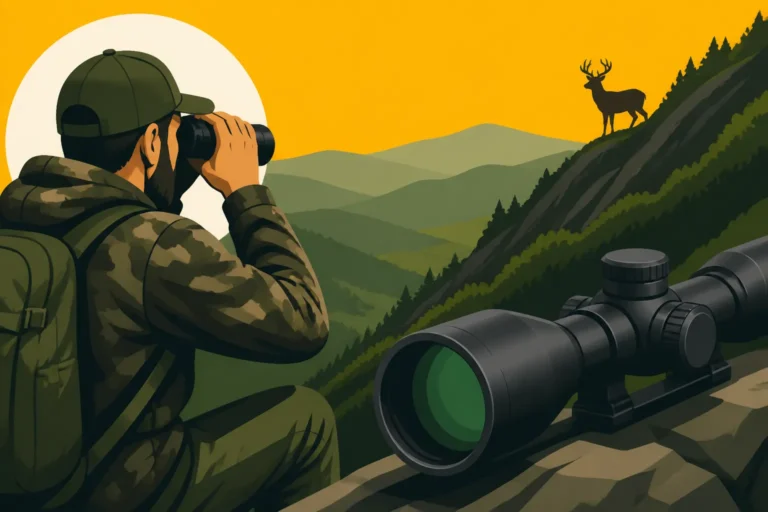
When it comes to optics for a .30-30 in West Virginia's thick cover, simplicity often reigns supreme. A low-magnification scope, something in the 1-4x or 2-7x range, is usually ideal. This allows for a wide field of view at close distances, making it easier to track a moving deer, while still offering enough magnification for those slightly longer shots. The low power also gathers light well, which is crucial in the dim light of dawn or dusk in dense timber. An illuminated reticle, as discussed in Illuminated Reticles for Dark Timber, can be a huge asset in these conditions.
Some hunters even prefer a simple red dot sight, especially if their typical shots are always under 75 yards. A red dot provides incredibly fast target acquisition. If you’re a purist, don't underestimate the effectiveness of good open sights, particularly in heavy rain or fog where scopes can sometimes become a liability. A reliable sling is non-negotiable for carrying your rifle comfortably during long treks through the mountains. When you're trying to figure out the right magnification for your scope, consider the advice in Rifle Scope Magnification for West Virginia Deer. Before you even hit the woods, make sure to scout your potential hunting grounds. Using tools like GoHunt can help you analyze terrain and identify areas where a .30-30 would be an asset versus areas that might demand a different setup.
Potential Drawbacks and When to Consider Other Options
While the .30-30 is a fantastic choice for many West Virginia hunting situations, it's not a one-size-fits-all solution. There are certainly scenarios where other cartridges might offer an advantage. Being a well-rounded hunter means understanding these limitations and being prepared to choose the right tool for the job.
Range Limitations in Open Country
The primary limitation of the .30-30 comes into play when you find yourself in more open country. If you're hunting expansive agricultural fields in the Eastern Panhandle, long clear-cuts in timber country, or powerline rights-of-way that offer shots stretching out to 200 yards or more, the .30-30 begins to show its effective range limits. Beyond 150-175 yards, the bullet drop becomes more pronounced, and the energy delivered starts to diminish significantly, making ethical shots more challenging.
In these situations, a flatter-shooting cartridge like a .270, .308, or even a 6.5 Creedmoor would be a more appropriate choice. These rifles can maintain flatter trajectories and deliver more energy at extended ranges, giving you a greater margin for error and a more ethical shot. It's not that a .30-30 can't hit a target at 200 yards, but consistently delivering a humane kill at those distances is more difficult. For longer-range capabilities, you might explore options like the 6.5 Creedmoor for Allegheny Ridges.
Recoil and Personal Preference
Compared to many larger magnum cartridges, the .30-30 generally has a mild recoil impulse, making it comfortable to shoot for most hunters. However, recoil sensitivity is a very personal thing. Some hunters might find even the .30-30's recoil a bit stout, especially in lighter carbine models, and might prefer something like a .243 for a softer shooting experience, particularly younger hunters or those who are recoil-averse.
Ultimately, the best rifle for you is the one you shoot most accurately and with the most confidence. If you find yourself flinching or anticipating recoil, it will negatively impact your accuracy, regardless of the rifle's capabilities. It's important to spend time at the range with your chosen firearm and ensure it feels comfortable and natural in your hands. Using a platform like GoHunt can help you research different rifle setups and cartridges to match your comfort level and hunting style, ensuring you're making an informed choice for your specific West Virginia adventures. Knowing the West Virginia Legal Firearms for Deer Hunting is always the first step.
.30-30 Versus Common West Virginia Rifle Calibers
To give you a clearer picture, let's compare the .30-30 to a couple of other popular rifle calibers often used by West Virginia hunters, highlighting their strengths and weaknesses in our unique terrain.
| Feature | .30-30 Lever Action (e.g., Marlin 336) | .308 Bolt Action (e.g., Remington 700) | .270 Bolt Action (e.g., Winchester Model 70) |
|---|---|---|---|
| Typical Range | Excellent up to 150 yards, decent to 175 | Excellent up to 300+ yards | Excellent up to 300+ yards |
| Best Use | Thick woods, close cover, drives, still-hunting | Versatile, open country, longer shots, dense timber | Versatile, open country, longer shots |
| Maneuverability | Very High (short, light, quick handling) | Moderate (longer, heavier bolt action) | Moderate (longer, heavier bolt action) |
| Recoil | Moderate | Moderate-Heavy | Moderate-Heavy |
| Follow-up Shots | Fast (lever action) | Moderate (bolt action) | Moderate (bolt action) |
| Ammunition Cost | Generally moderate | Generally moderate | Generally moderate |
| Optics Pairing | Low power scopes, red dots, open sights | Mid to high power scopes | Mid to high power scopes |
This table should help illustrate that while the .30-30 might not be the most versatile cartridge across all terrains, it truly excels in its specific niche – the close-quarters, heavy cover hunting that defines much of West Virginia. For the discerning hunter, sometimes specializing means optimizing for success. Make sure to zero your chosen rifle for West Virginia conditions as discussed in Zeroing at 100 Yards for Woods Hunting, and be ready for West Virginia Buck Gun Season Opening Day.
In the end, the .30-30 isn't just a relic of the past; it's a living legend that continues to prove its worth in the demanding hunting grounds of West Virginia's highlands. Its compact size, reliable power, and rapid handling make it an outstanding choice for busting brush, still-hunting timber, or sitting in a stand overlooking a dense funnel. While it might not be the cartridge for wide-open fields, for the vast majority of deer hunting scenarios you'll encounter in the Mountain State's thick cover, the .30-30 is a hard-hitting, fast-pointing, and supremely effective rifle that honors tradition while getting the job done season after season.
Disclaimer
This article is for general informational purposes only and does not constitute professional advice. Laws, prices and regulations vary by location and change over time. Consult a qualified professional for guidance on your specific situation.