Turkey Calls Worth Carrying in West Virginia
There’s nothing quite as frustrating as sitting in the pre-dawn dark, hearing a gobbler absolutely hammer on the roost, and then having him completely shut up the moment he hits the ground. Or maybe you've spent hours working a field edge, trying every call in your vest, only for those wary birds to give you the silent treatment. It happens to all of us, and often, the key to unlocking those stubborn West Virginia longbeards lies in understanding and mastering the right turkey calls for the situation. This guide will walk you through the essential types of calls, how to use them effectively in different hunting scenarios across our beautiful mountains and valleys, and how to keep them performing at their peak.
The Core Four: Essential Turkey Call Types for West Virginia
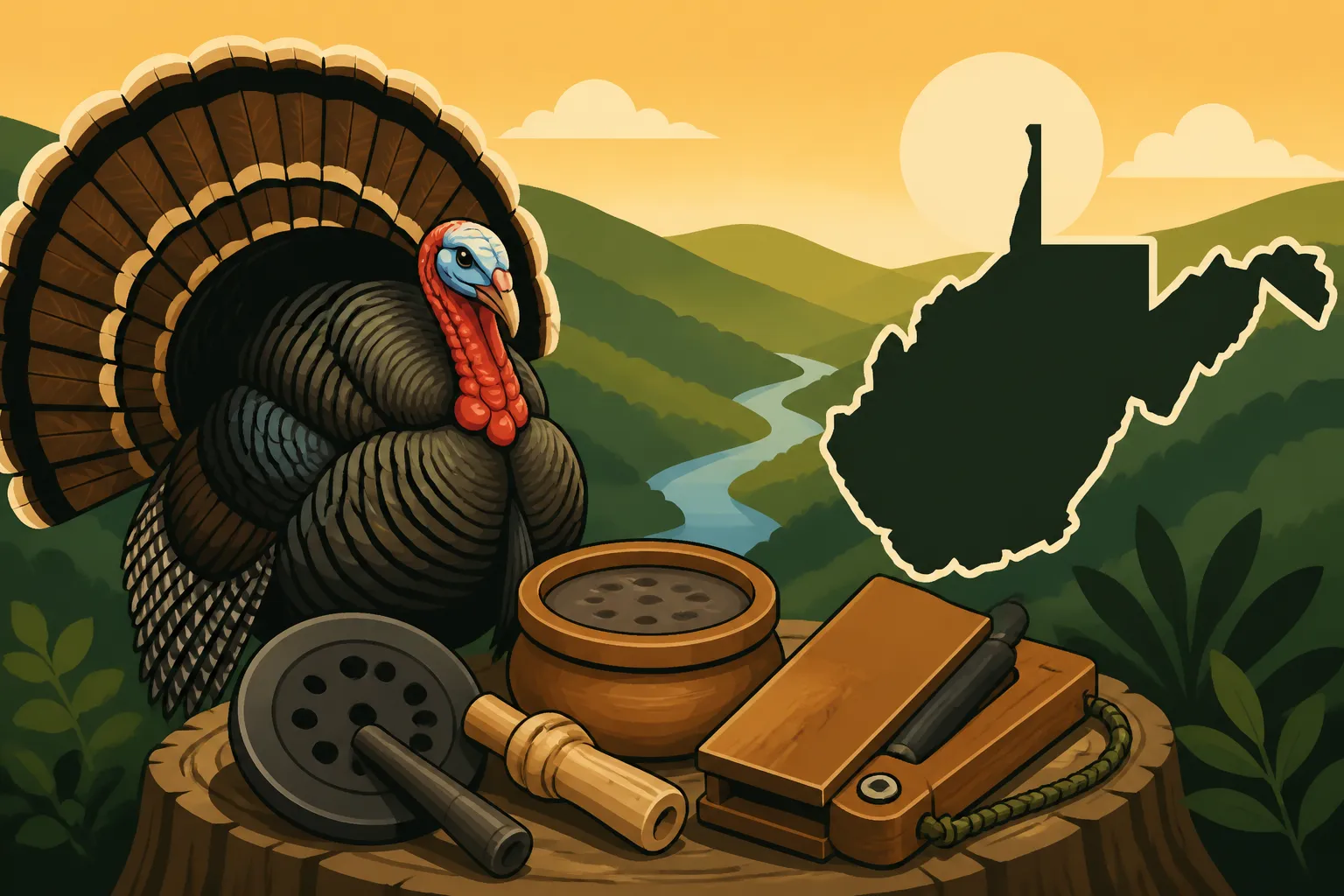
When you’re out chasing gobblers in West Virginia, whether it's in the deep woods of the Monongahela National Forest or the rolling hills of the Eastern Panhandle, having a versatile set of calls is absolutely crucial. You can’t just rely on one type; turkeys are smart, and their moods change with the weather, pressure, and time of day. Think of your calls like tools in a toolbox – each has a specific purpose, and the best hunters know when to grab which one.
Mastery of the Mouth Call (Diaphragm Call)
Ah, the mouth call. For many seasoned turkey hunters, this is the bread and butter. It's a small, horseshoe-shaped piece of latex or prophylactic material stretched over a frame, held in your mouth. You use air pressure from your diaphragm and tongue manipulation to produce a vast array of turkey sounds. The real beauty of the mouth call is its hands-free operation, allowing you to keep your shotgun up and ready for that surprise gobbler sneaking in. This is especially vital when you're Calling a West Virginia Gobbler Off the Roost and need to be absolutely still.
Learning to use a mouth call can be a frustrating journey initially. It often involves a lot of squeaks, squawks, and sounds that certainly don't resemble a turkey. The key is perseverance and understanding how to apply pressure with your tongue to the latex reeds. Different cuts of latex (double reed, triple reed, ghost cut, bat cut, etc.) create different tones, from raspy old hens to softer, younger birds. Finding the right fit for your mouth and preferred sound takes experimentation, but once you click with one, it becomes an extension of yourself in the woods.
The hands-free advantage cannot be overstated, particularly when a gobbler is committed and closing the distance quickly. You can cluck, purr, yelp, and cut without moving a muscle in your hands, keeping your camouflage unbroken. This is invaluable in thick cover or when a bird might be hung up at 60 yards, staring directly into your setup, trying to pinpoint the source of the sound. Being able to make soft, reassuring calls without any movement can be the difference between tagging out and watching him walk away.
The Versatility of Pot Calls (Friction Calls)
Pot calls, also known as friction calls, are arguably the most versatile calls in a turkey hunter's vest. They consist of a pot (often made of slate, glass, aluminum, or copper) and a striker (typically wood, carbon, or a composite material). By drawing the striker across the surface of the pot, you can create yelps, clucks, purrs, and cuts with incredible realism and varying volume. The combination of different pot materials and striker types allows for an almost endless array of turkey vocalizations, from high-pitched, excited hens to deep, throaty clucks.
One of the great strengths of the pot call is its relative ease of learning compared to a mouth call. Most beginners can produce realistic yelps and clucks with just a little practice, making it a fantastic entry point into turkey calling. However, true mastery involves understanding pressure, speed, and angle of the striker to mimic the nuances of real turkeys. Different striker tips (pencil-like, mushroom, flared) can also dramatically change the sound, allowing you to fine-tune your calls to the specific mood of the birds you're hunting. For hunters who enjoy walking and covering ground, a quality pot call can be a lifesaver.
Pot calls shine in situations where you need to project sound across a hollow or into a distant ridge, but also where you need soft, seductive purrs and clucks. They are fantastic for working birds that are hung up or for coaxing them across an open field. Just be mindful of rain or moisture, as it can severely impact the calling surface, especially slate. Many hunters carry a small piece of sandpaper or a conditioning stone to refresh their pot call surfaces during a hunt, ensuring optimal performance.
Box Calls: The Beginner-Friendly Powerhouse
The classic box call is a cornerstone of turkey hunting, loved for its simplicity, loud volume, and remarkably realistic sounds. It consists of a resonant wooden box with a lid, or "paddle," hinged to one side. By drawing the paddle across the lip of the box, you generate friction that produces rich, throaty yelps and cuts. It’s a very forgiving call, making it an excellent choice for new hunters and those who want to quickly produce effective sounds without extensive practice.
One of the box call's biggest advantages is its ability to project sound over long distances, making it ideal for locating birds on windy days or across vast stretches of timber. When you're trying to reach a bird on a distant ridge after they've flown down and gone quiet, the loud, clear yelps of a box call can often get a shock gobble when other calls fail. They're also relatively durable, though a wet box call can be as frustrating as a wet slate call. Keep it dry, and it will serve you well.
While simple to operate, a good box call also allows for a range of tones and pitches depending on how you grip the paddle and the pressure you apply. You can produce soft purrs and clucks by lightly tapping or dragging the paddle, or aggressive, loud cuts by making longer, more forceful strokes. Many hunters carry a traditional box call alongside a mouth call, using the box call for initial locator yelps and then switching to the hands-free mouth call as a bird closes in. It's a reliable workhorse in any West Virginia turkey hunter's kit.
Locator Calls: Getting Them to Talk
Locator calls are a bit different from the other three, as their primary purpose isn't to mimic a turkey, but rather to provoke a "shock gobble" from a tom. The idea is to make a loud, non-threatening sound that startles a gobbler into announcing his presence. Common locator calls include owl hoots, crow caws, coyote howls, and even hawk or woodpecker sounds. These calls are invaluable for pinpointing a gobbler's location, especially at dawn when they're still on the roost, or during the mid-day lull when they're less vocal.
The effectiveness of different locator calls can vary by region and even by the day. In areas with high crow populations, a crow call might be extremely effective. In areas where coyotes are prevalent, a howl can stir up a gobble. Owls are classic for pre-dawn and post-dusk locator calls. It’s a good idea to carry a couple of different types, as turkeys can become accustomed to certain sounds, especially on heavily hunted public land. Changing it up can often trigger a response from a silent bird. Coyote Calling in West Virginia Farm Country can even cross over into turkey hunting if you're trying to locate a bird in open areas.
Using a locator call effectively means not overdoing it. A few hoots or caws are usually enough to get a response. If a bird gobbles, you've done your job; now it's time to set up and start working him with your turkey-specific calls. Don't engage in a calling contest with a crow or an owl using your locator call; it's just meant to get that initial gobble. They’re a fantastic tool for Scouting West Virginia Public Land Before Season to see where birds are roosting without putting direct turkey calls on them and potentially educating them.
Matching Your Calls to West Virginia Scenarios
Hunting turkeys in West Virginia isn't a one-size-fits-all endeavor. The terrain changes dramatically, from the steep, rugged Allegheny Mountains to the flatter, agricultural lands of the Eastern Panhandle, and so do the tactics needed to succeed. Matching your calling strategy to the specific situation and the birds' mood is paramount.
Opening Morning Roost Talk and Fly-Downs
There’s an undeniable magic to opening morning in the West Virginia spring woods, particularly when a gobbler thunders from his roost limb. Your approach to calling at this time is critical. Often, less is more. Start with soft, subtle tree yelps and clucks using a mouth call or a very quiet pot call. You want to sound like a hen waking up, stretching her wings, and looking for company. Avoid loud, aggressive calling that might spook a bird still evaluating his options from high in the tree. Roost Hunting West Virginia Gobblers demands patience and finesse.
Once the bird flies down, the dynamic changes. If he pitches down in your direction, keep the calling soft and reassuring, letting him come to you. If he flies down and heads the other way, that’s when you might need to become a bit more aggressive with your yelps and cutting, trying to pull him back. Sometimes a series of excited cuts on a pot call or box call, followed by soft clucks, can pique his interest. Remember that turkeys have incredible hearing, and over-calling can quickly educate a bird, especially on public land.
The biggest challenge can be getting a gobbler to commit once he's on the ground. He's looking for the hen, so Setting Up Against a Big Oak or against a brush pile, ensuring you have clear lines of sight and shooting lanes, is crucial. Use subtle purrs and clucks to maintain his interest as he searches, and be ready. If he hangs up, soft, quiet calling can sometimes be the trick, suggesting the hen is content and waiting for him.
Mid-Day Lulls and Field Edge Finessing
Many hunters head out of the woods by mid-morning, but some of the most productive calling can happen during the mid-day hours. When West Virginia Gobblers Go Quiet in May or during those periods where the excitement of the morning has died down, turkeys are often moving, feeding, and looking for hens. This is a great time to cover ground, calling periodically, or set up on a known travel corridor or food source.
For field edges or open bottomlands, such as those you might find while Hunting Eastern Panhandle Farmland Deer (which often overlaps with turkey country), soft calling with a pot call or mouth call can be very effective. A series of contented yelps, clucks, and purrs suggests a hen feeding happily, which can be irresistible to a lonesome gobbler. Set up with a good view of the field, and be patient. A gobbler might take his time to appear, often skirting the edges before committing.
Don’t be afraid to experiment with different calls during this period. Sometimes a box call's louder yelps can reach out and pull a bird from a distant woodline that quieter calls might miss. If you're not getting a response, move to a new location. Turkeys are always on the move, and covering ground while intermittently calling can help you intercept a bird traveling between feeding areas and strut zones.
Run-and-Gun on Pressured Public Land Birds
West Virginia has a lot of fantastic public land for turkey hunting, but it also means encountering pressured birds. These gobblers have heard every call in the book and are often extremely wary. For these situations, a "run-and-gun" approach, as described in Run-and-Gun Turkey Tactics on Public Land, coupled with judicious calling, is often key. You need to move fast, call sparingly, and be ready to set up quickly when you get a response.
Mouth calls are king here because they allow for stealthy movement and immediate hands-free calling. You can walk through the woods, stopping every 100-200 yards to let out a series of yelps or cuts, listening intently for a response. If a bird gobbles, quickly assess the situation, find a setup with good cover and visibility, and become silent. Let the bird come looking. Over-calling pressured birds is a common mistake; they often associate aggressive calling with hunters.
Consider incorporating subtle sounds, like purrs and soft clucks, which are often less intimidating to wary birds. Sometimes, simply mimicking the sounds of a contented hen going about her business is more effective than loud, excited calling. If you do use louder calls, make them brief and realistic. The goal is to pique his curiosity, not to have a full conversation. Remember, these birds have likely been shot at, and they've developed an uncanny ability to pattern hunter behavior.
Adapting to Quiet Gobblers and Tough Conditions
There will be days when the gobblers just don't want to talk. Cold fronts, high winds, heavy rain, or even just a general lack of hen interest can make for quiet woods. This is where adaptability in your calling arsenal and strategy truly pays off. Don't give up just because they aren't gobbling their heads off.
When birds are quiet, sometimes a soft, unassuming call is what it takes. A lost hen yelp on a pot call or a series of pleading yelps on a mouth call can sometimes be enough to elicit a response from a silent tom. You might have to move more slowly and deliberately, stopping often to listen for the subtle sounds of a turkey. Remember that even when they aren't gobbling, they are still vocalizing with clucks, purrs, and the occasional soft yelp.
On particularly windy days, projecting sound is a challenge. This is when a loud box call or a robust pot call can cut through the wind better than a soft mouth call. You might also need to find more sheltered areas, like creek bottoms or hollows, where the wind's effect on sound is minimized. During rain, protect your calls. Box calls and pot calls can become useless if wet, so keep them in waterproof pouches or under your jacket. Mouth calls are often the most reliable in wet conditions because they are protected in your mouth.
Keeping Your Calls in Top Shape: Maintenance and Care
Your turkey calls are tools, and like any good tool, they need proper care and maintenance to perform when it counts. A call that won't make a sound or produces an off-key squawk can ruin a hunt faster than a missed shot. Taking a few minutes to care for your calls will ensure they’re always ready for action in the West Virginia spring woods.
Protecting Friction Calls from the Elements
Pot calls, especially those with slate or glass surfaces, are highly susceptible to moisture. Rain, heavy dew, or even high humidity can severely dampen the calling surface, making it difficult or impossible to create the necessary friction for sound. Always carry your pot calls in a protective case or a waterproof pouch. Many hunters use small plastic bags or purpose-built call covers. When not in use, keep them in a dry environment.
Beyond moisture, keeping the calling surface clean is crucial. Oily fingers, dirt, and debris can all mute your calls. Carry a small piece of fine-grit sandpaper (around 120-220 grit) or a conditioning stone specifically designed for pot calls. Lightly roughing up the surface before each hunt or whenever the call starts sounding dull will restore its friction. Clean your strikers too; a little sandpaper on the tip can make a huge difference in sound quality. Store strikers separately to prevent them from damaging the pot surface during transport.
Mouth Call Hygiene and Longevity
Mouth calls, being in your mouth, require a different kind of care. After each hunt, rinse your mouth calls with clean water to remove saliva and debris, then allow them to air dry completely. Don't store them in airtight containers when wet, as this can encourage mold or mildew growth, which you definitely don't want in your mouth. Small, vented cases are ideal for storing mouth calls, allowing them to dry out and protecting the latex from being crushed or warped.
The latex reeds in mouth calls will eventually wear out, lose their tension, and sound dull. This is normal. Over time, saliva, use, and even just sitting in your vest will degrade the latex. It's a good practice to replace your favorite mouth calls before each spring season. Buy a few extra of your go-to calls so you have backups. Keeping them flat and protected in a case will extend their life compared to just tossing them loosely in a vest pocket.
Box Call Tuning and Preservation
Wooden box calls are sensitive to moisture and temperature changes, which can affect their sound. Just like pot calls, keep your box call dry. A little bit of chalk on the paddle can help with friction and sound quality, but too much can gum it up. If your box call sounds squeaky or off-key, it might need a light sanding of the paddle and the lip of the box. Use fine-grit sandpaper (400 grit or higher) and apply a small amount of call chalk or even a tiny bit of paraffin wax to the rubbing surfaces if needed.
Over time, the tension on the lid of a box call can loosen, affecting its sound. Some box calls have screws that allow for adjustment. If not, a slight bending of the paddle or the box itself can sometimes restore the proper tension. Wooden box calls can also benefit from periodic conditioning with a wood-friendly oil to prevent drying and cracking, especially if stored for long periods. Always follow the manufacturer’s recommendations for specific care, as different woods and finishes can react differently.
The Art of Mimicry: Practice Makes Perfect
Having the best calls in the world won't do you any good if you don't know how to use them, or worse, if you're making sounds that don't resemble a turkey. Mastering turkey calling is an art form that requires dedication, a keen ear, and consistent practice. It's not just about making sound; it's about communicating.
Decoding Turkey Vocalizations
Before you can mimic a turkey, you need to understand what they're saying. Spend time listening to real turkeys, both in person and through recordings. Pay attention to the cadence, rhythm, and inflection of their yelps, clucks, and purrs. Notice the different levels of excitement or contentment in their calls. A hen yelping for a lost gobbler sounds very different from a hen clucking contentedly as she feeds. Understanding these nuances is key to realistic calling.
There are numerous resources available, from online sound libraries to instructional DVDs, that can help you identify and differentiate between various turkey vocalizations. Practice mimicking these sounds with your calls. Record yourself and compare it to real turkey sounds. This immediate feedback loop is invaluable for refining your technique. Think about the specific sounds: plain yelps, cutts, purrs, clucks, lost calls, assembly calls, fly-down cackles. Each has its place in the turkey's vocabulary, and thus, in your hunting strategy.
Drilling Down Your Calling Sequence
Once you can produce individual turkey sounds, the next step is to string them together into realistic sequences. Turkeys rarely just make a single yelp and then stop. They communicate in patterns. A typical calling sequence might start with a series of soft tree yelps, followed by a fly-down cackle, then perhaps a few excited cuts and some yelps on the ground. As the hunt progresses, this might transition to quieter clucks and purrs.
Practice various sequences, from short and sweet to longer, more elaborate ones. Work on your rhythm and timing. Consistency in your practice will build muscle memory, especially for mouth calls, allowing you to produce natural-sounding calls without conscious effort. Focus on sounding like one or two hens, not a whole flock. Overdoing it can sometimes make birds wary, especially on public land where they’ve heard a cacophony of calls before.
It’s not just about the calls themselves, but the pauses between them. Turkeys don't just call constantly. They listen. Build realistic pauses into your sequences, giving any distant gobblers time to respond, and giving you time to listen for their approach. A long silence after a series of calls can sometimes be more effective than continuous chatter.
Practicing for Real-World Scenarios
The calling range in your living room is very different from the vastness of the West Virginia woods. Practice in different environments and conditions. Call softly, call loudly. Practice in the wind. Practice in the rain (with calls that can handle it). Get a feel for how far your calls carry and how their sound changes in different terrains.
Think about hypothetical hunting scenarios and practice calling for them. A gobbler on the roost at 100 yards. A bird hung up across a hollow. A tom strutting on a field edge. How would your calling strategy change for each? This mental rehearsal, combined with physical practice, will build confidence and make your responses in the field almost instinctual. The more you immerse yourself in the sounds and scenarios, the more prepared you'll be when that big gobbler finally steps into view. This continuous learning and adaptation are what make Spring Turkey Hunting in West Virginia so rewarding.
Choosing Your Arsenal: Buying and Building Your Call Collection
With so many calls on the market, it can be overwhelming to decide what to buy. Should you go for the cheapest, or the most expensive? Do you need one of every type, or just a few good ones? Building your call collection is a personal journey, but there are some solid principles to guide you.
Starting with the Essentials
If you're just starting, you don't need to break the bank. A good entry-level pot call (slate or glass) with a couple of different strikers, a user-friendly box call, and a simple owl or crow locator call will get you started. Focus on calls that are relatively easy to learn and produce consistent, realistic sounds. A basic double-reed mouth call can also be a good addition once you're comfortable with the friction calls, though expect a steeper learning curve.
Many reputable call makers offer beginner kits that include a selection of calls and sometimes even instructional material. These kits are often a good value and take some of the guesswork out of initial purchases. Remember, the most expensive call isn't always the best for you. What matters most is how well you can make it sound like a turkey. Focus on learning to consistently produce the basic yelp, cluck, and purr before moving on to more advanced sounds and calls.
The Value of Quality Craftsmanship
While you don't need to start with custom-made calls, there's a significant difference between cheap, mass-produced calls and those from established, quality manufacturers. Better materials, precise cuts, and careful tuning contribute to more realistic sounds, better durability, and easier use. A well-made pot call will have a consistent surface, and a quality striker will feel balanced in your hand. A good box call will produce rich, deep tones right out of the box.
Consider brands known for their consistency and sound quality. Many veteran West Virginia hunters swear by calls from companies that have been around for decades, refining their designs. While you won't get specific pricing or details here, look for established names in the turkey hunting world. These brands often invest in research and development, ensuring their calls replicate turkey vocalizations with accuracy. Even when looking for gear, platforms like GoHunt can offer reviews and insights from other hunters, helping you make informed decisions.
Experimenting and Expanding Your Toolkit
As you gain experience, you'll start to develop preferences and identify gaps in your calling arsenal. Maybe you find that a particular brand's mouth call just "fits" your mouth perfectly, or a copper pot call produces the exact raspy yelp you need for those late-season toms. Don't be afraid to experiment with different calls and materials. Try a glass pot call if you've only used slate, or a different cut of mouth call.
Many hunters enjoy collecting calls, not just for utility but for the craftsmanship involved. Custom call makers often create unique, hand-tuned calls that are works of art and exceptional performers. These can be a great way to fine-tune your sound profile for specific situations or to simply enjoy the tradition of the craft. Platforms like GoHunt can also be a good place to look for specialized calls or to read reviews on the latest innovations in turkey calling. Continually refining your calling ability and expanding your call collection can keep your passion for West Virginia's Wild Turkeys alive and exciting year after year.
| Call Type | Pros | Cons | Learning Curve | Volume Range | Primary Use Cases |
|---|---|---|---|---|---|
| Mouth Call | Hands-free, wide range of sounds, compact | Tricky to master, can stick to roof of mouth | High | Soft to Moderate | Close work, finishing birds, stealthy calling |
| Pot Call | Realistic sounds, relatively easy to learn, versatile | Requires two hands, can be affected by moisture | Moderate | Soft to Loud | All-around, locating, working distant birds |
| Box Call | Loud, great for locating, natural "gobble" sound | Requires two hands, bulky, affected by moisture | Low | Moderate to Very Loud | Locating, aggressive calling, challenging birds |
| Locator Call | Provokes shock gobble, non-threatening to turkeys | Not a turkey sound, only for locating | Low | Moderate to Very Loud | Pinpointing roosted birds, mid-day searches |
Disclaimer
This article is for general informational purposes only and does not constitute professional advice. Laws, prices and regulations vary by location and change over time. Consult a qualified professional for guidance on your specific situation.