Hunting the One-Week Fall Turkey Counties
There's nothing quite like the excitement of fall turkey season in West Virginia, but for many of us, the joy is often overshadowed by the sheer brevity of it all. If you've ever felt the scramble to make the most of those precious few days, knowing your county's fall turkey season is over almost before it begins, you're not alone. This guide is dedicated to helping you unravel the mysteries and strategize effectively for success in West Virginia's challenging one-week fall turkey counties.
Understanding West Virginia's One-Week Fall Turkey Season Structure
West Virginia's diverse landscape and varying turkey populations across its 55 counties mean the state’s fall turkey season isn't a one-size-fits-all affair. While some fortunate hunters get to pursue birds for multiple weeks, many find themselves restricted to a much shorter, often frustratingly brief, one-week window. This compressed season isn't just an inconvenience; it presents a unique set of challenges and demands a different approach than the longer seasons.
Why Some Counties Have Shorter Seasons
The West Virginia Division of Natural Resources (WVDNR) carefully monitors turkey populations across the state, and the length of the fall season in any given county is a direct reflection of these localized population dynamics. Counties with lower turkey densities or those where reproductive success (poult-to-hen ratios) has been consistently low are often assigned shorter seasons to protect the breeding stock. This science-backed approach aims to ensure sustainable turkey hunting for future generations. It can feel unfair when you see neighboring counties with longer seasons, but remember, it’s all about sound wildlife management.
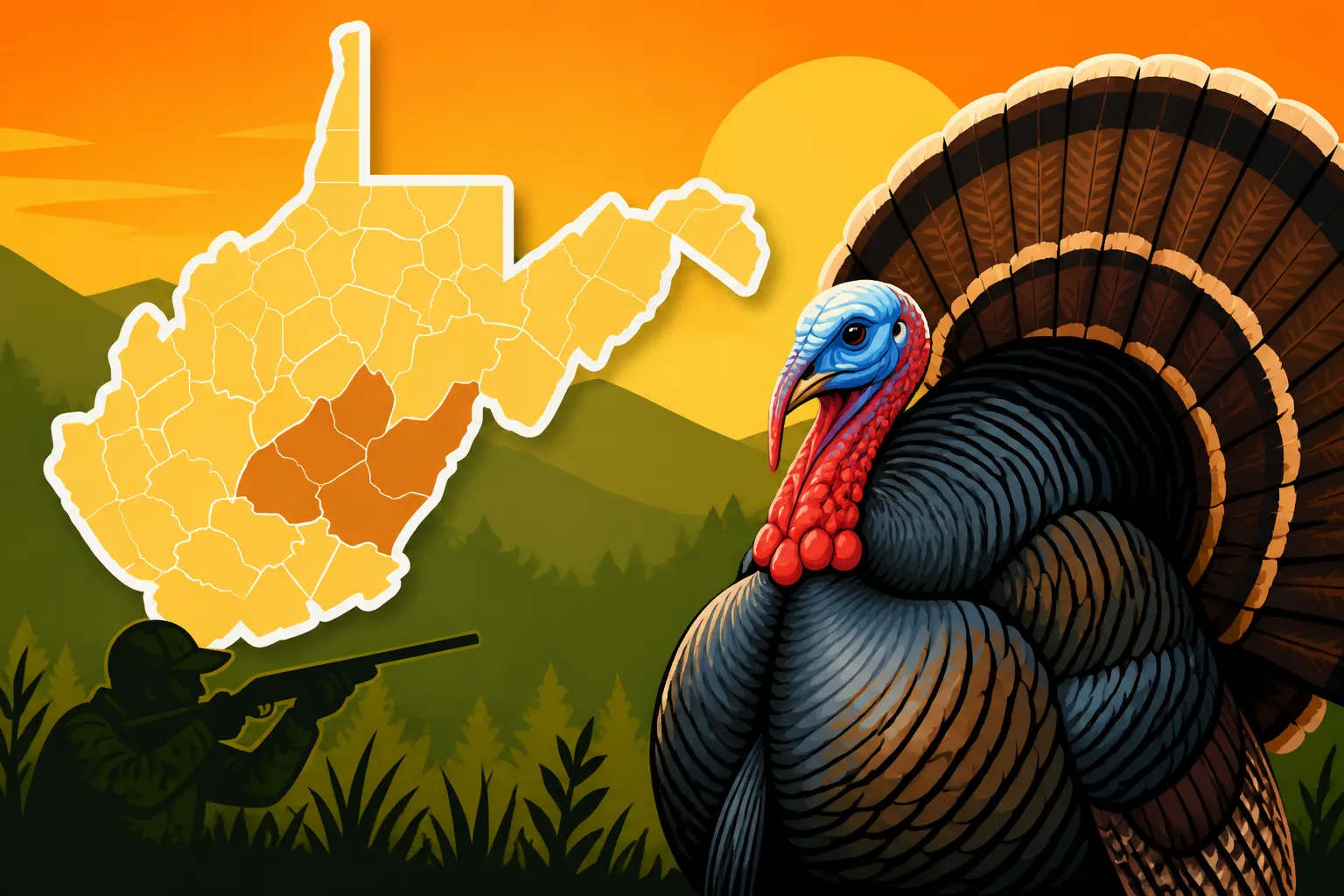
The one-week season typically kicks off in late October, often running for six hunting days (Monday through Saturday) before closing. This means you have exactly one weekend and a handful of weekdays to fill your tag. Knowing these specific dates and understanding when West Virginia's fall turkey splits around a late-October gap is absolutely crucial for planning. For instance, counties like Nicholas and Webster have historically fallen into this one-week category, often alongside other central and southern mountain counties where turkey habitat might be more fragmented or populations more vulnerable to pressure.
Key Dates and County Tiers
To successfully navigate the one-week season, the first step is always to verify your county's specific regulations for the current year. The WVDNR provides a detailed breakdown of West Virginia Fall Turkey County Tiers, which clearly outlines which counties fall into the one-week, two-week, or four-week categories. These tiers can sometimes shift based on annual population surveys, so never assume. A quick check on the official WVDNR website or a quick lookup through a mapping application like GoHunt can save you a lot of headache.
It’s not just about the opening and closing dates; it’s also about understanding the bag limits and other specific rules. In most cases, the bag limit for fall turkey in West Virginia is one bird, and hunters must adhere to that strict limit, regardless of the season length in their county. Furthermore, Sunday hunting is generally prohibited for turkeys in West Virginia, meaning that one-week season is truly only six days. This emphasizes the need for efficient and strategic hunting, as every single day counts.
Scouting for Success in a Short Window
With such a limited timeframe, effective scouting becomes not just important, but absolutely critical for hunting the one-week fall turkey counties. You can't afford to spend precious hunting days trying to locate birds. The groundwork needs to be done well in advance, giving you a clear plan of action before opening morning arrives.
Pre-Season Reconnaissance
Ideally, your scouting efforts should begin weeks, if not months, before the season opener. Turkeys are creatures of habit, and while their exact movements can vary, their core areas and preferred habitats tend to remain consistent year after year. Look for obvious signs like tracks, droppings, and scratch marks in the leaf litter. Pay close attention to food sources; turkeys are often found near mast-producing trees such as oaks and beeches. If acorns are abundant in a particular area, turkeys will be there. Conversely, if a mast crop fails, they will shift their feeding patterns.
Understanding West Virginia Turkey Roost Tree Preferences can also give you a significant advantage. Turkeys prefer to roost in large, mature trees, often pines or oaks, on ridgelines or near water sources. Locating these roosting areas during pre-season scouting will allow you to plan your approach on opening morning, giving you the best chance to intercept birds as they fly down. Use mapping apps to identify potential roosting habitat, then put boots on the ground to confirm. Tools like GoHunt can layer topographic maps with land ownership, helping you identify potential public access points and analyze terrain for logical travel corridors.
Reading the Woods for Turkey Sign
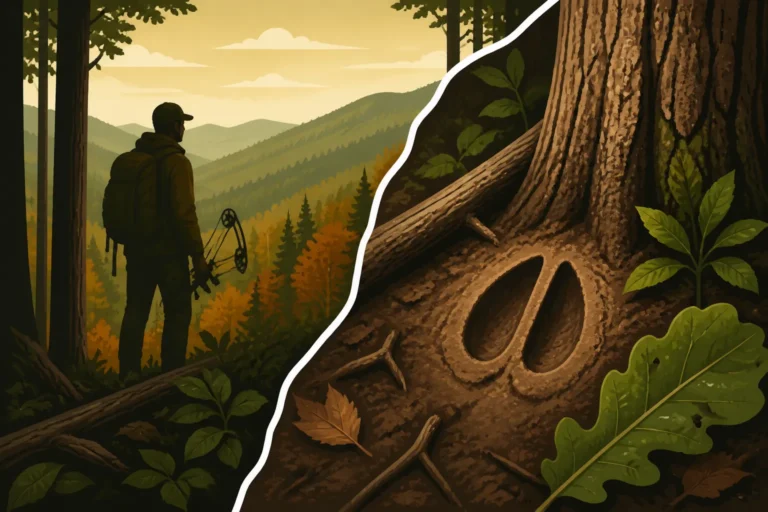
Once you're actually in the woods, whether during scouting or hunting, your ability to "read" the landscape for fresh turkey sign is paramount. Fresh droppings, especially those that are moist and dark, indicate recent activity. Tracks in soft soil or mud can tell you how many birds are present and which direction they're moving. Scratch marks, distinct from deer scrapes, will show where turkeys have been foraging for food on the forest floor.
Beyond ground sign, listen for vocalizations. While fall turkeys are generally less vocal than their spring counterparts, they do communicate. Yelps, clucks, and even soft putts can indicate their presence. During pre-season, listen at dawn and dusk for fly-down and fly-up cackles, which can pinpoint exact roost locations. Also, don't overlook natural travel corridors like logging roads, old logging decks, or subtle benches along hillsides. Turkeys use these routes to move between feeding, roosting, and watering areas. The more time you spend scouting these subtle nuances, the more confident you'll be when the season arrives. This deeper knowledge of turkey behavior and patterns is your most valuable asset when the clock is ticking in a one-week season.
Tactics for a Compressed Fall Season
Hunting turkeys in a one-week fall season demands a focused and often aggressive approach. There's no time to waste on unproductive ground or to wait for ideal conditions. You need to be proactive and ready to adapt quickly to maximize your chances of success.
Locating and Breaking Up Flocks
One of the most effective strategies for fall turkey hunting is to locate a flock, Breaking Up a Fall Turkey Flock, and then call individual birds back in. This tactic works because turkeys are highly social animals and will work to reassemble after being scattered. During your scouting, if you've identified a consistent travel route or feeding area for a flock, you're halfway there. On opening day or during your hunt, if you encounter a flock, try to bust them up as thoroughly as possible. A well-executed run or charge into the middle of a feeding flock can scatter birds in all directions.
Once the flock is scattered, wait for things to calm down, typically 30-60 minutes, before beginning to call. Start with soft assembly yelps or lost calls. If you hear a response, set up quickly with good cover and an open shooting lane. Often, younger birds or hens will come back first, eager to reunite. Sometimes, the dominant hen will start calling to gather her brood, which can provide a perfect opportunity to pinpoint their location and work your way in. Remember, patience is key even within a short season; you might have to wait an hour or more for birds to start responding after a breakup.
Effective Calling Strategies
Fall calling is very different from spring calling. While gobblers might respond to aggressive hen calls in the spring, fall turkeys are more about subtle communication and reassembly. Your primary calls should be soft yelps, clucks, and purrs, mimicking a flock trying to find each other. A lost hen yelp can be particularly effective. You might also use kee-ke runs, especially if you're trying to simulate a lost juvenile bird.
Using a box call, slate call, or mouth call, practice varying your tone and volume. Sometimes, a soft tree yelp from a mouth call can be just enough to get a response from a roosted bird at first light. Other times, a slightly louder series of yelps on a slate might be needed to draw in a distant bird. Pay attention to how the birds are responding, or not responding, and adjust your calling accordingly. Sometimes silence, or very minimal calling, is the most effective approach, especially if birds are wary from previous hunting pressure. For a deeper dive, consider techniques often employed during Hunting the Rut in Mid-November, as some of the passive observation skills transfer to subtle fall turkey work.
Run-and-Gun vs. Sit-and-Wait
Given the short duration of the one-week season, many hunters lean towards a more aggressive run-and-gun approach, especially on public land. This involves covering a lot of ground, stopping frequently to call, and moving quickly to any responses. It's an excellent tactic for covering expansive areas of national forest or WMA land where turkeys might be widely dispersed. If you hear a bird, quickly assess the terrain and move to a strategic setup point to call it in. The goal is to maximize the amount of ground you can effectively hunt within your limited time. This style is often used during Run-and-Gun Turkey Tactics on Public Land.
However, there's also a place for the sit-and-wait strategy, particularly if you've done your pre-season scouting and know a specific area is holding birds. If you've located a prime feeding area, a water source, or a distinct travel corridor, setting up quietly and patiently waiting for turkeys to move through can be incredibly effective. This is especially true mid-day when birds might be less responsive to calling. Consider a ground blind setup in these key areas, or simply find natural cover that allows you to remain concealed while waiting. Combining both approaches, using run-and-gun to locate birds and then transitioning to a sit-and-wait once a flock is identified, often yields the best results in these condensed seasons.
Navigating Public Lands in One-Week Counties
Hunting public land in West Virginia's one-week fall turkey counties presents its own unique set of challenges, from navigating other hunters to finding birds in less-pressured areas. With so little time, understanding how to maximize your public land access is paramount.
Finding Less-Pressured Areas
Public lands like the Monongahela National Forest, or specific Wildlife Management Areas (WMAs) in one-week counties, can see significant hunter pressure, especially on opening weekend. To find success, you often need to go where others won't. This usually means hiking further, ascending steeper terrain, or exploring areas away from easy road access. Consult topographic maps or digital mapping tools like GoHunt to identify deep hollows, remote benches, or ridge systems that are a significant walk from any parking areas. Turkeys, particularly older birds, will often seek refuge in these less accessible spots.
Look for subtle features that might concentrate birds, such as isolated clear-cuts that are starting to regenerate with thick cover, or stands of mature timber nestled within more open hardwoods. While some hunters might focus on traditional logging roads, Scouting West Virginia Public Land Before Season can reveal forgotten old trails or game paths that offer quieter access to prime habitat. Remember, a one-week season means everyone is trying to make the most of those limited days, so the further you're willing to go, the better your chances of encountering undisturbed birds.
Understanding Public Land Rules and Etiquette
Hunting West Virginia public lands comes with a specific set of rules and unwritten etiquette. Always be aware of West Virginia Public Land Hunting Hours and any special regulations that might apply to a particular WMA or national forest section. Some WMAs may require a WMA stamp in addition to your regular hunting license. Blaze orange requirements, while usually associated with gun deer season, can sometimes apply to other species or specific areas during overlapping seasons, so always double-check.
When encountering other hunters, especially in the tight window of a one-week season, always be courteous. If you hear another hunter calling or see them working an area, give them space. Communication is key; a friendly wave or quick chat can prevent conflicts and ensure safety. Remember, everyone is out there for the same reason, and respecting fellow hunters contributes to a better experience for all. Also, be mindful of your impact on the land. Pack out what you pack in, and leave no trace of your presence beyond your boot prints.
| County Group | Fall Turkey Season Length | Typical Characteristics | Hunting Pressure | Recommended Tactics |
|---|---|---|---|---|
| One-Week Counties | Six days (Mon-Sat, late Oct) | Lower density populations, more restrictive | High on opening weekend, drops mid-week | Aggressive run-and-gun, deep scouting, breaking flocks |
| Two-Week Counties | Twelve days (Mon-Sat, late Oct/early Nov) | Moderate density, wider range of habitats | Moderate to high early, tapers off | Mix of run-and-gun and sit-and-wait, varied calling |
| Four-Week Counties | Twenty-four days (Mon-Sat, late Oct/Nov) | Higher density populations, diverse habitat | Lower overall, but hotspots get hit | Extended scouting, patient calling, exploiting food sources |
Note: Always verify specific season dates and county tiers with the official West Virginia DNR regulations each year, as they are subject to change.
Post-Harvest and Season Wrap-Up
Even after the brief one-week season concludes, your duties as a responsible hunter aren't over. Proper handling of your harvest and reflecting on your hunt can make future seasons even more successful.
Checking Your Harvest
One of the most important responsibilities after harvesting a turkey in West Virginia is to legally check your game. This is not just a formality; it's a critical part of wildlife management. The data collected from hunter check-ins helps the WVDNR monitor turkey populations, assess harvest rates, and make informed decisions about future season structures. You can check your bird online through the WVDNR website, via the Go Wild West Virginia app, or by calling a toll-free number. Ensure you have all the necessary information, including your license number and the county of harvest, to complete the process accurately. The deadline for reporting a harvest is usually within a specific timeframe after the kill, so don't delay. Refer to West Virginia Turkey Checking Requirements for the most current information.
Properly field dressing and caring for your turkey immediately after the shot is also crucial, especially if temperatures are mild. Removing the entrails quickly helps the meat cool down, preventing spoilage. If you're planning to butcher the bird yourself, make sure you have the right tools and knowledge. If you prefer to have it processed professionally, find a reputable local processor who handles wild game. Remember, a successful hunt isn't just about the shot; it's about respectful and responsible handling of the animal from field to table.
Reflecting and Planning for Next Year
Once the one-week season is over, take some time to reflect on your hunt. What worked well? What didn't? Did your scouting pay off? Were the turkeys where you expected them to be? Did you encounter significant pressure, and how did you adapt? Keeping a hunting journal can be an invaluable tool for tracking these details. Note down weather conditions, moon phase, specific locations, calling sequences, and any observations about turkey behavior. This information will build a powerful personal database that will serve you well in future seasons.
Consider also the broader picture of West Virginia Turkey Population Trends. Understanding how populations are faring can help you anticipate future season structures and adjust your expectations. Even if your one-week season was tough, the knowledge gained is priceless. You've experienced the unique challenges of hunting in a compressed timeframe, and that experience will only make you a more adaptable and skilled hunter. Use the off-season to further hone your calling skills, scout new public land areas, and deepen your understanding of turkey behavior. That limited one-week season isn't a setback; it's a crucible that forges sharper hunters.
Disclaimer
Please remember that hunting regulations, season dates, and specific county classifications can change annually. Always consult the official West Virginia Division of Natural Resources (WVDNR) regulations for the most current and accurate information before planning any hunt. This guide is for informational purposes only and does not supersede official state regulations.