Roost Hunting West Virginia Gobblers
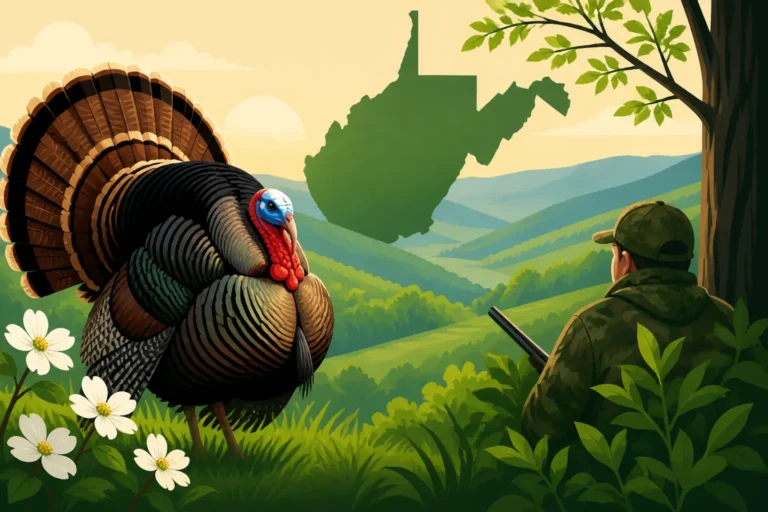
There's nothing quite like the heart-stopping shock gobble echoing through a West Virginia hollow at first light, but finding those elusive birds on the roost can feel like searching for a needle in a vast, mountainous haystack. Many hunters struggle with pinpointing where gobblers spend the night, leading to frantic morning scrambles or missed opportunities before the birds even hit the ground. This comprehensive guide is going to strip away the guesswork, diving deep into the art and science of roost hunting West Virginia gobblers, giving you the knowledge to confidently slip into position for a shot at a Mountain State longbeard.
Understanding the Gobbler's Roost Behavior in West Virginia
Before you can even think about slipping through the dark timber, you’ve got to get inside the head of a West Virginia gobbler. Their roosting habits aren't random; they're driven by instinct, safety, and convenience, adapting to the unique challenges of our diverse terrain. Understanding these patterns is your first step to consistent success.
Why Gobblers Choose Specific Roost Trees
Gobblers, and turkeys in general, don't just pick any old tree to spend the night. They're looking for specific advantages that enhance their survival. High on their list is safety from ground predators like coyotes, bobcats, and even bears. This means they often favor the tallest trees in an area, especially those with wide, horizontal limbs that offer a secure perch and a clear vantage point. Think old-growth oaks, hickories, or even towering pines that stand above the canopy.
Beyond height, visibility is key. A gobbler wants to be able to scan for threats both as they fly up to roost and as they prepare to fly down at dawn. This often places them on ridge lines, points, or high benches overlooking hollows, offering expansive views. The big, old oaks and maples that commonly dot our West Virginia ridges are prime candidates. They also prefer trees that allow for an unobstructed flight path in and out, rather than getting tangled in dense undergrowth. Sometimes, these preferred trees are near reliable food sources like acorn flats or agricultural fields, allowing them to fly down directly into a morning meal. Other times, they might be near water, giving them a quick drink before heading off for the day. Recognizing these patterns means you're not just looking for a tree; you're looking for a turkey tree in a turkey spot.
Seasonal and Weather Influences on Roosting
A gobbler’s roosting spot isn't a fixed address; it can shift with the seasons and the whims of the weather. Early in the spring, during the pre-rut, gobblers might roost together in larger groups, often near traditional strutting areas or prominent features. As the season progresses and hens start nesting, gobblers become more solitary or might roost closer to where they expect to find receptive hens in the morning. This often means moving from the highest ridges down into the mid-slopes or even closer to creek bottoms where hens might be feeding.
Weather plays a huge role too. On a calm, clear night, gobblers might roost more openly, feeling secure. But if a strong wind picks up, they might seek out more sheltered hollows or the leeward side of a ridge, opting for protection over maximum visibility. Rain, especially heavy downpours, can also push them into denser cover, or they might seek the protection of large, widespread branches. A sudden cold snap might see them roosting in a thermal hub, hoping to catch the rising warm air in the morning. Understanding these subtle shifts is crucial. For instance, after a night of heavy rain, I might focus my search on the protected side of a ridge where the birds would be less exposed, rather than their usual exposed point. This adaptability makes them challenging, but also predictable if you know what to look for. For a deeper dive into how the season progresses, check out our guide on Spring Turkey Hunting in West Virginia.
The Art of Locating Roosted Gobblers Before Dawn
Finding a gobbler before he flies down is arguably the most critical step in roost hunting. It’s a dance of patience, keen listening, and knowing when and how to elicit that tell-tale gobble without giving away your position. It’s an evening affair as much as a morning one.
Scouting and Listening for Fly-Up
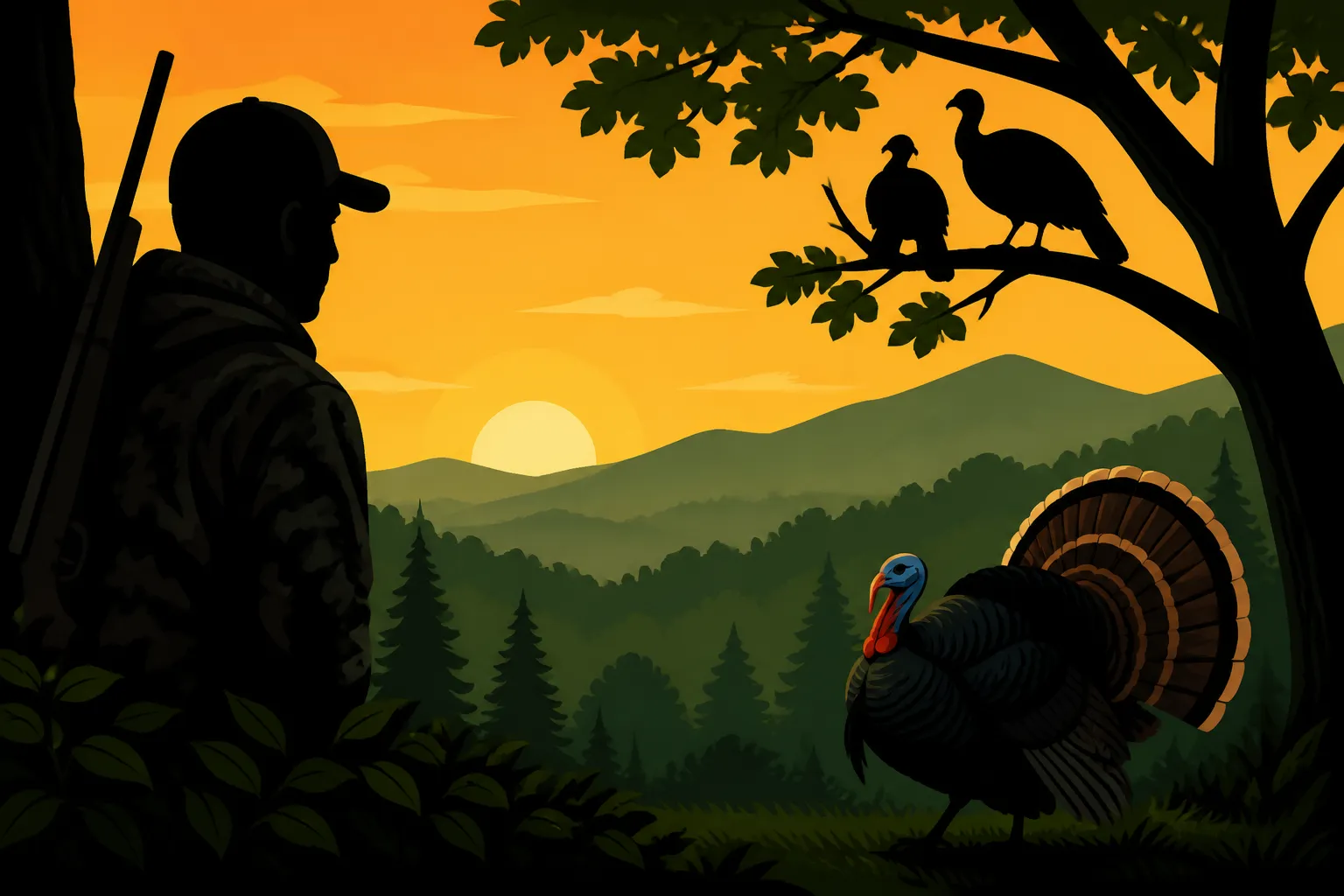
Successful roost hunting often begins the evening before. As the sun begins to dip below the ridgetops, gobblers will start to make their way to their chosen roost trees. This is your prime opportunity to listen for the "fly-up." It’s not always a booming gobble; sometimes it's just the loud thump-thump-thump of powerful wings beating against the air as they lift themselves into the canopy. Listen for subtle clucks or soft yelps as they settle in, sometimes even a series of excited cackles if they're particularly thrilled with their perch, or perhaps arguing over prime real estate.
To effectively scout for fly-up, you need to be in the general area you plan to hunt, but far enough away not to disturb the birds. Position yourself on a prominent point or a high bench where sound carries well across the hollows and ridges. Use a good pair of binoculars to scan potential roost trees against the twilight sky. Often, I'll sneak into an area I plan to hunt the next morning, sit quietly for an hour before dusk, and just listen. Knowing which drainage a bird flew up into, or even which specific ridge, provides an invaluable starting point for your pre-dawn approach. Don't underestimate the power of simply being present and observant during those golden hours just before dark.
Using Locator Calls at Dusk
Once the birds have settled onto their roost, it's time to try and make them gobble. This is where locator calls come into play. The goal isn't to call the turkey to you, but to elicit a "shock gobble" – a reflexive gobble in response to a loud, abrupt sound. The most popular locator calls are owl hoots, crow calls, and even coyote howls. Each has its place.
Owl hoots, particularly the barred owl "Who cooks for you?" call, are fantastic right after dark and again just before first light. They sound natural, and gobblers often respond without feeling pressured. Crow calls can be effective a bit later in the evening or morning, as crows are common and noisy, often provoking a gobble. Coyote howls can work well but are generally more aggressive and might put timid birds on edge, so use them sparingly. The key is timing and volume. Hoot or caw loudly enough for the sound to travel, then immediately go silent and listen intently. Wait a full minute or two for a delayed response. If you get a gobble, you've located your bird! Now, the critical part: stop calling. You know where he is. Repeated calling can make him wary or even cause him to fly down silently in a different direction. Remember, the goal is just to locate, not to engage in a full calling sequence. I've found that using a good mapping app like GoHunt helps me mark the exact location of a roosted bird, which can be invaluable for planning that pre-dawn approach. For more on the initial stages of the hunt, consider our guide on Scouting West Virginia Public Land Before Season.
Stealthy Approaches and Setup Strategies for Roost Hunting
Once you've marked that gobbler's location, the real work begins: getting into position under the cover of darkness. This requires meticulous planning, silent execution, and a solid understanding of how turkeys perceive their environment.
Navigating Dark Timber Without Spooking Birds
Approaching a roosted gobbler in the pre-dawn darkness is a delicate operation. Your main objective is to get as close as safely possible without alerting the bird to your presence. This means moving slowly, deliberately, and above all, silently. Before you even leave your truck, know your route. Study your maps to identify potential obstacles: steep ravines, noisy leaf litter, running water, or even dense laurel thickets. On public land, especially in popular areas, you might even encounter Opening Weekend Crowds on West Virginia Public Land, so having a well-planned, quieter approach is critical.
A headlamp is essential for safety, but use it sparingly and always on a low red light setting. White light can spook game from a surprising distance. Pay attention to your footing; a snapped twig or a scuff of leaves can instantly alert a roosted gobbler. Try to walk on moss, pine needles, or bare dirt if possible. Wind direction is paramount. Approach from a direction where your scent is blowing away from the roost tree. Also, consider the terrain. If you're hunting in the steep Allegheny ridges, remember that sound travels uphill very easily, so a quiet approach from below might be more challenging than a careful traverse along a contour. Always aim to arrive well before first light – often an hour or more – to allow yourself ample time to set up and for the woods to settle down after your disturbance.
Optimal Setup Positions and Decoy Placement
Your setup position is absolutely critical for success with roosted birds. The ideal spot is usually within 75-100 yards of the roost tree, positioned so that the gobbler will have to fly down past you, or directly towards you, to get to where he wants to go. This often means finding a subtle rise, a break in the timber, or an open area that offers clear shooting lanes. Remember, turkeys generally fly down, not straight across. They’ll usually land on the highest ground nearby, often on a field edge or a prominent knob, before walking down.
Consider the topography: if the bird is on a ridge, he'll likely fly down to the same ridge system or a nearby field. If he’s over a hollow, he might fly down onto the opposing ridge or a lower bench. Your setup should anticipate his landing zone. You want to be concealed but also have good visibility of his likely approach. A natural blind of blowdowns, thick pines, or a big oak (like when Setting Up Against a Big Oak) works wonders.
When it comes to decoys, less is often more with roosted birds. A single hen decoy, or a hen and a jake, positioned 15-20 yards in front of you, can be incredibly effective. The jake can entice an aggressive gobbler, but sometimes a lone hen is enough. Set them up where the gobbler will see them clearly when he flies down, but not so close to his roost tree that he might spot them while still aloft and become suspicious. Always set your decoys facing away from you, so the gobbler approaches them, giving you a frontal or broadside shot as he comes into range. Make sure your back is against a tree wider than your shoulders to break up your silhouette and protect you from another hunter.
Calling Tactics for Roosted Birds
You’ve slipped in, set up perfectly, and the woods are starting to lighten. Now comes the moment of truth: engaging that roosted gobbler with your calls. This isn't just about making turkey sounds; it's about building anticipation and convincing that bird to come to you.
First Light Calls and Their Impact
As the world slowly wakes up, resist the urge to hammer on your call. The first sounds a gobbler typically makes are soft, contented clucks and tree yelps from his perch. Mimic these. Start with soft, sleepy tree yelps – just a few short, muffled yelps and soft clucks, as if you’re a hen just waking up. Don't call too loudly or too frequently. The idea is to let him know a hen is nearby, but not to scare him off his limb. He needs to gobble on his own first, feeling confident and eager.
After he gobbles naturally a few times, perhaps responding to an owl or a crow, then you can offer a slightly more excited sequence. A soft series of yelps, clucks, and purrs, mimicking a hen stretching and getting ready to fly down. The key here is patience. Let him gobble, listen to his tone, and only call in response or to pique his interest further. If he’s gobbling his head off, you’re in good shape. If he’s quiet, just make subtle, seductive sounds. Remember, he can see a long way from up there, and if he hears you but doesn’t see a hen, he can become wary quickly. It’s a fine balance between enticing and pressuring. For guidance on getting that initial response, check out our piece on Calling a West Virginia Gobbler Off the Roost.
Adapting to Unresponsive or Hung-Up Gobblers
Not every gobbler is going to pitch down to your decoys on command. Sometimes, they’ll gobble incessantly from the limb, but refuse to fly down. Or they’ll fly down and head in the opposite direction, or "hang up" just out of range, gobbling but not committing. This is where adaptation becomes paramount. If a bird is still on the roost and just gobbling, try to change your call type or volume slightly. Sometimes a sharp, loud cackle can push him over the edge, or a series of aggressive cutting. But don't overdo it.
If he flies down and hangs up, first, be patient. Sometimes a bird just needs a few minutes to survey the scene. If he's still hanging back, try going completely silent for 10-15 minutes. This silence can sometimes make him nervous enough to come looking. If that doesn't work, try a different call: maybe a box call instead of a slate, or a diaphragm call if you've been using a pot call. Varying your calling style can sometimes make a difference. If he completely leaves the area after flying down, don’t despair. That’s when it might be time to transition to a Run-and-Gun Turkey Tactics on Public Land approach, trying to relocate him later in the morning. A gobbler that was on the roost isn’t necessarily gone for good; he’s just changed his mind about your initial setup.
Common Mistakes and How to Avoid Them
Even the most seasoned turkey hunters make mistakes, especially when dealing with the high-stakes scenario of a roosted gobbler. Knowing the common pitfalls can help you avoid them and increase your chances of success.
The Perils of Overcalling and Aggressive Approaches
One of the biggest mistakes hunters make when dealing with a roosted gobbler is overcalling. We get excited, that bird gobbles, and we just want to keep calling back to him. But think about it from the gobbler's perspective: if a hen is that eager and that loud, why isn't she coming to him? He's on the roost, expecting hens to come to his location. Excessive calling, especially loud, aggressive calling right off the limb, can make him suspicious. He might decide you're not a real hen, or that you're just too easy and he'll wait for you to come closer. This often leads to him "hanging up" just out of range, or worse, flying down and heading in the opposite direction to find a more convincing (or less demanding) hen.
Instead, practice restraint. Use soft, subtle calls at first light. Let him initiate the most aggressive gobbling. Your job is to entice, not to push. If he gobbles ten times, you might only call once or twice. Think of it like a conversation – you wouldn't interrupt someone every time they speak. Also, avoid approaching too aggressively in the dark. Rushing in too close can easily lead to snapping a twig or scuffing leaves, spooking the bird before he even knows what hit him. Give yourself plenty of time to get into position quietly, even if it means getting up an extra half hour earlier. It’s better to be 100 yards out and quiet than 50 yards out and busted.
Handling Pressure and Unforeseen Obstacles
Hunting West Virginia, especially on public land, means dealing with pressure. You’re not the only one out there chasing gobblers. It’s entirely possible to sneak into position, only to have another hunter walk in on you, or worse, set up between you and your bird. This is a common frustration, particularly during the West Virginia Spring Turkey Season Rules opener. If another hunter is impacting your hunt, the best thing you can do is back out quietly and try to find another bird. Your safety, and theirs, comes first. Never call in a way that might draw another hunter towards you who thinks you're a turkey.
Beyond other hunters, unexpected challenges can arise. A sudden gust of wind could make your carefully chosen setup less effective, or a pop-up shower could quiet the woods. Sometimes, a gobbler will simply fly down silently, without a single gobble or wing beat, leaving you wondering where he went. In these scenarios, having a backup plan is essential. Don't pack up and go home. If the roosted bird bails, immediately switch to a run-and-gun strategy. Start walking, listening for distant gobblers, or looking for fresh tracks and sign. Use your locator calls again to try and strike another bird. The woods are vast, and there are always more opportunities. The key is to stay positive, adapt, and keep hunting.
Roost Hunting Across West Virginia's Diverse Terrains
West Virginia is a beautiful, rugged state, and its diverse topography means that roost hunting tactics will vary significantly depending on where you are. What works in the Eastern Panhandle might need adjustment in the deep hollows of the Allegheny Mountains.
Mountainous Regions and Steep Hollows
Hunting in West Virginia’s mountainous regions, like the Monongahela National Forest or the upper reaches of the Potomac Highlands, presents unique challenges and opportunities for roost hunting. Gobblers here often prefer to roost on high ridgelines, prominent points, or along steep benches that offer excellent visibility and thermal updrafts. The key challenge is navigating the steep terrain in the dark and understanding how sound and thermals interact.
When approaching a roosted bird in a steep hollow, remember that sound travels uphill exceptionally well. A gobble from a bird high on a ridge can sound incredibly close, only for you to realize he’s still 400 yards and a couple hundred vertical feet away. Your approach needs to be planned to minimize noise, often by contouring along the side of a hill rather than climbing directly up a steep, leaf-covered slope. Thermals also play a huge role. In the pre-dawn, cool air will be flowing downhill into the hollows. As the sun rises, these thermals will reverse, drawing air (and your scent) uphill. Position yourself so your scent is flowing away from the roost tree, considering this thermal shift. Many times, gobblers will fly down to the highest available ground, so anticipate them pitching down to a parallel ridge or a small knob rather than dropping straight into the bottom of a hollow. Understanding Hunting Steep Allegheny Ridges can give you an edge, even when targeting turkeys. Using a mapping tool like GoHunt can help you identify potential benches and saddles where birds might roost or fly down to.
Farmland Edges and River Bottoms
In contrast to the mountains, the rolling farmlands of the Eastern Panhandle or the river bottoms along the Ohio River Valley offer different roost hunting scenarios. Here, gobblers might still use the tallest trees, but those trees could be scattered in woodlots, along fencerows, or in mature timber strips bordering agricultural fields. The approaches are often flatter, but visibility can be more open, meaning stealth is still paramount.
On farmland edges, gobblers frequently roost in trees lining fields, intending to pitch down directly into the field for morning feeding and strutting. Your setup here needs to be well-concealed, perhaps in a brushy fencerow or a thick timberline, but still offer clear shots into the field. Decoys are often highly effective in these open settings, as the gobbler can see them from a distance. However, you'll need to be extra cautious about other hunters who might also be targeting these accessible areas. When hunting river bottoms, gobblers often roost in the towering sycamores, oaks, and cottonwoods that grow along creek banks or in floodplain forests. Here, the challenge can be navigating wet ground or thick undergrowth in the dark. The sound of running water can also mask gobbler calls, making precise location harder. Understanding Turkey Tactics for Eastern Panhandle Field Edges and Hunting Ohio River Valley Bottomland can be immensely helpful for these specific terrains. The flatter ground might allow for easier walking, but you lose the cover and topographical breaks that the mountains offer, requiring even more attention to concealment.
| Locator Call Type | Best Time to Use | Pros | Cons |
|---|---|---|---|
| Owl Hoot | Dawn/Dusk | Sounds natural, less alarming | Less effective in high winds |
| Crow Call | After Dawn/Pre-Dusk | Common and effective, covers ground noise | Can be overused, less effective at pitch dark |
| Coyote Howl | Any time | Strong shock gobble, can cover wide area | Can alarm timid birds, less subtle |
| Goose Call | Dawn/Dusk | Natural to many WV areas | Specific to regions with geese |
| Peacock Call | Any time | Very loud, unique sound | Not natural, may spook wary birds |
Disclaimer
Hunting is an inherently dangerous activity. This guide provides information for educational purposes only. Always consult and strictly adhere to the current West Virginia hunting regulations and safety guidelines published by the West Virginia Division of Natural Resources (WVDNR). Prioritize safety, hunt ethically, and respect private property. The author and publisher are not responsible for accidents, injuries, or legal infractions incurred while hunting.