Finding Access Near Martinsburg
Hunting near Martinsburg, West Virginia, can feel like a puzzle. You’re in a bustling area of the Eastern Panhandle, surrounded by farms, subdivisions, and folks who appreciate the tranquility of their own land, which can make finding a good spot to chase game feel incredibly daunting. This guide is here to walk you through the nuances of scouting, securing, and successfully hunting both public and private lands in the Martinsburg vicinity, offering practical advice to ease that common frustration.
Understanding the Martinsburg Area and Eastern Panhandle Hunting Landscape
The Eastern Panhandle, and Martinsburg specifically, presents a unique backdrop for hunters. It's a blend of rolling farmlands, dense timber tracts, suburban sprawl, and historical communities. This diverse landscape offers fantastic opportunities for certain species, but it also comes with its own set of challenges that hunters, especially those new to the area, need to understand.
The Unique Challenges of Hunting Near Martinsburg
Let's be real: hunting close to a populated area like Martinsburg isn't like heading into the deep, untouched wilderness of the Monongahela National Forest. The first major hurdle is population density. More people mean more houses, more roads, and less contiguous wild space. This fragments habitat, pushes wildlife into smaller, often isolated pockets, and significantly increases the amount of private property you'll encounter. For a hunter, this translates into a higher likelihood of running into "No Trespassing" signs and a greater need for explicit permission.
Furthermore, the prevalence of agricultural land, while often a boon for deer and turkey populations due to abundant food sources, also means that much of the prime hunting ground is privately owned. Farmers depend on their land for their livelihood, and while some are incredibly gracious, others are wary of strangers, especially after bad experiences with irresponsible hunters. This dominance of private land places a premium on public hunting areas, which then often see increased pressure from the hunting community. You can't just wander onto a promising-looking woodlot without knowing who owns it; that's a quick way to find yourself in a heap of trouble.
General Game Presence and Hunting Opportunities
Despite the access challenges, the Martinsburg area offers surprisingly robust hunting opportunities, primarily for white-tailed deer and wild turkeys. The mix of mature hardwoods, brushy edges, and fertile agricultural fields creates an ideal environment for these species. Deer, in particular, thrive here, often growing to impressive sizes thanks to a consistent, high-quality food supply from local farms. It’s not uncommon to hear tales of solid bucks coming out of small woodlots tucked between cornfields or along creek bottoms.
Turkeys are also present, though often more scattered than in some of the state's more remote, heavily timbered regions. They adapt well to the mosaic of habitat, often using farm fields for foraging and retreating to woodlots for roosting and security. Small game, such as squirrels and rabbits, can also be found in many of the remaining wooded areas and brushy fencerows, providing additional opportunities, especially for those looking to introduce new hunters to the sport or just enjoy a simpler day afield. Understanding these dynamics is crucial for Hunting the Eastern Panhandle effectively.
Navigating Public Hunting Lands in the Martinsburg Vicinity
When private land is difficult to secure, public lands become invaluable. Near Martinsburg, the options might feel limited compared to other regions of West Virginia, but they absolutely exist and can provide excellent hunting if you know where to look and how to approach them. It’s not about finding vast, untouched wilderness, but rather understanding how to work within the confines of accessible, managed areas.
Key Wildlife Management Areas (WMAs) and Their Offerings
The most significant public hunting ground within reasonable driving distance of Martinsburg is Sleepy Creek WMA, located in Berkeley and Morgan Counties. This WMA spans over 22,000 acres of rugged, forested terrain, dominated by oak and hickory stands, along with some pine plantations. While it's not prime agricultural land, the diverse forest provides excellent habitat for deer, turkey, bear, and various small game. Hunters should expect steep hills, rocky outcrops, and dense laurel thickets – classic West Virginia mountain hunting. It’s a place where you earn your harvest through effort and determination.
Beyond Sleepy Creek, other WMAs like Short Mountain WMA in Hampshire County (a bit further west) or the smaller, more localized Potomac WMA (which, despite its name, is closer to the Potomac River but still a drive from Martinsburg) can offer additional options. These areas typically consist of mixed hardwood forests and can hold good numbers of deer and turkeys. The key is to thoroughly research each WMA, understand its specific rules, and study topographical maps. For example, Potomac Wildlife Management Area offers different challenges and opportunities than Sleepy Creek. These WMAs are managed by the West Virginia Division of Natural Resources (WVDNR) specifically for wildlife and public recreation, making them a crucial resource for hunters without private land access. Always check the WVDNR website for the most up-to-date information on boundaries, access points, and specific regulations for each area.
Strategies for Hunting Pressured Public Land
Public land in any semi-populated region will see pressure, and Martinsburg is no exception. However, "pressure" doesn't mean "no game." It simply means you need to adjust your tactics. The most effective strategy is often to simply walk farther than the average hunter. Most hunters stick to within a quarter to a half-mile of roads and parking areas. By putting in the extra mileage and pushing into steeper, thicker, or less accessible terrain, you can often find pockets of unpressured game. This might mean tackling a particularly steep hollow or traversing a dense laurel patch that deters others.
Early season scouting is absolutely critical on public land. Before the season opens, use tools like onX Hunt to identify potential bedding areas, travel corridors, and remote food sources that might be overlooked. Look for sign far from trails and obvious access points. Hunting during mid-week, if your schedule allows, can also significantly reduce the number of hunters you encounter. Deer and turkeys quickly learn to avoid areas with heavy human activity, so quieter times can lead to better success. Utilizing apps like onX Hunt or GoHunt allows you to overlay public and private land boundaries, pinpoint property lines, and identify isolated parcels of public ground that might be surrounded by private holdings – these often act as natural sanctuaries for wildlife. These tools are invaluable for understanding Hunting Pressure on West Virginia Public Land and helping you with Finding Ground Others Walk Past.
The Art of Gaining Private Land Access
While public land offers a guaranteed place to hunt, securing private land permission can often unlock higher quality, less pressured hunting experiences. However, it’s an art form that requires patience, respect, and a good understanding of human nature. Most landowners aren't going to hand over access to their property lightly, and for good reason.
Approaching Landowners and Building Relationships
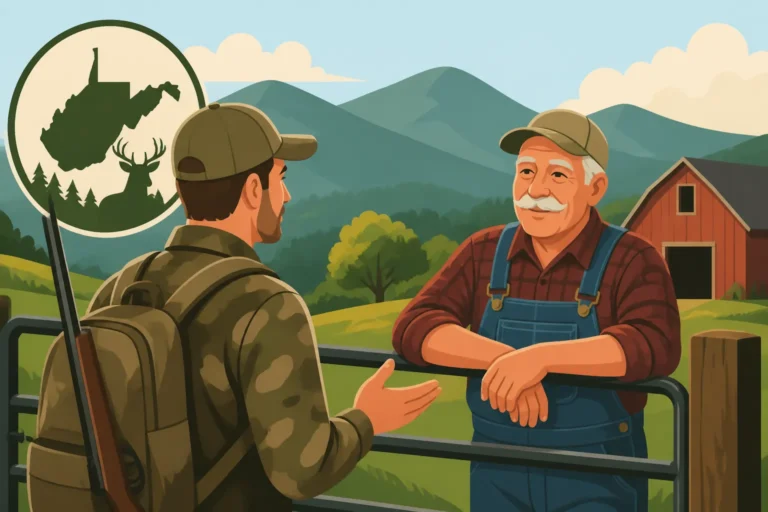
The first step in securing private land access is remembering that you are asking for a privilege, not a right. Landowners, especially farmers, have legitimate concerns about strangers on their property: safety, potential damage, liability, and simply maintaining their privacy. Your approach needs to be respectful, courteous, and professional. Dress neatly, introduce yourself clearly, and state your intentions upfront. Don't show up in camouflage demanding access a week before opening day. A better approach is to visit well before the season, perhaps in late summer or early fall, when farmers aren't as busy and can talk without feeling rushed.
Offer to help in some way – mend a fence, help with chores, even offer to share your harvest. Building a relationship takes time and trust. Many landowners are simply looking for a trustworthy individual who will respect their land and their rules. Be prepared for "no," and accept it graciously. Even if you get a "no" today, a good impression might open a door for you or a friend in the future. Always inquire about their specific concerns, and assure them you will address them. For example, some might be worried about Chronic Wasting Disease (CWD) and want assurances that you'll follow proper protocols if you harvest a deer. It's also vital to understand Do You Need Written Permission in West Virginia?, as clarity on legal requirements can put a landowner's mind at ease.
Identifying Potential Private Land Opportunities
Near Martinsburg, where large tracts of public land are less common, identifying smaller, overlooked private land opportunities is key. Don't just focus on vast timberlands; think about those fragmented woodlots, brushy creek bottoms, power line cuts, or neglected corners of farmland that might hold deer or turkeys. These areas often aren't actively hunted by the landowner and can be incredibly productive. Aerial maps, especially those found on apps like onX Hunt, are your best friend here. You can literally scroll through the landscape, identify parcels of woods surrounded by fields or residential areas, and then use the app's landowner information feature to find out who owns the property.
Once you have a name, you can often find contact information through public records or by asking around at local businesses, feed stores, or co-ops. Local knowledge is invaluable, so strike up conversations with folks who have lived in the area for a long time. They might know who owns what, or even suggest someone who has had trouble with deer depredation and might welcome a hunter. Targeting these smaller, less obvious spots can be incredibly rewarding for Hunting Small Private Tracts in West Virginia. It’s a long game, but persistence and a genuine, polite approach often pay off, especially when Knocking on Doors in Eastern Panhandle Farm Country.
Overcoming Specific Challenges in the Martinsburg Area
Hunting near Martinsburg and throughout the Eastern Panhandle comes with its own set of regional challenges that hunters must be prepared to address. These aren't just about finding access, but also about understanding wildlife health and how local agriculture impacts game behavior.
Dealing with Chronic Wasting Disease (CWD) Zones
A significant and serious consideration for hunters in the Martinsburg area is the presence of Chronic Wasting Disease (CWD). The Eastern Panhandle, particularly counties like Berkeley, Morgan, Hampshire, and Mineral, falls within West Virginia's CWD containment area. This means specific regulations are in place to monitor and prevent the spread of this fatal neurological disease in deer. These rules are non-negotiable and apply to all hunters.
Hunters harvesting deer within a CWD-positive county are subject to strict carcass movement restrictions. You often cannot transport certain parts of a deer carcass (like the brain, spinal cord, or certain bones) out of the containment area. Mandatory CWD testing may also be required for harvested deer, or at least highly encouraged through voluntary sampling stations, depending on the current regulations. It's absolutely crucial to stay informed about these rules, as they can change. Before you head afield, visit the WVDNR website to understand West Virginia's Chronic Wasting Disease Counties and specific requirements for Mandatory Testing Inside the CWD Containment Area. Ignoring these regulations not only puts the state's deer herd at risk but also puts you at risk of fines and penalties. Hunters must be prepared to field dress their deer according to CWD guidelines and properly dispose of high-risk tissues.
Balancing Agricultural Influences with Hunting Tactics
The Eastern Panhandle is rich with agriculture, which is a double-edged sword for hunters. On one hand, the abundance of corn, soybeans, alfalfa, and other crops provides an incredible food source that allows deer populations to thrive and grow large. Deer will often pattern their movements around these fields, feeding heavily, especially during the late evening and early morning hours. This predictable behavior can make them easier to locate.
However, hunting agricultural landscapes also presents challenges. Deer often bed in thick cover adjacent to these fields, making them nearly unapproachable during daylight hours once they leave the feed. Standing crops, particularly corn, can provide an immense amount of cover, swallowing deer whole and making them virtually invisible. Your hunting tactics need to adapt. Instead of hunting directly in the fields, focus on the transition zones: the edges where the field meets the woods, pinch points between two fields, or thickets and draws that act as travel corridors from bedding to feeding. Understanding prevailing winds and thermals is paramount, especially when deer are moving from cover to feed or vice-versa. During the rut, bucks will often cruise these field edges looking for does. Learning to read deer movement in agricultural settings, like Reading a Ridge for Eastern Panhandle Deer or strategically Hunting a Standing Soybean Field, is key to consistent success in this part of the state.
Essential Tools and Mindset for Martinsburg Hunters
Success in hunting, especially in a dynamic and often challenging environment like the Martinsburg area, hinges not just on knowledge of game and land, but also on having the right tools and maintaining an adaptable mindset. Modern technology has revolutionized how hunters approach scouting and navigation, making it easier than ever to locate game and secure access.
Mapping and Scouting Technology
In today's hunting world, digital mapping applications are no longer a luxury; they are a necessity, especially when trying to decipher the complex patchwork of public and private lands around Martinsburg. onX Hunt is perhaps the most robust and widely used tool for this purpose. It offers incredibly detailed property line information, identifying land ownership at a glance. Imagine knowing definitively whether that promising woodlot is public ground, or who to contact if it's private. The app also features topographic maps, satellite imagery, and various layers that can show everything from historical wildfires to public land boundaries, allowing you to scout from your couch before ever stepping foot in the woods. This is indispensable for understanding where you can legally hunt and identifying potential private landowners to approach.
Another valuable resource is GoHunt, which can provide critical information on regulations, season dates, and even public land drawing opportunities in different states, though its primary focus might extend beyond just West Virginia. Still, it’s a good source for broader hunting intelligence. Don't forget the official WVDNR website and their mobile app, which often provides up-to-date information on CWD zones, specific WMA rules, and harvest reporting. Combining these digital tools with traditional map-reading skills and on-the-ground reconnaissance will give you a significant edge. Using these tools for Scouting With the WVDNR App and for Reading Aerial Photos for Eastern Panhandle Deer can save you countless hours of unproductive walking.
The Importance of Persistence and Adaptation
Hunting, particularly in areas with significant human presence, is rarely easy. It requires a significant amount of persistence. You might knock on ten doors and get ten "no's" before finding a welcoming landowner. You might hike deep into a public WMA only to find little sign. The key is not to get discouraged. Every "no" or unproductive scout is a learning experience, narrowing down what doesn't work and bringing you closer to what does.
Adaptation is equally important. If the deer aren't in the hardwoods, check the creek bottom. If the public land is too pressured, try a different access point or focus on mid-week hunts. If early season tactics aren't working, shift to rut-focused strategies. The game animals in the Martinsburg area are smart and heavily influenced by human activity and agricultural cycles, so your approach must be flexible. This could mean switching from a stand hunt to still-hunting, adjusting your call sequences, or even targeting different species. Building a network of local hunting friends can also be invaluable, as shared experiences and insights can often accelerate your learning curve. Ultimately, ethical conduct, respect for landowners and wildlife, and an unwavering commitment to the pursuit will be your greatest assets in finding success as a hunter in the Martinsburg region.
| Access Type | Pros | Cons | Key Tactics | Essential Tools |
|---|---|---|---|---|
| Public Land | Guaranteed access; diverse terrain; opportunity for solitude (if you walk far). | Often heavily pressured; game can be warier; physical exertion required. | Walk farther than others; scout remote areas; hunt mid-week; understand WMA specific rules. | onX Hunt, WVDNR app, topo maps, comfortable boots, reliable backpack. |
| Private Land | Less pressure; potentially higher quality game; more control over conditions; often easier access. | Difficult to obtain permission; requires relationship building; liability concerns for landowner. | Be respectful and professional; offer assistance; scout for overlooked pockets; build trust over time. | onX Hunt (for landowner info), clean attire, polite demeanor, clear communication. |
Disclaimer
This article is for general informational purposes only and does not constitute professional advice. Laws, prices and regulations vary by location and change over time. Consult a qualified professional for guidance on your specific situation.