What Collared Deer Research Revealed in Hampshire County
It's incredibly frustrating, isn't it? You spend countless hours scouting, hanging stands, and trying to predict where deer will be, only to feel like you're always a step behind. Especially with concerns like Chronic Wasting Disease (CWD) looming, understanding how deer move and interact with their environment, particularly in affected zones like Hampshire County, becomes paramount for West Virginia hunters. This comprehensive guide will delve into what collared deer research has unveiled in Hampshire County, offering crucial insights into deer behavior and how these revelations can sharpen your hunting strategies.
The CWD Landscape in West Virginia's Eastern Panhandle
The discovery of Chronic Wasting Disease in West Virginia, specifically in Hampshire County, sent ripples of concern through the hunting community. It’s a silent, persistent threat that changes how we think about deer populations, health, and management. For years, hunters in the Eastern Panhandle, including counties like Hampshire, Grant, and Mineral, have grappled with the implications of CWD. It's not just about the disease itself, but how it impacts everything from herd dynamics to hunting regulations and even our personal venison consumption.
Before collared deer research, much of what we knew about CWD spread and its impact on local deer populations was based on harvest data and theoretical models. This often left hunters feeling somewhat in the dark, wondering about the real-time movements and behaviors of the deer in these critical areas. The desire to understand the disease's progression, the health of the herd, and ultimately, how to hunt effectively and responsibly in a CWD-positive area, made more precise data indispensable. If you're looking to understand the broader impact, delve into West Virginia's Chronic Wasting Disease Counties.
Hampshire County, in particular, became a focal point because it was one of the first areas where CWD was detected in the state. This made it a crucial natural laboratory for wildlife biologists to study the disease's ecology and the movement patterns of the deer living within the CWD containment area. Hunters here often express frustration over the changing landscape of deer management and the need for reliable information to guide their efforts. Understanding the initial spread of the disease can be found by reading How CWD Spread From Hampshire County.
The Science of Collared Deer Research: Unlocking Deer Secrets
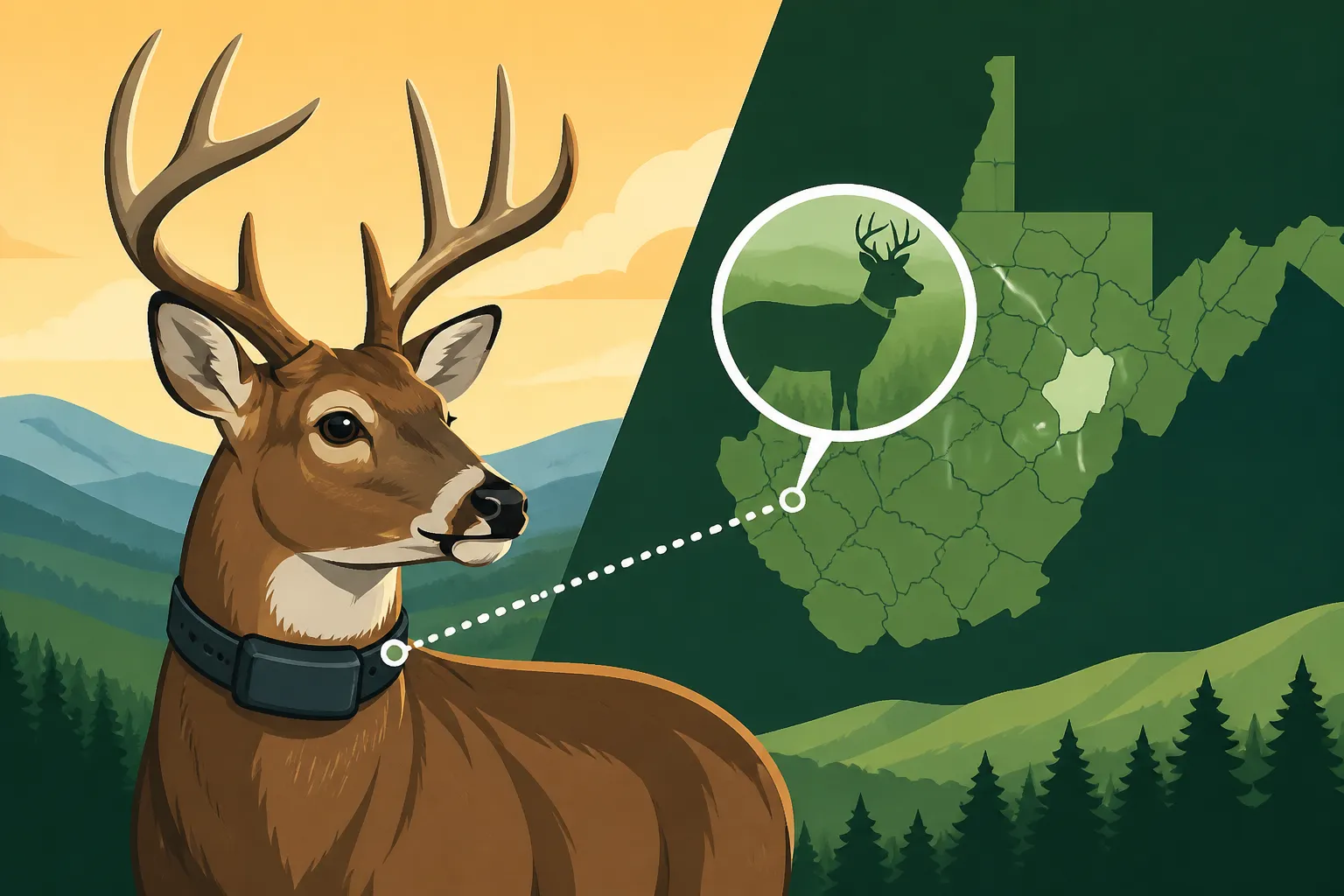
To truly grasp the intricate lives of West Virginia deer, especially within areas like Hampshire County, wildlife agencies embarked on collared deer research. This isn't just about putting a pretty necklace on a deer; it's a sophisticated scientific endeavor designed to gather real-time, granular data about their movements, habitat use, and survival. Imagine having a tiny, dedicated scout reporting back to you every hour, every day, for months or even years. That's essentially what these collars provide.
The process typically begins with the careful and humane capture of deer. This can involve darting, netting, or trapping, always with the utmost care for the animal's well-being. Once captured, each deer is fitted with a specialized GPS collar. These collars are technological marvels, equipped with tiny computers that record the deer's location at programmed intervals, often every few hours or even more frequently. Some collars can even transmit data directly via satellite or cellular networks, allowing biologists to track movements almost instantaneously. The data collected provides an unprecedented look into the individual deer's life, helping to paint a much clearer picture than general population surveys ever could.
Beyond location data, some collars can also monitor activity levels or even transmit data related to body temperature, offering clues about the deer's health and behavior. This level of detail is invaluable for understanding how deer respond to various factors, from changing food sources to hunting pressure and the presence of diseases like CWD. The technology allows researchers to identify core home ranges, travel corridors, bedding areas, and even how far young deer disperse from their birth territories. Hunters can leverage mapping tools, such as those found on GoHunt, to analyze similar terrain features and predict where deer might move, even without specific collar data.
Unveiling Deer Movement Patterns in Hampshire County
The collared deer research in Hampshire County provided groundbreaking insights into the secret lives of the local deer, revealing patterns that both confirmed some long-held hunter beliefs and shattered others. These findings are crucial for anyone looking to hunt effectively in areas influenced by CWD or simply to better understand deer behavior in challenging Appalachian terrain.
One of the most significant revelations centered around deer dispersal. Young bucks, especially, were found to undertake substantial dispersal movements, often traveling many miles from their birth areas. This wasn't just a casual wander; these were deliberate, often linear movements into new territories. This finding has profound implications for CWD management because it highlights how the disease can potentially spread over larger distances as these young bucks establish new home ranges, possibly in unaffected areas. For hunters, it reinforces the idea that the "neighborhood buck" you're seeing today might have traveled a good distance to get there, suggesting that hunting pressure in one area can influence deer far away.
The research also shed light on home range sizes and how they fluctuate seasonally and by sex. While bucks generally have larger home ranges than does, the collared data showed how these ranges could expand dramatically during the rut, when bucks are actively searching for mates. Conversely, during periods of high hunting pressure or harsh winter weather, deer might constrict their movements to smaller, more secure bedding and feeding areas. This detailed understanding of movement helps hunters plan their strategies, knowing when deer are likely to be on the move across wider areas versus hunkering down in thick cover. Understanding these patterns can greatly assist in Hunting the Rut in Mid-November with greater success.
Movement in relation to hunting pressure was another key finding. Deer, particularly mature bucks, demonstrated an ability to adapt their movements to avoid human disturbance. This might involve shifting their activity to nocturnal hours or utilizing thicker, more remote cover during daylight. The collared data clearly showed how deer would often use difficult-to-access terrain, such as steep hollows or dense laurel thickets, as sanctuaries during hunting season. This isn't just anecdotal observation; the GPS points painted a clear picture of deer "disappearing" into these areas when human presence increased. For hunters using mapping applications like GoHunt, understanding these historical pressure points can help identify overlooked pockets of habitat.
| Deer Characteristic | General Understanding (Pre-Research) | Collared Research Findings (Hampshire Co.) | Implications for Hunters |
|---|---|---|---|
| Young Buck Dispersal | Varies, some travel, some stay close. | Significant, often long-distance movements (several miles common). | CWD spread risk is higher. Focus on new areas away from traditional haunts for incoming bucks. |
| Mature Buck Home Range | Larger, especially during the rut. | Expands considerably during rut, contracts in high pressure/winter. | Target travel corridors and transition zones during the rut. Expect deer to "hole up" in thick cover during pressure. |
| Doe Home Range | Smaller, more localized. | Consistently smaller, focused on specific food/cover. | Predictable movement patterns. Focus on known bedding/feeding areas, especially for late-season antlerless hunting. |
| Response to Pressure | Deer "go nocturnal" or move to cover. | Clear shifts to nocturnal movement and use of remote, thick cover. | Hunt harder-to-reach areas. Consider morning/evening sits on edges of sanctuaries. |
| CWD Impact on Movement | Assumed to reduce movement. | Early CWD stages show normal movement; late stages lead to reduced movement and isolation. | Healthy-looking deer can still be CWD-positive and moving widely. |
| Seasonal Habitat Use | Follows food sources (acorns, browse). | Confirmed strong correlation with mast crops and winter browse availability. | Scout for current food sources. Deer will follow the best nutrition. |
Practical Takeaways for West Virginia Hunters
Understanding the detailed movements of collared deer in Hampshire County isn't just for biologists; it's invaluable information that can profoundly influence how you plan and execute your hunts. These revelations offer concrete strategies to adapt to the realities of hunting in West Virginia, particularly in CWD-affected zones.
First, the confirmed extensive dispersal of young bucks means you shouldn't get too fixated on deer that grew up on "your property" or "your public land spot." The buck you're pursuing might have originated miles away. This insight should encourage hunters to broaden their scouting efforts, looking for sign not just in familiar haunts but also in areas that might serve as destination points for dispersing deer. Think about areas that offer good cover and food a few miles from known bedding areas, especially during the early season and into the pre-rut. Tools like GoHunt's mapping capabilities can help you visualize these larger dispersal corridors and potential new territories.
Second, the clear evidence of deer seeking refuge in dense cover and remote terrain under hunting pressure is a powerful reminder. If you're consistently seeing little activity in easily accessible areas, it's highly likely the deer have moved into thicker, more challenging habitat. This means embracing the grind of hunting steep Allegheny ridges or plunging into dense rhododendron and laurel thickets where most hunters won't venture. It also suggests that still-hunting or carefully planned deer drives in these challenging areas could be more productive than simply sitting a stand on a field edge. For tips on navigating tough terrain, check out Hunting Steep Allegheny Ridges.
Furthermore, the data on seasonal movement underscores the importance of staying current with food sources. Whether it’s early season acorns, late-season browse, or planted food plots on private land, deer movements are intrinsically tied to available nutrition. The collared deer research reinforces that you need to be scouting actively throughout the seasons, adjusting your stand locations or hunting areas based on what the deer are actually eating. A quick read on Late-Season Food Sources for West Virginia Whitetails can help you stay current.
Finally, while the research provides invaluable insights, remember that every deer is an individual, and local conditions always play a role. Use this scientific data as a framework, but always couple it with your boots-on-the-ground scouting. Pay attention to fresh sign, monitor trail cameras, and learn to read the specific nuances of your hunting spot. The more information you have, whether it's from collared deer studies or your own observations, the better prepared you'll be. Embrace the knowledge that tools like GoHunt provide, allowing you to mark observations and analyze terrain in relation to these broader movement patterns.
Disclaimer
This article is for general informational purposes only and does not constitute professional advice. Laws, prices and regulations vary by location and change over time. Consult a qualified professional for guidance on your specific situation.