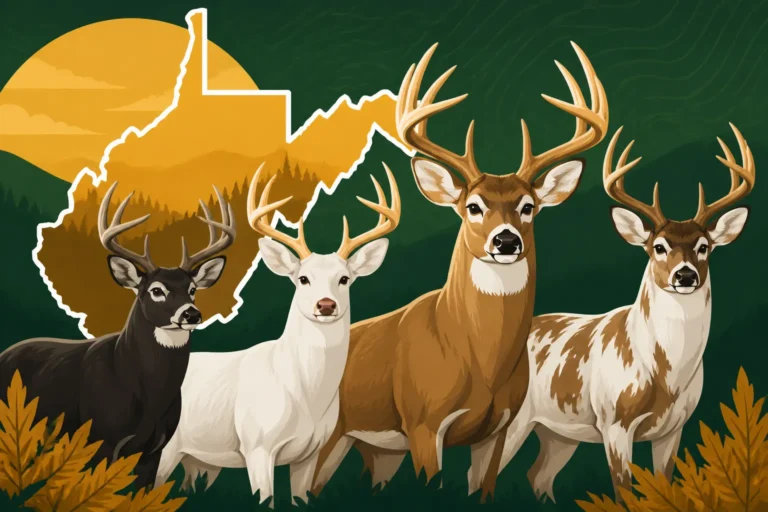
Which West Virginia County Kills the Most Deer
Every West Virginia deer hunter eventually asks the age-old question: "Where's the best place to hunt?" But "best" can mean a lot of things. For many, it boils down to sheer opportunity – which county consistently sees the highest deer harvests, giving you the best statistical chance of filling your tag? It can be a real frustration trying to sift through all the rumors and local chatter to get to the hard facts. This comprehensive guide will cut through the noise, breaking down the factors that lead to high deer harvests and identifying the counties that regularly top the charts in West Virginia.
Understanding West Virginia's Deer Harvest Data
Before we dive into specific county names, it's really important to understand what "highest deer kill" actually means in the grand scheme of West Virginia hunting. It's not just a simple number; it's a reflection of many interwoven factors, and if you understand those, you can make smarter decisions about where to focus your efforts. Many hunters just look at the raw numbers, but there's a lot more beneath the surface.
Raw Numbers Versus Hunter Effort
When you see a West Virginia county with a sky-high deer harvest number, your first thought might be, "Wow, that place must be crawling with deer!" And while that can certainly be a contributing factor, it's not always the full picture. A county might have a massive number of deer harvested simply because it has a massive number of hunters. Think of it like a popular fishing hole: more anglers often means more fish caught, even if the fish density isn't exceptionally higher than elsewhere.
Conversely, a county might have an incredibly healthy deer population, but if it has limited access or fewer hunters willing to brave its rugged terrain, its harvest numbers might appear lower than they truly reflect the deer density. It’s a classic case of supply and demand, or in our case, deer density versus hunter density and accessibility. This is why digging deeper than just the top line number is crucial for strategic hunting.
The Importance of WVDNR Reports
The West Virginia Division of Natural Resources (WVDNR) is your best friend when it comes to understanding deer harvest trends. Every year, they compile detailed reports that break down harvests by county, weapon type, and even provide insights into antlered versus antlerless kills. These reports are invaluable and should be a cornerstone of your scouting, whether you're using paper maps or digital tools like GoHunt to layer this information.
These reports allow you to track historical trends, identify consistently strong counties, and even observe shifts in harvest patterns over time. For example, if you see a county's archery harvest numbers steadily climbing but its buck gun season numbers remaining static, it might indicate a shift in hunter preference or increased pressure during early seasons. Learning to interpret these public datasets can give you a significant edge and help you plan your hunts more effectively. This data is far more reliable than word-of-mouth and should be prioritized in your preseason scouting.
The Top Contenders: Counties with Consistently High Deer Kills
Alright, let's get down to brass tacks. You want to know which counties consistently deliver the goods when it comes to deer harvest numbers. While the exact top spot can shuffle a bit year to year, there are several counties that reliably appear in the upper echelons of West Virginia's deer harvest reports. These are the workhorses of deer hunting in the Mountain State, where a combination of factors usually leads to abundant opportunities.
The Usual Suspects
When you look at the WVDNR harvest data over the past several seasons, certain counties repeatedly show up at or near the top of the list for overall deer harvest. These aren't necessarily the counties producing the biggest bucks (though they certainly can), but rather the ones where a high volume of deer are consistently taken by hunters.
Counties in the Eastern Panhandle often feature prominently, such as Hampshire, Hardy, and Grant. These counties typically have a mix of agricultural land and forested areas, providing excellent habitat and food sources. Further west, counties like Preston, Randolph, and Upshur also tend to post high numbers, benefiting from varied terrain and often a solid mix of public and private land opportunities. The more central, rolling counties like Braxton and Nicholas also regularly show up as strong performers. It's a testament to the diverse deer habitat found throughout our state.
Why These Counties Excel
So, what makes these counties such consistent performers? It's usually a combination of robust deer populations, excellent habitat, and often a higher density of hunters than some of our more remote, rugged areas. Many of these top-performing counties are characterized by significant agricultural activity mixed with hardwood forests, which provides deer with both ample forage and cover. This blend of resources is a recipe for thriving deer herds.
For example, the Eastern Panhandle counties often have vast tracts of farmland bordering timber, creating ideal edge habitat that deer absolutely love. This allows deer to browse on crops like corn and soybeans while quickly retreating to dense woods for safety. Similarly, some of the central counties benefit from a checkerboard of active timber harvests, which creates young, regenerating forest growth that offers fantastic browse and cover for deer. These areas essentially become deer magnets, drawing animals in and supporting higher densities. Understanding these regional differences can help you refine your hunting strategy, whether you're looking for Hunting Eastern Panhandle Farmland Deer or prefer the more challenging terrain of the Allegheny ridges.
Let's take a look at a simplified comparison of factors often found in high-harvest counties:
| Factor | Eastern Panhandle (e.g., Hampshire, Hardy) | Central/North Central (e.g., Preston, Randolph) | Southern (e.g., Nicholas, Braxton) |
|---|---|---|---|
| Habitat Diversity | Excellent (Farm/Forest Mix) | Good (Mixed Hardwoods, some Ag) | Good (Mixed Hardwoods, some Ag) |
| Food Sources | Abundant (Crops, Mast) | Good (Mast, browse, limited Ag) | Good (Mast, browse, limited Ag) |
| Hunter Pressure | Moderate to High | Moderate | Moderate |
| Land Access | Mix of Private/Public | Mix of Private/Public | Mix of Private/Public |
| Deer Density | High | High | High |
| Trophy Potential | Excellent | Good | Good |
It's clear that areas with diverse food sources and cover tend to hold more deer, and if hunter access is also good, then harvest numbers will naturally climb.
Beyond Raw Numbers: What Else to Consider for Your Hunt
While knowing which West Virginia county kills the most deer is a great starting point, it shouldn't be your only consideration when planning your hunt. There's a lot more to a successful and satisfying hunting experience than just chasing the highest aggregate numbers. Sometimes, looking beyond the statistics can lead to a more rewarding hunt and even a bigger deer. After all, not every hunter is looking for the same thing when they hit the woods.
Public Versus Private Land Access
A significant portion of deer harvested in West Virginia, especially in those top-performing counties, often comes from private land. Farmers, landowners, and hunting clubs manage these properties, and they might employ specific deer management strategies that contribute to robust populations and high harvest rates. If you have access to private land in one of these high-harvest counties, you're certainly at an advantage.
However, if you're like many of us and rely primarily on public land, then a high county harvest number might not directly translate to easy hunting for you. Public lands often experience significantly more hunting pressure, especially in easily accessible areas. You'll need to be willing to put in the legwork to find those pockets of deer that others overlook. Scouting with tools like GoHunt that layer public/private land ownership can be extremely helpful here, allowing you to identify those less-pressured corners or understand the flow of deer moving between different land types. Remember, Hunting Pressure on West Virginia Public Land is a very real factor, and you’ll need tactics to counter it.
Trophy Potential Versus Meat Hunting
Another crucial distinction to make is between harvesting any deer and harvesting a trophy buck. The counties that kill the most deer overall aren't always the counties that produce the most Boone and Crockett contenders. While a healthy deer population generally means better odds for all deer, trophy potential often comes down to genetics, nutrition, and, most importantly, age structure within the herd.
Counties with significant agricultural contributions, like those in the Eastern Panhandle, often have the nutritional base to grow bigger-bodied and bigger-antlered deer. However, if hunter pressure is also high and bucks are harvested at younger ages, the number of mature bucks might be lower, even if the overall harvest is high. If your primary goal is to fill your freezer, then a high-harvest county is an excellent choice. But if you're chasing that elusive wall-hanger, you might want to look at counties known for a better buck age structure, even if their overall harvest numbers aren't chart-topping. For more on this, check out which are the Best West Virginia Counties for Big Bucks.
Factors Influencing Deer Harvest Success
Understanding the underlying mechanisms that drive deer populations and hunter success is vital for any hunter in West Virginia. It's not just about pointing at a map and saying "there," but understanding why that "there" is successful. These elements are always in play, constantly shifting, and a truly adaptable hunter keeps them in mind.
Habitat and Food Sources
The availability and quality of habitat and food sources are arguably the most critical factors influencing deer populations and, consequently, harvest numbers. Deer are grazers and browsers, and they need a consistent supply of nutritious forage to thrive, grow, and reproduce. In West Virginia, this often means a mix of mast-producing hardwoods (oaks, hickories), regenerating timber cuts that provide abundant browse, and agricultural fields.
Counties with diverse ecosystems, offering a buffet of food options throughout the year, tend to support higher deer densities. For instance, a county rich in oak forests provides acorns, a high-energy food source during the fall and early winter. If that same county also has fields of corn or soybeans, or recent clear-cuts growing up in forbs and saplings, deer have a wide range of options, making them less susceptible to single-crop failures. Conversely, a poor mast year can significantly impact deer movement and health, making hunting tougher, so it's always good to be aware if you're Hunting After a Poor Acorn Year.
Hunter Access and Pressure
It’s an undeniable truth: where hunters can easily go, hunters will go. Access points, road systems, and the distribution of public and private lands all play a huge role in where deer are killed. A county with extensive public land, like parts of the Monongahela National Forest, might have incredible deer habitat, but the sheer size and ruggedness can limit hunter access to certain areas, spreading out pressure. Conversely, a county with a lot of private land might see high harvests due to intensive management and less widespread pressure, but only for those with permission to hunt it.
The density of hunters also impacts deer behavior. In high-pressure areas, deer quickly become nocturnal and gravitate towards the thickest, nastiest cover they can find. This doesn't mean those deer are unkillable, but it does mean hunters need to adapt their tactics, perhaps focusing on bedding areas or subtle travel corridors rather than open feeding zones. Scouting with mapping applications or even just good old-fashioned topographical maps can help you find those less-pressured pockets, even in a crowded public area. The more remote you're willing to go, the less competition you'll generally find.
Management Practices and Regulations
The West Virginia Division of Natural Resources plays a crucial role in managing our deer herd, and their decisions directly influence harvest numbers. Regulations such as bag limits, season lengths, antler point restrictions (or lack thereof), and the issuance of antlerless permits are all designed to manage herd health and population levels. Counties with more liberal antlerless seasons or higher antlerless bag limits will naturally see higher overall deer harvests, as hunters are able to take more does.
Understanding the West Virginia Deer Season Structure Explained is key to maximizing your opportunities. For example, some counties have specific early antlerless seasons, while others are archery-only in certain areas. These nuances allow for targeted management, aiming to balance herd numbers with habitat capacity and recreational opportunity. These regulations are not arbitrary; they are based on population data and biological considerations, ensuring a sustainable deer population for future generations of West Virginia hunters. Being informed about these rules allows you to capitalize on all legal opportunities in your chosen hunting grounds.
Hunting the West Virginia Rut
No matter which county you choose, understanding deer behavior during the breeding season, often called the rut, is paramount for success. West Virginia whitetails become incredibly active during this time, moving more during daylight hours in search of does. This increased activity often leads to a spike in harvest numbers across the state, and knowing when to be in the woods can make all the difference.
The exact timing of the rut can vary slightly year to year and by region within West Virginia, but generally, the peak of the primary rut tends to fall in mid-November. This aligns perfectly with the opening of our buck gun season, which is why that period is often when we see the highest deer harvest numbers recorded. Bucks are less cautious, focusing intently on breeding, making them more vulnerable to hunters. This is when rattling, grunting, and covering ground become incredibly effective strategies. Getting out during Hunting the Rut in Mid-November is often your best bet for encountering active deer.
However, the rut isn't a single event. There are pre-rut periods where bucks are staging and looking for does, and post-rut periods where they are recovering and still seeking out any unbred does. Being in the woods during these windows, even if they aren't the absolute peak, can still be highly productive. The key is to understand how deer behavior changes throughout this extended period and adapt your tactics accordingly. Utilizing trail camera data and scouting for fresh sign like rubs and scrapes can help you pinpoint the precise timing in your specific hunting area, regardless of whether you're in a top-harvest county or a quieter one.
Maximizing Your Chances in Any County
Even if you can't hunt in one of the traditionally high-harvest counties, or if you prefer hunting less-pressured areas, there are still plenty of ways to increase your chances of success. It really comes down to knowledge, preparation, and perseverance. Don't let the big numbers intimidate you; individual effort can still yield fantastic results.
Deep Scouting and Understanding Deer Movement
The most impactful thing any hunter can do is thoroughly scout their chosen area. This means more than just a quick walk-through. It involves understanding terrain, identifying food sources, locating bedding areas, and recognizing how deer move between them. Tools like topographical maps, aerial photos, and even satellite imagery can reveal subtle features that act as funnels, pinch points, or preferred travel corridors. For instance, knowing how to read Reading Aerial Photos for Eastern Panhandle Deer can give you an edge, even if you’re not physically in the Panhandle.
Pay attention to natural features like ridge lines, creek bottoms, and changes in timber type. Deer are creatures of habit and efficiency, and they will almost always take the path of least resistance or the one that offers the most cover. Even in a county with lower overall harvest numbers, finding those "hot spots" where deer congregate or travel frequently will dramatically improve your odds. This also includes understanding how Wind and Thermals on a Steep Ridge impact deer movement, especially in West Virginia's rugged landscape.
Adapting to Local Conditions
West Virginia's diverse landscape means that hunting tactics that work well in one region might be completely ineffective in another. The rolling farmland and woodlots of the Eastern Panhandle require different approaches than the steep, dense timber of the Potomac Highlands or the rugged terrain of the Southern Coalfields.
For example, still-hunting through thick laurel patches might be productive in some mountain areas, while sitting over an agricultural field edge might be the ticket in others. Even within a single county, topography and habitat can vary dramatically. Being able to read the land and adapt your strategy, whether it's setting up a ground blind, still-hunting, or employing deer drives, is the mark of a truly effective hunter. Don't be afraid to experiment and adjust your plans based on what the deer are telling you in your specific spot. This flexibility is what separates consistent hunters from those who struggle.
Disclaimer
This article is for general informational purposes only and does not constitute professional advice. Laws, prices and regulations vary by location and change over time. Consult a qualified professional for guidance on your specific situation.