West Virginia Duck Harvest Numbers
If you're like many West Virginia duck hunters, you've probably wondered about the bigger picture of our duck harvests – how many birds are actually taken each season, what species are most common in the bag, and what trends might be emerging. It can be frustrating trying to piece together this information, especially when you're out there braving the cold and hoping for a good day in the blind or along the river. This guide aims to pull back the curtain on West Virginia's duck harvest numbers, helping you understand how they're tracked, what influences them, and what it all means for our beloved waterfowl.
Understanding West Virginia's Duck Harvest Landscape
West Virginia might not always be the first state that comes to mind when you think of duck hunting, but for those of us who live here, our rivers, impoundments, and floodplains offer unique and challenging opportunities. Understanding the harvest landscape means appreciating both our geographical position and the specific birds that call our state home, even if temporarily.
The Atlantic Flyway's Influence
Our state is strategically situated within the Atlantic Flyway, a major migratory route for countless waterfowl species traveling between their northern breeding grounds and southern wintering areas. This means that a significant portion of the ducks we harvest here aren't necessarily birds that hatched in West Virginia. Instead, they're often transient visitors, pushed south by colder weather and drawn by available food and resting spots along our waterways. This dynamic connection to a larger flyway system means that conditions far beyond our borders can dramatically impact the number of ducks that pass through, and ultimately, the number that end up in hunters' bags. Knowing this helps us understand why West Virginia Waterfowl on the Atlantic Flyway is such a crucial topic.
The nature of the Atlantic Flyway also means that our duck harvest numbers are intertwined with the success of breeding seasons in places like Canada and the northern U.S. states. A bumper hatch up north, combined with favorable migration conditions, can lead to a noticeable increase in duck populations moving through our area. Conversely, poor breeding success or altered migration patterns due to widespread drought or unseasonably warm weather can result in fewer birds making their way to West Virginia, directly impacting local harvest totals. It's a complex, interconnected system that keeps us always looking north, wondering what the birds will bring.
Key Species in the Harvest
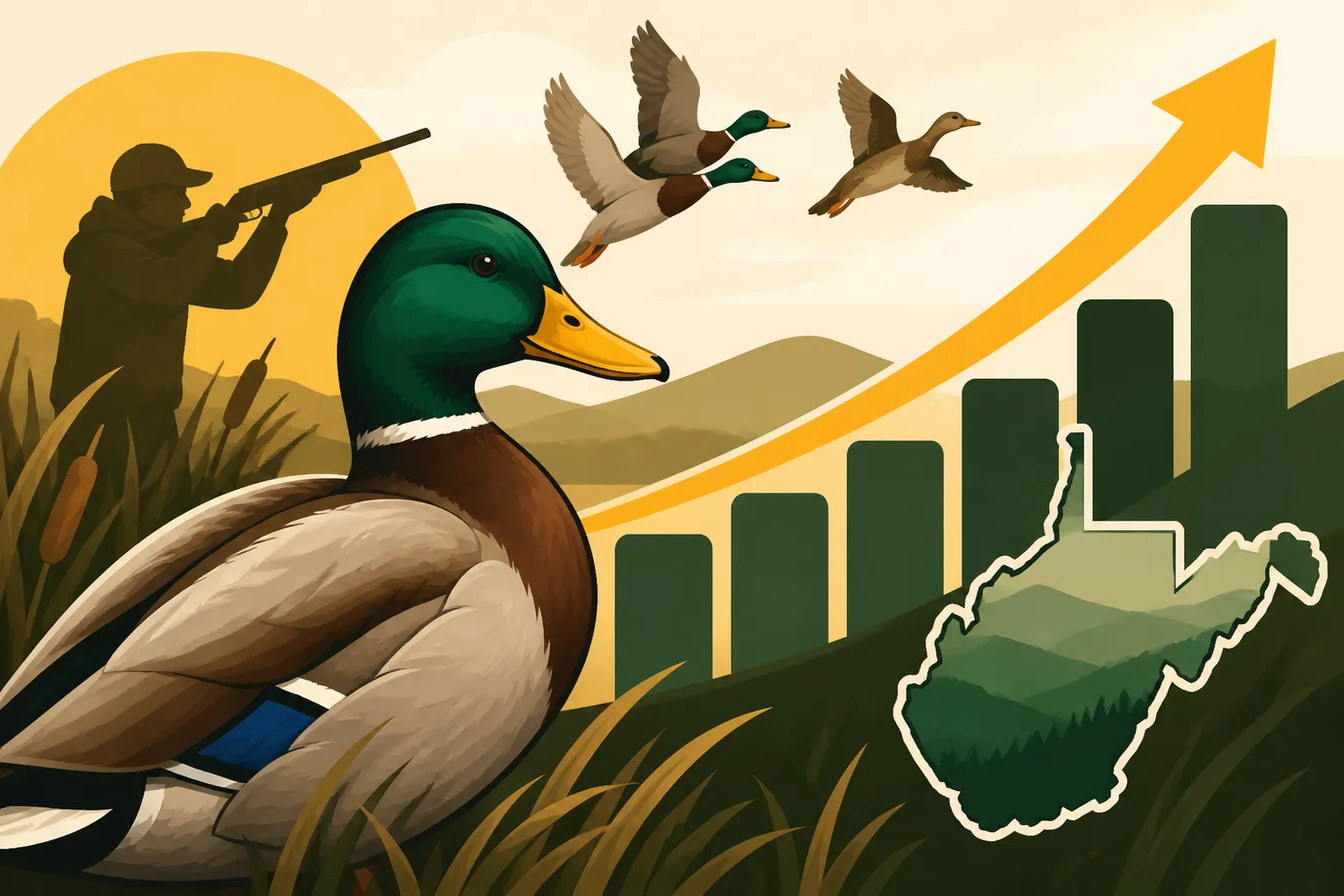
While a variety of duck species pass through West Virginia, certain ones consistently dominate the annual harvest. Mallards are almost always at the top of the list, being incredibly adaptable and found in diverse habitats from large rivers to small farm ponds. Wood ducks are another perennial favorite, particularly for hunters in wooded river bottoms and flooded timber, thanks to their stunning plumage and delicious meat. These species, along with others like green-winged teal, black ducks, and gadwalls, make up the bulk of what West Virginia hunters pursue.
The prevalence of these species in the harvest isn't just about their overall population numbers; it's also about their behavior and habitat preferences, which align well with the types of waterfowl hunting opportunities available in West Virginia. For example, the secretive nature of a wood duck makes hunting them in a quiet slough a different experience than pass-shooting mallards over a large open river. Understanding which ducks are most commonly harvested helps hunters focus their efforts, choose appropriate decoy spreads, and learn the calls that will be most effective. If you're looking for more information on their presence, check out West Virginia Mallard and Wood Duck Numbers.
Factors Affecting Annual Duck Harvests
The number of ducks harvested in West Virginia each year isn't a static figure; it's a dynamic number influenced by a multitude of environmental and human factors. It's like a complex recipe where a slight change in ingredients can alter the final dish completely. For a duck hunter, understanding these factors can help explain why some seasons are bountiful and others leave you wondering where all the birds went.
Habitat Conditions and Breeding Success
The journey of a duck begins long before it reaches West Virginia, primarily on its northern breeding grounds. The success of a breeding season hinges heavily on habitat conditions – specifically, the availability of wetlands and water across the prairie pothole region and boreal forests. Years with ample rainfall and good wetland conditions typically lead to higher nesting success and more ducklings surviving to fledge. Conversely, drought conditions can severely limit breeding opportunities, resulting in fewer young ducks entering the flyway.
Even within West Virginia, local habitat conditions play a role, albeit a smaller one for most migrating species. Healthy river systems, well-managed impoundments, and available food sources in flooded agricultural fields can hold migrating birds longer, increasing hunting opportunities. A great resource for understanding where to find these crucial areas can often be found by scouting with tools like GoHunt, which helps visualize terrain and potential water sources. The more favorable the local conditions, the more attractive our state becomes to weary travelers, contributing positively to the overall harvest.
Weather Patterns and Migration
Weather is arguably one of the most critical drivers of duck migration and, by extension, our state's harvest numbers. Cold fronts pushing south from Canada and the northern states are what truly trigger large movements of ducks down the Atlantic Flyway. Without these strong weather patterns, birds might linger further north, delaying their arrival in West Virginia or simply passing over if conditions remain mild. This is why conversations around the duck blind often revolve around looking at long-range forecasts, hoping for that arctic blast.
Conversely, unseasonably warm weather, especially during the early parts of the season, can mean fewer ducks pushing through. Local hunters have seen this firsthand, where early season hunts are slow because birds are content to stay in areas further north. The timing and intensity of these weather events directly influence West Virginia Waterfowl Migration Timing and dictate when the bulk of the duck population will be available to hunters, creating a direct impact on harvest totals.
Hunter Effort and Access
While environmental factors are paramount, the human element also plays a significant role in annual harvest figures. The number of active duck hunters in West Virginia, combined with their effort and access to huntable land, directly affects how many birds are taken. If more hunters are out in the field, or if existing hunters put in more days, the potential for a higher overall harvest increases. Similarly, ease of access to prime waterfowl habitat, whether it's public land or private property with permission, influences the total hunter effort.
Accessing quality hunting ground can be a challenge in a state like West Virginia, where steep terrain can limit options for waterfowl outside of major river systems and larger impoundments. That's why tools such as GoHunt's mapping features are invaluable for identifying suitable waterways, understanding public land boundaries, and even pinpointing potential private land opportunities where permission might be obtained. A hunter's willingness to put in the time scouting, setting up decoys, and enduring the elements directly correlates with the overall harvest success for the state.
Interpreting Harvest Data and Trends
When we talk about West Virginia duck harvest numbers, it's not just about a single digit. It's about understanding the context, the methodology behind how these numbers are gathered, and what long-term patterns they reveal. This information helps hunters, wildlife managers, and conservationists alike make informed decisions.
The Role of Hunter Surveys
Unlike big game where every harvested animal must be checked, duck harvest numbers are primarily estimated through comprehensive hunter surveys conducted by federal and state agencies. The U.S. Fish and Wildlife Service, in cooperation with state wildlife agencies, conducts annual surveys to gather data on waterfowl hunter activity and success. Hunters who purchase a federal duck stamp and get their West Virginia HIP Certification for Bird Hunters are often randomly selected to participate in these surveys, reporting their hunting days, species harvested, and other relevant information.
This survey data is then extrapolated to provide state-level and flyway-level harvest estimates. It's an incredibly important system, relying on the honesty and participation of hunters to provide accurate data. Without this input, wildlife managers would have a much harder time assessing population health, setting seasons, and allocating conservation resources. So, if you ever get one of those survey requests, know that your participation is directly contributing to the future of waterfowl hunting.
Long-Term Trends Versus Annual Fluctuations
It's crucial to differentiate between short-term, year-to-year fluctuations in harvest numbers and broader, long-term trends. Annual numbers can swing wildly based on a single variable, like a mild winter that keeps ducks north or an exceptionally successful breeding season. These ups and downs are normal and expected in waterfowl management. However, when we look at data spanning decades, we can identify more significant patterns – perhaps a gradual decline in a particular species, or a steady increase in another.
These long-term trends are what truly inform conservation strategies and season setting. They can highlight issues like habitat loss on breeding grounds, changes in migration patterns due to climate, or the effectiveness of past conservation efforts. For instance, wildlife agencies constantly monitor data to determine West Virginia Duck Season Dates and bag limits, ensuring that hunting remains sustainable while providing ample opportunity. While a single low harvest year might be disheartening, a sustained downward trend across multiple seasons is a much more serious concern, prompting deeper investigation and potentially new management approaches.
Regional Harvest Differences
West Virginia is a state of diverse landscapes, and it's no surprise that duck harvest numbers can vary significantly from one region to another. The vast, wide-open stretches of the Ohio River Valley, for instance, might see different duck concentrations and harvest compositions than the smaller, more secluded streams and beaver ponds tucked away in the Allegheny Highlands. The types of ducks harvested often reflect the available habitat. For example, the Ohio River often draws larger numbers of divers, while the more wooded areas are strong for wood ducks and mallards.
Hunters often find that success is localized. What works for a public hunting area along the Ohio River Valley Bottomland might not be effective in a remote mountain hollow. Understanding these regional nuances is key to consistent success. Detailed mapping applications, like those found on GoHunt, can assist hunters in pinpointing specific water bodies, understanding surrounding terrain, and identifying potential travel corridors for ducks within different regions of West Virginia, helping them tailor their approach to local conditions.
Contributing to Conservation and Future Harvests
As hunters, we are often the first line of conservation. Our connection to the land and the animals we pursue gives us a unique perspective and a responsibility to ensure that healthy populations thrive for generations to come. Contributing to duck conservation and future harvests goes beyond just buying a license and a federal duck stamp; it involves active participation and support.
Reporting Your Harvest Accurately
One of the most direct ways hunters contribute to the management of duck populations is by accurately reporting their harvest when selected for federal or state surveys. This data is the bedrock of scientific wildlife management. Each duck reported, each day spent hunting, contributes to a clearer picture of population dynamics, hunter effort, and species-specific trends. It might seem like a small act, but collectively, accurate reporting by thousands of hunters provides invaluable information that guides decisions on season lengths, bag limits, and conservation funding.
Think of it this way: the more precise the data, the better equipped wildlife biologists are to advocate for and implement effective conservation strategies. If harvest numbers are underestimated due to poor reporting, it could lead to missed opportunities for habitat enhancement or misinformed regulatory adjustments. So, if you're among the hunters chosen for a harvest survey, take the time to fill it out thoroughly – you're playing a direct role in the future of West Virginia's waterfowl hunting.
Habitat Preservation Efforts
Ultimately, the future of duck harvests in West Virginia, and across the flyway, rests on the health and availability of quality habitat. Ducks need places to breed, feed, and rest during their arduous migrations. This means supporting organizations and initiatives that work to preserve, restore, and enhance wetlands and other crucial waterfowl habitats, both locally and across the continent. Every dollar spent on a West Virginia Federal Duck Stamp Requirement goes directly towards acquiring and restoring wetlands, benefiting not only ducks but countless other wildlife species.
Beyond direct financial contributions, local efforts can also make a difference. Participating in habitat workdays, advocating for responsible land use policies, or even managing small wetlands on private property can have a cumulative positive impact. Understanding the broader context of duck populations, including factors like West Virginia Wildlife Disease Monitoring, ensures that our efforts are well-placed. The more we invest in healthy habitats, the more robust our duck populations will be, and the better our chances for continued strong harvests in the Mountain State.
Disclaimer
This article is for general informational purposes only and does not constitute professional advice. Laws, prices and regulations vary by location and change over time. Consult a qualified professional for guidance on your specific situation.