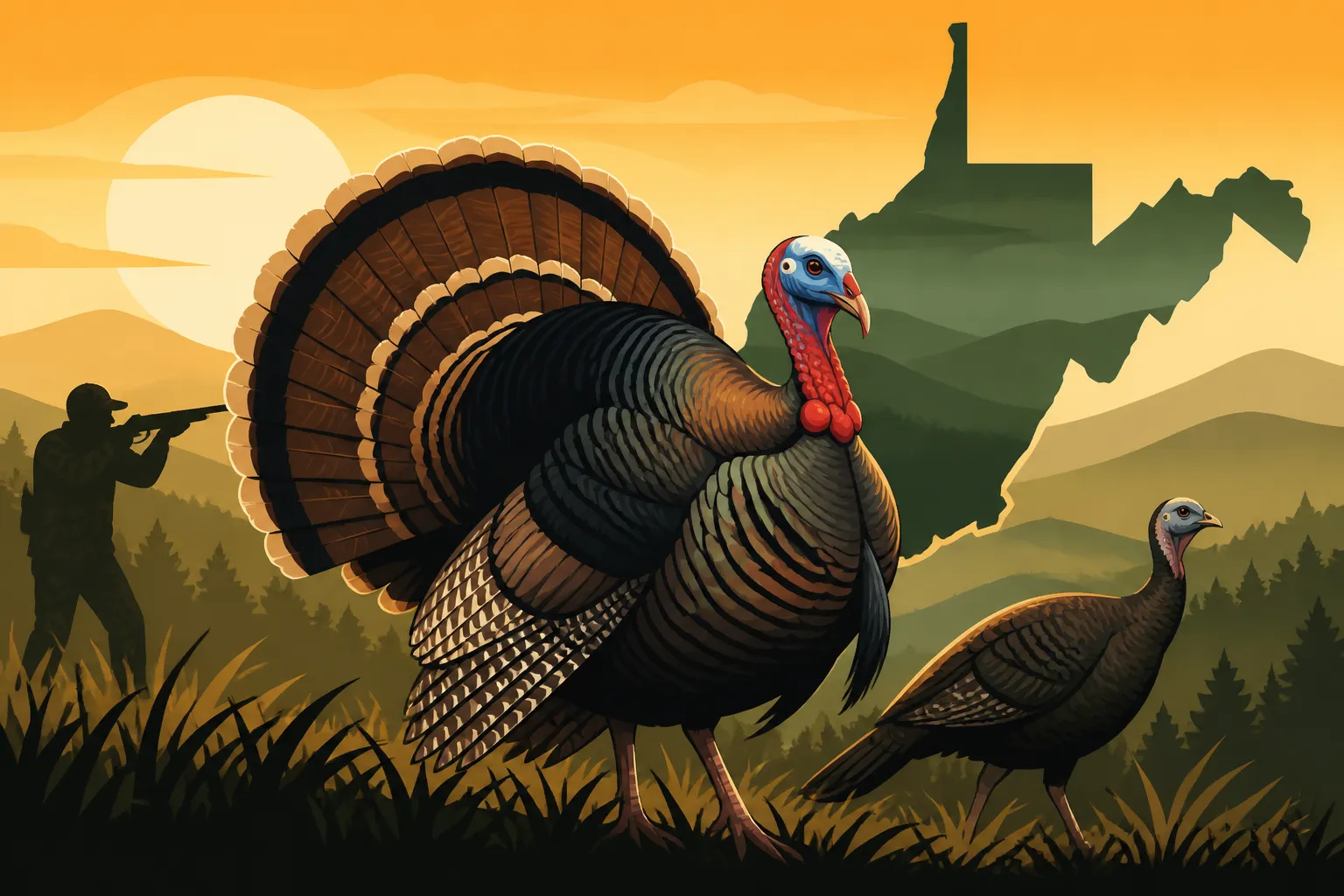
Wild Turkeys in West Virginia
The sound of a thunderous gobble echoing through a mist-shrouded West Virginia hollow at first light is an experience etched into the soul of any turkey hunter. But finding that elusive tom, especially on pressured public land or after a string of silent mornings, can feel like an impossible puzzle. This guide is dedicated to helping you unravel the mysteries of wild turkeys in West Virginia, offering deep insights into their biology, behavior, and the most effective strategies for bringing one home, whether it’s spring or fall.
The Resilient Comeback of West Virginia's Wild Turkeys
It's easy to take for granted the sight and sound of wild turkeys across the Mountain State today, but their presence is a testament to one of the most incredible wildlife restoration success stories in North America. These intelligent birds were once nearly extirpated from West Virginia, a stark reminder of what happens when conservation takes a backseat.
A History of Decline and Restoration Efforts
Rewind a century or so, and the dense, unbroken forests that once covered West Virginia were slowly being chipped away by logging, mining, and agricultural expansion. This habitat destruction, coupled with unregulated hunting practices, pushed the wild turkey population to the brink. By the early 20th century, sightings were rare, limited to the most remote, rugged pockets of the Allegheny Mountains. It was a bleak time for a species that had thrived here for millennia.
Thankfully, the tide began to turn with a concerted effort led by the West Virginia Division of Natural Resources (WVDNR) and dedicated conservation organizations like the National Wild Turkey Federation (NWTF). They embarked on ambitious trap-and-transfer programs. This involved capturing turkeys from healthy, reproducing populations in states like Pennsylvania and carefully relocating them to suitable habitats within West Virginia where local populations had vanished. These birds were then closely monitored, and hunting seasons were carefully managed, sometimes even closed, to allow the new populations to establish and grow. This wasn't a quick fix; it was decades of painstaking work, patience, and a deep understanding of turkey ecology that slowly brought the birds back from the brink. It truly is a conservation triumph that we can all be proud of.
Current Population Trends and Distribution
Today, wild turkeys are thriving in all 55 counties of West Virginia, a testament to those tireless efforts. While population numbers fluctuate based on factors like nesting success, severe winters, and disease, the overall trend has been positive. The WVDNR conducts annual surveys, including brood counts in the summer, to estimate populations and gauge reproductive success, which helps inform season setting. Generally, you'll find healthy turkey populations in areas with a good mix of mature hardwoods, particularly oak and hickory for mast production, intermixed with clearings, fields, and younger forest growth.
Some regions of the state are particularly renowned for their turkey numbers. The Eastern Panhandle, with its mix of agricultural lands and rolling woodlands, often boasts robust populations. Similarly, many areas within the Allegheny Highlands and the Ohio River Valley offer prime turkey habitat. While the dense, deep woods of the Monongahela National Forest are a challenge to hunt, they hold significant turkey numbers too. However, even within these prime regions, success can vary year to year. A harsh, wet spring can reduce poult-to-hen ratios, meaning fewer young birds survive, which impacts the following year's gobbler population. It’s always a good idea to check current WVDNR reports for specific county trends before planning your hunt. These reports often highlight regional differences in turkey numbers, giving you a better idea of where your efforts might be most fruitful.
Understanding West Virginia's Turkey Habitat and Behavior
Hunting wild turkeys isn't just about calling; it's about understanding their world. Knowing where they live, what they eat, and how they move is fundamental to consistent success in the woods. West Virginia offers a diverse landscape, and turkeys adapt their behaviors to these varied environments.
Preferred Habitats Across the Mountain State
Wild turkeys are generalists when it comes to habitat, but they thrive in areas that provide a mosaic of different cover types. Mature hardwood forests are absolutely critical, especially those rich in oak, hickory, and beech trees. These provide the vital mast crops – acorns and nuts – that are a primary food source, particularly in the fall and winter months. You'll often find birds actively scratching through the leaf litter in these mature timber stands, especially on south-facing slopes that warm up quickly in the morning sun.
Beyond the big timber, turkeys also rely heavily on areas with open woodlands, clear-cuts, and the edges of agricultural fields. These spots offer insects, seeds, and tender greens, as well as crucial areas for dusting, strutting, and nesting. Younger forest growth and thickets provide excellent escape cover from predators like coyotes and bobcats. In regions like the Eastern Panhandle, turkeys frequently utilize the interface between sprawling corn or soybean fields and adjacent woodlots, providing both food and safety. Along the major river systems, like the Ohio or New River, riparian zones with bottomland hardwoods and brushy edges offer unique habitat that turkeys readily exploit. Understanding these local preferences for turkey habitat can greatly narrow down your scouting efforts, helping you focus on areas where turkeys are most likely to be present throughout the season.
Daily and Seasonal Movement Patterns
A turkey's day begins and ends in a roost tree, typically a large, dominant tree that offers clear flight paths and a good vantage point for security. As the first hints of dawn appear, they'll often gobble from the roost, signaling their presence. After fly-down, their movements are generally dictated by food, water, and breeding activity in the spring. In the morning, they might head to an open field to feed on insects and display, or to a strut zone on a ridge top. Throughout the day, they'll often work their way through the woods, foraging, dusting, and sometimes loafing in shaded areas during warmer hours.
Seasonal changes bring significant shifts in turkey behavior. In spring, the focus is squarely on breeding. Gobblers are looking for hens, constantly strutting and calling, while hens are focused on mating and eventually nesting. Once hens begin incubating eggs, gobblers may still seek out unbred hens, but their activity often becomes more sporadic. Come summer, hens are raising their poults, and flocks of hens and young become common. Fall brings the formation of larger, often mixed-sex flocks, and their movements become more about finding abundant food sources, especially acorns. During this time, they will range much wider than in the spring, covering miles in a single day as they forage. Knowing these patterns helps you anticipate where birds might be and when, tailoring your hunting approach to their current stage of life.
Reading Sign for Success
Successfully hunting wild turkeys in West Virginia hinges on your ability to read the subtle language of the woods. Turkeys leave behind plenty of clues, if you know what to look for. Fresh tracks in soft dirt or mud, especially along logging roads, creek bottoms, or field edges, are a dead giveaway. You'll notice their three distinct toes, often with a clear rear toe mark. Larger, wider tracks usually indicate a gobbler. Droppings are another key indicator: gobbler droppings are typically J-shaped or elongated, while hen droppings are more coiled or blob-like. Fresh droppings under a roost tree confirm recent activity in that area.
Beyond tracks and droppings, look for scratchings in the leaf litter. Turkeys use their powerful legs and feet to rake back leaves in search of nuts, seeds, and insects. These scratchings will appear as distinct V-shaped patterns. Dusting bowls – small depressions in dry, soft soil or sand – are where turkeys roll around to rid themselves of parasites. Finding fresh dusting bowls indicates a consistent presence. And of course, in the spring, look for strut zones: areas, often open and somewhat elevated, where gobblers display for hens. The most obvious sign here will be drag marks from their primary wing feathers and tail feathers in soft dirt. Tools like GoHunt can be invaluable here, allowing you to mark these findings on a map, build a comprehensive scouting report, and identify patterns over time. By combining these visual cues with your knowledge of habitat and movement, you're well on your way to intercepting a West Virginia gobbler.
Spring Turkey Hunting Strategies in West Virginia
Spring turkey hunting is a tradition for many West Virginians, filled with anticipation, the thrill of the chase, and the unforgettable sound of a gobbler answering your call. It's an active, engaging form of hunting that demands patience, good woodsmanship, and a touch of art in your calling.
Locating Gobblers on the Roost
The hunt often begins before the sun even thinks about rising. Many seasoned hunters will be in the woods well before first light, positioning themselves in an area known for turkey activity, or at least one with good visibility and acoustics. The goal is to listen for the first sleepy gobbles from the roost. Turkeys typically choose tall, sturdy trees on ridge lines, near clearings, or along creek bottoms for their nocturnal perch.
Once you hear that initial gobble, it's time for some careful maneuvering. The trick is to get as close as safely and ethically possible without bumping the bird. This might involve a stealthy walk through the pre-dawn darkness, using terrain features to mask your approach. As the light increases, you can use locator calls – owl hoots, crow caws, or even a coyote howl – to try and provoke a shock gobble without giving away your exact position as a hunter. This helps you pinpoint his tree and direction. Once you have a good idea of his location, select a setup spot that offers good concealment, a clear shooting lane in the direction you expect him to come from, and a solid backrest to break up your silhouette. Remember, safety is paramount; never assume a gobble is from a turkey alone, especially when moving in the dark.
Calling Tactics for Pressured Birds
West Virginia's public lands, while abundant, see their fair share of hunting pressure. This means that a gobbler that's heard every cluck and yelp under the sun can become notoriously difficult to call in. It often boils down to subtle, realistic calling. Forget the aggressive, loud calling that might work in less pressured areas. Here, less is often more. Start with soft, realistic tree yelps as the bird is still on the roost, making him think a hen is waking up nearby. Once he flies down, switch to quiet clucks, purrs, and soft yelps, mimicking a hen feeding contentedly. The goal is to make him curious enough to come investigate without spooking him.
Mastering a variety of calls is key. Mouth calls offer hands-free operation and a wide range of sounds, while slate or glass calls provide realistic, rich tones that can carry well. Box calls are simple to use and excellent for long-range communication. Experiment with different calls and volumes, trying to gauge the bird's mood. Sometimes, a "silent" approach, where you set up on a known travel route and barely call, letting the natural movements of the birds dictate the encounter, can be incredibly effective. For more detailed insights on how to bring a gobbler off his perch, check out our guide on Calling a West Virginia Gobbler Off the Roost. Learning when to be aggressive and when to be subtle is a skill that comes with time and experience, but starting with realism and restraint is a solid foundation.
Decoy Usage and Setup
Decoys can be a game-changer in spring turkey hunting, especially for drawing in wary gobblers. The visual appeal of a decoy can often overcome a bird's reluctance to commit to a call alone. There are several types of decoys available, each with its own purpose. A single hen decoy is a safe bet, signaling a receptive female. Adding a jake decoy can be incredibly effective, as it often infuriates a dominant gobbler into charging in to assert his dominance. Full strut gobbler decoys, while very realistic, can sometimes intimidate subordinate gobblers or make them hang up at a distance.
Strategic placement is crucial. Always set your decoy(s) within your effective shooting range, typically 20-30 yards. If using a jake or gobbler decoy, position it so the approaching tom has to face away from your position to confront the decoy, giving you a better shot opportunity as he focuses on the fake. If using a single hen, place it slightly off to your side, so the gobbler approaches with his attention fixed on the decoy, not your blind. Remember that decoys draw attention, so always be aware of other hunters in the area. Safety is paramount, especially on public land where other hunters might mistake your decoy for a live bird. For advanced placement tactics, our article on Decoy Placement for Pressured West Virginia Birds offers excellent tips. Ultimately, decoys should enhance your calling, providing a visual that closes the deal when a gobbler hangs up just out of range.
Fall Turkey Hunting: A Different Challenge
While spring gobbler hunting gets most of the glory, fall turkey hunting in West Virginia offers a unique, equally rewarding experience. It’s less about enticing a lone gobbler with sweet talk and more about strategic woodsmanship and understanding flock dynamics. The season often provides a great opportunity to fill your freezer, and it stretches across various counties with different rules, as detailed in the West Virginia Fall Turkey County Tiers information available from the WVDNR.
Understanding Fall Turkey Flocking Behavior
In the fall, wild turkeys congregate into larger flocks after the breeding season. These flocks are typically composed of hens and their poults from the spring, often combining with other hen families. Sometimes, you'll also find bachelor groups of gobblers that have separated from the hens. These flocks can range from a handful of birds to dozens, moving as a unit across vast swathes of timber, constantly foraging for food. Their behavior is geared towards survival and finding sustenance before winter sets in.
Unlike spring, where a gobbler's desire to breed makes him vulnerable to calling, fall turkeys are more cautious and focused on flock cohesion. They communicate with a range of soft clucks, purrs, and kee-kees, maintaining contact as they feed. Locating these flocks often involves extensive scouting to find active feeding areas, such as oak ridges laden with acorns, or fields offering waste grain. Observing their movements from a distance, perhaps glassing from an overlook with a good set of binoculars, can reveal their travel routes and feeding patterns.
Breaking Up a Flock and Calling Them Back
The classic and often most effective fall turkey hunting strategy is to "bust up" a flock. This involves locating a flock, then aggressively running or charging into it to scatter the birds in all directions. The goal is to separate them completely, making them feel vulnerable and compelled to reassemble. It might sound counterintuitive to scare the turkeys away, but once scattered, their instinct to regroup kicks in.
After busting a flock, immediately find a concealed spot to set up, ideally near where the birds were scattered. Wait for 15-30 minutes, allowing the birds to settle and feel isolated. Then, begin with soft, plaintive "assembly yelps" or "kee-kees" – the lost call of a young turkey trying to find its family. Start softly, gradually increasing volume and frequency if you don't get a response. The sounds of turkeys trying to reassemble can be incredibly exciting, with individual birds yelping and clucking from different directions. Be patient, as it can take time for them to work their way back to your position. Often, the first birds to return will be younger birds, but mature hens or gobblers will follow. For a deeper dive into this technique, check out our guide on Breaking Up a Fall Turkey Flock. It’s a rewarding tactic that often requires more active participation and stealth than simply sitting and calling.
Scouting and Still-Hunting for Fall Birds
Effective fall turkey hunting starts with thorough scouting. Since fall birds are constantly on the move, finding fresh sign is paramount. Look for extensive scratchings in the leaf litter, especially under oak and hickory trees, indicating a feeding frenzy. Fresh droppings and tracks along logging roads or creek beds will confirm recent activity. Using mapping tools like GoHunt can help you identify areas with good mast production or known travel corridors, allowing you to narrow down your search.
Still-hunting is another productive fall tactic, especially when you're hunting vast public lands like the Monongahela National Forest. This involves moving slowly and quietly through the woods, stopping frequently to listen and observe. Use your eyes more than your ears, looking for subtle movements, a flash of color, or the distinct profile of a turkey in the distance. Focus on areas where food sources are concentrated, such as benches on steep hillsides or creek bottoms. Move into the wind, if possible, to carry your scent away and muffle any sounds you make. When you spot a flock, you can either try to get ahead of them to set up an ambush or, if conditions are right, try to scatter them for a reassembly call. Remember that fall turkeys are often much more vocal with soft clucks and purrs than in spring, so listening for these subtle sounds can lead you to a flock. For those hunting specific regional seasons, understanding the nuances of localized rules is vital, especially in areas like those covered in Hunting the One-Week Fall Turkey Counties.
Essential Gear and Safety Considerations
Whether you're chasing spring gobblers or fall flocks, having the right gear and, more importantly, adhering to strict safety protocols are non-negotiable. West Virginia's varied terrain and weather demand thoughtful preparation.
Shotguns, Chokes, and Ammunition
When it comes to putting a turkey on the ground, your shotgun setup is crucial. While 12-gauge shotguns are the most popular, offering a wide array of ammunition choices, 20-gauge shotguns have become increasingly effective, especially with modern turkey loads. The key is to pattern your shotgun thoroughly before the season. This means shooting at a target at various distances (20, 30, 40 yards) to see how your chosen choke and ammunition combination performs. You want a dense, consistent pattern with enough energy to dispatch a bird cleanly.
For chokes, most turkey hunters opt for a "full," "extra full," or even "super full" constriction to achieve tight patterns. These tightly constricting chokes concentrate the shot, delivering maximum pellets to the turkey's head and neck area, which is your target zone. As for ammunition, advancements in technology have revolutionized turkey hunting. Modern loads, particularly those utilizing Tungsten Super Shot (TSS), offer incredible density and lethality, allowing for smaller gauges and extended effective ranges. However, they are more expensive. Lead shot remains a viable and effective option. You can learn more about finding the right combination in our articles on Turkey Shotguns and Chokes and Turkey Chokes and Patterning. Remember, ethical hunting demands that you know your effective range and stick to it.
Clothing, Blinds, and Other Key Accessories
West Virginia weather in spring can be notoriously fickle, swinging from warm and sunny to cold and rainy in a matter of hours. Layering your clothing is essential. Start with a moisture-wicking base layer, add insulating layers, and top it off with waterproof and windproof outerwear. Camouflage is critical; break up your silhouette with patterns that match the local foliage.
For concealment, a good ground blind or simply setting up against a wide tree can make all the difference. Portable ground blinds offer excellent concealment, especially if you're hunting open areas or using decoys. They also help contain your movement, which is vital when a gobbler is trying to pinpoint your location. Don't forget a comfortable seat cushion – you might be sitting still for a long time! Other essential accessories include a quality headlamp for pre-dawn and post-dusk movements, insect repellent (especially for ticks and gnats), a small first-aid kit, and a durable turkey vest with plenty of pockets for calls, shells, and water. A well-designed vest, perhaps with a built-in kickstand seat, like those highlighted in Turkey Vests With a Kickstand Seat, can make your time in the woods much more comfortable and efficient.
Hunter Safety and Ethics
Turkey hunting demands a heightened level of safety awareness. The biggest risk is often another hunter. Always positively identify your target: look for a gobbler's red, white, and blue head, his beard, and his fan. Never shoot at sound or movement alone. Assume every sound is another hunter until proven otherwise.
When calling, avoid moving your position or standing up if you hear a bird approaching. Remain still and let the turkey come to you. If you need to move, do so quietly and cautiously, making sure no other hunters are in the vicinity. After you've harvested a bird, place a piece of blaze orange over the turkey as you carry it out of the woods. This simple step can prevent tragic accidents. In West Virginia, carrying out a harvested turkey requires you to make it plainly visible to other hunters; often, this means covering it with blaze orange. Our guide on West Virginia Blaze Orange Requirements offers detailed information on this important topic. Hunting ethically means respecting the animal, other hunters, and the land. Make clean, quick kills, and follow all regulations to ensure the health of the turkey population for future generations.
Regulations, Licenses, and Conservation
Hunting in West Virginia is a privilege that comes with responsibilities, primarily adhering to regulations and understanding how your license fees contribute to vital conservation efforts. The WVDNR works tirelessly to manage game populations, and hunters play a crucial role in that system.
Navigating West Virginia's Turkey Regulations
West Virginia's turkey seasons are carefully structured to ensure sustainable populations. The spring gobbler season typically runs from mid-April through May, offering a generous window to pursue wary Toms. Fall turkey seasons are more complex, varying by county and split into different segments, some only a week long, others extending for several weeks. This tiered system, often with a bag limit of one bird in the fall, is designed to protect local populations and provide diverse opportunities. You'll need to consult the current WVDNR hunting regulations booklet or their website to confirm exact dates and bag limits for your specific county of interest.
Youth hunters have special opportunities, with a dedicated youth spring turkey weekend preceding the general season opener, providing a less pressured environment for younger hunters to learn. Our resource on West Virginia Youth Spring Turkey Weekend provides more details. After harvesting a turkey, reporting your kill is mandatory. The WVDNR's "Go Wild West Virginia" system allows you to report your harvest online, via phone, or through their mobile app, often required within 24 hours. This data is critical for biologists to monitor harvest rates and make informed management decisions. It’s imperative to carry your valid license and stamps, as well as a physical or electronic copy of your WVDNR regulations summary, whenever you are afield.
License and Stamp Requirements
Before you even step foot in the West Virginia woods, you need the proper licenses and stamps. For resident hunters, a base hunting license, such as the Class A (annual hunting) or Class X (combination hunting/fishing), is required. On top of that, you'll need a West Virginia Turkey Stamp, which is an additional permit specifically for turkey hunting. The West Virginia Resident License Options provides comprehensive information on which license fits your needs. Non-residents will need to purchase a non-resident hunting license and a non-resident turkey stamp.
The costs of these licenses and stamps, like the West Virginia Turkey Stamp Cost, directly fund the WVDNR's conservation programs. This includes habitat restoration, law enforcement, research, and educational initiatives. When you buy a license, you're not just buying access to the woods; you're directly investing in the future of West Virginia's wildlife. The Go Wild West Virginia platform makes it easy to purchase and manage your licenses online, ensuring you're legal before your boots hit the dirt. Always keep your license and stamps on your person while hunting, whether as a physical copy or stored digitally on your phone via the Go Wild app.
The Future of West Virginia Turkeys
The story of the wild turkey in West Virginia is a resounding success, but conservation is an ongoing effort, not a destination. The WVDNR, in partnership with organizations like the NWTF and hunters themselves, continues to monitor populations, conduct research, and manage habitats. Challenges persist, including habitat fragmentation from development, the spread of diseases, and shifts in weather patterns affecting nesting success.
However, there are also significant opportunities. Active forest management, including selective timber harvests and prescribed burns, can create ideal turkey habitat by promoting new growth and increasing food availability. Hunters' financial contributions through license sales and excise taxes on hunting equipment (Pittman-Robertson Act) remain the bedrock of wildlife conservation funding. By participating in these programs, following regulations, and engaging in ethical hunting practices, West Virginia hunters are ensuring that the thunderous gobble will continue to echo through the mountains for generations to come. The collective effort keeps our wild turkey populations robust and healthy.
Spring vs. Fall Turkey Hunting: A Comparison
To help you strategize your turkey season, here's a quick comparison of the key differences between spring and fall turkey hunting in West Virginia.
| Feature | Spring Turkey Hunting | Fall Turkey Hunting |
|---|---|---|
| Primary Target | Adult Gobblers (seeking to breed) | Any legal turkey (often hens, jakes, or gobblers) |
| Motivation | Breeding drive, dominance, curiosity | Reassembly instinct after being scattered, finding food |
| Flock Size | Gobblers often solitary or in small bachelor groups; hens in small groups | Large, mixed-sex flocks (hens, poults, jakes, gobblers) |
| Calling Focus | Imitating hen sounds to attract gobblers | Assembly calls (kee-kees, clucks) to regroup scattered birds |
| Main Strategy | Setup and call, ambush, locator calls, decoys | Busting flocks, still-hunting, calling scattered birds |
| Vocalization | Aggressive gobbling, yelping (gobblers); soft hen calls | Kee-kees, clucks, purrs (often softer, more social) |
| Season Dates | Typically mid-April to end of May (statewide) | Varies by county, often split seasons from mid-Oct to Dec |
| Challenge | Enticing wary, "henned-up" gobblers; hunter pressure | Locating large, mobile flocks; effectively scattering and reassembling |
Disclaimer
The information provided in this guide is for general informational purposes only and does not constitute legal advice. Hunting regulations, season dates, and license requirements in West Virginia can change. Always consult the most current West Virginia Division of Natural Resources (WVDNR) hunting regulations booklet or their official website before planning any hunting activity. Failure to comply with all applicable laws and regulations may result in penalties.