West Virginia Turkey Tag Transport Rules
Hunting a wild turkey in West Virginia is an exhilarating experience, a true test of patience, stealth, and calling skill. That feeling when a gobbler finally commits and struts into range is unmatched. But as soon as that bird hits the ground, the excitement can quickly shift to a scramble as you try to remember all the rules for handling and transporting your hard-earned harvest. Many hunters, especially those new to the Mountain State or those who haven't reviewed the latest regulations, find themselves scratching their heads, worried about making a mistake. This comprehensive guide will meticulously walk you through the essential West Virginia turkey tag transport rules, ensuring you can confidently get your bird from the woods to your home, totally by the book and worry-free.
The Foundations of West Virginia Turkey Tagging
Before you even think about lifting that magnificent bird, understanding the core tagging requirements is absolutely critical. This isn't just bureaucratic red tape; it's how wildlife agencies manage populations, track harvest data, and ensure sustainable hunting for everyone. Skipping these steps, or doing them incorrectly, can turn a successful hunt into a hefty fine and a lot of heartache.
The Importance of Immediate Tagging
The moment your turkey is down and secured, your very next action, even before the celebratory high five, needs to be tagging it. In West Virginia, this means affixing the appropriate tag from your hunting license and conservation stamp to the bird. For many years, this involved physically writing out information on a paper tag and attaching it. While the system has evolved with technology, the principle remains the same: the animal must be tagged immediately and before it's moved from the place of kill.
This immediate tagging serves several purposes. It helps prevent "party hunting," where multiple hunters try to claim one animal, and ensures that each hunter only harvests within their legal bag limit. It also creates a clear record, right there in the field, of a legal harvest. You'll want to make sure your West Virginia Turkey Stamp Cost is taken care of and that you've got your physical license or its digital equivalent on hand. Even if you're using a digital license, many hunters still prefer to carry a physical copy of their tags, just in case their phone battery dies or signal is non-existent deep in the hollers. Make sure the tag is securely fastened to the bird in a visible location, usually a leg, so it won't accidentally come off during transport through brush or rough terrain.
Understanding Your Legal Harvest Confirmation
Beyond the physical tag, West Virginia requires hunters to legally check or report their harvested game. This is a crucial step that often causes confusion. It’s not enough to just tag your bird in the field; you have to register it with the state. The West Virginia Division of Natural Resources (WVDNR) has made this process quite accessible, primarily through their "Go Wild West Virginia" system.
Once your turkey is tagged in the field, you have a 24-hour window from the time of kill to report it. This can be done online through the Go Wild website, via their mobile app (which is a lifesaver when you're out and about), or by calling a toll-free number. When you report your harvest, you'll need specific information: your license number, the date and time of kill, the county, and details about the bird (e.g., gobbler, hen if applicable, number of spurs, beard length). This data is vital for wildlife biologists who use it to monitor turkey populations, assess the health of the flock, and make informed management decisions for future seasons. Failing to report your harvest within the 24-hour timeframe is a violation, so mark it on your calendar or set a phone reminder! For more details, you can always refer to the specific guidelines on West Virginia Turkey Checking Requirements.
Field Dressing and Initial Transport Considerations
So, you've got your tag on and you're ready to get that bird out of the woods. But hold on a second! There are specific rules about how much of the bird needs to remain intact during transport, and how you field dress it can impact your compliance. These regulations are designed to ensure that conservation officers can easily identify the species and sex of your harvest if they stop you, confirming it was legally taken.
Maintaining Proof of Sex and Species
When you harvest a wild turkey, especially a gobbler, specific anatomical features must remain attached to the bird until it reaches its final destination or place of processing. This usually means the head, beard, and spurs for a gobbler. These features unequivocally identify the bird as a male turkey and allow officers to confirm beard length and spur size, which can be relevant for bag limits or specific season rules like during the spring hunt. For instance, West Virginia Spring Turkey Season Rules clearly outline what kind of birds are legal to take.
If you're hunting during a fall season where hens might be legal, it's often required to keep the entire bird intact or at least sufficient plumage to identify it as a turkey. The reasoning is straightforward: without these identifying characteristics, it's impossible for an officer to distinguish between a legally harvested gobbler and, say, a jake that might not have met legal requirements or, in some cases, an illegally taken hen. So, while it might be tempting to clean your bird thoroughly right there in the woods, be mindful of these requirements. A good practice is to carry a copy of the current regulations, perhaps even on your phone through an app like GoHunt, to quickly double-check if you're ever in doubt.
Proper Field Dressing for Transport
While you must retain specific identifying parts, you absolutely should field dress your turkey to prevent spoilage, especially if you're hunting in warmer weather. Nobody wants to ruin a good meal! Field dressing involves removing the internal organs. This significantly cools the bird down and removes a major source of bacteria that can cause the meat to spoil quickly.
You can gut the bird in the field without removing the head, beard, or spurs. Simply make an incision in the breast or abdominal cavity, reach in, and remove the entrails. Once removed, you can usually bury the entrails away from trails and water sources, or scatter them for scavengers. Keeping the body cavity open and allowing air to circulate will help it cool down. If it's a hot spring day, consider packing some ice in a game bag to place inside the cavity for the journey out, though this might be challenging in remote areas. Remember, you're responsible for keeping that meat in good condition. While this might feel like a lot of work, especially after a long walk, proper field dressing is a sign of respect for the animal and ensures you get to enjoy the fruits of your labor. The general principles for game care, even if applied to a different species, remain similar, like those discussed in Handling a Bear After the Shot (adjusting for animal size and specific requirements, of course).
Navigating Transport Rules in West Virginia
Once your turkey is tagged and field dressed appropriately, the next hurdle is getting it home. Whether you're hiking it out of a remote hollow or driving it across the state, there are rules governing how you must carry and document your harvest. These aren't just suggestions; they're legal requirements designed to maintain the integrity of the hunting system.
Carrying Your Harvested Bird Legally
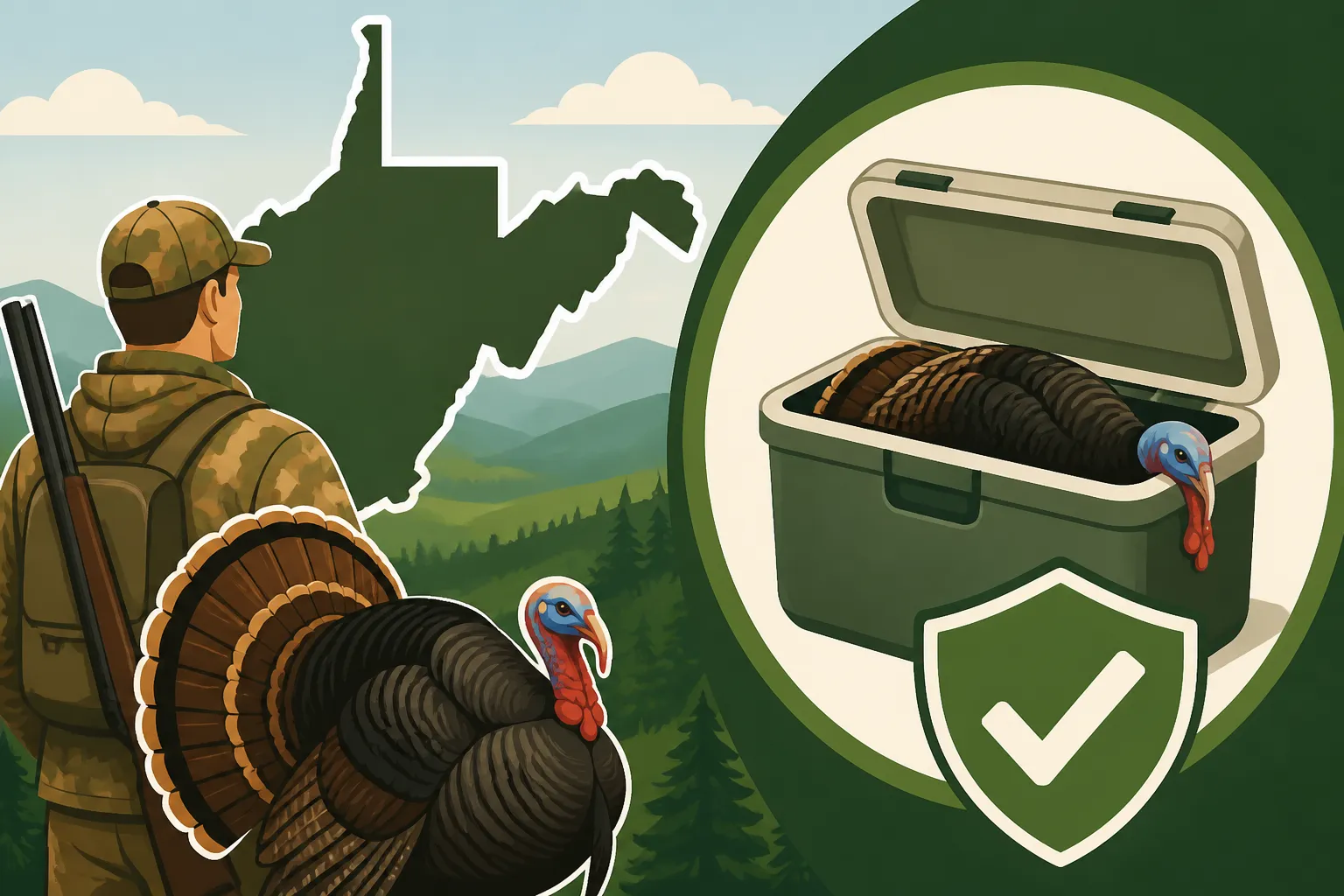
The primary rule for transporting your harvested turkey in West Virginia is that the tag must remain securely attached to the bird until it reaches its final destination or is placed in storage for processing. "Final destination" usually means your home, a processor, or a taxidermist. The tag acts as the immediate visual proof that the bird was legally taken.
Beyond the physical tag on the bird, you, as the hunter, must also be able to produce your valid hunting license and any required stamps or permits. This applies whether you're on foot, riding an ATV, or driving a vehicle. While many hunters rely on digital licenses stored on their phones, it's always wise to have a physical backup or at least ensure your phone is charged and accessible. Nothing is worse than getting stopped by a conservation officer and being unable to display your credentials because your phone died in a remote area. In fact, understanding Carrying Proof of License on Your Phone is key in today's digital age, but always have a backup plan.
When transporting in a vehicle, the bird should be clearly visible if possible, though not necessarily on display. Officers will want to see the tag and confirm details if they perform a stop. Having the bird easily accessible, rather than buried under a pile of gear in the trunk, will make any interaction with law enforcement smoother and quicker.
Interstate and Out-of-State Transport Challenges
If you're a nonresident hunter or planning to take your West Virginia-harvested turkey across state lines, you need to be aware of additional regulations, both from West Virginia and your destination state. While turkeys don't generally carry the same Chronic Wasting Disease (CWD) concerns that deer and elk do, and thus don't have the same carcass movement restrictions, it's always best to be informed.
West Virginia's regulations generally state that once legally tagged and checked, your bird is considered personal property. However, the destination state might have its own rules regarding the importation of wild game. Some states might require a separate permit, specific documentation, or have different rules about what parts of the animal can be brought across their borders. It’s your responsibility to research and comply with the laws of any state you pass through or into. For general guidance on moving game, even though specifically for deer, you can read up on Moving a Deer Carcass Out of the Containment Area as it touches on the broader concept of transporting game across zones or states. Always check with the wildlife agency of your home state or any states you plan to travel through to avoid any unpleasant surprises. A quick call to their respective DNR or equivalent agency before your trip can save you a lot of grief.
Avoiding Common Mistakes and Ensuring Compliance
Even seasoned hunters can sometimes trip up on the rules, especially when regulations change or when the excitement of the moment takes over. Being proactive and prepared is your best defense against inadvertently breaking the law. A little planning goes a long way in ensuring a legal and stress-free hunt.
Double-Checking Regulations Before You Hunt
One of the most frequent reasons hunters run into trouble is simply not knowing or understanding the current regulations. Wildlife laws are not static; they can change annually based on biological data, public input, and unforeseen circumstances. What was legal last year might have changed this season. Therefore, before you even step foot in the woods for the West Virginia Spring Turkey Opening Day or any other season, you absolutely must consult the most current West Virginia Hunting and Trapping Regulations pamphlet or the WVDNR website.
Don't rely on what your buddy told you or what you read online years ago. Always go directly to the source. The WVDNR website is kept up-to-date with all the latest information, including season dates, bag limits, and specific tagging and transport rules. They often provide digital copies of the regulations that you can download to your phone, allowing you to access them even without cell service in remote areas. A pre-season scouting trip, perhaps aided by detailed aerial imagery from GoHunt, can highlight potential challenges like remote access points or public land boundaries, prompting you to review the regulations for that specific area.
Utilizing Technology for Compliance
In today's world, technology offers incredible tools that can help hunters stay compliant and enhance their overall experience. The WVDNR's "Go Wild West Virginia" app is a prime example, allowing you to purchase licenses, check game, and often access regulations directly from your smartphone. Knowing how to use Scouting With the WVDNR App is a huge advantage.
Beyond the official state apps, third-party platforms like GoHunt can provide invaluable support. While the official WV DNR app is essential for checking game, supplemental tools like GoHunt provide valuable mapping and scouting information. For instance, using a reliable app like GoHunt can help you quickly reference property lines, locate nearby public hunting areas, and even cross-reference your location with CWD management zones (though less critical for turkey, it's good practice for deer). Many hunters find it convenient to use digital maps, and platforms like GoHunt often integrate WMA boundaries, helping you ensure you're hunting in a legal spot and adhering to any special rules for areas like the Monongahela National Forest or various Wildlife Management Areas. Even in areas with no cell service, many of these apps allow you to download maps for offline use, which is critical when you are Using Go Wild West Virginia Without Cell Service deep in the backcountry. Leveraging these tools means you have a wealth of information at your fingertips, reducing the chances of making a costly mistake due to ignorance or a simple oversight.
| Step | Requirement | Key Detail |
|---|---|---|
| Harvest Confirmation | Physical tag from license or confirmation number attached to the bird. | Must be attached immediately after the kill, before moving the bird from the kill site. |
| Proof of Sex/Species | Specific parts must remain attached for identification. | For gobblers: head, beard, and one leg with spur attached. For hens (if legal): entire bird or sufficient plumage. |
| Checking Game | Report your harvest within 24 hours of the kill. | Use the Go Wild WV app, website, or toll-free number. Record license, date, county, and bird details. |
| Transport Documentation | Carry your valid West Virginia hunting license and any required stamps. | Physical or digital proof is acceptable, but always have a backup for digital. |
| Interstate Travel | Check the game importation laws of your destination state and any states you will pass through. | West Virginia regulations might be met, but other states may have additional requirements. |
Ultimately, being a responsible hunter means more than just knowing how to call in a gobbler or aiming true. It means understanding and respecting the regulations designed to protect our wildlife resources. By familiarizing yourself with West Virginia's turkey tag transport rules, you're not just staying legal; you're contributing to a tradition of ethical hunting that ensures healthy turkey populations for generations to come, whether you're still-hunting the ridges or employing Run-and-Gun Turkey Tactics on Public Land.
Disclaimer
Please be aware that hunting regulations are subject to change. While this guide aims to provide accurate and up-to-date information, it is the individual hunter's responsibility to consult the current official West Virginia Hunting and Trapping Regulations issued by the West Virginia Division of Natural Resources (WVDNR) before engaging in any hunting activities. Always prioritize safety and legal compliance.