Shot Placement on a West Virginia Black Bear
The thrill of spotting a black bear in the West Virginia mountains is something truly special, but that excitement quickly turns to immense responsibility when you have a tag in your pocket. Black bears are incredibly tough, tenacious animals, and ensuring a swift, ethical harvest hinges entirely on precise shot placement. This guide is here to walk you through the critical anatomy and ideal aiming points, helping you feel confident when that moment of truth arrives in the wild.
Understanding West Virginia Black Bear Anatomy
Before you even think about raising your rifle or drawing your bow, you need to understand what’s happening inside that bear’s chest cavity. A black bear’s anatomy is surprisingly different from a whitetail deer, and mistaking one for the other can lead to a long, frustrating, and potentially unsuccessful recovery. Bears are built like tanks, with dense muscle, heavy bone structure, and thick fat layers that can absorb a lot of energy if you don't hit the vitals precisely.
The Bear's Vitals vs. Deer Vitals
Many hunters get into trouble by instinctively aiming for what would be a perfect deer shot. With a deer, you often aim just behind the shoulder, slightly low, to catch both lungs and potentially the heart. However, a bear's shoulder blade and leg bone extend further back and are much more robust. If you aim for the same spot on a bear, you might hit heavy bone and muscle, resulting in a superficial wound or a non-fatal shot.
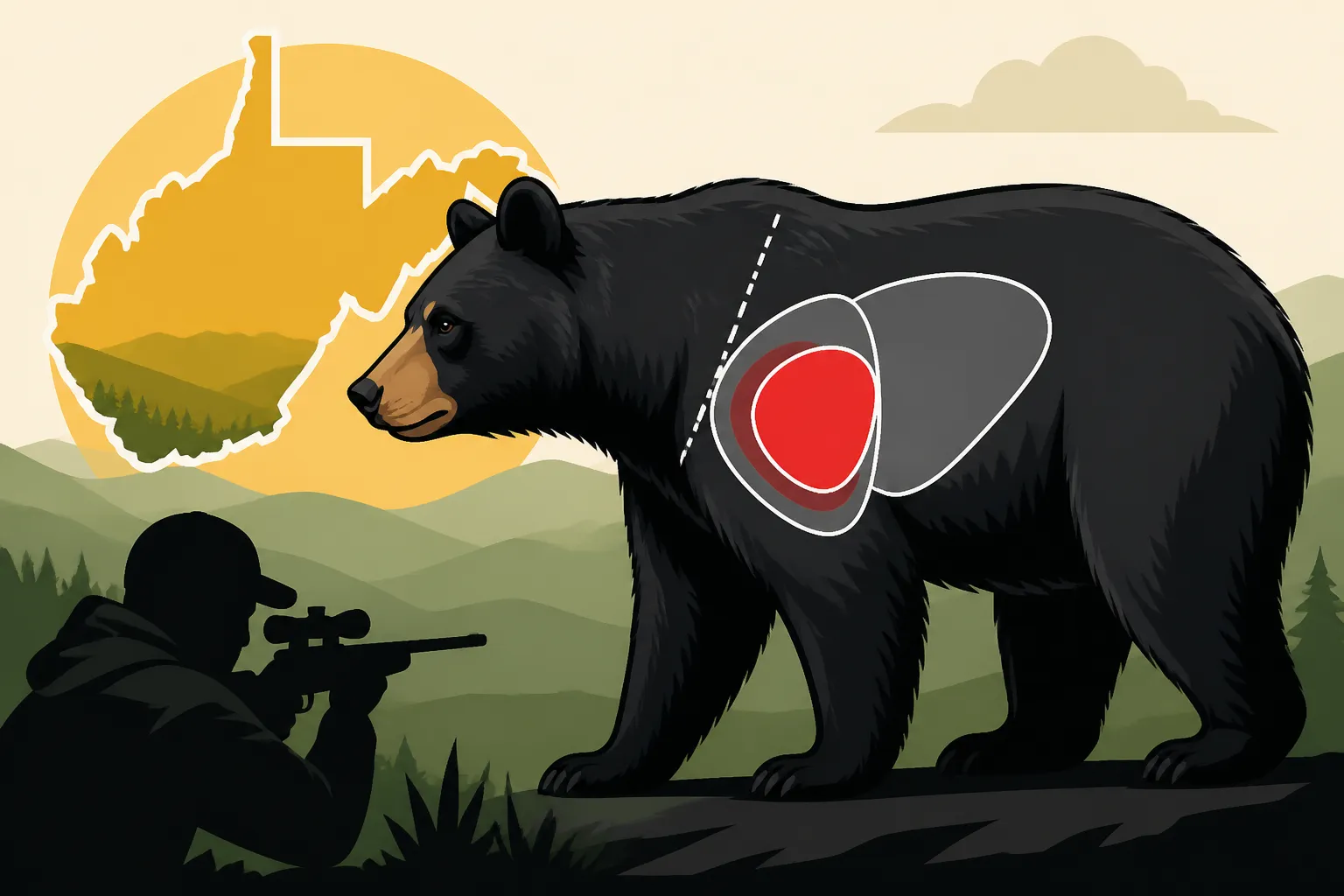
The heart of a black bear sits lower and more forward in the chest than a deer’s. The lungs are massive, but they also sit relatively low and are protected by those heavy bones. The key is to visualize the true location of these organs, not just the outline of the shoulder or leg. Think of the vital zone as a "pocket" that’s further forward and lower than many assume, tucked right behind the elbow of the front leg when the bear is broadside. This knowledge is paramount for an ethical kill, especially when you're hunting bears over natural mast in the mountains or running hounds for West Virginia bears, where shot opportunities can be fleeting.
Skeletal and Muscular Structure
A bear’s dense skeletal structure includes a large, heavy shoulder blade (scapula) and powerful leg bones that can easily deflect an arrow or absorb a bullet's energy. The musculature around the chest and shoulders is incredibly thick, designed for digging, climbing, and fighting. This means your projectile needs to have enough energy and good construction to penetrate these layers before reaching the vitals.
For archery hunters, choosing the right broadhead that offers excellent penetration is critical. For rifle hunters, a well-constructed bullet designed for deep penetration and controlled expansion is equally important. Remember, a bear’s thick hide and fat layer also add to the challenge, especially if you're taking advantage of West Virginia's liberal bear season rules, which can sometimes extend into colder weather when bears are building up fat reserves.
Primary Shot Placement for Black Bear
When you’re finally presented with a shot opportunity, the angle of the bear will dictate your exact aiming point. Patience is key; always wait for the best possible shot angle that exposes the vitals and minimizes the chance of hitting heavy bone.
Broadside Shot: The "Sweet Spot"
The broadside shot is generally considered the most ideal and ethical shot for black bears. With the bear standing perfectly perpendicular to you, you want to aim for the "sweet spot" that maximizes your chances of hitting the heart and both lungs.
Visualize a vertical line running up the back of the bear's front leg, directly behind the elbow. Now, imagine a horizontal line about one-third of the way up from the bottom of the chest. The intersection of these two lines is your aiming point. This spot will put your bullet or arrow through the dense lung tissue, hopefully catching the heart on its way, and exiting through the opposite side. This "double lung, heart shot" devastates the bear quickly, leading to a fast, ethical kill and a shorter blood trail.
It’s important to practice this shot with your chosen weapon, whether it’s a rifle setup for West Virginia deer hunting (many bear calibers overlap) or a bow and crossbow setup for West Virginia. Understanding your weapon's capabilities and practicing at various ranges will build confidence. Services like GoHunt can help you scout potential bear habitat, allowing you to visualize shot scenarios in real terrain.
Quartering Away Shot: Angling for Success
A quartering away shot occurs when the bear is angled slightly away from you, exposing its rib cage more on the far side. This is another excellent shot opportunity, as it often provides a clear path to the vitals without immediately encountering the heavy shoulder bone.
For a quartering away shot, you'll want to aim slightly further back than a broadside shot, aiming towards the opposite shoulder. Imagine an arrow or bullet traveling through the bear and exiting out the center of the opposite front leg. This angle allows your projectile to slip in behind the last rib on your side, penetrate the large lung cavity, and potentially hit the heart or the far-side lung, resulting in massive internal damage. This can be a particularly effective shot with muzzleloaders for a West Virginia December hunt, where bears might be moving through thick cover at slight angles.
Quartering Towards Shot: Exercise Extreme Caution
A quartering towards shot means the bear is angled slightly towards you, with its head and front shoulder pointed somewhat in your direction. This shot is generally discouraged, especially for bowhunters, as it presents a much smaller vital target and a higher risk of hitting heavy bone or dense muscle without reaching the vitals.
If you absolutely must take a quartering towards shot (and only if you are proficient and confident with your weapon and shot placement), you would aim for the point of the shoulder on the bear’s near side, trying to drive the projectile straight through the chest towards the vitals. However, the thick shoulder blade and leg bone provide significant protection. The risk of a non-lethal hit is high, which can lead to a wounded animal and a difficult, if not impossible, recovery. It’s almost always better to wait for a better shot angle, even if it means letting the bear walk away. Ethical hunting means passing on low-percentage shots.
Factors Influencing Your Bear Shot
It's never as simple as just "aim here." The real world throws variables at you, and successful shot placement means accounting for them all.
Bear Behavior and Stance
A bear's behavior at the moment of the shot is critical. Is it standing still, grazing, or moving quickly? A stationary bear offers the best opportunity for a clean shot. If the bear is walking, try to anticipate its movement and aim for where the vitals will be when your projectile arrives. Never shoot at a running bear; the chances of a clean kill are minimal, and you risk only wounding the animal.
Also, pay attention to how the bear is standing. A bear with its head down, digging for roots or acorns, might shift its shoulder blades in a way that further protects its vitals. A bear standing upright on its hind legs might seem to offer a large target, but the vitals are still small and low in the chest, making this a highly risky shot. Always wait for a calm, relaxed, broadside or quartering-away stance. Knowing how the bear population has grown from only a few hundred to over 10,000 today underscores the importance of proper game management and ethical harvesting practices.
Terrain and Cover Challenges
West Virginia's rugged terrain often means shooting through or around thick cover. Whether you're hunting bears in the Cranberry backcountry or navigating steep Allegheny ridges, brush and branches can deflect bullets and arrows, even seemingly small ones. Always ensure you have a completely clear line of sight to your aiming point. A deflected shot can result in a superficial wound, or worse, a lost animal. Before you take the shot, mentally clear your shooting lane. Use the mapping features on a tool like GoHunt to mark potential shot distances and clearings when scouting.
Visibility can also be a challenge. Low light conditions at dawn or dusk, or heavy fog, can obscure your target. Ensure you have enough light and a clear view to confidently identify your target and precisely place your shot. Good bear hunting gear in the Highlands will include quality optics that perform well in low light.
Weapon Type and Projectile Performance
The type of weapon you're using plays a significant role in effective shot placement.
- Rifles: A rifle offers the advantage of higher energy and flatter trajectory. Calibers commonly used for deer in West Virginia, like a .30-06, .308, or .270, are often sufficient for bears with proper bullet selection. Use a well-constructed, heavy-for-caliber bullet designed for deep penetration and controlled expansion. Avoid light, frangible bullets that might break apart on heavy bone. Remember, even with a powerful rifle, shot placement is paramount.
- Muzzleloaders: Muzzleloaders can be highly effective for bears, especially with modern sabot projectiles. Like rifles, focus on heavy, deeply penetrating bullets. The effective range of a muzzleloader is generally shorter than a rifle, so you must be even more diligent about closing the distance and waiting for a perfect shot. Keeping your powder dry and knowing your muzzleloader's trajectory are critical.
- Archery (Bow & Crossbow): Archery hunting for bears is incredibly challenging and requires impeccable shot placement. You'll need a stout bow or crossbow, a heavy arrow, and a razor-sharp, well-built broadhead designed for maximum penetration. Fixed-blade broadheads are often favored for bears due to their reliability and robust construction, though some mechanical broadheads designed for large game can also be effective. Your ethical range with archery equipment is much shorter than with a firearm, typically 20-30 yards for most hunters. Every inch of penetration counts, so avoid bone whenever possible.
It's also essential to consider your own proficiency with your chosen weapon. Spend time at the range, practicing from various positions you might encounter in the field. This preparation is a cornerstone of responsible hunting, ensuring that when the opportunity arises, you are ready.
After the Shot: Recovery and Follow-Up
Making the shot is only half the battle. Retrieving your bear is a crucial, often arduous, part of the hunt, especially in West Virginia’s rugged terrain.
Waiting and Listening
Unlike deer, which often crash immediately or run a short distance, bears can be incredibly tough to track, even with a solid hit. Their thick fat and dense muscle can "seal" wounds, resulting in sparse blood trails.
After the shot, it's wise to wait. If you’re rifle hunting, give the bear at least 30 minutes, and often longer (an hour or more), before beginning to track, especially if you suspect a marginal hit. For archery hunters, a wait of at least 4-6 hours, or even overnight if conditions allow, is strongly recommended. This gives the bear time to expire and reduces the chance of bumping a wounded animal, making tracking even harder. Listen intently after the shot for any sounds—a crash, a growl, or movement in the brush. Sometimes, these auditory cues are all you have to go on.
Tracking the Blood Trail
Bears don't always leave gushing blood trails like deer. Often, you'll be looking for sparse drops, hair, broken branches, or disturbed leaf litter. If your shot was good, you might find bright red, frothy blood (lung hit) or dark red blood (liver hit). If the blood is pinkish with stomach contents, it indicates a gut shot, which requires a much longer wait and careful tracking.
Use the mapping features on tools like GoHunt or your GPS unit to mark the exact location of the shot and every piece of sign you find. This creates a virtual breadcrumb trail that can be invaluable. Don't be afraid to take your time, get on your hands and knees, and systematically search for any clue. It’s a good idea to have a powerful headlamp, even during the day, to help illuminate the ground cover.
Follow-Up Shots and Recovery
If you find the bear still alive, you must administer a quick, ethical follow-up shot. Aim for the vitals again, or if close enough and safe, a brain shot can instantly dispatch the animal. Remember, a wounded bear can be dangerous. Approach with extreme caution, ideally from an elevated position or from behind, and with your weapon ready.
Once the bear is down and confirmed expired, the work truly begins. Bears are heavy, and getting one out of a steep West Virginia hollow can be an enormous task. Having good packs for a Monongahela Forest day hunt, a sharp field dressing knife, and potentially a game cart or sled will make the recovery much easier. You might also need to consider coolers for an early archery kill to preserve the meat if temperatures are warm. West Virginia bear harvest trends show robust numbers, reflecting both a healthy population and dedicated hunters.
| Shot Angle | Ideal Aiming Point | Target Organs | Notes |
|---|---|---|---|
| Broadside | One-third up from bottom of chest, directly behind the elbow of the front leg. | Heart, both lungs | Most ethical. Maximizes chances of clean kill. |
| Quartering Away | Behind the last rib on your side, aiming for the center of the opposite front leg. | Both lungs, heart (potentially), liver, stomach | Excellent option. Penetrates vitals while avoiding heavy shoulder bone. |
| Quartering Towards | Point of the near shoulder, aiming to pass through vitals. | Shoulder bone, lungs (difficult), heart (difficult) | High risk, generally discouraged due to dense bone protection and small vital window. Avoid if possible. |
| Frontal | Center of the chest, aiming for the base of the neck. | Spine, lungs (difficult) | Extremely high risk. Very small target, high chance of non-lethal hit. Avoid entirely. |
Disclaimer
Hunting is an inherently dangerous activity. This guide is for informational purposes only and does not substitute for proper hunter education, safety courses, or professional guidance. Always prioritize safety, adhere to all West Virginia hunting regulations, and ensure you have the appropriate licenses and permits before heading afield. Responsible hunting practices contribute to the conservation of wildlife and the safety of all outdoor enthusiasts.