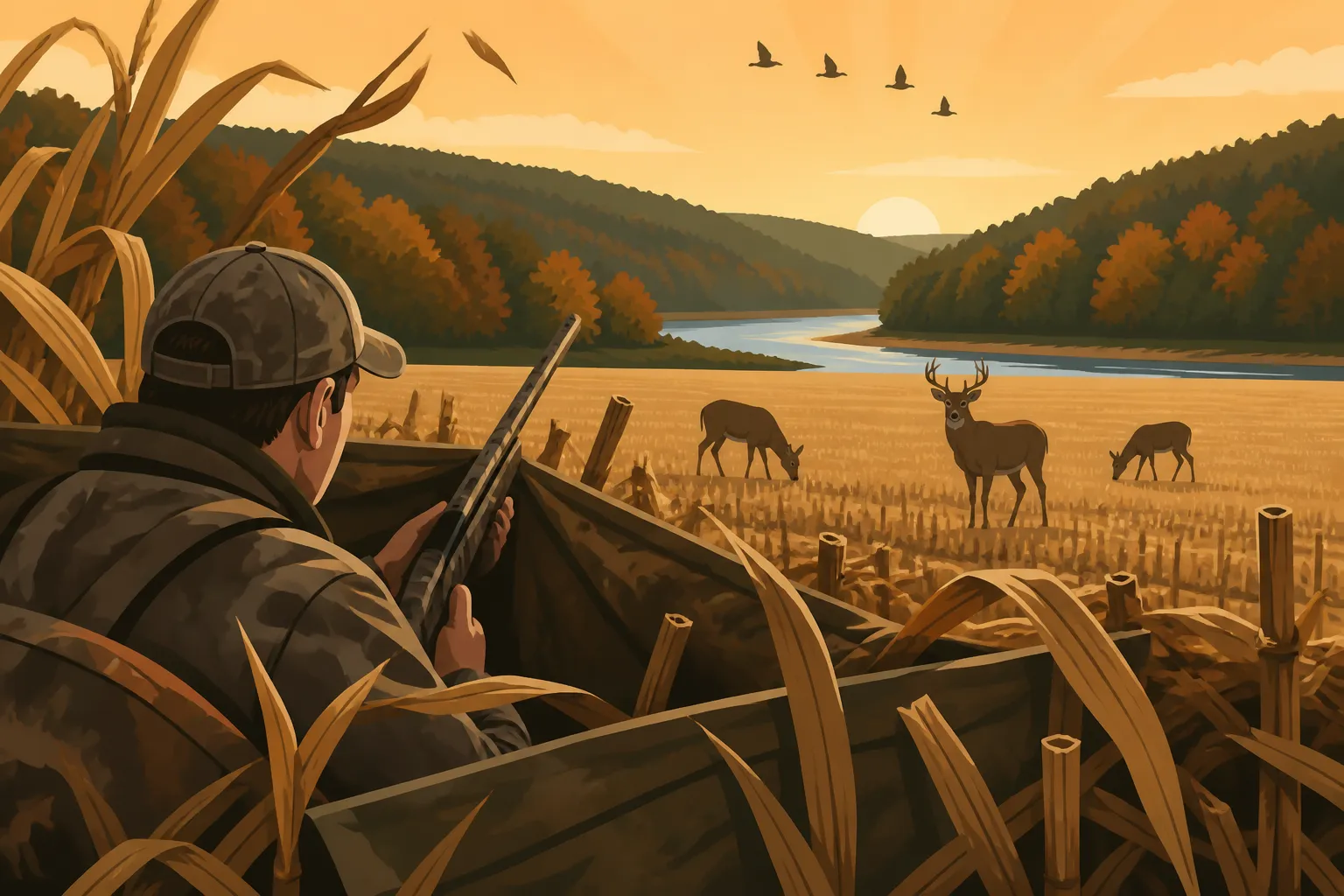
Layout Blinds for River Bottom Corn
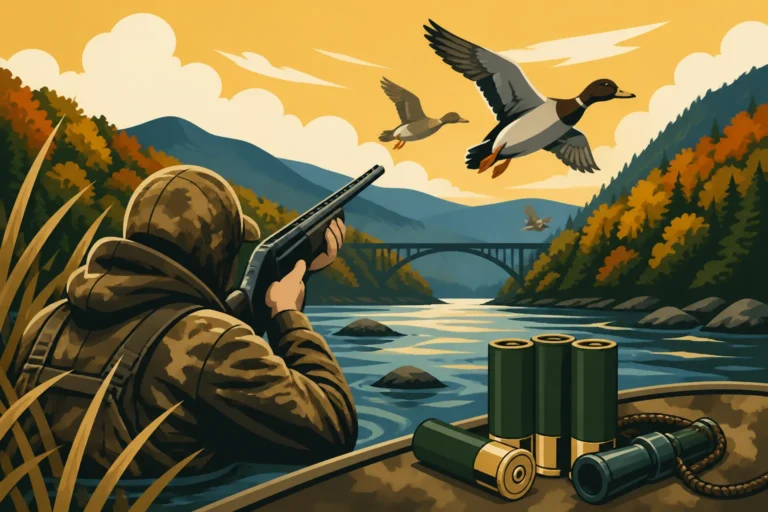
There's nothing quite like the sight of hundreds, even thousands, of ducks or geese pouring into a freshly cut cornfield in West Virginia's river bottoms. It's a breathtaking spectacle, but getting close enough for a shot in those wide-open spaces can feel nearly impossible. This guide is all about mastering the art of the hidden hunter in corn stubble, making those frustrating, flared birds a thing of the past with the right layout blind tactics.
The Challenge of Hunting River Bottom Corn
Hunting waterfowl in river bottom cornfields presents a unique set of challenges that can leave even seasoned hunters scratching their heads. Unlike hunting over water, where natural vegetation often provides ample cover, harvested cornfields offer precious little to hide behind. Yet, these fields are absolute magnets for ducks and geese, drawing them in with their promise of abundant, high-energy food. It's a classic hunter's dilemma: prime location, impossible concealment.
Why Field Hunting is So Tricky
The primary difficulty when field hunting, especially in places like the Ohio River Valley Bottomland, is the sheer lack of natural cover. Imagine trying to disappear in what essentially looks like a giant, flat table from a bird's-eye view. Ducks and geese possess incredible eyesight, honed over generations to detect the slightest anomaly in their environment. A hunter standing upright, or even hunkered behind a sparse row of stubble, sticks out like a sore thumb against the uniform backdrop of a harvested field.
Birds will circle, often at considerable height, performing a meticulous reconnaissance before committing to land. They're looking for movement, unnatural shapes, and anything that screams "danger." When they spot something amiss, even a subtle glint or an outline that doesn't quite match the surroundings, they'll flare, climb, and quickly disappear over the horizon, leaving you with nothing but a sinking feeling and an empty gun. This is why conventional ground blinds or simply crouching behind a few cornstalks often leads to frustration; the birds simply see you long before they're in range.
Understanding Waterfowl Behavior in Fields
To successfully hunt river bottom cornfields, you first need to think like a duck or goose. Why are they there? The answer is simple: food. After the combines have rolled through, countless kernels of corn are left scattered on the ground. This wasted grain provides a high-calorie feast, crucial for birds fueling up for migration or building reserves for colder weather. Geese, in particular, are grazers, happily munching on tender shoots or leftover grains, making cornfields a primary food source throughout much of the fall and winter.
Waterfowl typically fly in from roosting areas on nearby rivers, lakes, or ponds, often in the early morning or late afternoon. Their approach is usually methodical. They'll arrive in a general area, then begin to circle, gaining altitude to survey the field. This circling behavior is their way of checking for predators – be it a fox, a coyote, or a camouflaged hunter. They'll look for other birds already on the ground (your decoys!), and once they're convinced the coast is clear, they'll begin their descent.
Crucially, they almost always land into the wind, which aids in their braking and allows for a softer touchdown. This behavior is key to setting up your spread and blinds effectively. Their keen eyesight means that any silhouette, any unnatural color, or any unexpected movement from a human hunter will send them spiraling away. This acute awareness makes proper concealment not just an advantage, but an absolute necessity for consistent success in these open environments.
What Makes Layout Blinds Essential for Cornfields
When you're trying to hide from birds that can spot a pinhead from a mile high, traditional methods just don't cut it in the wide-open expanse of a cornfield. This is where layout blinds truly shine, transforming you from an obvious threat into an invisible part of the landscape. They are arguably the single most important piece of gear for serious field waterfowl hunters. Waterfowl Gear for Ohio River Bottoms often starts with a good layout blind.
Superior Concealment at Ground Level
The genius of a layout blind lies in its design: it allows a hunter to lie prone, practically at ground level, effectively becoming part of the field itself. Think about the profile of a hunter sitting or kneeling – it’s a distinct, unnatural bump in the terrain. A layout blind, on the other hand, is designed to be low-profile, hugging the ground and breaking up the human outline completely.
Most modern layout blinds feature a sloping, tapered design, often with stubble straps or pockets that allow you to attach natural vegetation from the field itself. This "stubbling" is the critical step in achieving true invisibility. You're not just putting a camo tarp on the ground; you're actively integrating your blind into the environment using corn stalks, dead weeds, dirt clods, and whatever else is present. When properly stubbled, a layout blind virtually disappears, looking like nothing more than a random pile of debris to a circling duck or goose. This blend-in effect is far superior to any camouflage pattern alone, as it matches the texture and three-dimensionality of the real field.
Comfort and Endurance in the Field
Hunting waterfowl, especially in West Virginia's late season, often means long hours spent exposed to the elements. Imagine lying flat on frozen, muddy ground for hours on end, waiting for birds to commit. Without proper protection, it's a miserable experience that will inevitably lead to fidgeting, shivering, and ultimately, spooking birds.
Layout blinds are built with hunter comfort in mind. They typically feature a padded backrest and floor, insulating you from the cold, wet ground. Many also offer a degree of wind and moisture resistance, keeping you drier and warmer than if you were simply lying under a blanket. The ability to sit up slightly or shift positions within the blind (without giving away your presence) is a huge advantage, allowing you to remain still and focused for extended periods. This comfort isn't just a luxury; it's a tactical necessity. A warm, dry, and comfortable hunter is a patient hunter, and patience is paramount when waiting for wary waterfowl to make their final approach. Without that comfort, you'll be squirming, and the birds will see you.
Maximizing Decoy Spreads and Calling
One of the most significant advantages of using layout blinds in a cornfield is their ability to place the hunter within the decoy spread. When you're tucked away in a blind, you're not an anomaly on the edge of the field; you're another seemingly natural element among the feeding "birds." This placement enhances the realism of your spread dramatically. Birds approaching feel safer because they see other "birds" (your decoys) feeding confidently, and they don't see a human hiding awkwardly on the perimeter.
Being inside the spread also allows for much more effective calling. Your calls sound more natural, originating from the midst of the "flock" rather than from a distance. You can interact with the approaching birds more intimately, adjusting your calling based on their reactions and proximity. Furthermore, you have an unobstructed view of the approaching birds through the mesh top of the blind, allowing you to track their movements, anticipate their landing zone, and know precisely when to spring up for the shot. This combination of superior concealment, tactical placement, and enhanced communication with the birds dramatically increases your chances of success.
Choosing and Setting Up Your Layout Blind for West Virginia Corn
Selecting the right layout blind and then mastering its setup are crucial steps for successful field hunting in West Virginia. Not all blinds are created equal, and how you deploy yours can be the difference between a full strap of birds and an empty sky.
Key Features to Look For
When you're looking to invest in a layout blind for West Virginia's diverse agricultural landscape, there are a few non-negotiable features you'll want to prioritize:
- Durability: West Virginia hunting can be rough. Mud, moisture, sharp corn stubble, and repeated transport demand a blind built with robust materials. Look for heavy-duty fabrics, strong stitching, and a sturdy frame.
- Portability: You'll often be walking into fields, sometimes across considerable distances. A lightweight blind that's easy to fold up and carry, perhaps with backpack straps, is a huge plus.
- Size and Profile: Consider how much room you need inside for yourself and your gear, but also how low to the ground the blind sits. The lower the profile, the better the concealment. However, don't sacrifice comfort entirely if you plan on long sits.
- Backrest Adjustability: Being able to adjust the backrest for optimal comfort and visibility is a game-changer for all-day hunts. Some blinds offer multiple positions, from nearly flat to a more upright recline.
- Stubble Straps/Pockets: This is perhaps the most critical feature for cornfield hunting. These straps or mesh pockets allow you to attach actual corn stalks, weeds, and dirt to the blind, making it truly disappear. Ensure they are plentiful and well-placed.
- Access Doors: Easy access to your calls, shells, and snacks without making excessive movement is important. Some blinds have zippered side doors or easily accessible pockets.
- Flag Ports: Many blinds now include ports specifically designed for flagging, which is a key tactic for enticing wary birds.
When researching different brands and models, consider looking at reputable outdoor gear review sites or community forums. Websites like GoHunt can also be a valuable resource for reading product reviews and comparing features across various layout blind manufacturers. Don't just pick the cheapest option; this is one piece of gear where quality pays dividends in comfort and success.
Blending into West Virginia's Agricultural Landscape
This is where the "art" of layout blind hunting truly comes into play. Simply placing a camouflaged blind in a cornfield isn't enough; you need to make it disappear. The key is natural stubbling.
Before you even lie down, collect a generous amount of local vegetation. This means snapping off broken cornstalks, pulling up dead weeds, gathering dried grass, and even grabbing a few handfuls of dirt or mud. The goal is to make your blind look like just another piece of natural field debris.
- Layer it on: Don't just stick a few stalks in the stubble straps. Layer them, making sure to break up the hard lines of the blind itself. Think about how natural debris piles up randomly.
- Match the environment: If the corn stubble is short and sparse, don't over-stub your blind with tall, bushy weeds from a fence row. Conversely, if there's tall, thick stubble, you'll need more material to blend in.
- Conceal the edges: Pay special attention to the edges and ends of the blind, which often have the most pronounced "bump" in the field. Use thicker stubble here to break up the outline.
- Use the ground: Don't be afraid to throw some dirt or mud on the blind itself, especially if the ground is muddy. This further integrates it into the field.
- Check from a distance: After stubbling, have a hunting partner walk away and look back at the blinds from different angles, especially from the direction you expect the birds to approach. Adjust as needed until the blinds are truly invisible.
This meticulous attention to detail during the stubbling process is what separates the successful cornfield hunter from those who constantly get flared by incoming birds. It's a bit of work, but it's absolutely worth the effort.
Optimal Placement Within Your Decoy Spread
The placement of your layout blinds within your decoy spread is as critical as the stubbling itself. You want to be close enough to the kill hole (the open landing zone you create for the birds) to ensure clean shots, but positioned to capitalize on the birds' natural approach and landing patterns.
- Wind Direction is King: Waterfowl almost always land directly into the wind. Therefore, your blinds should typically be positioned with the wind at your back, and your decoy spread extending out in front of you into the wind. This puts the kill hole directly in front of your shooting position.
- Creating the "Kill Hole": Leave an open area in your decoy spread directly in front of your blinds where you want the birds to land. This gives them a clear, inviting spot.
- The "J" or "U" Shape: A common and effective spread involves arranging your decoys in a "J" or "U" shape, with the open end of the letter facing into the wind. Your blinds would then be placed at the bend or base of the "J" or "U," allowing birds to commit to the opening and work their way towards you.
- Spacing Between Blinds: If hunting with multiple people, ensure your blinds are spaced far enough apart for safe shooting lanes, but close enough for effective communication and to maintain the illusion of a single, coherent blob of feeding birds.
- Sun Position: If possible, try to position your blinds with the sun at your back. This not only helps you see the incoming birds better but can also blind them slightly as they make their final approach, giving you an extra advantage.
- Avoid the "Clump": While you want to be close to the decoys, don't just pile your blinds directly into a tight group of decoys. Give them some breathing room; a little space often looks more natural.
Thinking through these placement strategies before birds start flying will significantly improve your chances of getting them to commit to your spread rather than flaring out of range.
Tactics for Success in River Bottom Corn with Layout Blinds
Having the right gear and a well-stubbled blind is only half the battle. To consistently bring West Virginia waterfowl down in cornfields, you need to understand the tactics that make those blinds truly effective. It's about combining concealment with realistic attraction.
Decoy Spreads for Cornfield Waterfowl
The layout of your decoys is paramount when hunting in river bottom corn. You’re trying to create an inviting, natural-looking scene that convinces wary birds to drop in. While there’s no single “perfect” spread, understanding the basics for ducks and geese can make a huge difference. Decoy Spreads for Ohio River Divers will differ slightly from field spreads, but the principles of creating landing zones remain.
For ducks, especially mallards, pintails, and wigeon that frequent these fields, a "J-hook" or "U-shape" spread works wonders. Position the majority of your duck decoys into the wind, with the open part of the "J" or "U" serving as your landing zone. Place your layout blinds at the back or side of this open area, allowing birds to fly over the main body of decoys and commit to the clear space. Motion decoys, like spinning-wing or jerk-string models, can add crucial realism, simulating active feeding and movement that catches the eye of high-flying birds. Remember, variety in species and poses can add to the natural look.
For geese, especially the large flocks of Canada Geese on West Virginia Farmland, realism is key. Geese tend to feed in family groups or small clusters. Mimic this by setting out groups of three to five full-body goose decoys, spaced a bit further apart than your duck decoys, around your intended landing zone. Ensure some decoys are in feeding positions, heads down, while others are sentries, heads up, scanning for danger. Again, motion is vital. Windsocks or full-body decoys with realistic head movements can create the illusion of a lively feeding flock. Your layout blinds should be integrated into these family groups, appearing as just another mound of stubble within the feeding pattern.
Reading the Wind and Sun
Wind and sun are two natural elements that you must factor into every field hunt. Ignoring them is a recipe for frustration.
As mentioned, waterfowl nearly always land into the wind. This is crucial for their aerodynamics, allowing them to slow down and touch down softly. Therefore, your layout blinds should always be positioned with the wind at your back, allowing birds to approach your decoy spread, land into the wind, and present a shot directly in front of you. Misjudging the wind can mean birds landing behind you, forcing awkward shots, or flaring before they’re ever in range. Always check the wind direction before setting up and be prepared to adjust if it shifts.
The sun’s position is another tactical advantage. Ideally, you want the sun at your back, especially during morning or late afternoon hunts. This not only puts the birds in full light for you, making them easier to identify and track, but it also creates a glare for them as they approach. This can make it harder for them to spot your well-stubbled blinds and any subtle movements you might make. Hunting with the sun in your face puts you at a distinct disadvantage, as it makes spotting and identifying incoming birds much harder, and it illuminates your blind more clearly for them. Sometimes you can't have both the perfect wind and sun, so prioritize wind, but always consider the sun's path during your setup.
Calling Strategies from the Blind
Calling from a layout blind requires a slightly different approach than calling from a boat or a timber stand. Because you're lying down and often partially obscured by stubble, your sound projection can be affected.
For ducks, focus on a range of calls. Start with softer greeting calls or clucks and quacks as birds are distant. As they approach and start to commit, increase the intensity with feeding calls and excited quacks to seal the deal. Remember that your calls originate from within the decoy spread, adding to the realism. Don't be afraid to use a variety of calls – a mallard hen, a pintail whistle, or even a wigeon whistle can entice different species. Pay close attention to the birds' reactions; if they start to turn away, a little extra coaxing might be needed, but if they're locked in, sometimes going silent is the best move.
For geese, volume and realism are paramount. Large flocks require louder, more aggressive calling to get their attention, but as they get closer, transition to softer clucks and murmurs, mimicking a contented feeding flock. A mix of honks, clucks, and moans from multiple hunters can sound incredibly natural. Practice your cadence; geese are often looking for a rhythm, not just a sound. From a layout blind, projecting your call effectively might mean slightly adjusting your head position or having a partner call while you watch. The mesh top of the blind allows for clear sound transmission, but sometimes a small adjustment can help carry the call further across the open field. Again, the beauty of the blind is that the call sounds like it's coming from the ground, right where those "other birds" are feeding.
Beyond the Blind: Other Considerations for Cornfield Hunting
While layout blinds are a game-changer for cornfield hunting, they are just one piece of the puzzle. Maximizing your success in West Virginia's river bottom corn requires a holistic approach that includes diligent scouting, appropriate gear, and an unwavering commitment to safety.
Scouting is Non-Negotiable
You can have the best layout blind, the most realistic decoys, and a championship calling routine, but if you're not where the birds want to be, it's all for naught. Scouting is, without exaggeration, the single most important factor for consistent waterfowl success in fields. Scouting West Virginia Public Land Before Season is crucial for all hunting, but especially so for mobile field setups.
Ducks and geese are creatures of habit, but their habits are driven by food availability and pressure. A field that held thousands of birds yesterday might be completely empty today if they've eaten it out or been shot at too frequently.
- Glassing: Drive or walk roads adjacent to cornfields at dawn and dusk, using good binoculars or a spotting scope to identify where birds are feeding. Look for concentrations of birds, not just a few stragglers.
- Observe Flight Paths: Note how birds enter and exit fields. Are they coming from a specific direction? This helps with optimal decoy and blind placement.
- Look for Sign: Even if birds aren't present, fresh droppings and scattered feathers indicate recent activity. Pay attention to specific areas within a large field where the sign is heaviest.
- Talk to Farmers: If hunting private land, farmers are an invaluable resource. They often know exactly where the birds are causing problems or feeding most heavily.
- Use Mapping Tools: Modern mapping applications can help you identify potential fields, property lines, and access points. GoHunt, for example, often has layers that show public land boundaries and topographical features that can help you plan your approach and identify prime areas. Remember, you're looking for active feeding zones, not just any cornfield.
Gear for a Successful Cornfield Hunt
Your layout blind and decoys are central, but other gear plays a critical supporting role in keeping you effective and safe during a cornfield hunt in West Virginia.
- Shotgun and Ammunition: A reliable 12-gauge shotgun is the standard for waterfowl. Ensure it's clean, patterned, and familiar. Crucially, remember that nontoxic shot (steel, bismuth, tungsten alloy) is legally required for all waterfowl hunting. Lead shot is prohibited. Carry a good supply of shells appropriate for the species you're targeting; larger shot sizes (like BB or 2 for geese, 3 or 4 for ducks) are generally preferred for open-field shots at decent ranges.
- Warm, Layered Clothing: River bottoms can be damp and cold, especially in late fall and winter. Layering is key: start with a moisture-wicking base layer, add insulating middle layers (fleece or wool), and finish with a waterproof/windproof outer shell in a camo pattern that blends with corn stubble. Clothing for a West Virginia Late Season will be essential.
- Waders/Waterproof Boots: Even in a cornfield, you might encounter muddy patches, ditches, or standing water. A good pair of waterproof boots or knee-high rubber boots are often sufficient, but if you're crossing creeks or sloughs to access fields, chest waders might be necessary. Waders for River Bottom Hunting are a must-have for any waterfowl enthusiast.
- Facial Concealment: Your face is a prime giveaway. A face mask, face paint, or a balaclava in a suitable camo pattern is essential to break up your human outline.
- Other Essentials: Bring a thermos of hot coffee or soup, water, snacks, a headlamp for walking in/out in the dark, a small shovel or rake for fine-tuning blind stubbling, and a game strap or large bag for carrying out your harvest. Don't forget your hunting license, West Virginia Federal Duck Stamp Requirement, and West Virginia HIP Certification for Bird Hunters if required.
Safety First in Open Fields
Hunting in open fields, often in groups, presents unique safety considerations that demand constant vigilance.
- Identify Shooting Lanes: Before any birds arrive, and especially after everyone is settled in their blinds, visually identify your safe shooting zones. Discuss who will take which birds, and which directions are absolutely off-limits due to other hunters, vehicles, or structures.
- Muzzle Control: Always be aware of your muzzle direction, especially when getting in and out of your blind or when swinging on birds. Muzzles should always point in a safe direction, typically downfield or straight up.
- Communication: Use clear, concise communication with your hunting partners. "Heads up!" or "Coming from the left!" are crucial. When birds are working, a designated caller or leader should direct the shot.
- Know Your Target and Beyond: In a field setting, it's easy to get tunnel vision on an incoming bird. Always be aware of what's behind your target. Ensure there are no roads, houses, livestock, or other hunters in your shot path.
- Retrieve Safely: When retrieving downed birds, ensure all guns are made safe and unloaded, especially before leaving your blind. Always be mindful of your surroundings, particularly if crossing fences or uneven terrain.
A safe hunt is a successful hunt. By being prepared, communicating effectively, and practicing responsible firearm handling, you can enjoy the thrill of cornfield waterfowl hunting with peace of mind.
| Blind Type | Profile | Best For | Pros | Cons |
|---|---|---|---|---|
| Low-Profile | Very Low | Minimal cover, extremely wary birds, minimal stubble available | Excellent concealment, highly portable, good for small spaces | Less comfortable for long waits, can be difficult to get up quickly for a shot, limited gear storage |
| Full-Frame | Medium | Most common, balanced approach, diverse field conditions | Good balance of concealment and comfort, easier to get up for a shot, ample gear storage | Can be heavier and bulkier to transport, requires more stubbling to truly disappear |
| Backpack Style | Low to Medium | Long walks to remote fields, mobile hunting | Highly portable, often lightweight, quick setup | May sacrifice some comfort or stubbling capabilities for portability, less durable frames |
| Chair/Pit Blind | Higher (seated) | Permanent locations, heavier cover, less mobility | Very comfortable, often heated/spacious, can accommodate multiple hunters | Fixed location, conspicuous without significant natural cover, heavy/difficult to move |
Disclaimer
This article is for general informational purposes only and does not constitute professional advice. Laws, prices and regulations vary by location and change over time. Consult a qualified professional for guidance on your specific situation.