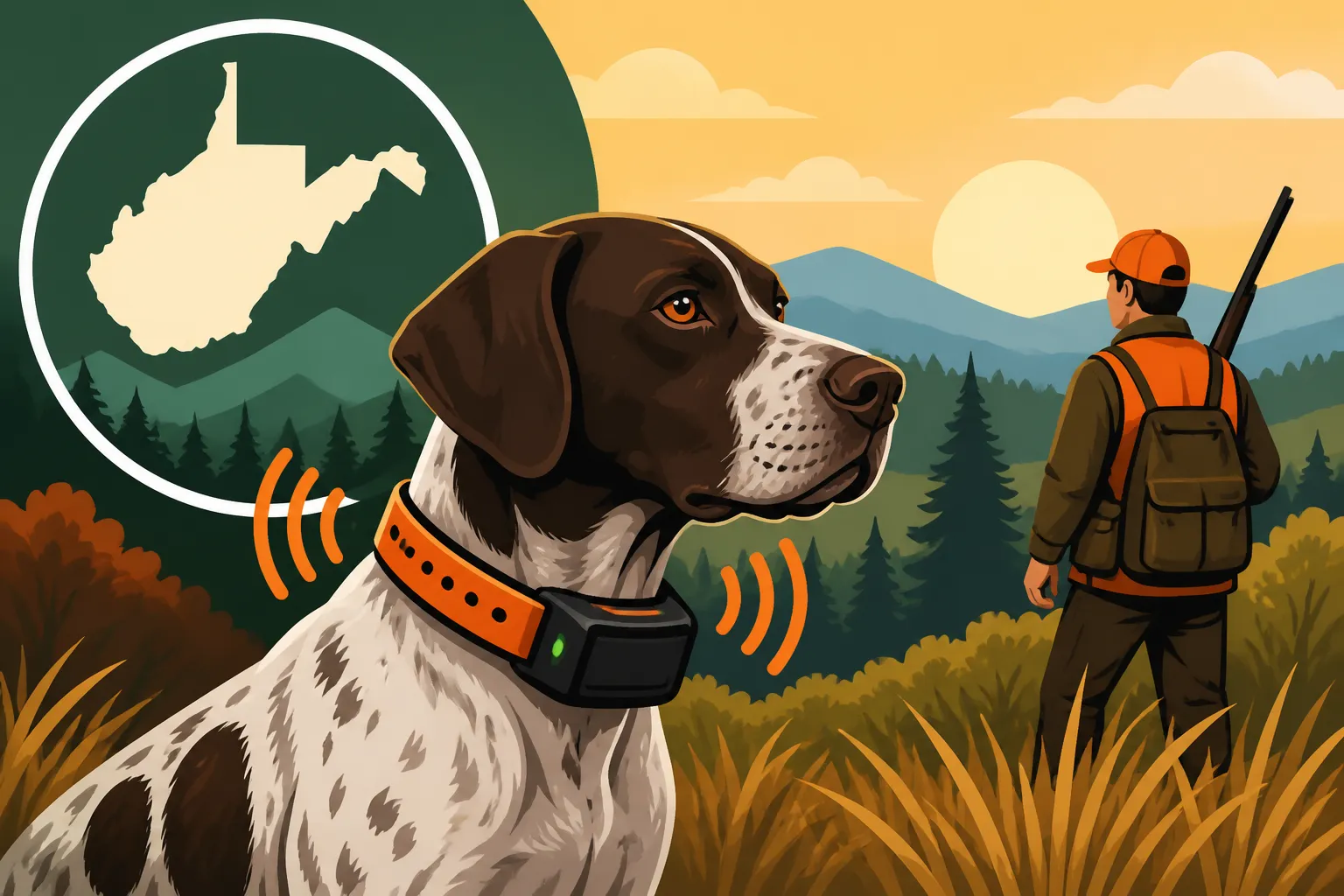
E-Collar Use on Public Ground
One of the trickiest parts about training a good hunting dog, especially for those of us who venture onto West Virginia's vast public lands, is finding that balance between control and freedom. You want your canine companion to range, find game, and work independently, but you also need instant, reliable recall when a deer jumps or another hunter appears. This is where the e-collar comes into play for many hunters, but its use on public ground comes with a lot of questions, misunderstandings, and sometimes, outright judgment. This guide will walk you through the nuances of using e-collars responsibly and legally when you're out chasing birds or small game on West Virginia's public access areas.
Understanding E-Collars: More Than Just a "Shock Collar"
For anyone new to the concept, or for those who've only heard the negative stereotypes, it's important to understand what a modern e-collar truly is and isn't. The term "shock collar" often conjures images of harsh, painful corrections, but the technology has evolved significantly. Today's e-collars, or electronic collars, are sophisticated training tools designed to provide communication and reinforce commands from a distance.
How Modern E-Collars Work
At its core, an e-collar consists of a remote transmitter and a receiver collar worn by the dog. The transmitter allows the handler to send a signal to the collar, which then delivers a mild, momentary stimulation. This stimulation can range from a low vibration or tone, to a tap, or a static pulse that feels more like a muscle twitch than a painful jolt. The key is that it's adjustable, often with dozens of levels, allowing the handler to find the exact level that gets the dog's attention without causing fear or discomfort. The goal isn't to punish, but to provide clear, consistent feedback, especially when the dog is distracted or far away. This can be invaluable when you're in thick cover or dealing with the unpredictable nature of wild game.
The Training Philosophy Behind E-Collars
Effective e-collar training is rooted in positive reinforcement and consistency, with the e-collar serving as a layer of remote communication. You start by teaching commands with positive methods – treats, praise, leash pressure – in a low-distraction environment. Once the dog understands the command, the e-collar is introduced to reinforce that command in more distracting settings. For instance, if you're teaching "come," you'd pair a low-level stimulation with your verbal "come" and leash pressure. When the dog complies, you release the pressure and praise. Over time, the dog associates the mild stimulation with the command, understanding it as a cue to respond, not a punishment. This method helps your dog generalize commands, meaning they'll respond reliably whether they're in your backyard or chasing a pheasant across a field. Brands like GoHunt often emphasize the importance of gradual introduction and finding the "working level" for each individual dog, ensuring humane and effective training.
Navigating the Legal Landscape of E-Collar Use in West Virginia
One of the biggest concerns for hunters considering e-collars, especially on public land, is the legality. Laws and regulations regarding dog training equipment can vary widely from state to state, and even within different types of public land. Thankfully, West Virginia has fairly clear guidelines, but it's still crucial to understand them fully.
General Regulations for Dog Training
In West Virginia, the use of e-collars for dog training, including for hunting dogs, is generally permissible. There isn't a statewide ban on their use. This means you can typically use an e-collar to train your bird dog, bear hound, or squirrel dog without issue on private land, provided you're doing so humanely and not in a manner that constitutes animal cruelty. The state's focus is more on ensuring animals are treated well and that hunting regulations are followed, rather than dictating specific training tools. However, the picture can get a little more nuanced when you step onto public ground.
E-Collar Rules on Public Hunting Lands
While e-collars aren't broadly prohibited, certain public land areas might have specific rules or recommendations. For instance, while generally allowed within West Virginia Public Hunting Land in West Virginia, it's always wise to check the specific regulations for the particular Wildlife Management Area (WMA) or National Forest land you plan to visit. The West Virginia Wildlife Management Areas often have their own set of guidelines regarding activities like dog training, including where and when certain activities are permitted. Some might have restrictions on noise, or rules about keeping dogs under immediate control. The use of an e-collar is often seen as a tool to help maintain that immediate control, especially when your dog is off-leash.
For example, in expansive areas like Monongahela National Forest Hunting, where you might be training a bird dog or running a bear hound, the e-collar becomes a vital safety tool for controlling your dog in vast, often rugged terrain. It ensures your dog doesn't wander too far, chase non-game animals, or disturb other hunters. However, it's paramount that the e-collar is used to reinforce control, not to replace basic training and a strong bond with your dog. You should always aim for your dog to respond to verbal commands first, with the e-collar acting as a backup communication system.
It's also worth noting that during hunting seasons, especially those involving dogs such as West Virginia Small Game Season Rules or Running Hounds for West Virginia Bears, maintaining control of your dog is not just about training, but about ethical hunting and respecting other hunters. An out-of-control dog can ruin another hunter's day or even put wildlife at risk. The e-collar, when used properly, is a powerful tool to prevent such scenarios.
| Public Land Type | E-Collar Use | Key Considerations |
|---|---|---|
| National Forests | Generally OK | Check specific forest district rules; focus on maintaining control, avoiding interference with other users. |
| Wildlife Management Areas | Generally OK | Review WVDNR WMA-specific regulations (often available on their website); some might have quiet hours or leash requirements. |
| State Parks | Varies | Hunting is allowed in some state parks on quota hunts, but dog training/e-collar use might be more restricted to specific areas or seasons. |
| Private Lands (with permission) | Generally OK | Ensure you have landowner permission and adhere to their rules; humane treatment is always paramount. |
Remember, while the law might allow it, public perception is a real thing. Be discreet and always prioritize humane and effective training. No one wants to see a dog being mistreated, and irresponsible use reflects poorly on all dog owners and hunters.
Responsible Use and Ethical Considerations on Public Ground
Using an e-collar is a responsibility, especially when you're out on public lands where you might encounter other people, wildlife, and even livestock. It's not just about legal compliance; it's about ethical behavior and being a good ambassador for hunters and dog owners.
Prioritizing Humane Training Methods
The first ethical consideration is always the humane treatment of your dog. An e-collar is a communication tool, not a punishment device. If you find yourself constantly hitting high levels or using it to scold your dog, you're likely misusing the tool. Proper e-collar training involves:
- Finding the "Working Level": This is the lowest setting at which your dog consistently acknowledges the stimulation. It might be a slight ear twitch, a head turn, or a brief pause in activity. It should never be a yelp or a panicked reaction. This level can change based on the dog's distraction level. A dog focused on a grouse scent in Grouse Hunting Allegheny Highlands Cover might need a slightly higher level than one simply wandering in the yard.
- Timing is Everything: Deliver the stimulation precisely as the dog is performing the undesired action or failing to perform a command. A delayed correction is confusing and unfair.
- Positive Association: Always pair the e-collar stimulation with a known command and praise the dog for the correct response. The e-collar helps clarify the command, but the ultimate reward should be positive reinforcement from you.
- Avoidance Training: Teach your dog to avoid the stimulation by complying with the command. For example, if you say "come" and provide a low stimulation, the dog learns that if they come, the stimulation stops, and praise follows. They quickly learn to respond to the verbal command before the stimulation is even necessary.
An effective e-collar allows you to keep your dog safe and under control without constant shouting, which can disturb wildlife and other hunters. This is especially true when navigating areas where you need to be mindful of your surroundings, such as near park boundaries or private land inholdings.
Respecting Other Public Land Users
Public land is for everyone, and that means you'll likely encounter hikers, bird watchers, photographers, and other hunters. Your dog's behavior directly impacts their experience. An e-collar, when used correctly, is a vital tool for ensuring your dog doesn't become a nuisance or a threat.
Imagine you're training your retriever in a field and a family with small children approaches. Even if your dog is friendly, not everyone is comfortable with an off-leash dog, especially a big, energetic hunting breed. With an e-collar, you can instantly cue your dog to heel, sit, or come to your side without having to yell or chase them down. This shows courtesy and helps build a positive image of hunters and dog owners.
Similarly, if you're Still-Hunting Cranberry WMA Ridges and your dog veers towards another hunter's setup, a quick, effective recall via the e-collar can prevent a dangerous or at least annoying encounter. It allows you to maintain control even when your dog's instincts might lead them astray. This goes hand-in-hand with scouting efforts like using GoHunt's mapping tools to identify areas where you might have fewer encounters with other users, minimizing potential conflicts.
Mitigating Risks to Wildlife and Livestock
Another critical ethical responsibility is preventing your dog from harassing non-game wildlife or straying onto private land to bother livestock. West Virginia is full of diverse wildlife, from deer and turkeys to smaller creatures that are not in season or are protected.
An e-collar can be invaluable in these situations. If your bird dog suddenly decides a whitetail deer is more interesting than the pheasant you're after, a well-timed "whoa" or "come" command, reinforced by the e-collar, can stop them in their tracks. This prevents your dog from chasing deer, which is illegal and harmful to the deer, especially during vulnerable times of the year. When you're Hunting West Virginia's Fall Turkey Splits, you certainly don't want your dog breaking up a flock of turkeys you aren't ready to call in, or running off after a bear cub.
Furthermore, West Virginia's public lands often border private farms with cattle, sheep, or horses. An e-collar provides the confidence that you can keep your dog from crossing property lines or bothering domestic animals, which can lead to serious legal and financial consequences. It's all about exercising responsible ownership and ensuring your dog's activities remain within acceptable boundaries.
Maximizing Training Success with E-Collars on Public Ground
Using an e-collar effectively on public land isn't just about strapping it on and pushing a button. It requires preparation, consistency, and a deep understanding of both your dog and the environment.
Building a Solid Foundation at Home First
Before you even think about taking your e-collar trained dog to a bustling WMA or a remote corner of the Monongahela, you need to have a bulletproof foundation at home. This means your dog should consistently respond to commands like "come," "heel," "sit," and "stay" in increasingly distracting environments without the e-collar. The e-collar is there to layer on an existing understanding, not to teach the command from scratch.
Start in your backyard, then move to a local park during off-peak hours, or a friend's large, fenced property. Practice in different weather conditions and with various distractions. Only when your dog is confidently responding to your verbal commands in a variety of situations should you consider using the e-collar as an enforcement tool on public land. Remember, Dog Training on West Virginia Public Land is an ongoing process, not a one-time event.
Graduating to Public Land: Step-by-Step Approach
Once you're ready to transition to public land, don't just jump into the deep end.
- Choose the Right Location: Start with less-pressured areas. Maybe a small, easily accessible section of a WMA during a weekday, or a less popular trailhead. Avoid crowded areas, especially on opening day of popular seasons. Use tools like GoHunt to scout maps for quieter spots or areas where you can Finding Ground That Sees Fewer Hunters.
- Start on Leash: Even with the e-collar, begin your public land training sessions with your dog on a leash. This gives you immediate physical control if things go sideways and allows your dog to acclimate to the new smells and sounds without being overwhelmed.
- Controlled Off-Leash Work: Once your dog is comfortable on leash, transition to off-leash work in a controlled setting. Keep your dog relatively close at first, practicing recall and other commands. Gradually increase the distance and the level of distraction. If your dog has a strong prey drive, you might need to use a higher working level on the e-collar when practicing in areas with abundant game.
- Simulate Hunting Scenarios: If you're training a bird dog, for instance, introduce training birds or simulate flushes. For bear hounds, work on tracking scents in appropriate environments. This helps your dog understand what's expected of them when actual game is present. Whether you're targeting Grouse Hunting Allegheny Highlands Cover or Woodcock Hunting West Virginia Alder Runs, the more realistic your training, the better.
Regular Maintenance and Troubleshooting
Dog training is never truly "done." You need to regularly reinforce commands and periodically practice with the e-collar to keep your dog sharp.
- Occasional "Proofing": Even a well-trained dog can get rusty. Periodically take your dog to a distracting environment and use the e-collar to "proof" their commands. This ensures they remain reliable.
- Battery and Contact Points: Always check your e-collar's battery before heading out and ensure the contact points are making good contact with your dog's skin. A loose collar or dead battery renders the tool useless.
- Troubleshooting: If your dog isn't responding, don't immediately crank up the level. First, check the collar for fit and function. Then, assess the distraction level. Is your dog truly ignoring you, or are they overwhelmed? Sometimes, backing off and returning to a less distracting environment is the best approach. If your dog seems to be reacting to the stimulation in a fearful way, you might need to revisit your foundation training or consult with a professional dog trainer experienced in e-collar use.
- Consider a Mentor: If you're new to e-collar training, consider finding an experienced hunter or professional trainer who can guide you. Programs like those that relate to West Virginia Hunter Education Requirements often emphasize ethical behavior and responsible gun dog ownership. There's a lot to learn, and hands-on guidance can make a world of difference.
By approaching e-collar use with thoughtfulness, responsibility, and a commitment to humane training, you can transform your hunting dog into an even more reliable, safer, and enjoyable companion on West Virginia's beautiful public lands.
Disclaimer
This article is for general informational purposes only and does not constitute professional advice. Laws, prices and regulations vary by location and change over time. Consult a qualified professional for guidance on your specific situation.