Grouse Hunting Allegheny Highlands Cover
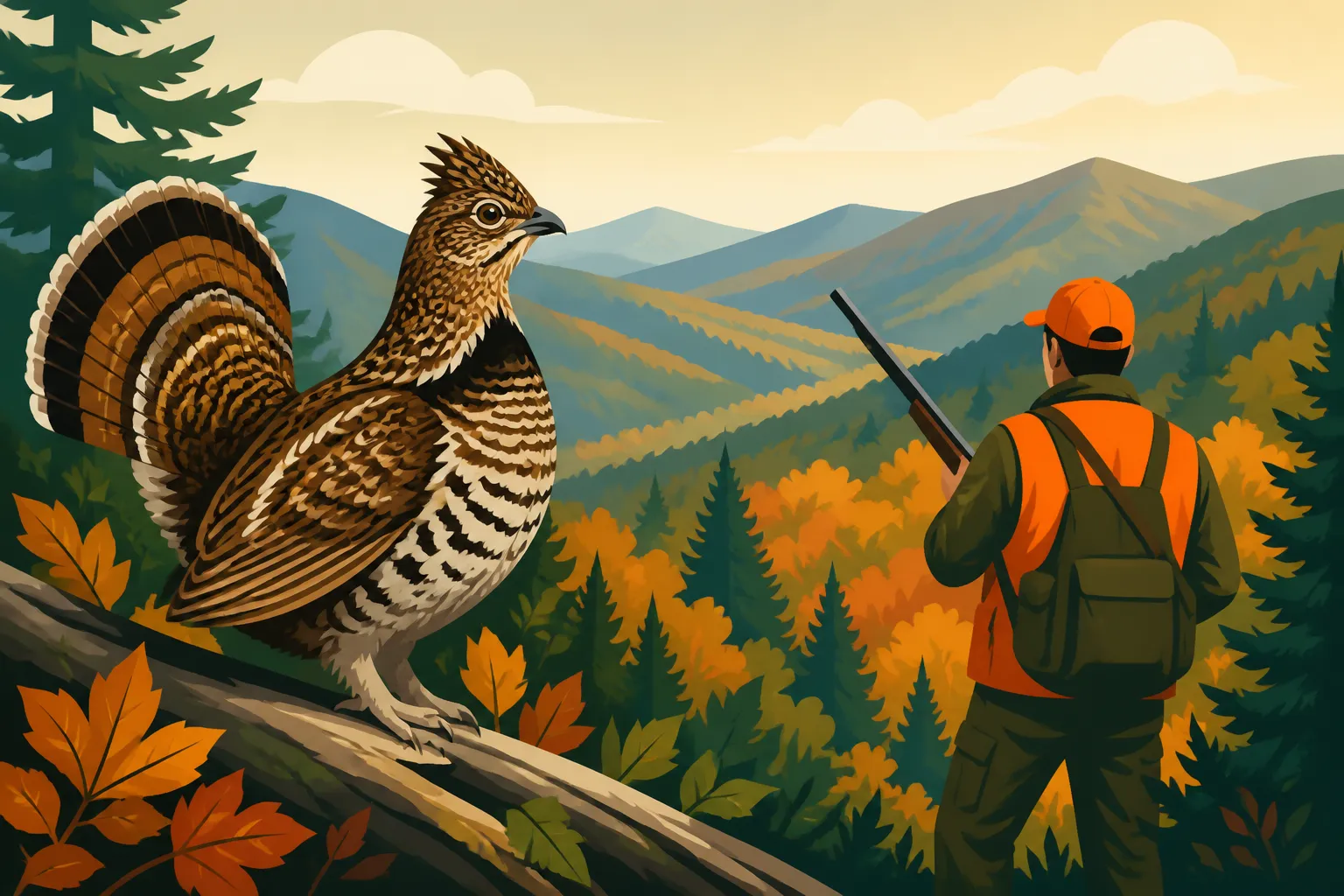
Oh, the Allegheny Highlands. There's just something about those rugged mountains that calls to a hunter's soul, isn't there? But let's be honest, chasing ruffed grouse through that thick, unforgiving cover can feel like trying to find a needle in a haystack – a haystack that’s constantly moving and often flushing out of sight before you even shoulder your gun. This guide is all about equipping you with the knowledge and tactics to find success, and maybe even a few birds, in West Virginia’s most challenging and rewarding grouse country.
The Allure of Allegheny Highlands Grouse
There's a reason so many of us are drawn to grouse hunting in the Allegheny Highlands, even when it feels like a constant battle against briars, steep inclines, and the birds' uncanny ability to vanish. It's the challenge, the wildness, and the fleeting thrill of that explosive flush that makes every bird earned feel like a trophy.
Why West Virginia's Highlands Are Grouse Heaven and Hell
The Allegheny Highlands, spanning much of eastern West Virginia, present a unique paradox for grouse hunters. On one hand, these mountains contain vast tracts of public land and a diverse forest ecosystem that, in theory, should be prime grouse habitat. You've got everything from high-elevation spruce-fir forests to mixed hardwoods, all dissected by countless hollows, ridges, and drainages. It's beautiful, wild, and largely undeveloped, which appeals to those of us who cherish solitude afield.
However, this same ruggedness also creates the "hell" aspect of the hunting. The terrain is relentlessly steep, often with dense undergrowth that can swallow a hunter whole. Navigation can be a nightmare without good tools, and the sheer scale of the landscape makes finding those elusive pockets of grouse-holding cover a monumental task. You might walk for hours, pushing through thickets that tear at your clothes and sap your energy, only to hear a distant flush or see a bird disappear into the canopy before you can react. It’s a place that tests your resolve and your conditioning, but the payoff when you do connect with a bird, or simply enjoy a quiet day in the woods, is immense.
Understanding the Ruffed Grouse's Habitat Needs
To consistently find ruffed grouse in the Allegheny Highlands, you have to think like a grouse. These birds are masters of concealment, preferring young, regenerating forests with a dense canopy overhead and thick undergrowth below. They need cover for protection from predators like hawks and coyotes, food sources like buds, catkins, and berries, and drumming logs for breeding.
In West Virginia's mountains, this often translates to specific types of timber stands. We're talking about areas that have been recently logged, perhaps 5-20 years ago, where saplings and brush have grown up into an impenetrable tangle. Mature stands often lack the dense understory grouse need, making them less productive. They also thrive in areas where different habitat types meet, creating "edge" cover that offers both food and protection. Think about the transition zone between a mature oak stand and a regenerating clear-cut, or where a thick stand of rhododendron meets an open hardwood flat. Knowing how to identify these specific features on a map or, more importantly, on the ground, is crucial for success. For more detailed insights into the birds themselves, check out our guide on Ruffed Grouse in the West Virginia Highlands.
Identifying Prime Grouse Cover in the Mountains
One of the biggest challenges in grouse hunting the Allegheny Highlands isn't finding the mountains; it's pinpointing the right spots within those mountains. It’s a puzzle, and you need to learn to recognize the pieces.
Aspen Stands and Young Forest Regenerations
Aspen stands are often considered classic grouse habitat, and for good reason. These fast-growing trees, often found in higher elevations or disturbed areas, provide excellent food and cover for grouse. Their buds are a crucial winter food source, and the thick, vertical stems create ideal escape cover from aerial predators. When aspen stands are young, say 5 to 15 years old, they're practically grouse magnets. The problem in West Virginia is that extensive, managed aspen stands aren't as common as they might be in states further north. However, wherever you find patches of aspen, especially those that have seen some recent disturbance, they are absolutely worth investigating.
Beyond specific aspen stands, any area that has undergone significant logging within the last 5-20 years can be gold. Look for clear-cuts or select cuts that have allowed sunlight to reach the forest floor, stimulating the growth of dense understory vegetation like briars, young saplings, and shrubs. These areas might be brutal to walk through, but that’s precisely why the grouse love them. They offer maximum protection and a buffet of natural foods. Satellite imagery and a tool like the GoHunt mapping platform can be invaluable for identifying these younger forest types, allowing you to scout from your armchair before hitting the steep hills. Remember, finding these specific Grouse Hunting Highlands Aspen Cuts can significantly boost your odds.
Thick Laurel Thickets and Rhododendron Hell Holes
If aspen stands are grouse heaven, then laurel and rhododendron thickets are their fortified bunkers. These dense, evergreen shrubs, often growing in vast, impenetrable patches along creek bottoms, hollows, and shaded hillsides, provide unparalleled thermal cover in winter and year-round protection from predators. Grouse will dive into these "hell holes" at the slightest hint of danger, and once inside, they are incredibly difficult to dislodge.
Hunting these areas requires patience, persistence, and a willingness to get scratched up. You'll often hear a bird flush from deep within the tangle, only to catch a fleeting glimpse of it as it disappears further into the green maze. The key here is to move slowly, stopping frequently to listen for subtle movements or the tell-tale thump-thump-thump of a drumming grouse. When a bird flushes, try to mark its general direction and follow up cautiously. Sometimes, if you apply enough pressure, you can force a re-flush that offers a shot. These thickets are often overlooked by less determined hunters, making them prime spots for those willing to put in the work. They are a classic example of cover where Flushing Grouse Without a Dog becomes a real art form, requiring you to anticipate their escape routes.
Essential Gear and Shotgun Setups for Mountain Grouse
Hunting West Virginia's Allegheny Highlands for grouse is not a casual stroll. The right gear makes all the difference, both in your comfort and your success. You don’t need the fanciest equipment, but you need reliable, durable tools that can stand up to the rigors of the mountain.
Choosing the Right Upland Shotgun and Choke
For grouse hunting in the dense cover of West Virginia, your shotgun is an extension of your body, and it needs to be quick to shoulder and point. Generally, a lightweight, fast-swinging shotgun is preferred. Many grouse hunters favor 20-gauge or even 28-gauge guns for their lighter weight and nimble handling, though a 12-gauge can certainly do the job. The key is balance and ease of carry through thick brush. Over-and-under or side-by-side shotguns are popular for their two-shot capability and often shorter barrel lengths, which are a godsend when navigating through dense laurel. Pump actions and semi-automatics work fine too, but make sure they handle quickly for those split-second shots. For more specific recommendations, our guide on the Best Shotgun Gauge for West Virginia Grouse dives deeper into options.
As for choke, remember you’re often shooting at close range in thick cover. An open choke is your best friend. Improved Cylinder (IC) is a perennial favorite for the first shot, giving you a wider pattern for those fast, close flushes. If your shotgun has interchangeable chokes, you might even consider a Skeet or Cylinder choke for your first barrel, especially when in truly dense "hell holes." For your second shot, a Modified (Mod) choke can give you a bit more reach if the bird gets out a little further, but honestly, most grouse shots in the Highlands are 15-25 yards, so wide patterns are key. Don't be afraid to experiment with different chokes and shot sizes (typically 7.5 or 8 for grouse) to see what patterns best in your gun.
Footwear and Clothing for Steep, Brushy Terrain
Your feet are your foundation in the mountains, so don’t skimp on footwear. You need sturdy, waterproof boots with excellent ankle support and aggressive tread. The terrain can be steep, rocky, and often wet, so a boot that can handle mud, slick leaves, and uneven ground is non-negotiable. Many hunters prefer a comfortable, insulated leather or synthetic boot that can withstand miles of walking. Brands like Danner, Kenetrek, or Irish Setter are popular choices known for their durability and comfort in rugged conditions. Make sure they are well broken-in before your first long hunt to avoid blisters.
Clothing needs to be tough, breathable, and provide protection from thorns and briars. Brush pants or chaps are an absolute must. Without them, you'll be shredded within minutes in thick West Virginia cover. Look for pants made of durable nylon, canvas, or a briar-proof fabric blend. Layering is also crucial. The mornings can be crisp, but you'll quickly work up a sweat climbing those steep hills. Start with a moisture-wicking base layer, add an insulating layer, and top it off with a tough, briar-resistant outer jacket or vest. A good upland vest with plenty of game bag space and shell loops is also incredibly useful. And, of course, blaze orange is required during many seasons, so make sure your outer layer meets the state's visibility requirements for safety.
Strategies for Flushing and Shooting Mountain Birds
Hunting grouse in the Allegheny Highlands is less about pinpoint accuracy and more about quick reactions and understanding bird behavior. These aren't field pheasants; they're wild, cagey birds that live in unforgiving country.
Still-Hunting the Laurel Tunnels Without a Dog
Many of us don't have the luxury of hunting with a trained bird dog, especially in the tight confines of West Virginia's mountain cover. But don't despair; still-hunting can be incredibly effective if done correctly. The key is to move slowly and deliberately. Think of it as a methodical sweep, rather than a brisk walk. Take a few steps, then pause for 10-20 seconds. This erratic movement often makes a nervous grouse hold tighter, then flush when you move again, or conversely, convinces them they've been spotted and they try to escape.
As you move, pay close attention to the wind direction. Grouse will often flush into the wind, as it aids their takeoff. Try to position yourself so that when they flush, they're not immediately flying away directly from you. When working through thick laurel or rhododendron, identify potential escape routes – a slightly thinner spot in the canopy, a gap between thickets, or an old logging road. Be ready to shoulder your gun the instant you hear that tell-tale thunder of wings. The shot window will be tiny, sometimes just a glimpse through the leaves. Focus on getting the gun up and pointed quickly, letting your lead instinct take over. It’s less about aiming precisely and more about instinctive shooting. You'll miss more than you hit, but the hits will feel incredibly satisfying.
Working With a Bird Dog in Challenging Cover
For those fortunate enough to hunt with a well-trained bird dog, the dynamic shifts, but the challenge remains. A good grouse dog is invaluable for finding birds that would otherwise be missed and for pinning down those tight-holding birds that often refuse to flush for a foot hunter. However, the thick cover of the Allegheny Highlands demands a specialized kind of dog and handler teamwork. A wide-ranging pointer might cover too much ground and get out of sight too quickly, potentially flushing birds out of gun range. A closer-working flusher or a pointer that understands the need to stay tight in dense cover is often preferred.
Communication with your dog is paramount. Use bells, Garmin or SportDOG GPS collars, or even two-way radios to keep track of your dog in the thick stuff. When your dog goes on point, approach cautiously, anticipating the bird’s escape path. Often, a grouse will try to sneak out or run through the thicket. You might need to move in quickly to kick it out, or even send your dog in on command to flush. Be prepared for a close-quarters shot as the bird bursts from the cover. After the shot, getting your dog to quickly retrieve the bird from tangled briars is another skill in itself. These mountains are tough on dogs too, so always carry water and check their pads frequently for cuts and thorns.
Navigating Public Lands and Scouting for Grouse
West Virginia boasts an impressive amount of public hunting land, much of it within the Allegheny Highlands. However, simply being on public land doesn't guarantee grouse. Strategic scouting is essential.
Key Public Lands in the Allegheny Highlands
The crown jewel for public land hunting in the West Virginia Highlands is undoubtedly the Monongahela National Forest. This massive forest covers over 900,000 acres, stretching across many counties including Pocahontas, Randolph, Pendleton, Greenbrier, and Webster. Within the "Mon," as locals call it, you'll find countless ridges, hollows, and diverse timber stands. Specific Wildlife Management Areas (WMAs) like Cranberry WMA, Little River WMA, and Rimel WMA are also fantastic options, often with targeted habitat management efforts. Other excellent choices include the Blackwater Wildlife Management Area in Tucker County and sections of the George Washington and Jefferson National Forests that spill into the eastern panhandle.
When exploring these areas, don't be afraid to venture off the beaten path. Logging roads, old railroad grades, and utility lines can provide easier access into vast tracts of timber, but the best grouse cover often requires leaving the well-worn paths. Utilize topographic maps and aerial imagery to identify steep slopes, drainages, and areas that show signs of past logging or habitat disturbance. Even small, overlooked patches of thick cover near a major trail can hold birds if they offer the right mix of food and protection. For a comprehensive overview, our guide to Public Hunting Land in West Virginia can offer even more locations.
Reading the Landscape for Grouse Activity
Successful grouse hunters learn to read the landscape like a book. When you’re walking through the woods, don’t just look for birds; look for sign of birds and optimal habitat. Fresh grouse droppings, usually dark and pellet-like, can indicate recent activity. Look for evidence of feeding, such as clipped buds on aspen or birch branches, or disturbed ground where they might have scratched for insects.
Drumming logs, though primarily used in spring, can also reveal prime grouse territory. These are typically large, fallen logs in an area with good cover, which a male grouse uses as a platform to "drum" his wings to attract a mate. Finding an old drumming log in the fall can tell you that grouse have historically used that area. Pay attention to changes in elevation, timber type, and density of undergrowth. As you walk, mentally flag areas that look like good cover – those young sapling thickets, dense laurel patches, or areas where hardwoods meet evergreens. Using a GPS or a mapping app like the one available via GoHunt or others can help you mark these promising spots for future reference, allowing you to build a personal "map" of grouse-holding cover over time. Being able to read the land effectively is a skill that comes with time and effort, but it's essential for consistent success.
| Habitat Feature | Grouse Appeal | Scouting Tip | Hunting Strategy |
|---|---|---|---|
| Young Clear-cuts | Dense escape cover, abundant food (berries, seeds) | Look for 5-20 year old growth on aerial maps | Walk the edges, push through the thickest parts slowly |
| Aspen Stands | Winter food (buds), vertical stem cover | Often found at higher elevations or disturbed sites | Focus on the densest patches, especially in late season |
| Laurel/Rhododendron | Thermal cover, predator protection, dense refuge | Common along creek bottoms, hollows, shaded slopes | Move very slowly, listen intently, anticipate tight flushes |
| Edge Habitat | Transition zones between cover types, food access | Identify where different timber types meet | Hunt parallel to the edge, or push through from one side to another |
| Old Logging Roads | Travel corridors, food sources (weeds), dusting sites | Look for overgrown roads on topo maps, especially in thick areas | Walk quietly, be ready for birds dusting or feeding along edges |
Preserving the Future of West Virginia Grouse Hunting
Chasing grouse in West Virginia is a tradition many of us cherish, and it's important to understand the factors affecting grouse populations and how we can contribute to their future.
Understanding Population Dynamics and Habitat Initiatives
West Virginia's ruffed grouse population, like in many other parts of its range, has faced some challenges over the years. Factors like habitat maturation, climate change, and even West Nile Virus have contributed to local declines. Grouse thrive on early successional habitat – those young, regenerating forests that are created by natural disturbances like wildfires or, more commonly, by active forest management through logging. As forests mature, the dense understory grouse need for protection diminishes.
The West Virginia Division of Natural Resources (WVDNR) and organizations like the Ruffed Grouse Society are actively working on habitat initiatives to create and maintain this critical early successional cover. This often involves carefully planned timber harvests on public lands, promoting the growth of aspen and other valuable browse species, and controlling invasive plants. Hunters play a vital role by supporting these efforts through license purchases and participation in conservation groups. Understanding the complexities of West Virginia Ruffed Grouse Decline helps us appreciate the importance of these conservation strategies.
Ethical Hunting Practices and Conservation
As hunters, we are the original conservationists. Upholding ethical hunting practices is crucial for ensuring the long-term health of the grouse population and the integrity of our sport. This means knowing and following all hunting regulations, including season dates, bag limits, and shooting hours. It also means making responsible shot choices – only taking shots where you have a clear, safe line of fire and a reasonable chance of a clean kill. In dense cover, this can be challenging, but it's our responsibility to avoid simply "blasting" into the brush.
Beyond the regulations, it’s about respect for the game and the land. Pack out everything you pack in, leave no trace, and consider retrieving every bird you shoot, even if it means a difficult search in thick cover. Participating in programs that monitor grouse populations, like drumming surveys, or simply reporting your observations to the WVDNR can also contribute valuable data. By embracing these principles, we not only ensure that future generations can experience the thrill of grouse hunting in the Allegheny Highlands but also solidify our role as stewards of West Virginia's wild places.
Disclaimer
Please note that hunting regulations, seasons, and bag limits are subject to change. Always consult the official West Virginia Division of Natural Resources (WVDNR) hunting regulations guide before heading afield. Safety should always be your top priority.