Wayne County Public Hunting Access
Finding quality public hunting access in West Virginia can sometimes feel like trying to find a needle in a haystack, especially in counties where sprawling national forests aren't the norm. If you're looking to hunt in Wayne County, you might be wondering where to even begin. This comprehensive guide will help you pinpoint the public land opportunities available, understand their unique characteristics, and equip you with the knowledge to make the most of your hunting season in this part of the Mountain State.
Understanding Wayne County's Public Land Landscape
Wayne County, situated in the southwestern corner of West Virginia, presents a slightly different public land picture compared to the vast expanses of the Monongahela National Forest further east. Here, the landscape is often a mix of rolling hills, river bottoms, and a more pronounced presence of private land. This doesn't mean hunting opportunities are scarce, but it does mean you need a more targeted approach to finding and utilizing public access. Many hunters accustomed to endless public timber find themselves scratching their heads when trying to locate huntable ground in counties like Wayne.
The Challenge of Fragmented Public Access
One of the primary frustrations for hunters in Wayne County is the often fragmented nature of public land. Unlike massive contiguous blocks, public parcels here can sometimes be smaller, isolated, or bordered by private property that requires careful attention to boundaries. This makes proper mapping and scouting absolutely essential before you ever set foot in the woods. You might find a promising woodlot only to realize it’s surrounded on all sides, leading to headaches with access or, worse, accidental trespassing. Understanding these nuances is key to a successful and stress-free hunt.
Navigating these fragmented pieces means you can't just wander aimlessly. You need to know exactly where the public land begins and ends, and more importantly, how to legally access it. This often involves looking for designated parking areas or rights-of-way that allow entry without crossing private property. Many local hunters become adept at "micro-scouting," focusing on smaller areas and really getting to know every nook and cranny of a particular public block. They might spend hours walking property lines or using digital mapping tools to ensure they're always on the right side of the law.
General Characteristics of Wayne County Terrain for Hunters
Wayne County's topography, while not as dramatically steep as the Allegheny Mountains, still offers plenty of challenging and rewarding terrain for hunters. You'll find a mix of hardwood forests, particularly oak and hickory stands that are prime for mast production, especially near the Ohio River. Creek bottoms and draws can provide natural travel corridors for deer, while steeper hillsides offer bedding areas. Game species like white-tailed deer, wild turkey, and various small game are present, with habitat ranging from mature timber to brushy clearings. Hunting Ohio River Valley Bottomland can be particularly productive for various species, given the fertile ground and abundant food sources.
When you're out there, pay close attention to the subtle changes in elevation, the types of trees, and the presence of water sources. Deer, for example, will often travel along benches and ridges, utilizing cover to move between feeding and bedding areas. Turkeys might roost in taller timber near water and then pitch down to feed in more open areas or along creek beds. Even small game, like squirrels and rabbits, will gravitate towards specific habitat features, whether it's an oak ridge full of acorns or a thick briar patch along a fencerow. Knowing these typical patterns for the local terrain will greatly improve your chances.
Key Public Hunting Areas in Wayne County
While Wayne County might not boast a long list of sprawling state forests, it does offer a few significant public hunting opportunities that are well worth exploring. The primary destination for public land hunters in this area is Beech Fork Lake Wildlife Management Area (WMA). This WMA provides thousands of acres of huntable ground and is often the first place local hunters will direct you.
Beech Fork Lake Wildlife Management Area
Beech Fork Lake WMA is the gem of public hunting in Wayne County. Encompassing over 7,500 acres, this WMA surrounds Beech Fork Lake and offers diverse habitat, including hardwood forests, brushy fields, and lake shoreline. It's a fantastic spot for White-Tailed Deer Across West Virginia, wild turkeys, and a variety of small game. The terrain here can be hilly, with plenty of hollows and ridges, providing excellent cover and travel routes for wildlife. Access points are scattered around the lake, so doing your homework on entry routes is crucial.
Hunters often find success here by focusing on areas away from the immediate recreational zones of the lake. Hiking further into the timber can get you away from pressure, especially during opening weekends. Look for areas with a good mix of mature timber for mast, thickets for bedding cover, and water sources. Scouting trails, rubs, scrapes, and turkey sign is paramount. Remember that hunting pressure can funnel game into specific areas, so identifying these escape routes or secluded pockets can be very rewarding.
Other Potential Public Access Points and Considerations
Beyond Beech Fork Lake WMA, dedicated hunters might find limited opportunities on smaller, often less publicized parcels of public land, or possibly through specific agreements with landowners for access to otherwise private ground. These smaller tracts require even more diligent research. The Public Hunting Land in West Virginia network is robust, but it takes effort to find and utilize every available acre, especially outside of the major forests and WMAs.
Sometimes, state park land adjacent to WMAs or national forests might have specific hunting seasons or quota hunts. Always check with the West Virginia Division of Natural Resources (WVDNR) for the most up-to-date regulations and maps for any area you plan to hunt. Don't assume that because land is publicly owned, it's open to hunting year-round or for all species. Specific zones, dates, and regulations always apply, and neglecting to check can lead to serious legal issues.
| Public Hunting Area | Approximate Size (Acres) | Primary Game Species | General Terrain | Key Considerations |
|---|---|---|---|---|
| Beech Fork Lake WMA | 7,500+ | Deer, Turkey, Small Game, Waterfowl | Hilly hardwood forest, brush, lake shoreline | Scattered access, proximity to lake recreation, pressure |
| Other Small Tracts | Varies (often <100) | Varies | Mixed woods, fields, river/creek bottoms | Highly fragmented, boundary vigilance, likely high pressure |
Navigating Access and Regulations
Hunting public land successfully in Wayne County isn't just about finding the right spot; it's also about understanding the rules of engagement. From licenses to land boundaries, being prepared means knowing what's expected of you as a hunter. This is where modern tools and diligent research become your best friends.
Essential Licenses and Permits
Before you even think about setting up a stand or calling in a turkey, you need to ensure you have all your ducks in a row when it comes to licenses and permits. Every hunter in West Virginia, resident or nonresident, needs a valid hunting license. Beyond the general license, specific stamps are required for deer, bear, and turkey. If you're planning to hunt migratory birds, you'll also need a HIP certification and a federal duck stamp. You can purchase most of these directly through the West Virginia Hunting Licenses and What They Cost system.
It's easy to get everything you need online through the Go Wild West Virginia platform. This portal allows you to purchase licenses, check game, and stay informed about current regulations. Always carry proof of your license while afield, whether it's a physical copy or a digital version on your phone. Game wardens regularly patrol public lands, and you don't want your hunt cut short because of a forgotten permit. Make it a routine to double-check your wallet or hunting vest before heading out each season.
The Power of Digital Mapping Tools
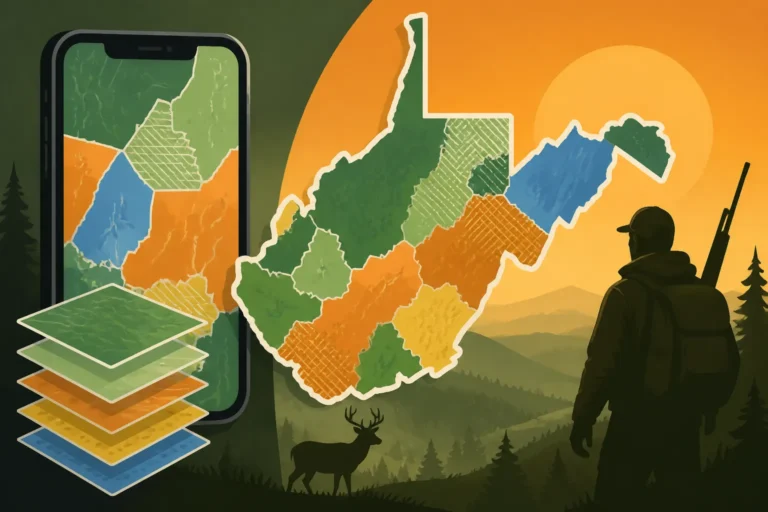
In a county with fragmented public land like Wayne, digital mapping applications are not just convenient – they're indispensable. Tools like onX Hunt can overlay public and private land boundaries directly onto your phone or GPS device, showing you exactly where you stand. This is invaluable for preventing accidental trespassing and for identifying key access points or pinch points on public ground. I honestly don't know how folks hunted some of these areas effectively before these apps came along.
You can use onX Layers for West Virginia Land Status to see landowner information, recent satellite imagery, and even topographical maps that help you scout from your couch. Imagine finding a small pocket of public land tucked between two private parcels, accessible only by a narrow strip. Without a detailed map, you'd likely never know it existed, let alone how to get there. Similarly, the Using the Go Wild West Virginia Map Tool provides a great starting point, often showing WMA boundaries and access roads that can then be cross-referenced with more detailed applications. These tools empower you to hunt smarter and safer.
Maximizing Your Hunt on Wayne County Public Land
Hunting public land is an art form, and doing it effectively in a county like Wayne, with its unique challenges, requires strategic thinking, diligent scouting, and an understanding of how game uses the available habitat. It's not just about showing up; it's about making smart choices before and during your hunt.
Scouting for Success
Scouting is the cornerstone of any successful hunt, and it's particularly vital on public land where pressure can often dictate animal movement. In Wayne County, focus your efforts on understanding how deer and turkey move between feeding, bedding, and watering areas. Look for fresh rubs and scrapes, well-worn trails, and significant mast crops like white oak acorns. Pay attention to terrain features like saddles, benches, and creek crossings, as these often act as natural funnels. You can apply principles similar to Reading Aerial Photos for Eastern Panhandle Deer by analyzing satellite imagery for potential travel corridors and bedding cover.
Don't limit your scouting to just a few weeks before the season. Off-season scouting, particularly in late winter and early spring, can reveal sign that's often hidden by thick foliage during hunting season. Use game cameras on public ground, if permitted, to monitor activity (always check WMA rules, as some might have restrictions). Remember, the more time you spend in the woods, the better you'll understand the habits of the local game and how they react to pressure. Think of yourself as a detective, piecing together clues to form a complete picture of animal movement.
Adapting to Hunting Pressure
Public land, by its very nature, can experience higher hunting pressure than private tracts. In Wayne County, especially around Beech Fork Lake WMA, you might encounter other hunters. The key to success often lies in adapting to this pressure. This could mean walking further than most, hunting during mid-week, or focusing on overlooked pockets of habitat that other hunters bypass. Deer, especially mature bucks, quickly learn to avoid areas with heavy human activity.
Consider hunting during the late season when many hunters have hung up their gear, or targeting overlooked species like small game which often receive less attention. Hunting the Late-Season December Lull can be incredibly productive for deer, as they are focused on finding food and are less wary of calling or rattling. Being willing to put in the extra effort, whether it's an extra mile on foot or an extra hour in a stand, can make all the difference in outsmarting pressured game. Sometimes, just sitting tight and being patient after the opening day rush has subsided can be your most effective strategy.
Specific Tactics for Wayne County Game
For deer, consider stand placement along benches or ridgelines connecting bedding areas to oak flats, especially if you're hunting during the rut. If you're fortunate enough to find a secluded food source, that's often a gold mine. For turkeys, early morning roost hunts can be effective, but be prepared to Run-and-Gun Turkey Tactics on Public Land if birds are pressured and don't respond to initial calls. Small game hunting for squirrels and rabbits often involves still-hunting through prime habitat or working thicker cover with a good dog. Squirrel Hunting West Virginia Bottomland Hardwoods can be a fantastic experience, especially after a good mast crop.
No matter what you're hunting, always prioritize safety. Wear your blaze orange during firearm seasons, be mindful of your shooting lanes, and always assume there might be other people in the woods. While Wayne County might not be the first place that comes to mind for vast public hunting, with the right approach and a bit of determination, it can offer some truly rewarding hunting experiences.
Disclaimer
This article is for general informational purposes only and does not constitute professional advice. Laws, prices and regulations vary by location and change over time. Consult a qualified professional for guidance on your specific situation.