Where West Virginia Sits in the Grouse Cycle
It's a common frustration for grouse hunters in West Virginia: one year, the woods seem alive with exploding wings and rapid flushes, and the next, you walk for miles in perfect cover, and all you hear is the crunch of leaves under your boots. This guide is dedicated to unraveling the mystery of the ruffed grouse population cycle and explaining where West Virginia typically fits into these fluctuations, helping you understand why some seasons are tougher than others.
Understanding the Ruffed Grouse Population Cycle
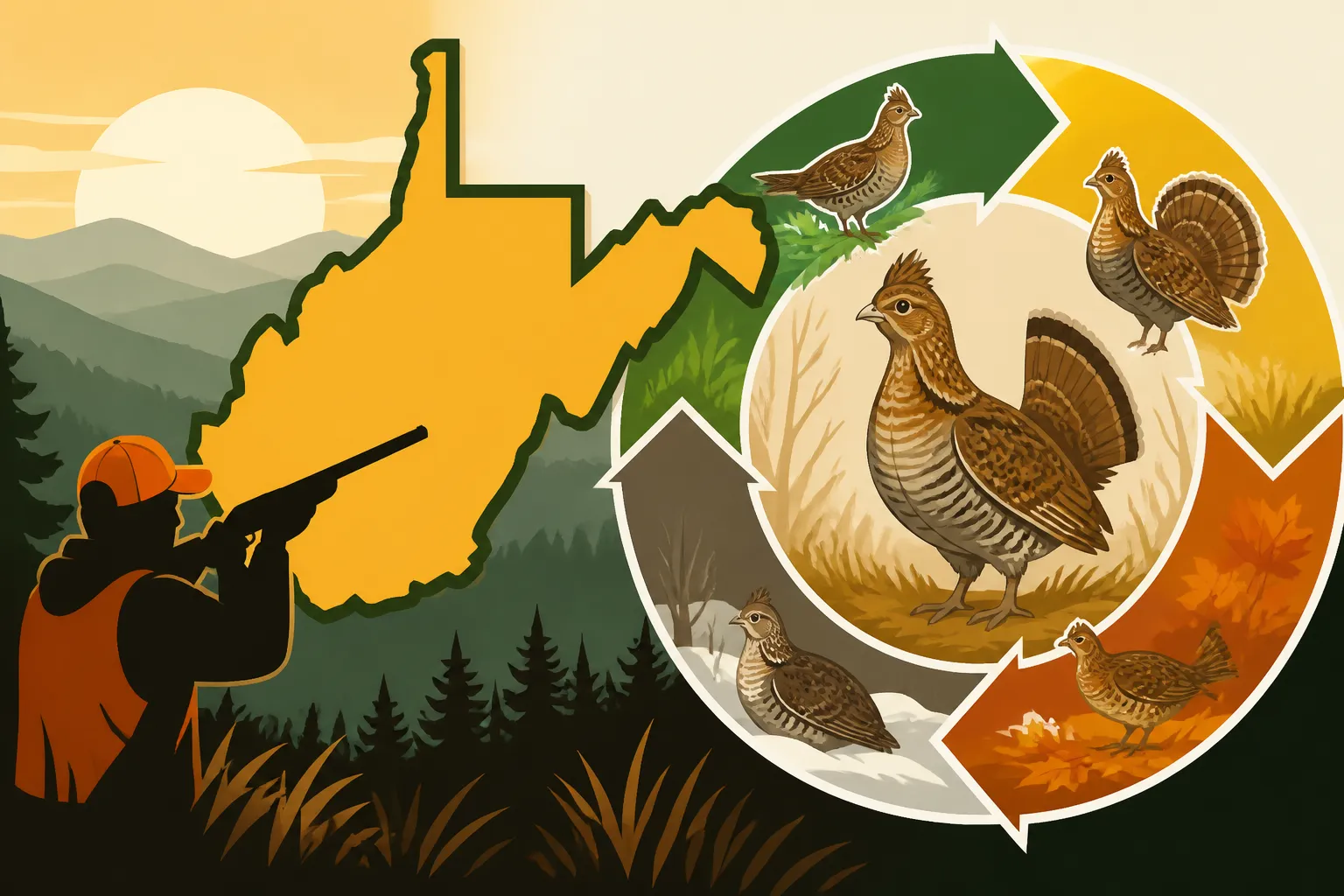
For many avid upland bird hunters, the phrase "grouse cycle" conjures images of the famous boom-and-bust patterns observed in the northern states and Canadian provinces. This concept suggests that ruffed grouse populations swing dramatically, peaking roughly every 8-11 years before declining and then slowly recovering. It’s a fascinating, if sometimes heartbreaking, aspect of grouse hunting.
The Elusive 10-Year Cycle Explained
At its simplest, the 10-year grouse cycle describes a predictable rise and fall in bird numbers. Imagine a roller coaster: a slow climb to a peak where birds are abundant, followed by a rapid, sometimes drastic, drop-off, and then a gradual ascent back towards the next peak. This pattern is often attributed to complex interactions between grouse, their predators (like goshawks, owls, and foxes), and even parasitic loads. When grouse numbers are high, predators thrive, eventually leading to a crash. As grouse numbers dwindle, so do predator populations, allowing the grouse to rebound. It's a natural, albeit challenging, rhythm of the wild. While this cycle is a well-documented phenomenon in the northern reaches of the ruffed grouse's range, its influence in West Virginia, nestled at the southern edge of prime grouse country, is often a bit more nuanced and less pronounced.
Key Drivers of Population Swings Beyond the Cycle
While the cyclical nature of grouse populations is often discussed, it’s crucial to understand that many other factors can independently or in conjunction drive population swings. Weather, for instance, plays a huge role. Harsh winters with deep snow or sudden ice storms can impact food availability and survival rates. Cold, wet springs can devastate poult survival, as young chicks are particularly vulnerable to hypothermia and a lack of insect protein. Habitat quality, too, is paramount. Ruffed grouse are creatures of early successional forests – young, regenerating woodlands that provide dense cover and abundant food sources. Without this specific type of habitat, no matter where a state theoretically sits in a cycle, grouse populations will struggle. Predation pressure, localized disease outbreaks, and even food mast crop failures can all contribute to good or bad years, sometimes overriding the classic cyclical pattern. Hunters often discuss the impact of factors like this after a tough season.
Where West Virginia Sits in the Grouse Landscape Today
Unlike some northern states where the 10-year cycle is almost a religion among grouse hunters, West Virginia's ruffed grouse populations tend to be more influenced by habitat availability and quality than by a strict, dramatic boom-and-bust cycle. While we do experience ups and downs, they are often less synchronized and more localized, a testament to the diverse topography and varied forest management practices across our state.
Regional Variations in West Virginia's Grouse Numbers
If you ask ten different grouse hunters in West Virginia, you might get ten different answers about how the bird numbers are doing. That's because our grouse populations aren't monolithic; they vary significantly by region. In the high-elevation Allegheny Highlands, where aspen and mixed hardwoods regenerate after logging or natural disturbances, you might find pockets of good bird numbers. Areas with a history of timber management that creates diverse age classes of forest tend to hold more birds. Conversely, in vast stretches of mature, unbroken timber – as beautiful as they are – grouse can be few and far between because the habitat simply isn't what they need.
Some years, a cold, wet spring might hit one drainage hard, while another, just a few ridges over, experiences better nesting success. This means that while a statewide trend might point to a general West Virginia Ruffed Grouse Decline, individual areas can still offer rewarding hunting if you know where to look. It really drives home the importance of scouting and understanding local conditions, rather than relying solely on a broad "cycle" prediction. You can gain valuable insights by looking at things like West Virginia Grouse Drumming Surveys which give a snapshot of breeding activity in different regions.
Habitat as the Primary Influence in the Mountain State
Here in West Virginia, it's less about the overarching 10-year cycle and more about the quality and quantity of early successional habitat. Ruffed grouse thrive in young forests, typically 10-25 years old, dense with saplings, briars, and brush. This provides crucial cover from predators and abundant food sources like buds, catkins, and berries. Without this critical habitat, grouse struggle to survive, regardless of what the broader "cycle" might suggest.
This is why Aspen Management and Highlands Grouse often go hand-in-hand. Aspen stands, when cut and allowed to regenerate, provide ideal grouse cover for years. However, as these stands mature, they become less suitable. Our state's landscape is constantly changing due to logging, natural succession, and other factors, and these changes directly impact grouse numbers. Forest management plans that incorporate periodic clearcuts or selective logging can be a huge boon for grouse populations, creating those vital pockets of dense, young growth that birds desperately need. If you're using a mapping app like GoHunt, you can often pinpoint recent timber harvests or areas with high forest diversity, which are prime spots to focus your efforts.
Hunting Strategies for Fluctuating Grouse Numbers
Given that West Virginia's grouse populations are more influenced by localized habitat conditions and less by a rigid, predictable cycle, a successful grouse hunter needs to be adaptable. Blindly walking the same old covers year after year might lead to disappointment if those areas have matured out of prime grouse habitat.
Adapting Your Approach to Cover Types
The key to consistent grouse hunting in West Virginia is to relentlessly pursue the right cover. This means being willing to explore new areas and pay close attention to forest age and density. Forget about searching for birds in mature, open hardwoods; they simply won't be there in numbers. Instead, focus on:
- Regenerating Clear-cuts: These areas, typically 5-20 years post-harvest, are gold mines. Look for dense thickets of saplings, briars, and blackberry canes. Be prepared for a tough walk, but the reward can be worth it.
- Old Logging Roads and Skid Trails: While the main road might be mature timber, the edges of old logging roads or areas where equipment created disturbed ground can sprout up with dense, brushy growth that grouse love.
- Alder Runs and Grape Tangels: These low-lying, wet areas or dense patches of wild grapes can provide food and cover, especially later in the season when other food sources become scarce.
- Conifer Plantations (Young): While not traditional, young conifer plantations can offer excellent thermal cover in colder weather, attracting grouse seeking refuge.
Remember, finding birds means finding their habitat, and that habitat is constantly changing. Using a mapping tool like GoHunt can help you identify these specific cover types, even in areas you’ve never visited before, by leveraging satellite imagery and often habitat layers. For deeper dives, consider the advice in Grouse Hunting Allegheny Highlands Cover to refine your understanding of specific terrain.
Leveraging Technology and Scouting for Success
In today's hunting world, technology can be a game-changer, especially when targeting a species as dependent on specific habitat as the ruffed grouse. Mapping applications are invaluable for identifying potential grouse cover. You can scout from home, looking for areas with recent timber activity, dense canopy breaks, or proximity to water sources.
Table: Factors Influencing West Virginia Grouse Populations & Hunting Impact
| Factor | Influence on Grouse Population | Impact on Hunting Strategy |
|---|---|---|
| Early Successional Habitat | Direct correlation; essential for food and cover. Higher quantity/quality = higher populations. | Focus efforts on young clear-cuts, thick regenerating timber, and brushy areas (5-20 years post-disturbance). |
| Spring Weather | Cold, wet springs reduce poult survival. Warm, dry springs increase it. | Adjust expectations based on spring conditions. After a poor spring, expect fewer young birds. |
| Winter Severity | Deep snow can insulate birds from cold and predators, but prolonged harshness can reduce food. | In harsh winters, focus on areas with persistent food sources (e.g., aspen buds) and dense thermal cover. |
| Predation Pressure | High predator numbers (owls, hawks, foxes) can suppress grouse, especially during population lows. | Seek out thicker, denser cover which offers more protection to birds. |
| Disease/Parasites | Can weaken birds, reduce breeding success, or cause localized die-offs. | Less direct for hunting strategy, but be aware of general wildlife health reports. |
| Food Availability | Abundant mast crops (grapes, berries, soft mast) improve condition and survival. | Later in season, target areas known for specific food sources. |
| Forest Management | Logging practices creating diverse age classes benefit grouse. Monoculture or mature forests do not. | Prioritize public lands or private parcels with active timber management plans. |
| Hunting Pressure | Can cause birds to become warier and move to thicker cover. | Hunt mid-week, scout remote areas, or go deeper into public lands where pressure is less. Consider Finding Ground Others Walk Past. |
Beyond remote scouting, putting boots on the ground before the season even opens (within legal limits for non-hunting activity) can give you a significant edge. Look for droppings, dusting areas, and drumming logs. Pay attention to signs of other game as well, as deer and turkeys often utilize similar habitat types. Keep an eye on West Virginia Grouse Season Dates to plan your trips, and remember the rules from West Virginia Small Game Season Rules. For those who hunt without a canine companion, strategies in Flushing Grouse Without a Dog can become especially important.
The Role of Habitat and Management in West Virginia
Ultimately, the future of ruffed grouse hunting in West Virginia hinges not on some mysterious, far-off cycle, but on proactive habitat management. Our state is known for its rugged beauty and extensive forests, but for grouse, not all forests are created equal.
Importance of Early Successional Forests for Grouse
I can't stress this enough: early successional habitat is the lifeline of ruffed grouse. These are the dynamic, ever-changing ecosystems that arise after a disturbance like logging, fire, or severe weather. Think of a clear-cut 5-15 years after the trees have been removed. It's a tangled mess of young saplings, briars, and shrubs – almost impenetrable for a human, but perfect for a grouse seeking shelter from predators and a smorgasbord of buds, seeds, and insects.
Without a consistent supply of this habitat, populations will inevitably decline. As forests mature, they lose the dense understory that grouse rely on. This is a natural process, but it means that active management is often necessary to maintain healthy grouse numbers. Programs focused on creating and maintaining these young forest habitats are critical. Places like the Hunting the Potomac Highlands often see some of the best habitat, precisely because of varied land management.
Conservation Efforts and Future Outlook for West Virginia Grouse
Conservation efforts in West Virginia are vital to ensuring future generations can still enjoy the thrill of a flushing grouse. These efforts often involve partnerships between state wildlife agencies, private landowners, and conservation organizations. Programs that encourage landowners to manage their timber for early successional habitat, through selective cutting or even prescribed burns, make a huge difference.
On public lands, such as our Wildlife Management Areas and portions of the Monongahela National Forest, foresters and biologists work to implement management plans that create this mosaic of forest ages that benefits grouse and other wildlife. It's a long-term game, but one that is essential for the future of our birds. While the overall trend for grouse may be challenging in some parts of their range, focused habitat work here in West Virginia offers the best hope for maintaining huntable populations. Staying informed about West Virginia Wildlife Disease Monitoring can also help understand other pressures on the grouse population. Ultimately, understanding which are the Best West Virginia Counties for Grouse often means understanding which counties have the most actively managed, diverse forest habitats. And when you head out, having the right gear, like Upland Guns for Highlands Grouse Cover, makes all the difference for those quick shots!
Disclaimer
This article is for general informational purposes only and does not constitute professional advice. Laws, prices and regulations vary by location and change over time. Consult a qualified professional for guidance on your specific situation.