Reporting a Poacher in West Virginia
It's an awful feeling, isn't it? You're out enjoying the wild beauty of West Virginia, maybe scouting a new area or just taking in the quiet, and you stumble upon something that just doesn't sit right – an illegally harvested deer, someone hunting out of season, or a baited stand in a no-baiting zone. It’s frustrating, disheartening, and often, people feel powerless. This guide is here to walk you through exactly how to report a poacher in West Virginia, ensuring you have the information and confidence to protect our precious wildlife resources.
Understanding the Scourge of Poaching in West Virginia
Before we dive into how to report, it's really important to grasp why reporting matters so much. Poaching isn't just someone "getting an extra one"; it's a serious crime with far-reaching consequences that impact every single one of us who respects the land and its creatures.
The Real Impact of Illegal Hunting on Our Wildlife
Think about it. Every deer, turkey, or bear taken illegally is one less animal for legal hunters, one less opportunity for wildlife watchers, and a direct hit to the population. Our West Virginia wildlife populations, from the healthy numbers of White-Tailed Deer Across West Virginia to the remarkable West Virginia's Black Bear Comeback, are managed through careful science, season limits, and bag limits. When poachers disregard these rules, they undermine decades of conservation efforts.
It's not just about numbers either. Poaching can have significant ecological impacts. For instance, illegal harvesting can skew age and sex ratios in local herds, making it harder for populations to thrive naturally. It also introduces disease risks, especially concerning issues like Chronic Wasting Disease (CWD). Poachers might not follow proper carcass disposal guidelines, or they might move animals across CWD containment areas, accelerating the spread of this devastating disease. Understanding West Virginia's Chronic Wasting Disease Counties is crucial, as violations here are particularly damaging.
Recognizing What Counts as Poaching Here in the Mountain State
Sometimes, people hesitate to report because they're not 100% sure if what they're seeing is actually illegal. Let's clear that up. Poaching encompasses a wide range of illegal activities related to wildlife. Here are some common examples specific to West Virginia:
- Hunting Out of Season: This is probably the most obvious. If someone is hunting deer during spring turkey season, or vice versa, that's poaching. Always check the official West Virginia Deer Season Structure Explained or West Virginia Spring Turkey Season Rules to be sure.
- Exceeding Bag Limits: Taking more than the legally allowed number of animals. This could be multiple bucks when only one is permitted, or harvesting an extra turkey.
- Illegal Hunting Methods: This includes hunting at night with a spotlight (unless specifically permitted for certain species like coyotes under specific conditions), using prohibited firearms or ammunition, or hunting with bait where it's not allowed. For example, understanding West Virginia Legal Firearms for Deer Hunting is key.
- Hunting Without a License or Proper Tags: Every hunter in West Virginia must possess the appropriate West Virginia Hunting Licenses and What They Cost and associated stamps for the species they are pursuing. No license, no tags, no legal hunt.
- Hunting on Private Land Without Permission: This is also a form of poaching. Respect for landowners is paramount. Familiarize yourself with West Virginia Trespass and Permission Law.
- Taking Protected Species: Harvesting non-game animals or species that are not currently in season for hunting is illegal.
- CWD Violations: This includes moving deer carcasses out of designated CWD containment zones without following strict guidelines, or not reporting harvested deer within the CWD area for mandatory testing.
- Trapping Violations: Not having the correct West Virginia Trapping License Requirements or setting traps illegally.
If you suspect any of these activities, it's definitely worth making a report. Even if you're not entirely certain, let the Natural Resources Police investigate.
Official Channels for Reporting Poachers in West Virginia
When it comes to reporting, you want to make sure your information goes to the right people who have the authority and resources to act. In West Virginia, that means the Natural Resources Police (NRP), who are part of the West Virginia Division of Natural Resources (WVDNR).
The Dedicated Turn In Poachers (TIP) Hotline
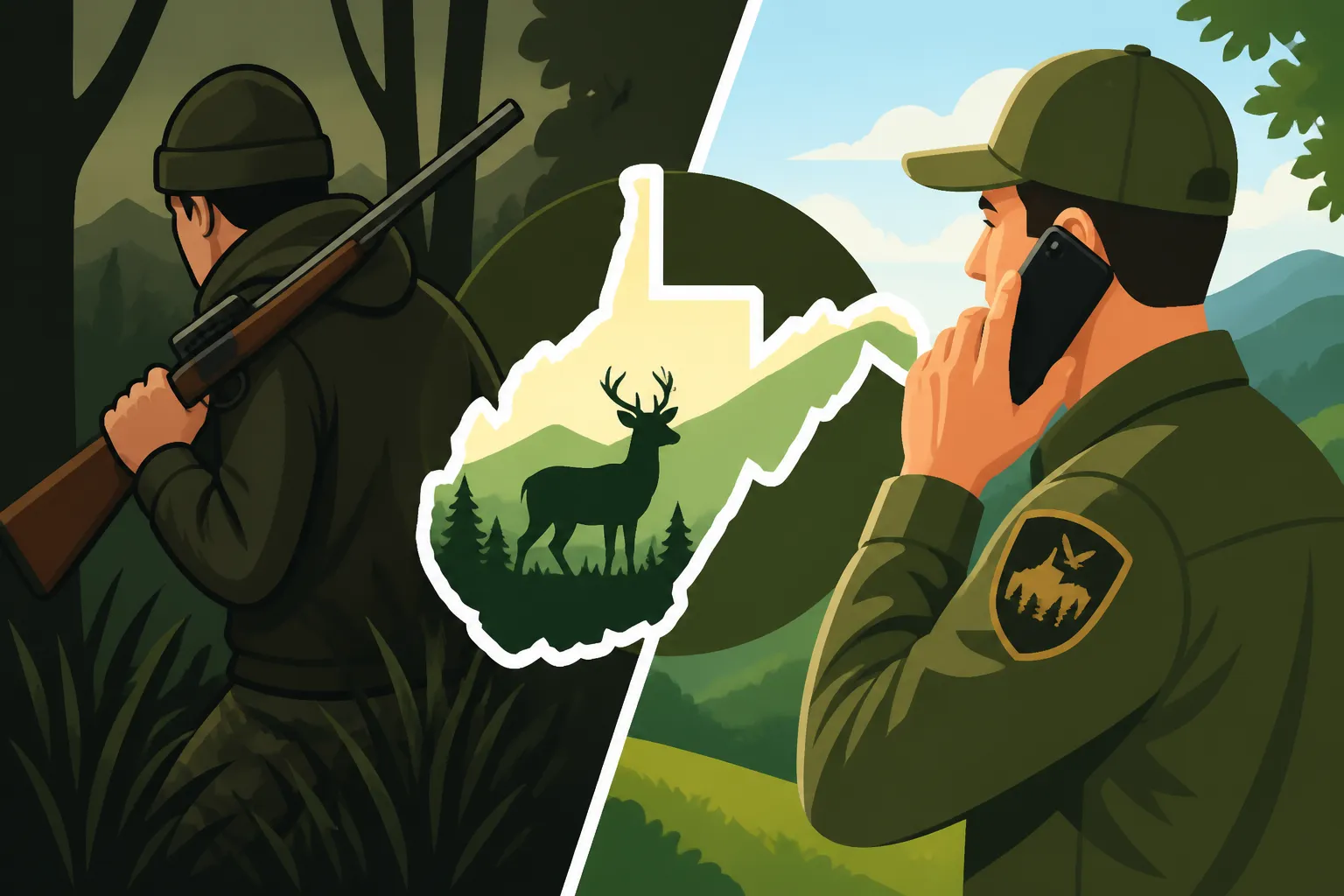
The most direct and often most effective way to report poaching in West Virginia is by calling the state's dedicated Turn In Poachers (TIP) hotline. This hotline is staffed 24/7, making it accessible whenever you observe illegal activity.
The number to remember is 1-800-CALL-WVDNR (1-800-225-5983).
When you call, you'll be connected with a dispatcher who will take down your information. It's incredibly important to provide as much detail as possible, which we'll cover in the next section. What's great about the TIP hotline is that it offers anonymity. You do not have to give your name or contact information, though doing so can sometimes be helpful if investigators need clarification or follow-up details. However, your safety and privacy are always paramount, and you can report with confidence that your identity will be protected if you choose.
Don't ever hesitate to use this number, whether it's the middle of the day or late at night. Poaching doesn't keep regular hours, and neither do our dedicated Natural Resources Police.
Online Reporting Options Through the WVDNR
For those situations where a phone call isn't feasible or immediate, the WVDNR also provides an online reporting form. This can be a great option if you have extensive details, photos, or videos you want to submit.
You can usually find this form on the official WVDNR website under their "Law Enforcement" or "Report a Violation" sections. A quick search for "WVDNR report poaching" should lead you directly to it. This method allows you to systematically input all the information and even upload supporting files.
While it might not be as immediate as a phone call, using the online form can be very thorough. It's especially useful if you discover evidence of poaching after the fact, or if you're observing ongoing activity that isn't immediately dangerous but needs to be documented over time. Just like the hotline, you typically have the option to remain anonymous when submitting through the online portal.
Connecting Directly with Natural Resources Police Officers
Sometimes, you might already know your local Natural Resources Police officer, or you might encounter one in the field. If you have immediate concerns and see an officer, don't hesitate to approach them (safely, of course) and share what you've observed. These officers are patrolling Public Hunting Land in West Virginia and specific areas like Monongahela National Forest Hunting or Cranberry Wildlife Management Area daily.
You can also find contact information for district WVDNR offices and their corresponding NRP officers on the WVDNR website. This can be helpful if you want to report something to a specific officer who covers a particular county or region, especially if it's an ongoing issue they might already be aware of. For instance, if you're frequently hunting in the Eastern Panhandle, you might want to know who the local officer is there.
However, for immediate and urgent concerns, the TIP hotline is usually the fastest route, as it dispatches to the nearest available officer.
Gathering Crucial Information Before You Report
Making a report is great, but a report with solid, actionable information is gold to an investigator. The more details you can provide, the better the chances of a successful investigation and prosecution.
Key Details That Aid Investigators
When you make that call or fill out the online form, try to have as much of this information ready as possible. Don't worry if you don't have everything; even a few key details can be enough.
- What happened? Clearly describe the illegal activity you witnessed.
- When did it happen? Provide the date and exact time if possible. If it's an ongoing situation, note the frequency.
- Where did it happen? This is critical. Be as specific as possible.
- County, road names, nearest town.
- Specific landmarks: "near the big oak tree at the bend in Mill Creek Road," "half a mile past the powerline crossing on Forest Road 101."
- GPS coordinates: If you have a GPS unit or use a mapping app like GoHunt, mark the exact location. This is incredibly helpful. You might also use tools like Scouting With the WVDNR App to pinpoint your location.
- Who was involved?
- Number of people.
- Descriptions: Age, gender, height, weight, hair color, clothing.
- Names or nicknames: If you happen to know them.
- Vehicle information:
- Make, model, color, year (if known).
- License plate number (partial is better than none!).
- Any unique features: Bumper stickers, dents, specific equipment like deer racks.
- Description of animals:
- Species: Deer, bear, turkey, etc.
- Number of animals.
- Approximate size or sex.
- If an animal was taken: Was it loaded into a vehicle? Where was it taken?
- Weapons used: Type of firearm (rifle, shotgun, handgun), bow, or crossbow.
- Any other evidence: Shell casings, blood, tracks, unusual sounds.
Here's a quick table summarizing key information to gather:
| Category | Specific Details to Collect |
|---|---|
| The Act | What illegal activity occurred (e.g., hunting out of season, baiting, over limit)? |
| Time & Date | Exact date and time; duration of observation. |
| Location | County, road names, nearest town, GPS coordinates, landmarks. |
| Individuals | Number, descriptions (age, height, clothing), names/nicknames. |
| Vehicles | Make, model, color, license plate, unique identifiers (e.g., dents, decals). |
| Wildlife | Species, quantity, size/sex, if taken, where it was placed. |
| Equipment | Type of weapon (rifle, bow), traps, calls, lights, bait. |
| Other Evidence | Photos, videos, tracks, shell casings, unusual smells. |
Prioritizing Your Safety While Observing and Documenting
It's absolutely critical to prioritize your personal safety above all else. Do not confront suspected poachers. These individuals are breaking the law and may be armed, unpredictable, or dangerous. Your role is to observe and report, not to intervene.
Here are some safety tips:
- Maintain a safe distance: Stay out of sight and earshot. Use binoculars or a camera with a zoom lens if you have one.
- Don't make your presence known: Avoid sudden movements, loud noises, or anything that might draw attention to you.
- Note escape routes: Be aware of your surroundings and have a plan to leave the area quickly and safely if needed.
- Don't risk pursuit: If poachers leave, do not follow them. Just note their vehicle information and direction of travel.
- Trust your gut: If a situation feels unsafe, disengage immediately and report from a secure location.
Remember, your safety is more important than getting a perfect photo or license plate number. The Natural Resources Police are trained professionals; let them handle the confrontation.
Utilizing Technology and Tools Like GoHunt for Evidence
In today's world, our smartphones and various apps can be incredibly powerful tools for gathering evidence.
- Smartphone Camera: Your phone's camera is invaluable. Photos and videos can provide undeniable proof of illegal activity, vehicle details, and even identifying features of individuals (from a safe distance, of course). The timestamp and GPS data embedded in many smartphone photos can also be critical for investigators.
- Mapping Apps: Apps like onX Hunt, BaseMap, or even Google Maps can help you pinpoint exact locations with GPS coordinates. Many hunters use general hunting and scouting apps like GoHunt to mark waypoints for treestand locations or game sign, and these same features can be used to accurately mark a poaching incident. This can be especially useful when trying to describe a remote area of Hunting the Potomac Highlands or deep within West Virginia Wildlife Management Areas.
- Note-Taking Apps: Immediately after observing something, jot down notes while the details are fresh in your mind. Don't rely on memory alone. Detail every aspect you recall – what they were wearing, the color of their truck, what kind of calls they were using if it was a turkey violation, etc.
While general hunting apps like GoHunt aren't direct reporting tools for the WVDNR, they can be excellent for collecting and organizing the information you'll then relay to the official TIP hotline or online form. For instance, if you're mapping out a potential bear hunting spot and notice illegal baiting, you can quickly drop a pin in GoHunt with notes and photos, then use that precise data when contacting the authorities. This kind of systematic documentation significantly strengthens your report.
What Happens After You File a Poaching Report
It’s natural to wonder what happens after you've made that call or submitted that online form. You've done your part, but you might not always see immediate action or get a follow-up call, and that's okay.
The Investigation Process Explained
Once you file a report, the information is reviewed by the Natural Resources Police. If it's an urgent or active situation, an officer will be dispatched as quickly as possible to the location you provided. For less urgent reports, the information might be assigned to a local NRP officer for follow-up investigation during their routine patrols.
Investigators will:
- Assess the information: They'll determine the credibility and urgency of the report.
- Gather more evidence: This could involve visiting the scene, looking for additional physical evidence, interviewing potential witnesses, or checking local records (like license databases).
- Conduct surveillance: If it's an ongoing issue, officers might conduct hidden surveillance to catch perpetrators in the act.
- Interview suspects: Once enough evidence is collected, officers will approach suspects.
The process can take time, sometimes weeks or even months, especially if the poachers are elusive or the evidence is scarce. Patience is key.
Why Immediate Action Isn't Always Visible
One of the biggest frustrations for concerned citizens is the lack of immediate visible action. You might report something, drive by the next day, and see no patrol car or arrest being made. This doesn't mean your report was ignored!
- Undercover Operations: Many investigations are conducted discreetly. Officers might be observing from a distance, gathering more intelligence, or waiting for the best opportunity to apprehend suspects without alerting them.
- Resource Allocation: The Natural Resources Police have a vast area to cover across West Virginia, from Hunting the Ohio River Valley Bottomland to the high elevations of the Monongahela. They must prioritize calls based on severity and available resources. Your report is one of many they receive.
- Building a Case: Sometimes, an officer might need to build a stronger case before taking overt action. This involves collecting enough evidence to withstand legal scrutiny, which can be a slow process.
- Anonymity: If you reported anonymously, the WVDNR cannot contact you to provide updates on the investigation, even if they wanted to.
Rest assured, every report is taken seriously. Your act of reporting is a vital contribution to protecting West Virginia’s wildlife, even if you don't witness the resolution directly. Your information contributes to keeping our hunting heritage strong and our wild places healthy for everyone. Remember that the West Virginia Wildlife Violation Penalties can be severe, so these cases are not taken lightly by the authorities.
West Virginia's Stance on Wildlife Crime
West Virginia takes wildlife crime seriously, and the Natural Resources Police are dedicated to enforcing the laws that protect our state's incredible natural heritage. From ensuring fair chase principles in deer season to safeguarding Wild Turkeys in West Virginia from illegal harvests, their work is ceaseless. Every report, no matter how small it might seem, contributes to their mission and supports the honest hunters who adhere to regulations. By knowing how to report and understanding the impact of your actions, you become a critical part of the conservation solution here in the Mountain State.
Disclaimer
The information provided in this guide is for general informational purposes only and does not constitute legal advice. Hunting regulations and laws can change, and it is always the responsibility of the individual to consult the most current West Virginia Division of Natural Resources (WVDNR) official regulations and statutes before engaging in any hunting activities or making a report.