Turkey Decoys That Work on Pressured Birds
There's nothing quite as frustrating as working a West Virginia gobbler, pouring your heart and soul into calling, only to watch him hang up at 100 yards, strutting and drumming, but refusing to commit to your decoy spread. It's a common story, especially when those birds have been hunted hard. This guide is all about overcoming that challenge, diving deep into decoy strategies that actually work on those educated, wary birds that have seen it all before.
Understanding the Wary West Virginia Gobbler
Hunting pressure, whether it's on public land or a local private woodlot that sees a lot of traffic, fundamentally changes how turkeys behave. They don't just forget about danger; they learn. And a gobbler that's had a bad experience with decoys is going to be incredibly tough to fool again with the same old setup. We need to get into their heads a bit to understand why they act the way they do.
The Psychological Impact of Hunting Pressure
Imagine walking into a trap twice in a row. You'd probably be pretty hesitant to walk into it a third time, right? Turkeys operate on a similar principle. After opening day, and especially after the first week of West Virginia Spring Turkey Season Rules, gobblers start to get a formal education in hunter avoidance. They learn what's safe and what isn't, and unfortunately, a static, unnatural-looking decoy spread often falls into the "isn't safe" category. This is particularly true on public lands, like those sprawling acres in Monongahela National Forest Hunting or even smaller, accessible WMAs, where birds are encountering human pressure constantly. They might hear aggressive calling, see poorly placed decoys, or even have a close call with a hunter. These experiences, even if they don't result in a shot, embed wariness into their behavior. What might have worked flawlessly on opening day becomes a surefire way to send them running for the hills just a few days later. They become skeptical of anything that seems "too perfect" or out of place.
Signs of Decoy Aversion and Wariness
How do you know you're dealing with a pressured bird that's wary of decoys? The signs are often clear, if disheartening. The most common is the infamous "hang up" – a gobbler that struts and drums, often intensely, but just outside of shooting range, usually 60-100 yards. He might circle your position wide, using terrain features like creek bottoms or a subtle ridge to keep his distance, carefully scrutinizing your setup from afar. These birds might be gobbling their heads off, eager to interact, but their instincts scream caution. They'll crane their necks, staring hard at your decoys, trying to spot movement or anything that feels off. You might even see them take a few steps in, then stop, stomp their feet, and retreat, a clear sign they've seen something they don't like. Another tell-tale sign is when they commit briefly, then suddenly bolt for no obvious reason; it’s usually because they spotted something incongruent with a natural scene. Sometimes, especially When West Virginia Gobblers Go Quiet in May, they'll approach silently, slipping in and out of cover, observing before committing. If your decoys don't convince them instantly, they're gone.
Decoy Fatigue and What it Looks Like
Beyond general wariness, "decoy fatigue" specifically refers to birds that have become desensitized or suspicious of decoys themselves. This happens when birds see the same types of plastic models day after day, often set up in similar ways, usually in popular hunting spots. They learn to associate these static forms with danger. Instead of eliciting curiosity or aggression, a decoy spread causes an instant reaction of avoidance. You'll see birds actively avoid fields or open areas where decoys are commonly deployed. They might come off the roost and fly directly to thick cover, ignoring calls and any visual enticement in open ground.
It's not just about them being shy; it's about active rejection. These birds have literally seen hundreds of decoys, perhaps even been shot at over one. They've processed that information and decided that those plastic birds aren't worth the risk. This is why understanding West Virginia Turkey Population Trends in your area can be helpful; lower populations or high hunting pressure on public land often lead to more decoy-fatigued birds. The challenge then becomes presenting something so natural and unintimidating that it overrides their ingrained suspicion.
Minimalist and Realistic Decoy Setups
When dealing with pressured birds, the old adage "less is more" often holds true. Overly elaborate or unrealistic spreads can do more harm than good. The goal isn't to create a full flock, but to present a believable, unintimidating scenario that eases a gobbler's suspicion.
Less is More: The Subtle Approach
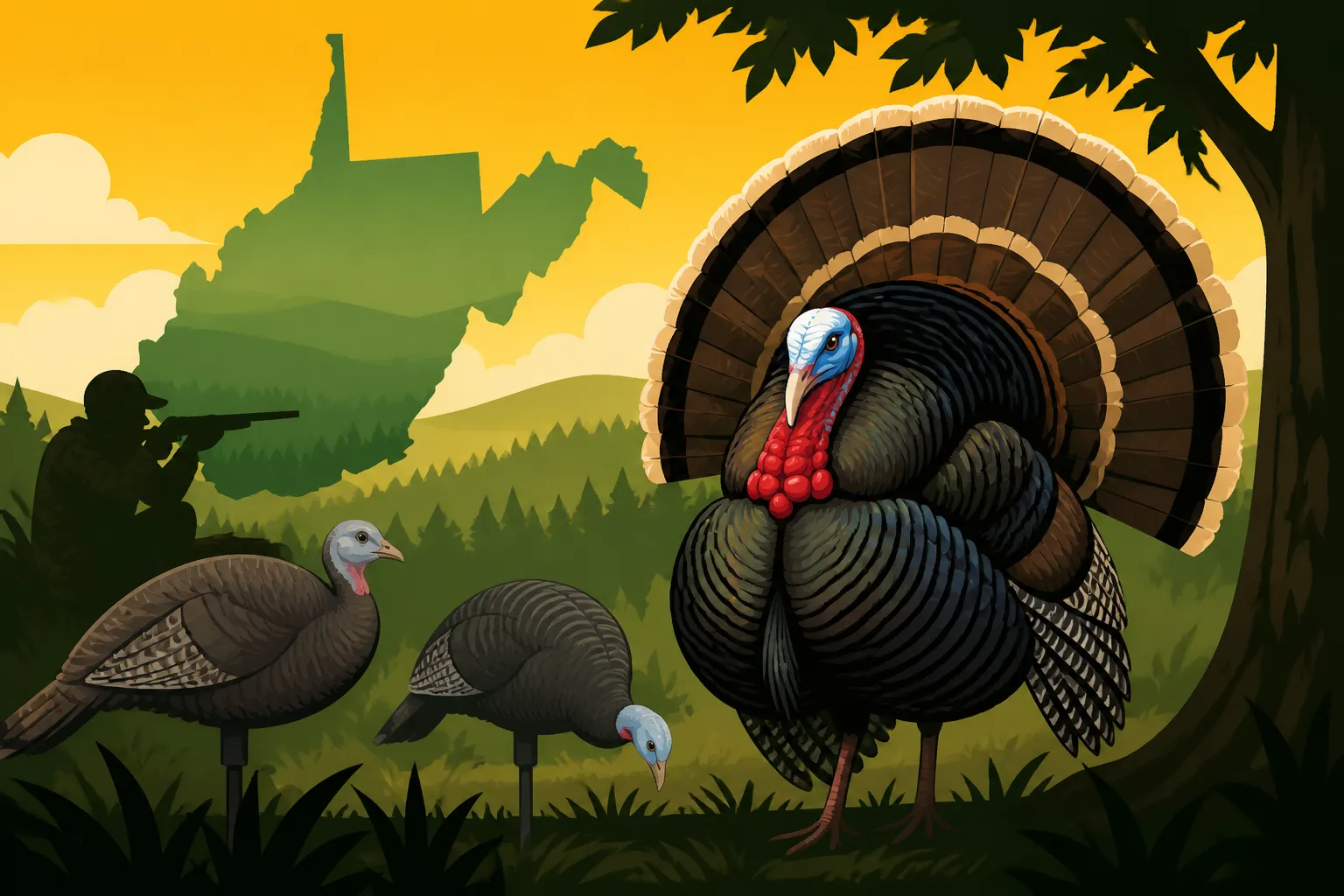
Forget the full-strut tom, the three jakes, and the half-dozen hens you might use in early season or on unpressured private land. For wary West Virginia gobblers, simplicity is key. A single hen decoy, perhaps in a feeding or breeding pose, is often the most effective. This setup is far less threatening to a gobbler, who might be hesitant to approach a perceived rival or a large group that could be associated with danger. It mimics the natural behavior of a lone hen, peacefully going about her business. This subtle approach doesn't trigger their "danger" alarm bells.
Think about it from the gobbler's perspective: a single hen doesn't demand confrontation, nor does it suggest a full-blown party that might have hunters waiting. It's just an easy opportunity. When you're Scouting West Virginia Public Land Before Season, use mapping tools like GoHunt to pinpoint those out-of-the-way, less-pressured pockets, or areas where natural feeding activity might occur. A simple hen decoy placed in one of these spots can be incredibly potent.
Achieving Ultimate Realism and Motion
Beyond just the number of decoys, the quality and realism of your decoys are paramount for pressured birds. Cheap, shiny plastic decoys that shimmer unnaturally in the sun or have obvious seams are instant red flags. Invest in realistic, detailed decoys with lifelike paint schemes and flocking that minimizes glare. Many premium brands offer decoys that look incredibly natural, even up close.
But realism doesn't stop at appearance; it extends to movement. Nothing sells a decoy like subtle, natural motion. Even a slight breeze can make a feeding hen's head bob, or a tail fan sway. Some decoys come with built-in motion stakes, or you can add a simple spring stake that allows for movement with minimal wind. If there's no wind, a light tug on a string from your blind can make a head turn or a tail fan twitch, mimicking the subtle movements of a real bird. This subtle animation is often the final piece of the puzzle that convinces a wary gobbler to close the distance. Remember the advice in Decoy Placement for Pressured West Virginia Birds – realism and proper setup go hand-in-hand.
Decoy Types and Their Effectiveness for Pressured West Virginia Gobblers
Choosing the right decoy isn't just about what looks good; it's about understanding how a pressured gobbler will interpret it. Here's a quick breakdown:
| Decoy Type | Pros (for pressured birds) | Cons (for pressured birds) | Best Use Scenario |
|---|---|---|---|
| Single Hen (Feeding) | Non-threatening, natural, subtle, less equipment | Less aggressive visual cue, might not pull far | When birds are extremely wary, subtle coaxing needed. |
| Single Hen (Breeding) | Realistic, strong breeding visual cue | Can sometimes be too direct if birds are very wary | Mid-season, when hens are receptive, gobblers still breeding. |
| Submissive Jake | Challenges dominant gobblers, less confrontational | Still a male presence, can be intimidating for some | When you know there's a dominant gobbler in the area, or with a dominant tom. |
| Full Strut Tom | Very aggressive, can bring a fight if challenged | Highly intimidating, often spooks wary birds, bulky, unrealistic | Rarely for pressured birds, perhaps only early season or highly aggressive, unpressured toms. |
| Jake/Hen Combo | Offers a social scene, jake is a challenger | Can be too much visual stimulation, less subtle, more gear | When birds are somewhat wary but still responsive to aggression, often later in the morning. |
Strategic Decoy Choices for Educated Birds
When every gobbler seems to have a Ph.D. in hunter avoidance, your decoy choices become critical. It's not just about having a decoy; it's about having the right decoy for the right situation, especially when dealing with those sharp West Virginia birds.
The Power of the Single Hen Decoy
If there's one decoy to reach for when facing pressured gobblers, it's a single hen, usually in a feeding or breeding pose. Why? Because it's the least threatening and most natural scenario for a gobbler to encounter. A lone hen doesn't imply competition from another tom, nor does it suggest a full social gathering that could signal danger. She's simply a potential mate, available and accessible.
A feeding hen projects contentment and safety. It tells a gobbler, "There's no danger here, I'm relaxed and finding food." This is incredibly appealing to a wary tom who might be hesitant to step out into the open. A breeding hen, on the other hand, is a stronger visual cue, directly appealing to his reproductive instincts. She's telling him, "I'm ready," and this can often be enough to pull a hesitant bird the last few yards. Positioning her correctly, perhaps with her tail slightly raised, can mimic this posture beautifully. The key is that these single hen setups are subtle, unassuming, and don't overwhelm a bird that's already on high alert. You’re not trying to create a spectacle; you’re just trying to provide a familiar, inviting image.
Selective Use of Jake and Tom Decoys
Using male decoys with pressured birds is a high-risk, high-reward proposition. A full-strut tom decoy, while incredibly effective on unpressured, dominant gobblers, is often a recipe for disaster with wary birds. A pressured gobbler might interpret such an aggressive display as a trap or an invitation to a fight he's not willing to take, especially if he's not the top dog in the pecking order. He'll simply skirt the area or melt back into the cover.
However, a submissive jake decoy can sometimes work wonders. A jake that appears to be feeding or subtly fanning, perhaps looking over his shoulder as if he's cautiously approaching a hen, presents a different challenge. A dominant gobbler might see this younger, less aggressive male as an easy target to run off, particularly if a hen decoy is also present. This scenario can tap into his territorial instincts without presenting an overwhelming threat. The visual of a smaller bird submitting can encourage a wary tom to come in and assert his dominance. You need to carefully read the specific gobblers you're hunting. If they're responding to aggressive calling with aggressive gobbling, but hanging up on anything that looks like a challenge, a submissive jake with a breeding hen might be the ticket. But always be ready to adapt; if it's not working, pull it out.
Specialty Decoys and Off-Season Scouting
Beyond the standard hen and jake, some specialty decoys can offer unique advantages for pressured birds. Avian X, for example, makes a highly portable, realistic turkey fan called a "Riot" that can be used for fanning or as a subtle visual. This can be great for run-and-gun tactics or to add a hint of realism without setting up a full-body decoy. Some hunters even use real taxidermy fans or wings to add an unmatched level of authenticity. Another option might be a half-strut tom or a lightweight silhouette decoy that offers just enough visual cue without being too bulky or intimidating.
The best way to know which decoy might work is through diligent off-season scouting, combined with tools like GoHunt. This isn't just about finding birds, but observing their behavior. Do they interact with jakes aggressively? Are they more cautious in open areas? Do they approach fields from specific entry points? Understanding these nuances, along with studying Reading West Virginia Mud for Fresh Deer Movement (which also provides insight into general game movement patterns), can inform your decoy strategy once the season opens. Observing how live birds react to different social dynamics will give you a huge advantage when selecting your plastic stand-ins.
Integrating Decoys with Calling and Hunter Concealment
Even the most realistic decoy won't do its job if your calling is off or if the gobbler spots you before he commits. For pressured West Virginia birds, these elements must work seamlessly together.
Complementary Calling to Lure Them In
When you're dealing with a wary gobbler that's eyeing your decoys with suspicion, your calling needs to complement, not contradict, the visual you're presenting. Overly aggressive or loud calling often works against you with educated birds. They've heard it all before, and they've learned to associate it with danger.
Instead, opt for softer, more subtle calls. Think purrs, soft clucks, and contented yelps, perhaps an occasional lost yelp. These sounds project a sense of safety and naturalness, mirroring the relaxed posture of your feeding hen decoy. The calls shouldn't be constant; rather, they should be intermittent, mimicking a real hen going about her day. Imagine a hen moving through a field or Hunting a Green Field Planted for Deer – she's not constantly yelping. These subtle sounds, paired with the visual of a lone hen, can be incredibly persuasive. Sometimes, a well-timed purr as the gobbler hangs up can be the final nudge he needs to step into range, feeling assured that the "hen" is truly uninterested in confrontation. Check out tips for Turkey Calls Worth Carrying in West Virginia to ensure you have the right tools for these nuanced interactions.
Imperative Concealment and Shot Angles
With pressured birds, absolute concealment isn't just a good idea; it's non-negotiable. These gobblers have learned to pick apart a scene, and any unnatural movement, shimmer, or silhouette will send them packing instantly. This means choosing a setup location that offers natural cover – a dense patch of laurels, a thick oak tree as mentioned in Setting Up Against a Big Oak, or a rise in the terrain. A ground blind brushed in to break up its outline can be invaluable, especially when hunting Turkey Tactics for Eastern Panhandle Field Edges where cover can be sparse.
Position your decoys so that the gobbler's attention is squarely on them, not on your position. This often means placing the decoy slightly off to the side, or in front of your shooting lane, so that the bird's approach directs his focus away from you. Also, be mindful of your shot angles. Wary birds might circle, so having a clear shooting lane in multiple directions is important. Take extra time to clear out any small branches or leaves that could impede a shot, but do so subtly to avoid disturbing the area. Remember, any time a gobbler feels exposed or like he's being watched, he's likely to bail.
Scouting and Adaptability in Pressured Areas
Successfully hunting pressured birds with decoys begins long before opening day with intense scouting. This means not just finding where birds are, but understanding how they use the terrain and how they react to different situations. Tools like GoHunt can provide invaluable aerial imagery and topographical maps, helping you identify subtle terrain features – saddles, creek bottoms, benches – that gobblers might use to approach or avoid a field edge. Look for areas with fresh sign, like dusting bowls or strut marks, that might indicate a less-pressured pocket.
Once the season starts, remain adaptable. If a gobbler hangs up at 70 yards and doesn't respond to your subtle calling and hen decoy, don't be afraid to change your strategy. This might mean pulling the decoy and going Run-and-Gun Turkey Tactics on Public Land, or repositioning your decoy to a slightly different spot, perhaps moving it closer to cover to ease his reluctance to step out. Sometimes, moving your decoy even 20 yards can make all the difference. Learning when to hold 'em and when to fold 'em, and when to try a completely different setup, is a hallmark of success when dealing with West Virginia's educated gobblers.
Disclaimer
This article is for general informational purposes only and does not constitute professional advice. Laws, prices and regulations vary by location and change over time. Consult a qualified professional for guidance on your specific situation.