Turkey Chokes and Patterning
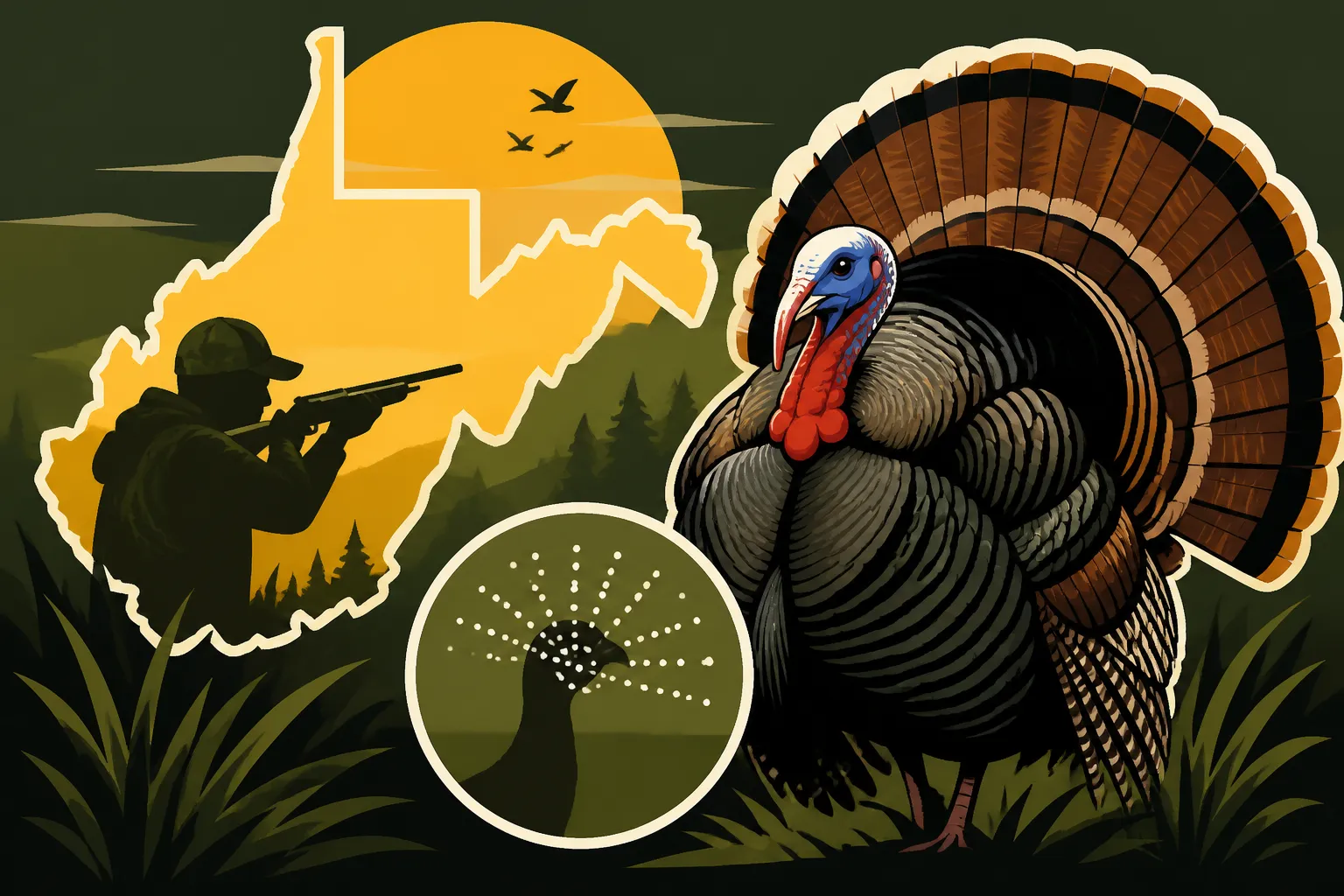
One of the most frustrating things for a West Virginia turkey hunter is missing that gobbler you’ve worked for hours, or worse, making a poor shot that doesn't put the bird down cleanly. Often, the culprit isn't your shooting ability, but rather a shotgun setup that isn't optimized for turkey hunting. This guide will walk you through the critical steps of selecting the right turkey choke and then the absolutely essential process of patterning your shotgun to ensure you’re delivering a devastatingly effective payload when that strutting tom steps into range.
Understanding Turkey Chokes: The Heart of Your Pattern
Many hunters think a shotgun is just a shotgun, but for turkeys, that couldn't be further from the truth. The choke tube you screw into the end of your barrel is arguably the most important component in ensuring a clean kill. It's what shapes the shot cloud, concentrating it into a dense, hard-hitting pattern that’s capable of ethically taking down a tough bird like a wild turkey.
What is a Shotgun Choke and How Does it Work?
At its simplest, a shotgun choke is a tapered constriction at the muzzle end of your shotgun barrel. When your shot charge travels down the barrel, it's held together by the shot cup or wad. As it exits the barrel, the choke tube squeezes that shot charge, much like a funnel. This compression changes how the pellets spread once they leave the barrel. A tighter choke constricts the shot more, resulting in a denser, narrower pattern at longer distances. A more open choke allows the pellets to spread out more quickly, creating a wider pattern for closer shots, which is typically desired for upland birds or waterfowl.
For turkey hunting, we're almost always looking for the tightest possible constriction because we need to deliver as many pellets as possible into a very small, vital zone: the head and neck of the gobbler. This is why you'll often hear hunters talking about "turkey chokes" that are significantly tighter than even a "full" choke. Without the proper choke, your shot pattern will be too sparse at typical turkey ranges, leaving gaps where pellets should be, and drastically reducing your chances of a clean kill.
Why Turkey Hunting Demands Specialized Chokes
Hunting spring gobblers in West Virginia is a unique challenge. You could be calling a bird from a steep ridge in the Monongahela National Forest, or trying to lure one across an open field edge in the Eastern Panhandle. No matter the terrain, the goal is always the same: get that bird close, but be prepared for a shot out to 40 yards, sometimes a little more if conditions are perfect and you've patterned effectively. Turkeys are incredibly tough birds, and their vitals are small. You're not aiming for the body, but specifically for the head and neck to disrupt the brain and spinal column for an instant, humane kill.
This specific target area requires an incredibly dense pattern of pellets, ideally 80-100 pellets, within a 10-inch circle at your maximum effective range. Standard full chokes, while great for ducks or pheasants, often don't provide the pellet density needed for turkeys, especially with smaller, lighter lead loads. Specialized turkey chokes are designed with extreme constriction to pack those pellets together tighter and longer, ensuring that critical mass hits the gobbler's head and neck. They are engineered to work with modern high-performance turkey loads, often incorporating features like porting to reduce recoil and specialized internal geometry to strip the wad cleanly, further enhancing pattern density.
Selecting the Perfect Choke for West Virginia Turkeys
Choosing the right choke isn't a "one size fits all" decision. It involves considering your shotgun, your chosen ammunition, and the specific types of hunting scenarios you anticipate across West Virginia's diverse landscape.
Common Choke Constrictions for Turkey Hunting
When you start looking at turkey chokes, you'll quickly move past the standard "Full" and "Modified" options. Turkey chokes are often labeled as "Extra Full," "Super Full," or simply "Turkey." Many will also have a specific constriction diameter listed, like .665 or .670. The smaller the number, the tighter the constriction. For example, a .650 choke is tighter than a .675.
Here's a general breakdown of how chokes are often categorized for turkey hunting:
- Full Choke: While some hunters might use a factory full choke with great success, especially at shorter ranges or with very dense shot like TSS, it's generally considered the minimum for turkey hunting. Expect patterns to spread more rapidly beyond 30 yards.
- Extra Full/Super Full Choke: These are purpose-built turkey chokes, usually with constrictions ranging from .675 to .665. They offer a significant increase in pellet density at traditional turkey ranges (20-40 yards) compared to a standard full choke.
- Tungsten Super Shot (TSS) Specific Chokes: With the advent of TSS loads, some choke manufacturers have developed chokes specifically designed to optimize these extremely dense pellets. TSS performs differently than lead, and a choke designed for it might have a slightly different constriction or internal geometry. These chokes, paired with the right TSS load, can produce incredibly tight patterns and extend your ethical range.
Remember, the goal is not just the tightest pattern, but a consistent and even pattern with no holes. Sometimes, too tight a choke can actually blow out the center of your pattern, or create inconsistent performance. This is why patterning is so crucial.
Considering Shot Type and Payload
The type of ammunition you plan to use is intrinsically linked to your choke selection. For years, lead shot was the standard, and still is for many. These days, however, Tungsten Super Shot (TSS) has revolutionized turkey hunting.
- Lead Shot: If you're using traditional lead turkey loads, you'll generally want a tighter choke, often in the .660-.670 range, to get the desired density. Pay attention to pellet size (4, 5, 6) as smaller pellets will inherently put more individual projectiles in the pattern, but may carry less energy per pellet. Brands like Federal Premium and Winchester offer excellent lead turkey loads.
- TSS (Tungsten Super Shot): TSS pellets are much denser and harder than lead, meaning smaller pellets carry more energy and maintain their velocity better. This allows hunters to use smaller shot sizes (like 7, 9, or even 9.5) and achieve incredibly dense patterns that hit harder at longer ranges. Because TSS pellets are so hard, they are less prone to deforming when passing through the choke, which can lead to more consistent patterns. This also means you might not need as tight a choke as you would with lead. Many hunters find success with TSS and chokes in the .660-.675 range. GoHunt often features reviews and comparisons of different TSS loads, helping hunters make informed decisions.
The key takeaway here is that you absolutely cannot just pick a choke and a box of shells and assume they'll work together perfectly. They are a system, and finding the right combination takes testing.
Matching Your Choke to West Virginia Hunting Scenarios
West Virginia offers a variety of terrain and hunting conditions. While a good turkey choke setup should be versatile, thinking about your typical hunting spots can help fine-tune your choice.
- Dense Woods Hunting: Much of West Virginia's public land, like areas within the Monongahela National Forest Hunting or many Wildlife Management Areas, means hunting in thick timber and laurel. Shots here are often 30 yards or less, but sometimes that gobbler hangs up just a bit further. A choke that provides a consistent, dense pattern out to 40 yards is ideal, giving you confidence if that bird just won't close the distance.
- Field Edges and Open Bottomlands: In regions like the Eastern Panhandle Farmland Deer areas or along river bottoms, you might encounter birds in more open settings. Here, a gobbler might hang up at 45 yards, especially if pressured. A setup optimized for maximum ethical range with TSS could be a real advantage, allowing you to confidently take a shot that you might pass on with a less effective lead load.
- Typical Shot Distances: While it's always best to call a bird in close, turkeys don't always cooperate. Most ethical turkey shots are taken between 20 and 40 yards. Your chosen choke and load combination should be able to consistently put a minimum of 80-100 pellets in a 10-inch circle at your maximum comfortable range, which for most serious turkey hunters, is 40 yards, or maybe 45 if they've truly done their patterning homework with modern loads. Don't push beyond your proven limits.
This is where the term Turkey Gear for a West Virginia Spring really comes into play, encompassing not just your calls and vest, but the entire system of your shotgun, choke, and ammunition.
The Indispensable Process of Patterning Your Turkey Gun
You wouldn't go deer hunting without zeroing your rifle, right? The same logic, even more so, applies to turkey hunting. Patterning your shotgun is non-negotiable. It's how you discover your gun's true capabilities with a specific choke and load, and what your actual maximum ethical range is.
Gathering Your Gear and Setting Up Your Range
Before you head to the range, make sure you have everything you need. This isn't a quick sight-in; it's a dedicated session.
- Your Shotgun: The one you'll actually be hunting with.
- Choke Tubes: Have a few different turkey chokes if you're experimenting.
- Ammunition: Crucially, bring several boxes of the exact same brand, load, and shot size you intend to hunt with. Don't pattern with one load and hunt with another.
- Turkey Targets: Paper targets with a turkey head/neck outline are best. They allow you to clearly see where your pattern is hitting relative to the vitals. Generic paper targets work too, but you'll have to draw your own target area.
- Measuring Tape: To accurately set distances.
- Marker/Pen: For marking your targets.
- Sandbags or a Bench Rest: Essential for stability. You want to eliminate as much human error as possible during patterning, so you're testing the gun and ammo, not your off-hand shooting.
- Eye and Ear Protection: Safety first, always.
- Cleaning Supplies: For cleaning your barrel and choke between shots, if desired, although a few shots usually don't require it.
Set up your range at specific, known distances. Start closer, like 20 or 25 yards, to get a baseline, then move to your primary patterning distances of 30, 35, and 40 yards. Some might even go to 50 yards if they are truly trying to stretch their effective range with TSS, but 40 yards is a solid benchmark for most.
Step-by-Step Patterning Protocol
Consistency is key here. Treat each shot as a scientific experiment.
- Mount and Aim Consistently: Use your sandbags or rest to ensure the gun is stable and aimed at the exact same spot on the target for each shot. Practice your mount until it feels natural.
- Shoot at Different Distances: Start with a target at 20 or 25 yards. Fire one shot, then walk down and analyze it. Don't keep shooting at the same target, as it will quickly get blown out and become useless. Use a fresh target for each shot.
- Move Back and Repeat: Gradually move your target back to 30, 35, and finally 40 yards. Always use a fresh target for each shot and distance. When you get to your maximum desired range (e.g., 40 yards), shoot at least 3-5 times with the same choke and load combination. This helps average out any flyers or slight inconsistencies.
- Experiment with Chokes and Loads: If your first choke/load combination isn't performing well, swap out the choke or try a different brand/type of turkey load. Repeat the patterning process. This is the only way to find what your specific shotgun likes. Brands often have slightly different internal dimensions, and what works great in one gun might not in another.
- Document Your Results: Label each target with the choke, load, and distance. Take notes on pellet count and overall pattern appearance. This log will be invaluable. A service like GoHunt can help you track these details digitally, making it easier to compare and decide.
Think of it as building a dossier on your shotgun's performance. You need hard data, not just a gut feeling. If you're patterning your gun for West Virginia Youth Spring Turkey Weekend, make sure the young hunter is involved and understands the importance of this step.
Interpreting Your Pattern: What to Look For
Analyzing your targets is where the magic happens. Don't just look for a hole in the center; you need to evaluate the entire pattern.
- Pellet Density in the Kill Zone: Draw a 10-inch circle around the densest part of your pattern, centered on the turkey's head and neck. Count the pellets within that circle. For an ethical kill, you want a minimum of 80-100 pellets. If you're consistently getting less than that at 40 yards, that's not your ethical range with that setup.
- Evenness of the Pattern: Are the pellets distributed evenly throughout the 10-inch circle, or are there "hot spots" (areas of extreme density) and "holes" (sparse areas)? A smooth, even distribution is critical. A hot spot means you might kill a bird at that specific spot, but an inch off, it's a crippling shot. Holes are obvious risks.
- Center of Impact: Does the densest part of your pattern consistently hit where you were aiming? Sometimes, a choke or load combination can cause your point of impact to shift, even if your gun is otherwise sighted in. This is why using a rest and aiming precisely is so important. Adjust your aiming point if necessary, or consider a different choke.
- Pattern Consistency: Look at the multiple targets shot at the same distance with the same setup. Are they similar, or is there a lot of variation? Inconsistent patterns are a red flag and suggest that choke/load combination isn't working well for your gun.
Once you find a combination that consistently delivers a dense, even pattern of 80-100 pellets in a 10-inch circle at your chosen maximum ethical range, that's your winning setup. Mark that choke, save those shells, and be confident when it's time to hit the woods. This is far more effective than just hoping your Turkey Shotguns and Chokes will work out of the box.
Here's a simple table to help you log your patterning results:
| Choke Type/Constriction | Ammo Brand/Load/Shot Size | Distance (Yards) | Pellets in 10" Circle | Notes (Evenness, POA Shift) | Max Ethical Range? |
|---|---|---|---|---|---|
| X-Full (.665) | Federal TSS 3" #9 | 20 | 150+ | Very tight center | YES |
| X-Full (.665) | Federal TSS 3" #9 | 30 | 120 | Excellent, even | YES |
| X-Full (.665) | Federal TSS 3" #9 | 40 | 95 | Good, slight gaps | YES |
| X-Full (.665) | Federal TSS 3" #9 | 50 | 60 | Too sparse for confidence | NO |
| Super Full (.670) | Winchester Long Beard XR #5 | 20 | 100+ | Very good | YES |
| Super Full (.670) | Winchester Long Beard XR #5 | 30 | 85 | Solid, slight hot spot | YES |
| Super Full (.670) | Winchester Long Beard XR #5 | 40 | 65 | Borderline, some large gaps | NO (Need more pellets) |
Troubleshooting and Advanced Tips for Optimal Turkey Performance
Patterning is not always a smooth process. You might encounter issues, and there are always ways to fine-tune your setup.
Common Patterning Problems and Solutions
Don't get discouraged if your first few patterns aren't perfect. Many hunters face these issues:
- "Blown Out" Patterns / Holes in the Center: This happens when the choke is too tight for the shot load, or the shot cup isn't protecting the pellets adequately. The pellets deform and scatter, leaving a sparse or uneven pattern.
- Solution: Try a slightly more open choke (larger constriction number, e.g., from .655 to .665). Experiment with different brands of ammunition, as wads and shot hardness vary. If using lead, switch to harder buffered loads.
- Inconsistent Patterns Shot to Shot: If one target looks great and the next looks terrible with the same setup, you have an inconsistency problem.
- Solution: Double-check your shooting form and rest. Ensure you're not flinching or pulling shots. Make sure your choke tube is screwed in tightly. Try a different box of ammunition, or even a different brand. Sometimes, a barrel simply doesn't like a particular combination.
- Point of Impact Shift: Your pattern is dense, but it's consistently hitting 6 inches high and left of your aiming point.
- Solution: This is common. You can sometimes adjust with an adjustable rear sight if your shotgun has one. More often, hunters learn to compensate by adjusting their aiming point slightly. For instance, if it hits high, aim at the base of the neck. Alternatively, try a different choke or load, as these can sometimes correct the shift.
Remember, patience is a virtue in patterning. It's a process of elimination and fine-tuning.
The Role of Different Ammunition Types
We've touched on lead and TSS, but it's worth reiterating how critical your ammunition choice is. The best choke in the world won't perform if the ammo is subpar or incompatible with your gun.
- Lead Shot: Still viable, especially if you're on a budget. Look for "buffered" or "copper-plated" lead loads. The buffering material (often plastic beads or granulated plastic) helps prevent pellet deformation, and the copper plating hardens the lead, both leading to tighter patterns. These loads are generally more effective than plain lead shot.
- TSS (Tungsten Super Shot): If you want maximum performance, this is it. TSS pellets are incredibly heavy and hard, leading to superior energy retention and pattern density. You can use smaller pellet sizes (e.g., #9) and get more pellets in the pattern, with each pellet hitting harder. Brands like Federal, Apex, and Winchester all offer excellent TSS loads. While more expensive, many hunters feel the increased performance and confidence are worth the cost. When buying from a reputable retailer, check GoHunt for current pricing and availability, and user reviews.
- Bismuth: A non-toxic alternative that falls between lead and TSS in terms of density and cost. It's softer than TSS but harder than steel, making it a good choice for older shotguns not rated for steel, or for those wanting a non-toxic option that patterns better than steel.
Always, always test new ammunition with your choke. Just because two loads are both #5 lead, doesn't mean they'll pattern the same. Different brands use different wads, buffering, and velocities.
Maintaining Your Choke and Shotgun for Consistency
A well-maintained shotgun and choke will perform more consistently.
- Choke Tube Installation: Always ensure your choke tube is screwed in tightly, hand-tight at a minimum, and ideally with a choke wrench. A loose choke can cause inconsistent patterns and can even damage your barrel or choke.
- Cleaning: Regularly clean your barrel, especially after patterning or a long day afield. Plastic wad residue can build up, affecting pattern consistency. Pay particular attention to the choke tube itself, ensuring any lead or plastic fouling is removed. A good gun cleaning kit should be part of your Turkey Gear for a West Virginia Spring.
- Storage: Store your chokes properly to prevent damage or corrosion. Keep them lightly oiled.
By understanding how chokes work, carefully selecting the right one for your gun and ammunition, meticulously patterning your setup, and then maintaining your equipment, you'll be well on your way to a successful Spring Turkey Hunting in West Virginia season, with the confidence that when that gobbler steps out, your shotgun will do its job.
Disclaimer
This article is for general informational purposes only and does not constitute professional advice. Laws, prices and regulations vary by location and change over time. Consult a qualified professional for guidance on your specific situation.